





























Blooming for shady spots: the best plants
Uncompromising flowers for shady spots
Contents
We often think that shaded areas of the garden are difficult to design, but there are nevertheless plenty of plants ready to rise to the challenge. While these are often plants with handsome foliage, varied and colourful, many perennials and bulbs flower vigorously in shade, bringing colour where light is scarce. A shaded woodland area, a corner in the shadow of a wall, or simply a space sheltered from the sun, can come alive with abundant flowering. Discover our selection of plants which, while shade-loving, will illuminate your garden with their vibrant flowering, season after season.
Note: these plants all grow in partial shade, but also in full shade. However, as they bear flowers, ensure that this shade is not too dark, too complete, too dense, but bright. Another possible exposure is a bright north-facing aspect, which does not see the sun, but can offer good brightness.

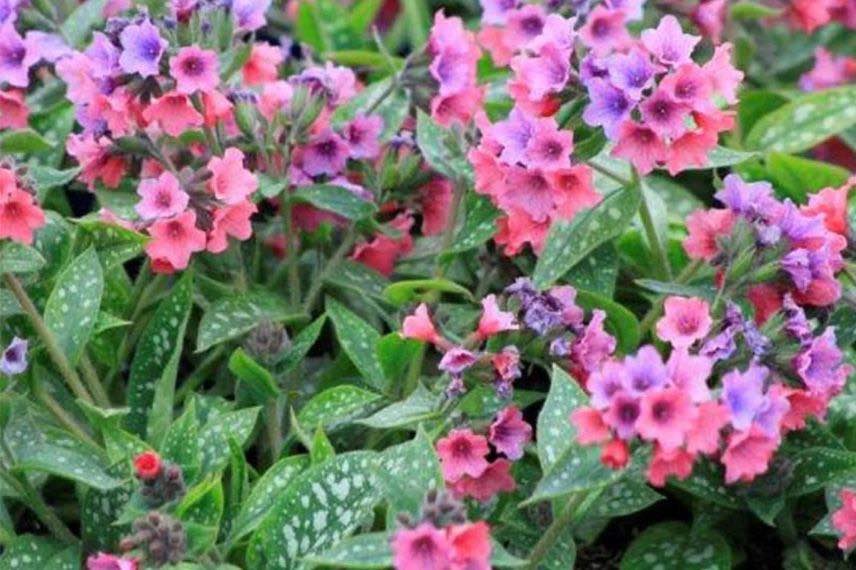
Lungwort - Pulmonaria 'Shrimps on the Barbie'
Pulmonaria ‘Shrimps on the Barbie’ is an excellent ground-cover plant for shaded or partially shaded areas, providing colour from the end of winter with its salmon-pink to blue-tinged flowers. Its soft green, semi-evergreen foliage with silver marbling creates a pretty contrast under trees or shrubs. It establishes in humus-bearing soil, well-drained and cool in summer, even slightly drier once the plant is established.
This pulmonaria, early-flowering, blooms from March to June with its bell-shaped flowers arranged in cymes, reminiscent of the colour of shrimp. Its thick leaves, covered in stiff hairs, are slug-resistant.
Growing to about 25 cm tall and 60 cm wide, this variety forms a low-growing clump that slowly spreads thanks to its short rootstocks. It suits the base of trees or shrubs, and can also enhance a shaded path or the foot of a wall.
Pulmonarias are ideal perennials for cool climates, as they do not cope well with heat and drought. Very hardy, they thrive in deciduous woodland, where spring humidity promotes their growth. Their early flowering benefits from the light available before the trees leaf out. They tolerate calcareous soils and heavy clay soils.
Read also
10 plants to create a shady rockeryLamium galeobdolon 'Hermann's Pride'
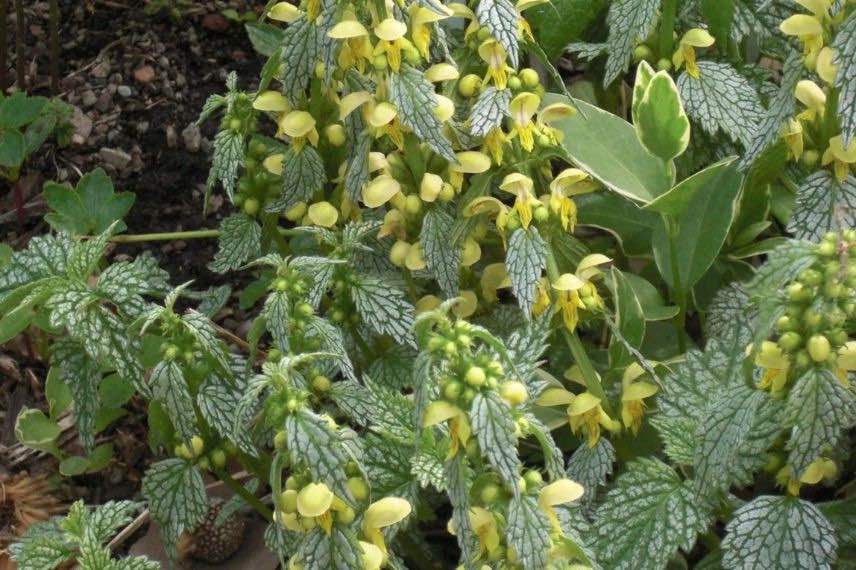
The Lamium galeobdolon ‘Hermann’s Pride’ is a variety of lamium, also known as yellow nettle, which brightens shady spots thanks to its charming buttery-yellow flowers and silvery foliage. Creeping, ground-covering perennial, less invasive and more compact than the type species, this variety forms a carpet of small oval green leaves, silver-veined, semi-evergreen. Its tubular flower spikes appear in early summer, in June and July, attracting bees, butterflies and birds.
At maturity, this ground-cover can reach 40 cm in height. Native to Asia, it is very hardy and tolerates drought well. However, it prefers light, calcareous, cool to moist but well-drained soil, as it dislikes stagnant moisture. Lamium thrives in shade or partial shade, and the leaf colour as well as the soft hue of its flowers shine in shade.
Columbine - Aquilegia 'Musik Pink-White'
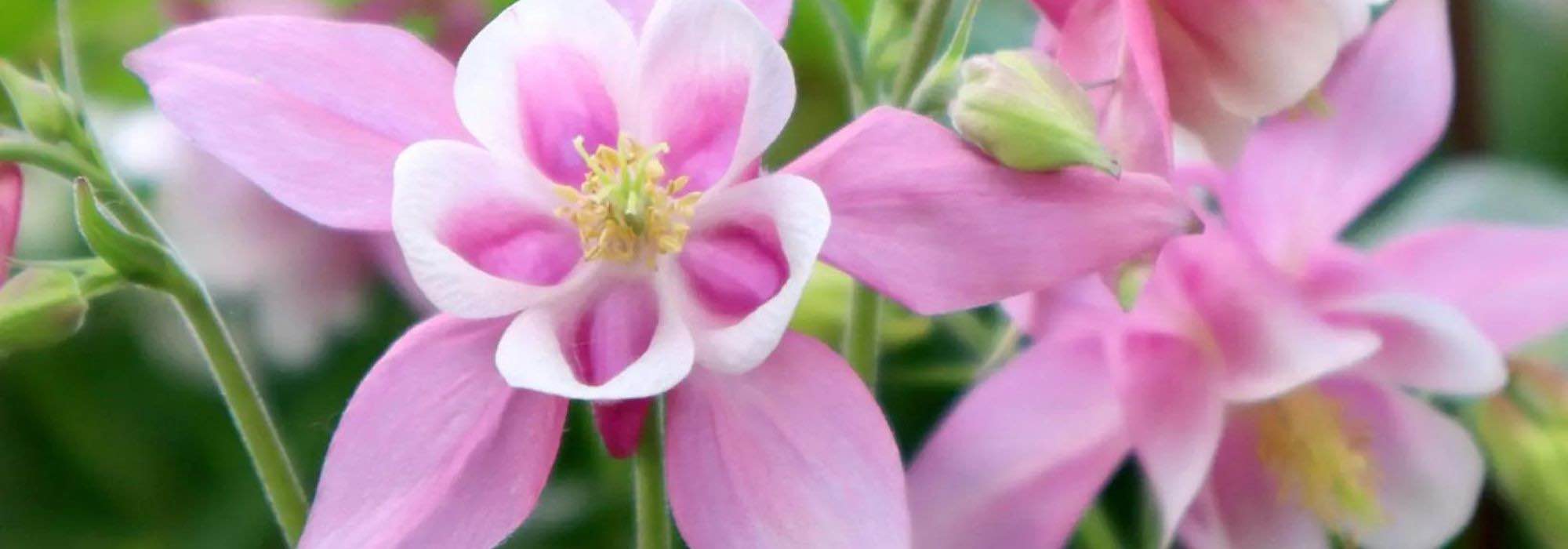
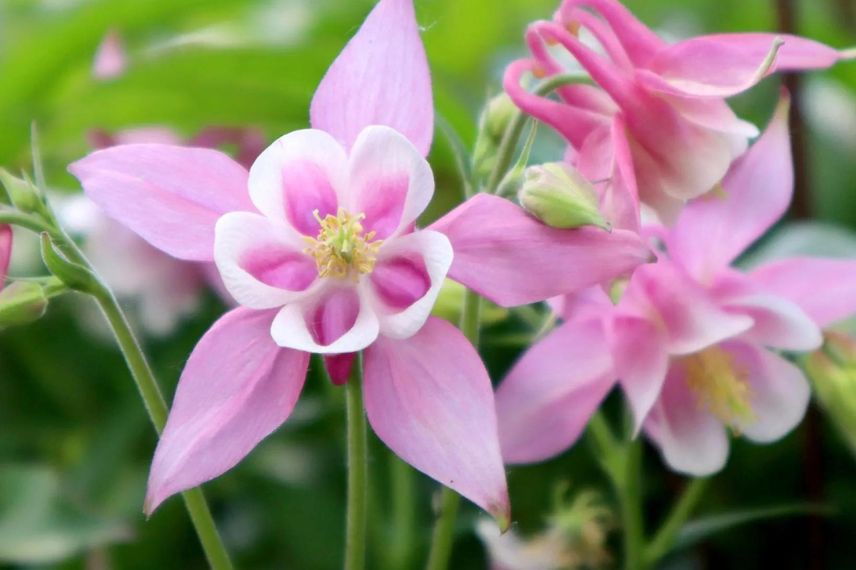
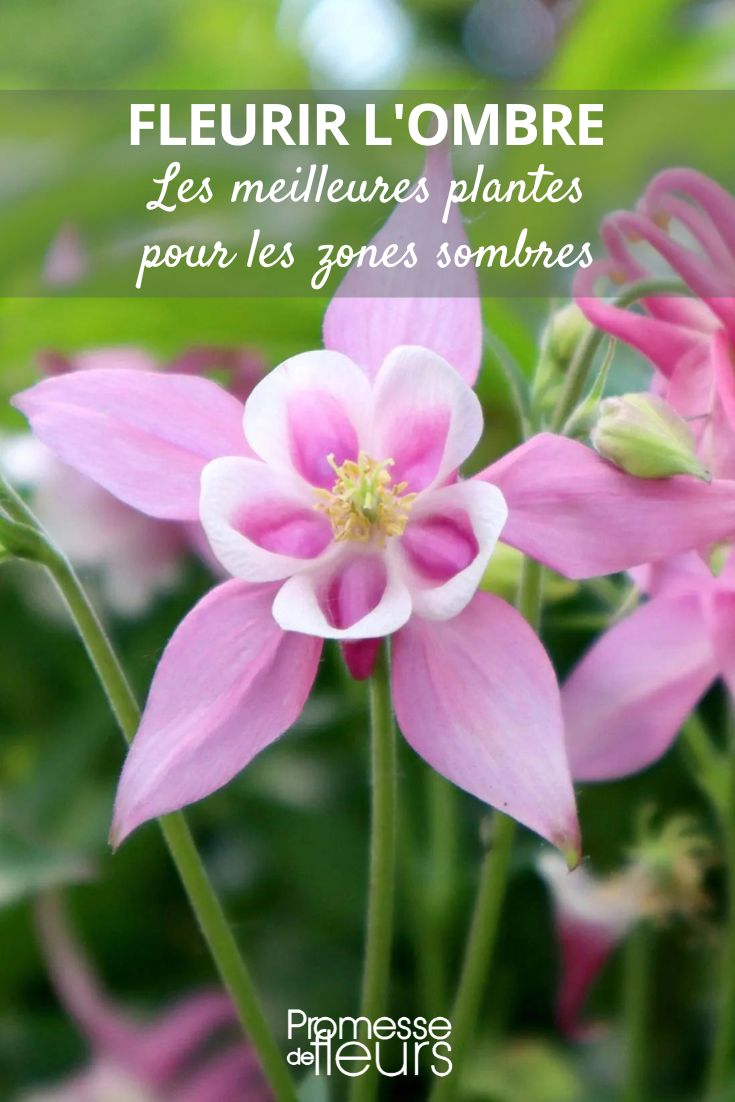
Aquilegia ‘Musik Rose Blanc‘ is an elegant, refreshing columbine, perfect for brightening rock gardens, borders or shaded containers.
Preferring shaded areas, Aquilegia ‘Musik Rose Blanc’ thrives under shrubs, in woodland margins or hedges, in light, moist soil.
This columbine is ideal for brightening shaded borders thanks to its luminous colours and light, airy growth habit.
Barren strawberry - Waldsteinia ternata
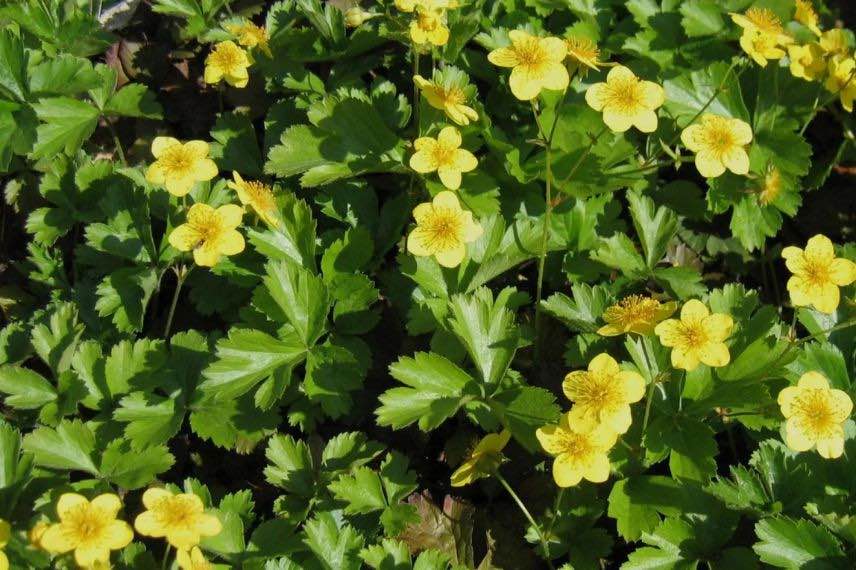
Waldsteinia ternata, also called Waldsteinia sibirica or trifoliata, is a semi-evergreen perennial that proves to be an excellent groundcover. This creeping plant does not exceed 15 cm in height, but it spreads quickly, forming a dense carpet that smothers weeds. Towards the end of spring, it blooms with bright lemon-yellow flowers, reminiscent of a strawberry plant adorned with buttercups. Adaptable, it tolerates all soil types, moist or dry, and withstands all exposures, from full sun to deep shade.
Waldsteinia ternata grows spontaneously in Central Europe, Russia, China and Japan. Its creeping rootstocks allow it to colonise spaces quickly, whether along a path edge or beneath large trees, where it fears neither roots nor shade. Its glossy green foliage, slightly pubescent and with three lobes, resembles that of a strawberry, taking bronzy tones when exposed to the sun.
Ideal for low-maintenance gardens, this plant is as effective as ivy, periwinkle or epimediums for covering difficult soils. Hardy and drought-tolerant, it can even become invasive in rich, moist soil.
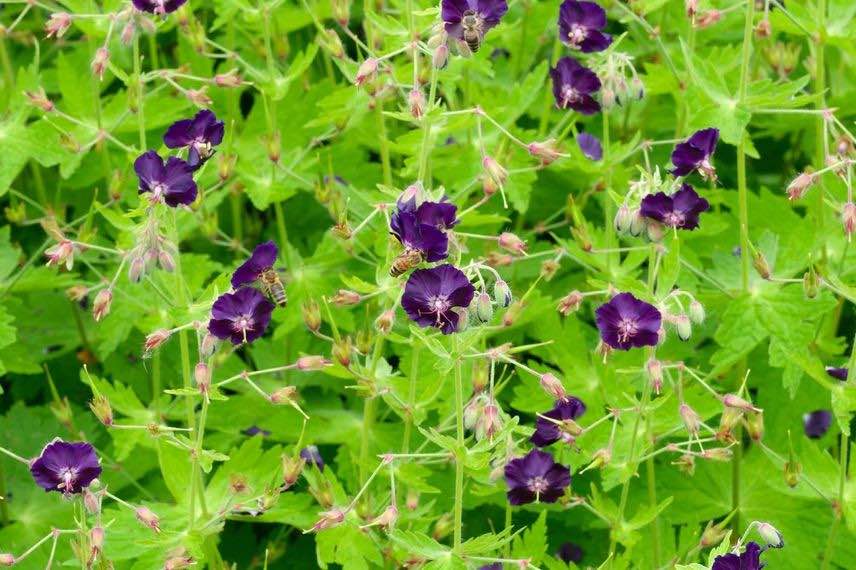
Geranium phaeum 'Raven'
Geranium phaeum is a species of hardy geranium that grows in shade. ‘Raven’ is a cultivar with small silky brown-purple flowers with white centres, forming a pretty contrast with its bright light-green foliage. This herbaceous plant forms a dense clump of 45 cm in height and 30 cm in width, flowering abundantly in May–June, with more sporadic flowering in summer when conditions are not too dry.
The ‘Raven’ geranium is an excellent groundcover, particularly suited to shaded and dry areas. Its flowers with pink recurved stamens, though small and dark, create a refined effect. The semi-evergreen, lightly dissected foliage in bright green with a yellow tinge adds a luminous touch to the garden.
Easy to grow and undemanding in terms of soil and exposure, this geranium is perfect for wild gardens or woodlands. Once well established, it tolerates drought and self-seeds abundantly, providing a lush groundcover with little effort.
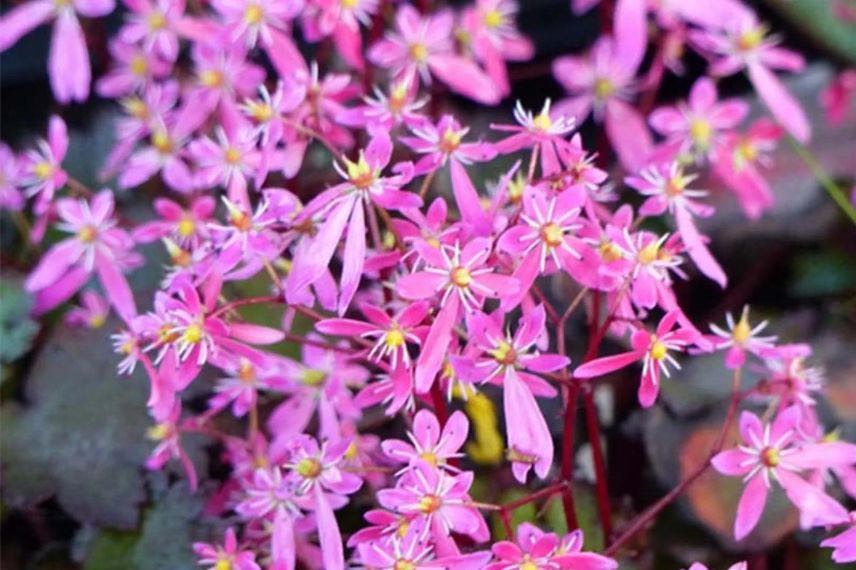
Saxifrage - Saxifraga cortusifolia 'Black Ruby'
The Saxifraga cortusifolia ‘Black Ruby’, like the Saxifraga fortunei, is an ideal type of saxifrage for shade, very floriferous, but somewhat delicate to grow. It is an elegant perennial that is distinguished by its chocolate-brown foliage and its late flowering, from September to November. Its small rosettes of deciduous leaves, up to 20 cm across, are glossy, dentate and rounded. Towards the end of summer, panicles of flowers, pink-purple, emerge on 10 cm stems, with a distinctive form of four upper petals and two longer lower ones. Their delicate fragrance is worth getting close to.
This plant prefers light, humus-bearing, cool and well-drained soil, in partial shade or full shade. Perfect for shaded rockeries, it is important to protect its foliage from dead leaves that could smother it in autumn, and to monitor for attacks by aphids, gastropods and vine weevils. It does not tolerate heavy, damp soils in winter.
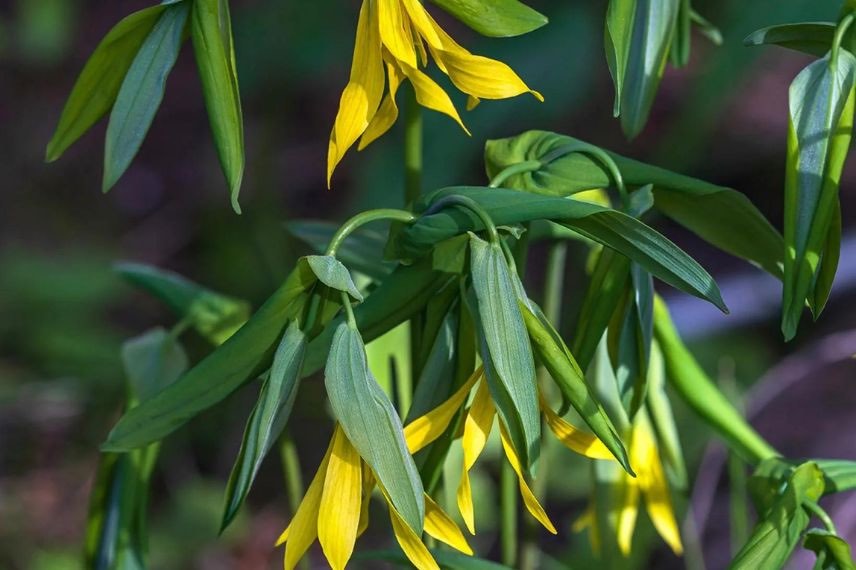
Large-flowered bellwort - Uvularia grandiflora
Uvularia grandiflora is a rare perennial, with a delicate appearance, perfect for cool, shaded woodland. Native to North America, this deciduous plant produces beautiful lemon-yellow pendulous bell-shaped flowers that bloom from March to May, before the full appearance of its foliage. Its bright green elliptical leaves, softly downy on the reverse, resemble those of Solomon’s seal and remain decorative all summer.
With its relatively slow growth, Uvularia rarely reaches 50 cm in height and gradually develops a non-invasive clump. It prefers humus-bearing, non-calcareous soils that retain a degree of coolness even in summer. It requires particular vigilance against slugs, which relish its young shoots.
Plant it in well-drained soil, in shade or partial shade, and be sure to mark its position to avoid trampling the clump after the foliage has disappeared in September. Uvularia is also pollinated by bumblebees and disperses its seeds with the help of ants, adding a touch of biodiversity to the garden.
creeping bugle - Ajuga reptans
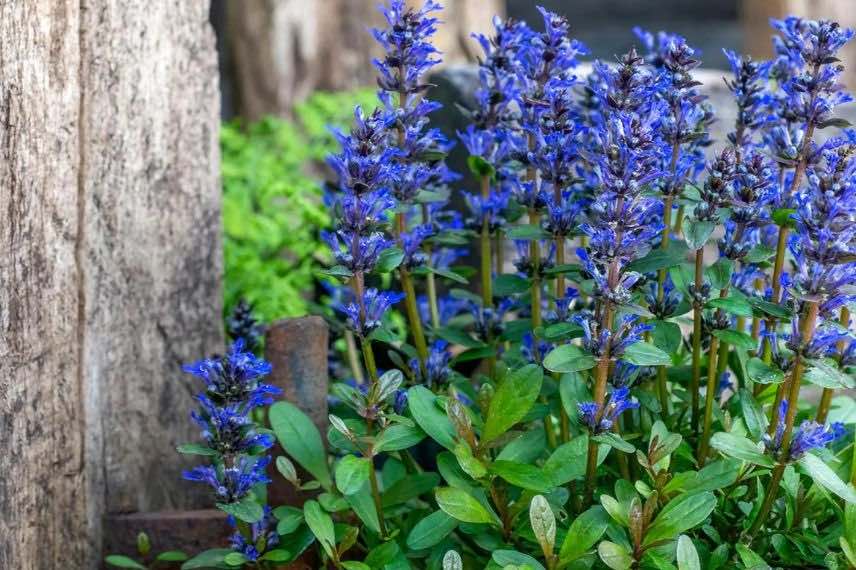
Ajuga reptans is a creeping perennial that spreads rapidly thanks to its stolons. From May to July, it produces short whorled spikes of 15 cm tall, composed of small blue labiate flowers measuring 10 to 12 mm. Its evergreen foliage, bluish-purple and slightly dentate, forms compact rosettes that elegantly dress the garden, even in winter.
Originating from Europe, the Caucasus and Iran, this plant is very hardy, except in Mediterranean regions. Ajuga reptans reaches 15 cm tall at maturity and adapts perfectly to borders, rock gardens, beds and damp areas such as stream margins. It also thrives at the base of shrubs and along hedgerows.
Although this perennial can be invasive, it is easy to control. It adds colour and structure to shady areas of the garden.
- Subscribe!
- Contents
Comments