





























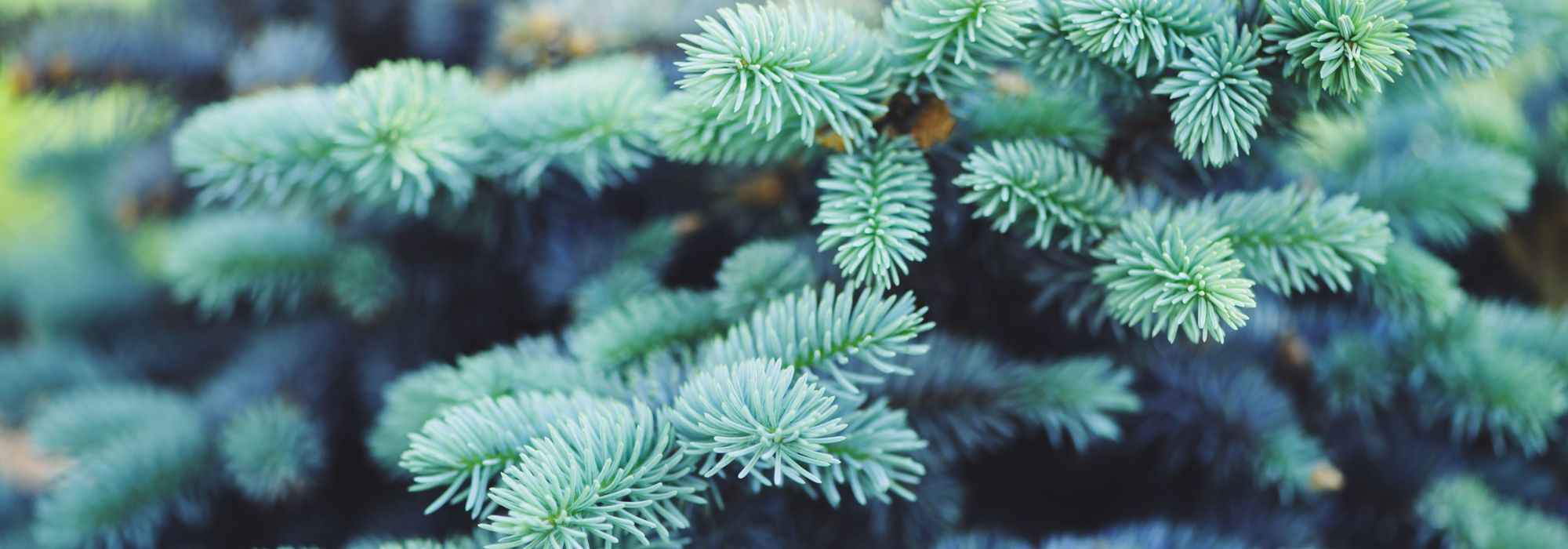
Blue conifers: remarkable varieties
Dwarfs or giants, the most beautiful varieties to combine in the garden!
Contents
Colourful conifers are plentiful, among which many are offered in various shades of blue. It can sometimes be challenging to choose from the wide diversity of different species and varieties available on the market. Some are true trees, while others are dwarf conifers perfectly suited for small gardens and container cultivation. All have the advantage of providing evergreen foliage, made up of needles that are either more or less prickly or soft to the touch, allowing them to maintain a beautiful structure in the garden throughout the seasons. Their reassuring presence adds to the ease of cultivation and maintenance appreciated by gardeners, regardless of the garden style envisioned, from the most contemporary to the most romantic. Intense blue, metallic blue, or silver, the shades of their foliage can also evolve throughout the seasons, making their presence even more interesting. I invite you to discover this small selection of blue-foliaged conifers, to be used generously in your garden, or even in pots on your balcony or terrace for some of them. And to make the most of it, I also suggest some pairing ideas to highlight their graphic forms, silhouettes, and colours!

Picea pungens ‘Glauca Globosa’
This blue spruce is one of the stars of dwarf conifers used in ornamentation. With very slow growth, it takes about fifteen years to reach 1.5 m in height, which is an advantage in small gardens. However, as an adult, it can reach up to 6 m, but it can be maintained at smaller dimensions through pruning. This dwarf version of the Colorado Blue Fir forms a small dome that is more or less flattened to conical, with its evergreen needles displaying a dense habit. In spring, the intense blue of its young shoots is captivating, especially when placed in sunlight. The foliage then takes on more silver-toned hues, which are also very attractive. Preferring well-drained soils, even occasionally dry, it is also the variety that tolerates calcareous soils the best.
- Ideal when paired with minerals, it finds its place in rockeries or more traditional beds. Offer it other conifers as companions, selecting golden-foliaged varieties such as Juniperus horizontalis ‘Limeglow’ or Thuja occidentalis ‘Rheingold’. It also pairs very well with perennial groundcovers such as creeping Sedums like ‘Lemon Ball’ or Heathers (which can bloom at different times of the year depending on the species) to extend the display for as long as possible.
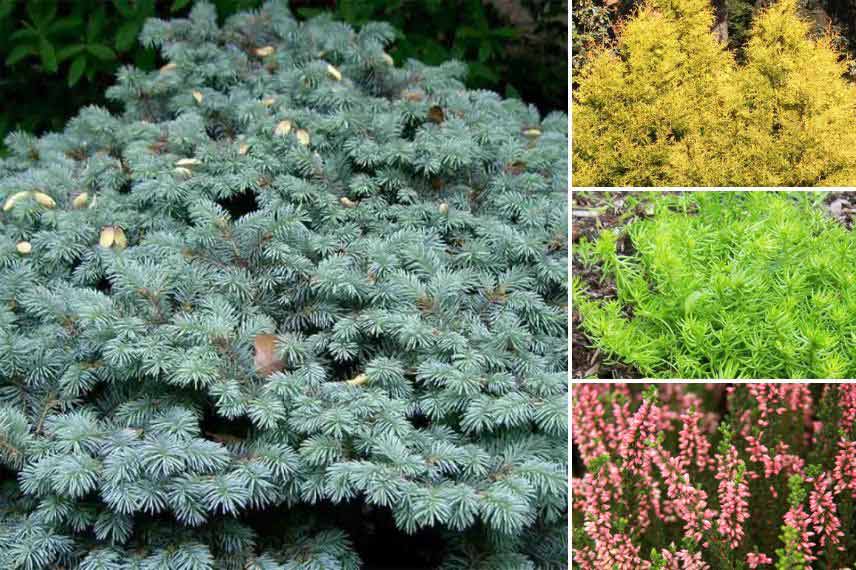
Picea pungens ‘Glauca Globosa’, Thuja occidentalis ‘Rheingold’, Sedum ‘Lemon Ball’ and Calluna Garden ‘Girls Gina’
Juniperus squamata ‘Blue Carpet’
Juniperus ‘Blue Carpet’ is one of the most popular varieties among groundcover Junipers. With dense foliage, it has a spreading habit, reaching 2 m or more in width, but does not exceed 40 cm in height. Its evergreen foliage with well-dense scales and a feathery appearance offers variable colours depending on the conditions. From bluish-green to metallic blue sometimes tinged with purple in winter, it displays a striking silver-blue all summer long. With a fairly rapid growth once it has developed its root system, it also bears small shiny black berries and eventually presents a decorative bark with reddish tones that exfoliates with age. Very hardy, it prefers cool, well-drained soils in sunny locations.
- Showcased at the top of a bank or wall, pair it with more upright and graceful companions, such as grasses like Calamagrostis, giant Stipas, or upright Panics. You can, of course, contrast its languid silhouette with that of other columnar conifers, such as the one offered by Taxus baccata ‘Fastigiata Aurea’ or perhaps with a Ginkgo biloba ‘Blagon’, a close relative of conifers whose characteristic foliage turns gold in autumn before falling. This juniper also forms a carpet that can highlight trees with beautiful coloured bark. Himalayan Birch, Tibetan Cherry, or Acer triflorum are potential candidates for this use and also ensure an unforgettable display all winter long!
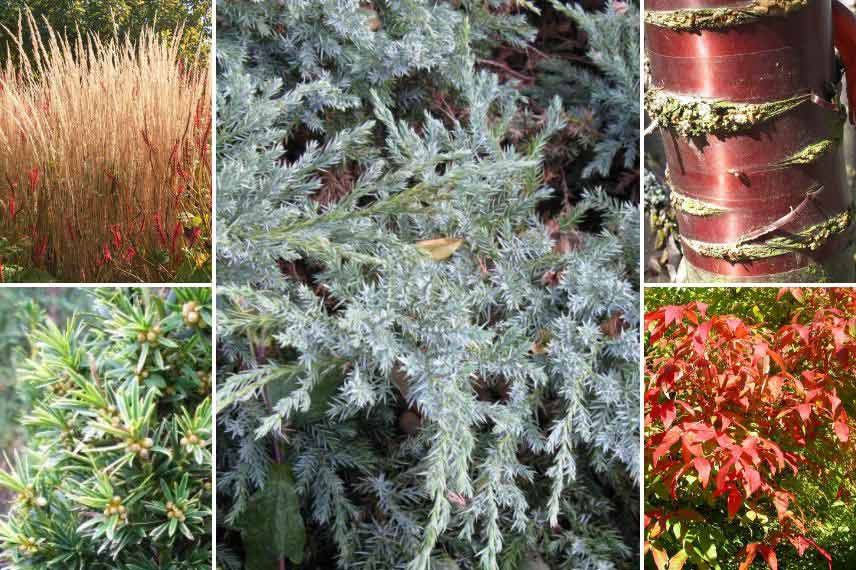
Calamagrostis acutiflora Karl Foerster, Taxus baccata ‘Fastigiata Aurea’, Juniperus squamata ‘Blue Carpet’, Prunus serrula, and Juniperus squamata ‘Blue Carpet’
Discover other Conifers
View all →
Available in 1 sizes
Available in 1 sizes
Available in 1 sizes
Available in 1 sizes
Available in 3 sizes
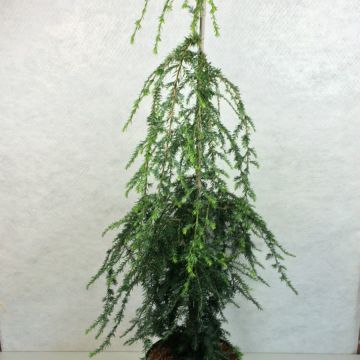
Available in 1 sizes
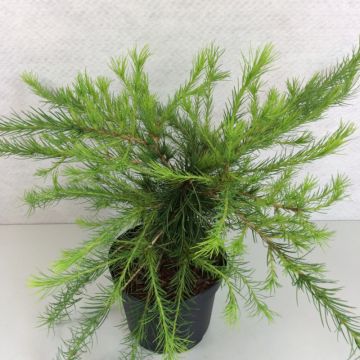
Available in 1 sizes
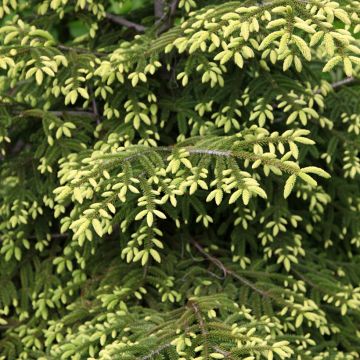
Available in 1 sizes
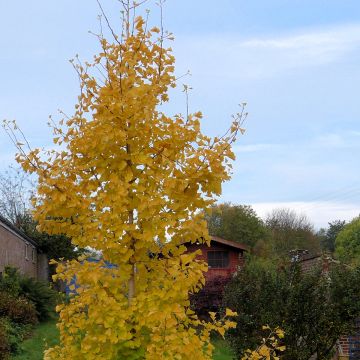
Available in 2 sizes
Available in 2 sizes
Chamaecyparis pisifera ‘Blue Moon’
The False Cypress ‘Blue Moon’ is also known as ‘Sawara Cypress’. This dwarf conifer forms a compact and regular ball of about 80 cm in all directions, without requiring repeated pruning. Its fine evergreen foliage, soft to the touch and borne on slightly trailing, flexible branches, takes on bluish-green hues if placed in a low-light situation. In sunnier exposure, it displays an intense silver-blue. With a slow growth rate and good hardiness, it thrives best in non-calcareous, cool, light, and well-drained soil.
- Its small size allows it to be grown in pots on a terrace, in rockeries, or to use its impeccable silhouette in various garden styles, from the most contemporary to the most romantic. To echo its plump shape, opt for bushes with a similarly globose habit, such as Boxwoods or Lonicera nitida trimmed into topiary, selecting them in different colours to play with foliage combinations. Japanese Spiraeas can add seasonal rhythm, like Spiraea japonica ‘Goldflame’, with its bright orange young foliage, intense pink summer flowering, and warm autumn hues. In mild climates, Pittosporums also offer highly decorative evergreen foliage. For a less formal look, use your dwarf Cypress in the foreground of generous roses, flowering shrubs (Deutzia, Elder, Mock Orange…) alongside colourful perennials (Peonies, Daylilies, Agapanthus, Asters, …). Add some grasses to play with contrasting habits: upright and more linear with Calamagrostis or Molinia, more open and flexible for Miscanthus, and Pennisetum. Some spring bulbs interspersed in small groups will complete the picture!
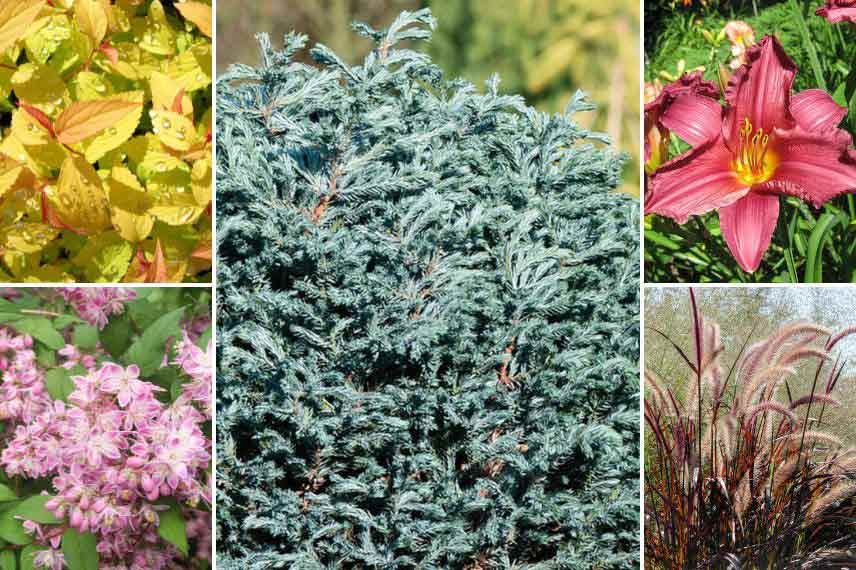
Spiraea japonica ‘Goldflame’, Deutzia Tourbillon Rouge, Chamaecyparis pisifera ‘Blue Moon’, Daylily ‘Summer Wine’ and Pennisetum setaceum
Podocarpus lawrencei 'Blue Gem'
The Podocarpus ‘Blue Gem’ is a unique small ornamental conifer that is relatively unknown. However, it has many advantages. Its somewhat twisted silhouette is first notable, with tortuous branches supported by a short, nodose trunk, resulting in a somewhat shaggy bush, both upright and spreading, with a distinctive charm. Its small leaves emerge in cream to purplish tones, eventually turning to a water green with bluish highlights. This female clone can also produce small red berries that contrast beautifully with the foliage. Finally, its compact size (1m to 1.5m in all directions) and rather slow growth make it suitable for small spaces and pot cultivation. Perhaps its limited hardiness, ranging from -7° to -12°C, accounts for its lesser prevalence compared to other conifers? Cultivating it in full sun, in a sheltered position, in neutral to acidic but well-drained soil ensures better cold resistance. The option of pot cultivation to bring it indoors when necessary also allows for enjoyment in less clement regions.
- It works wonderfully in a Japanese-inspired garden, alongside heavenly bamboo, which also has evergreen foliage, and true bamboos that can provide a protective screen (in this case, choose non-running varieties like Fargesia, or contain others with a root barrier). It can also echo the equally original silhouette of a dwarf flowering cherry ‘Kojo no mai’, which boasts a beautiful spring flowering and sumptuous autumn colours. Azaleas with lovely spring blooms (which can even repeat in autumn with certain hybrid varieties), paired with Hostas, Japanese anemones, Ophiopogons, Carex, and ferns will transport you straight to the land of the rising sun…
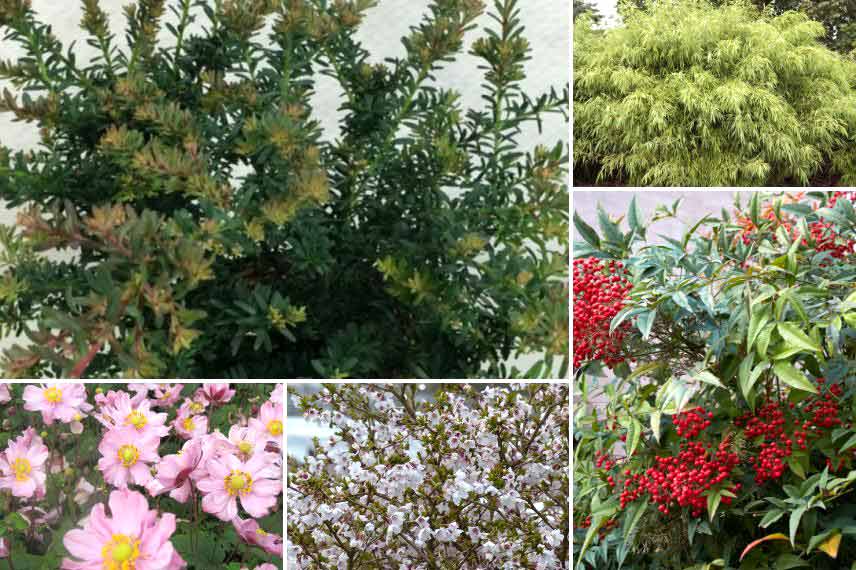
Podocarpus lawrencei ‘Blue Gem’, Fargesia Rufa, Nandina domestica, Prunus incisa Kojo no mai, and Japanese anemone ‘Fantasy Pocahontas’
Cedrus libani 'Atlantica Glauca'
With the Blue Atlas Cedar, also known as Blue Cedar, you literally change categories. Standing at 20m tall with a spread of 10m, it is a tree that stands as a giant. So if you live in a small city garden, forget it, and instead consider the variety ‘Horstmanns Silberspitz’, which does not exceed 8m by 5m! Cedrus ‘Atlantica Glauca’ needs space to develop its majestic silhouette, with a pyramidal and tabular shape. From a thick trunk that develops into a straight bole emerge solid branches with a slightly upright habit. These serve as the insertion points for secondary shoots, which may bend slightly under the weight of the foliage. The latter, more intensely blue in spring, reflects very bright metallic hues under the sun it so appreciates. The bark becomes rough and scaly with age, and this large ornamental conifer is adorned with cylindrical cones, first green then purplish-brown as they mature. Hardy down to about -20°C, it thrives in deep, fertile, cool, and well-drained soil but will also grow in poorer, even stony and dry soil.
- Its dimensions make it suitable for being planted in isolation in the middle of a lawn or in alignment to majestically frame a grand pathway. You can also use it in groups, alongside other conifers, playing with different shades of foliage: Metasequoia glyptostroboides ‘Gold Rush’ for yellow, Cryptomeria japonica ‘Elegans Viridis’ for green, Cryptomeria japonica ‘Sekkan Sugi’ for its changing hues, which becomes almost white in winter! Also insert deciduous trees whose warm and fiery hues contrast beautifully in autumn, such as the Ginkgo, the Sweetgum (or Liquidambar), certain Oaks (Marsh Oak, Scarlet Oak, or Red Oak), the ‘Autumn Blaze’ Maple, or even the Tulip Tree.
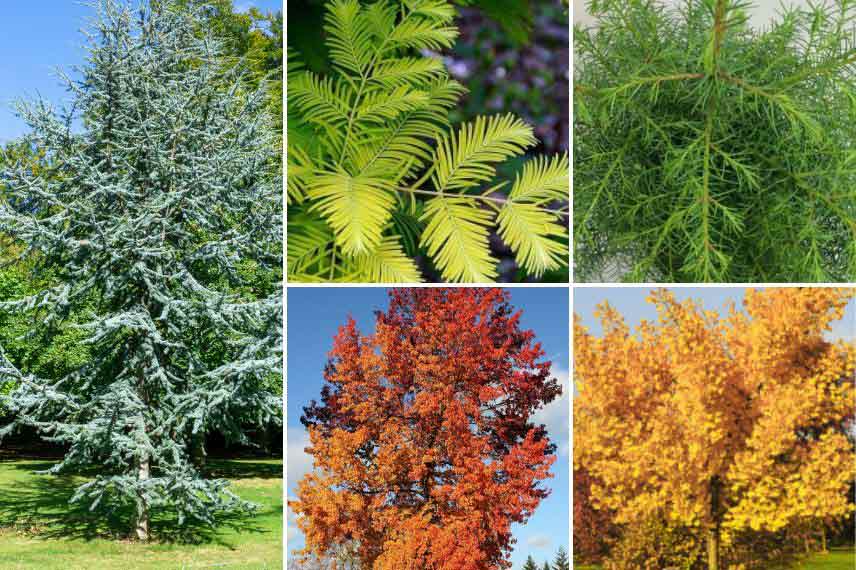
Cedrus libani ’Atlantica Glauca’, Metasequoia glyptostroboides ‘Gold Rush’, Cryptomeria japonica ‘Elegans Viridis’, Liquidambar styraciflua Golden Sun, and Ginkgo biloba ‘Autumn Gold’
For further reading...
- Discover our wide selection of colourful and decorative conifers.
- Do you have a small garden? No worries, many dwarf conifers are available for you!
- Are you familiar with rockery conifers?
- Discover our selection of 7 blue conifers for rockeries.
- Let yourself be charmed by rare and unusual conifers.
- Conifers are not just for the garden. Discover our range of conifers to grow in pots!
- A wide choice of conifers to integrate into a hedge is available in our online nursery.
- Subscribe!
- Contents
Comments