





























Botanical Hellebores
Natural-style hellebores, perfect for brightening up the garden in winter
Contents
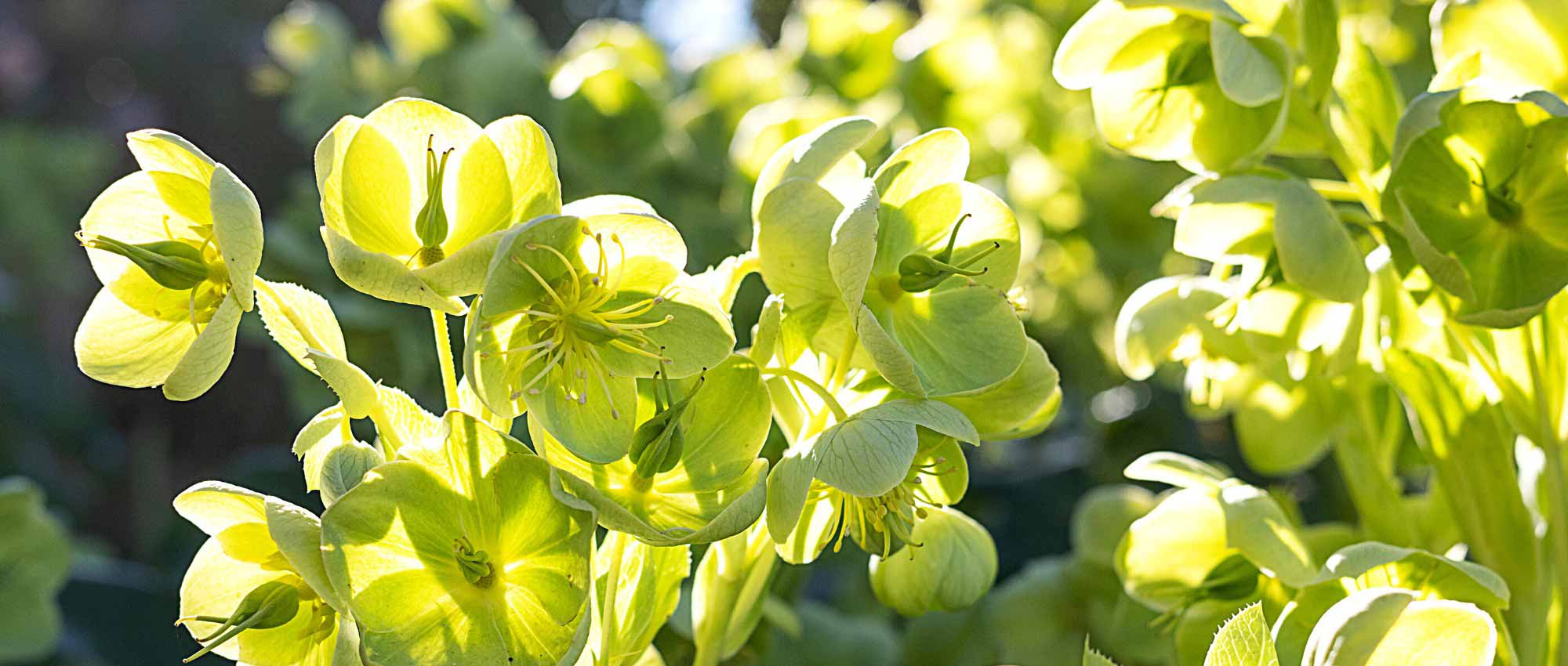
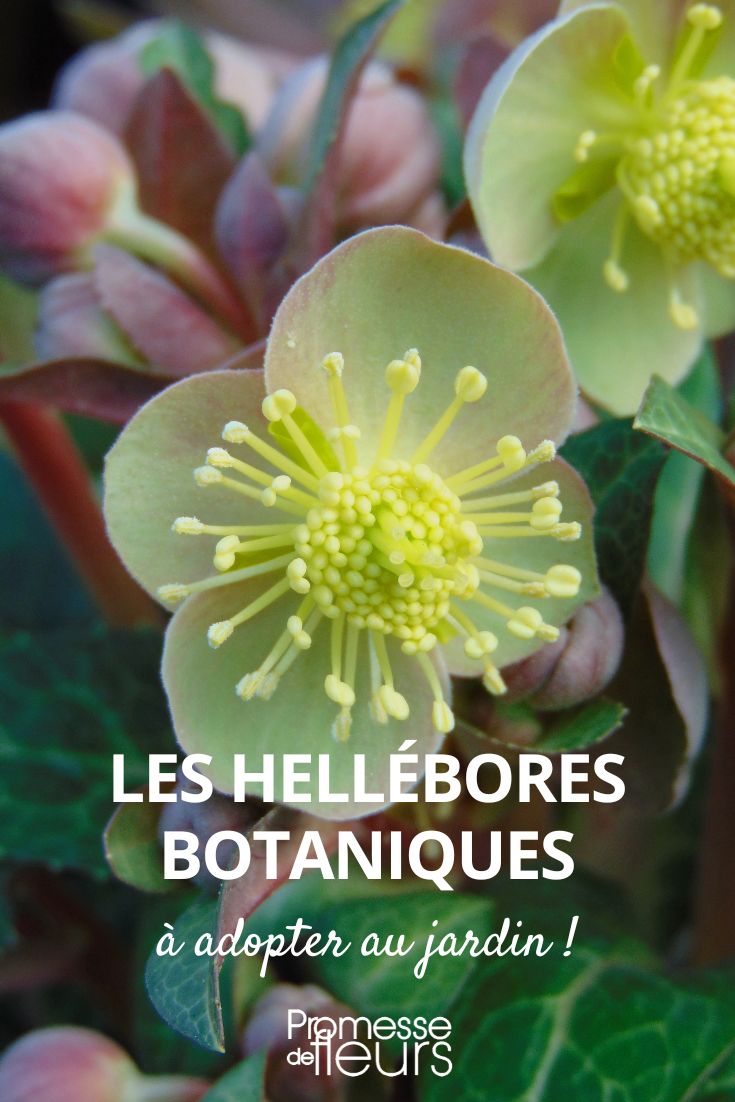
Hellebores are ideal perennials for bringing colour to the garden in the heart of winter, thanks to their very delicate cup-shaped flowering in light and often nuanced tones. There are numerous horticultural varieties, offering blooms in a range of shades: pink, red, purple, and even orange or yellow, with some flowers being double. Here, we present the botanical species as they are found in nature. They offer a less sophisticated and colourful flowering, for a more delicate and natural style… They have all the charm of wild plants! Discover our selection of the most beautiful botanical hellebores.
And to learn all about their cultivation, check out our complete guide “Hellebores: planting and growing them”.

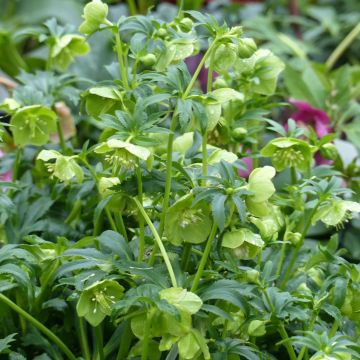
Helleborus foetidus, stinking hellebore
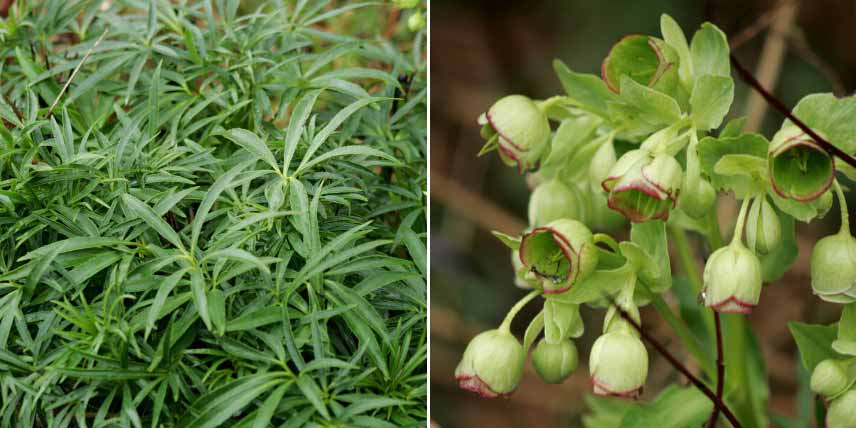
Stinking Hellebore, also known as Griffon’s Foot, is a species that grows spontaneously in France, typically at the forest edge, in woodlands, in scrub, and in rocky places. It has very beautiful dark green, slightly bluish leaves divided into 7 to 11 long, narrow leaflets. This gives the hellebore a very delicate and graphic style, light and airy! The leaves emit a foul smell when crushed, which earns it the nickname stinking hellebore. This hellebore generally reaches between 30 and 50 cm in height, and up to 80 cm during flowering. It blooms from January to April (sometimes even as early as November, depending on the climate), and displays above the foliage inflorescences made up of bell-shaped flowers drooping towards the ground, light green in colour, with a slight purple edge. The flowers are small, measuring 2 to 2.5 cm in diameter. They are favoured by pollinating insects, particularly bees and bumblebees, which come to feed on the nectar. Stinking hellebore is very hardy, tolerating temperatures as low as -20 °C. It prefers calcareous soils but also tolerates neutral or slightly acidic soils. It thrives in shade or partial shade, sheltered from the wind, in cool, fertile, but well-drained soil.
Read also
Flowering Your Garden in WinterHelleborus niger, the Christmas Rose
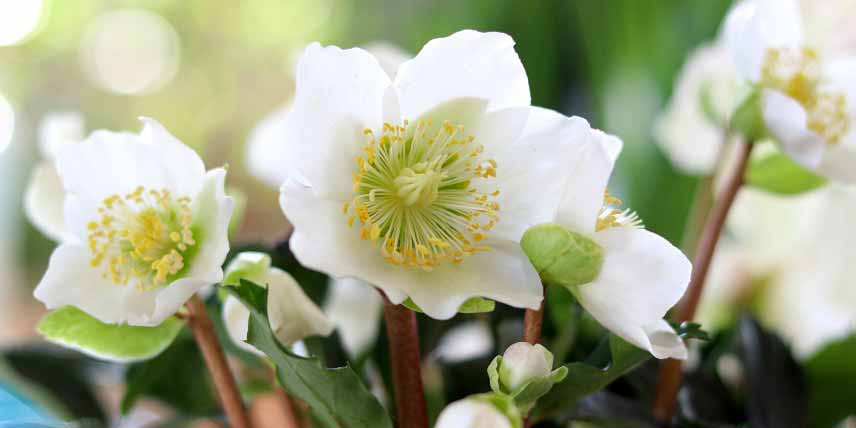
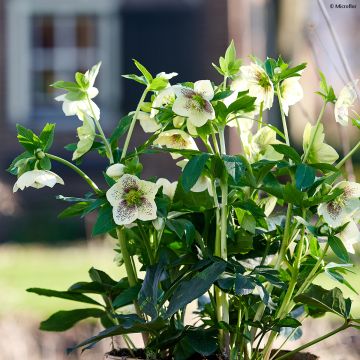
Helleborus niger or Christmas Rose is undoubtedly the most famous botanical hellebore! It blooms early, from December to February-March, making it the ideal flower for the festive season. It produces white cup-shaped flowers, 5 to 8 cm in diameter, formed of five petals surrounding a heart of yellow stamens. The flowers then take on green or pink-purple hues towards the end of flowering. Its very simple and elegant flowering is much appreciated. It forms a compact clump of about 30 to 40 cm in all directions. In the garden, the Christmas Rose thrives in shade or partial shade, in calcareous, fertile, cool, and well-drained soil, as it is sensitive to excess moisture in winter. It takes time to establish, usually two to three years, but then proves to be quite perennial, thickening year after year. Perfectly hardy, it withstands temperatures down to -20 °C. It also adapts well to pot cultivation, to decorate a terrace or windowsill, for example alongside heathers, gaultheria, and cyclamen coums.
Discover other Helleborus - Hellebore
View all →
Available in 1 sizes
Available in 1 sizes
Available in 1 sizes
Available in 1 sizes
Available in 1 sizes
Available in 1 sizes
Available in 2 sizes
Available in 1 sizes
Available in 1 sizes
Available in 1 sizes
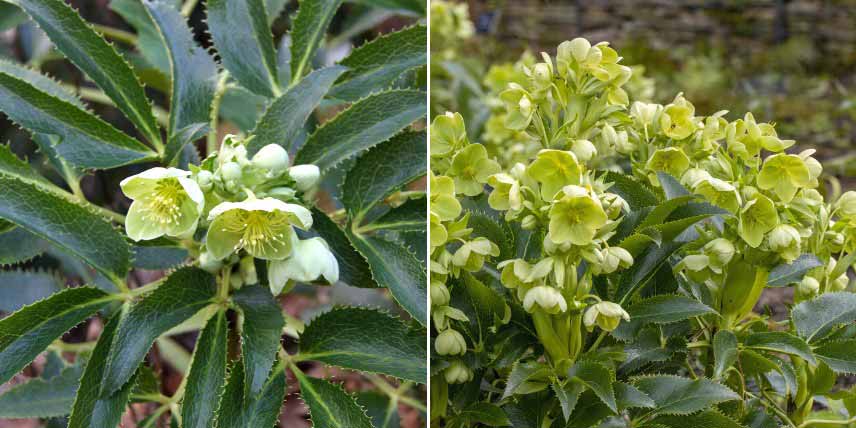
Helleborus argutifolius, the Corsican hellebore
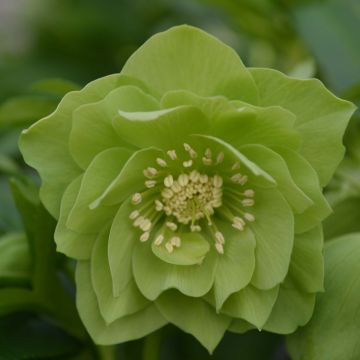
In contrast to the Christmas Rose, the Corsican Hellebore or Helleborus argutifolius is one of the largest hellebores, forming a clump 70-80 cm in all directions, and even up to 1 m in height under ideal growing conditions. It features very beautiful dark green, dentate leaves, divided into three lobes and leathery. Evergreen, they remain decorative all year round. From January to March, it produces light green cup-shaped flowers, 3 to 5 cm in diameter, nodding towards the ground. They are gathered in clusters above the foliage and contrast beautifully with it, bringing a lot of brightness. Although native to Corsica, the argutifolius hellebore can tolerate temperatures around -12 °C / -15 °C. It is a plant suited to dry soil, accepting slightly sunnier situations than other hellebores, although it also thrives in partial shade. It is ideal for brightening up a woodland edge.
Read also
Hellebores: planting, growingHelleborus lividus
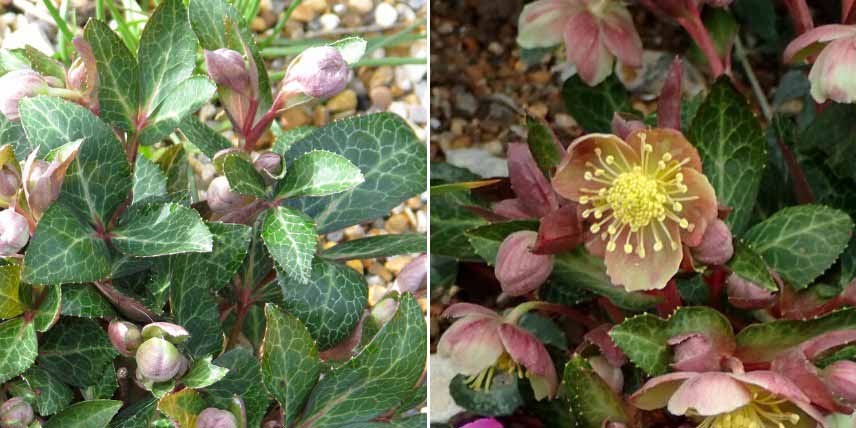
Helleborus lividus is a little-known species that forms a compact clump 30 to 40 cm in all directions, and offers very original, violet and green flowers from February to March, in pendulous bell-shaped blooms 3 to 5 cm in diameter. The centre of the flower is illuminated by a bouquet of light green to pale yellow stamens. The flowers are grouped in cymes of 5 to 10 blooms and are held above the foliage on purplish-pink stems. Its dark green, evergreen leaves, beautifully marbled with white and with a bluish sheen, are also appreciated. They are divided into three elliptical leaflets. Native to Mallorca, Helleborus lividus is unfortunately not very hardy, tolerating temperatures down to -8 °C. Its cultivation in open ground is therefore best reserved for regions with a mild climate along the Atlantic coast or the Mediterranean basin. However, it can easily be grown in pots, allowing it to be brought indoors for winter protection. It prefers partially shaded locations, fertile, cool but especially well-drained soils, without excess water in winter. It tolerates lime and short periods of drought.
Helleborus abchasicus
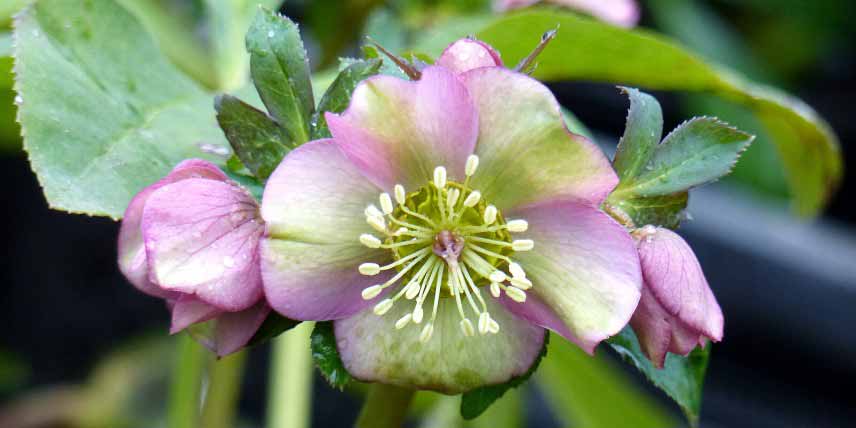
Rare and still little known, the Abkhazian Hellebore is nonetheless very decorative, offering lovely purplish-pink flowers (from February to April) with a very natural style! They measure 4 to 5 cm in diameter and are highlighted in the centre by a bouquet of cream-white stamens. The flowers are nodding downwards, allowing rain to slide off and preventing the heart of the flower from rotting. It forms a compact clump of about 40 cm in all directions and bears palmate leaves, divided into 7 to 9 glossy dark green leaflets. The Abkhazian Hellebore is ideal for borders, in mixed borders, at the foot of trees and bushes, but also in pots to decorate a terrace, balcony, or windowsill. It thrives in shade or in non-burning sun, in rather acidic soil. It adapts to heavy, clayey soils and will appreciate a sheltered position from cold winds.
Helleborus multifidus ssp. bocconei
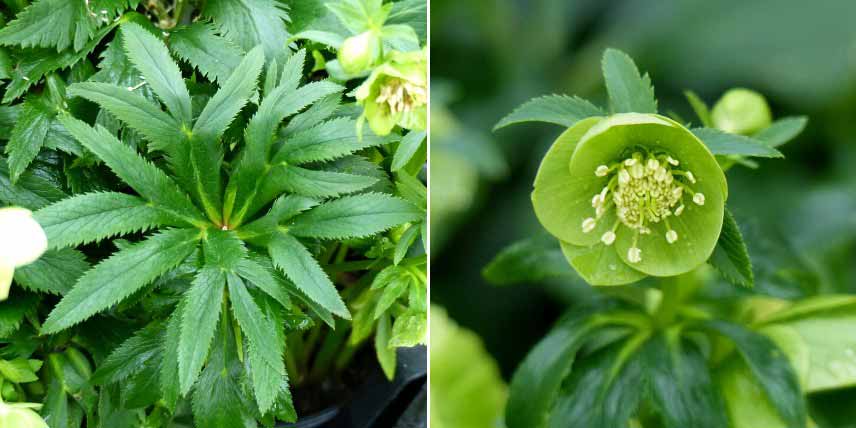
Helleborus multifidus ssp. bocconei is undoubtedly the hellebore with the most beautiful foliage! Its leaves are very finely divided, with 20 to 45 linear leaflets that are long and slender, creating a feathery and light effect. They are dark green and glossy, with the edge of the lamina beautifully dentate. Helleborus multifidus also bears clusters of light green flowers from January to March, cup-shaped, which become almost white at ripeness. They measure 3 to 4 cm in diameter and release a delicate elderflower fragrance. Helleborus multifidus reaches about 40 cm in height and spread. It thrives in partial shade, in deep, loose, well-drained, neutral or calcareous soil. Place it sheltered from cold winds. Once established, it tolerates summer drought.
Helleborus purpurascens
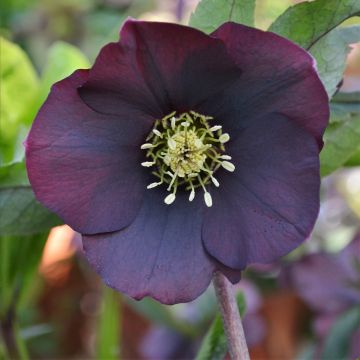
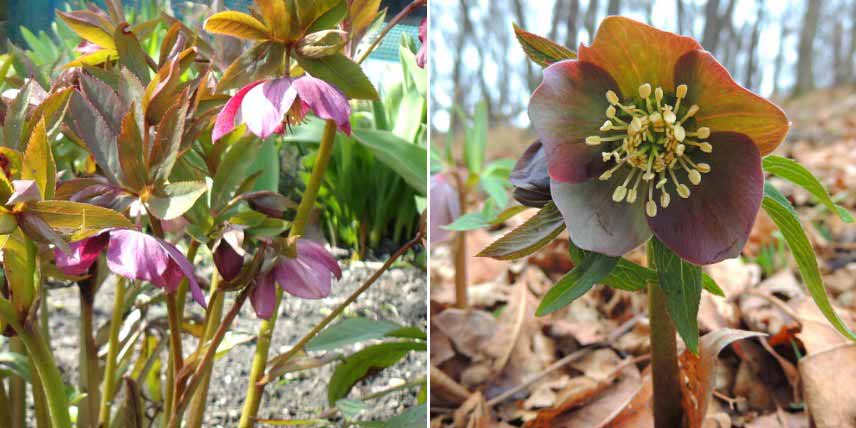
Helleborus purpurascens is a species native to Eastern Europe, forming clumps of about 30-40 cm in all directions. It blooms between February and April, bearing, as its name suggests, purple flowers, varying shades of green, adorned with pale yellow stamens. They are delicately inclined towards the ground. Its beautifully dissected foliage, dark green to brown-purple in colour, is also appreciated. The leaves are deciduous. We recommend planting it in partial shade, in humus-bearing, light, deep soil, preferably calcareous. Perfectly hardy, robust, and easy to grow, Helleborus purpurascens is a truly perennial plant once established.
- Subscribe!
- Contents
Comments