





























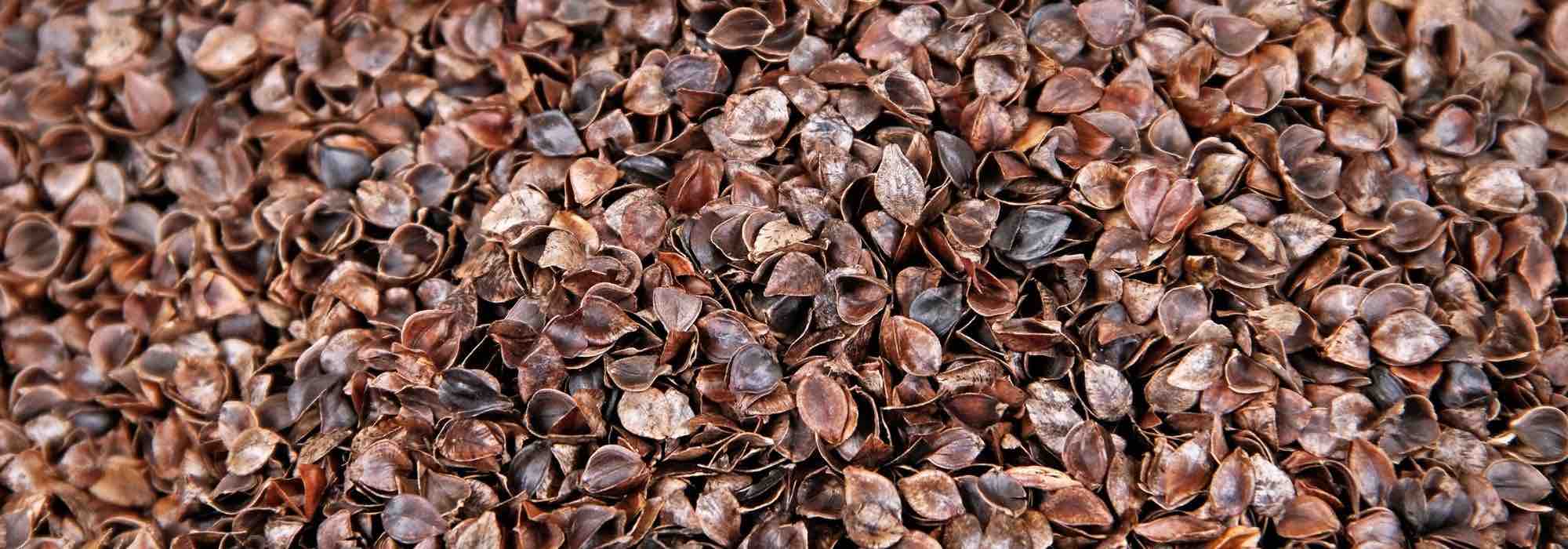
Buckwheat hulls: why choosing this mulch for the garden?
Advantages, disadvantages and uses of buckwheat hull mulch
Contents
Mulching in the garden is a useful practice for protecting and nourishing plants. There are different types of mulch: organic, which can be plant-based or mineral, and synthetic. Organic mulch, in particular, is used in organic farming to insulate the soil and protect plantings from weather conditions such as rain and wind, cold, frost, as well as drought and heat, which can disrupt their growth. It preserves moisture in the substrate and promotes the development of microorganisms necessary for soil balance. It helps limit the number of waterings and prevents weed growth, sparing the gardener from having to carry out this task. It degrades and nourishes the soil with humus. It can also, depending on the types of organic mulch, be light, easy to use and economical. Among organic mulches, buckwheat hulls are of particular interest. Discover the advantages and disadvantages of buckwheat hull mulch and how to use it in the garden or in pots.

What are buckwheat hulls?
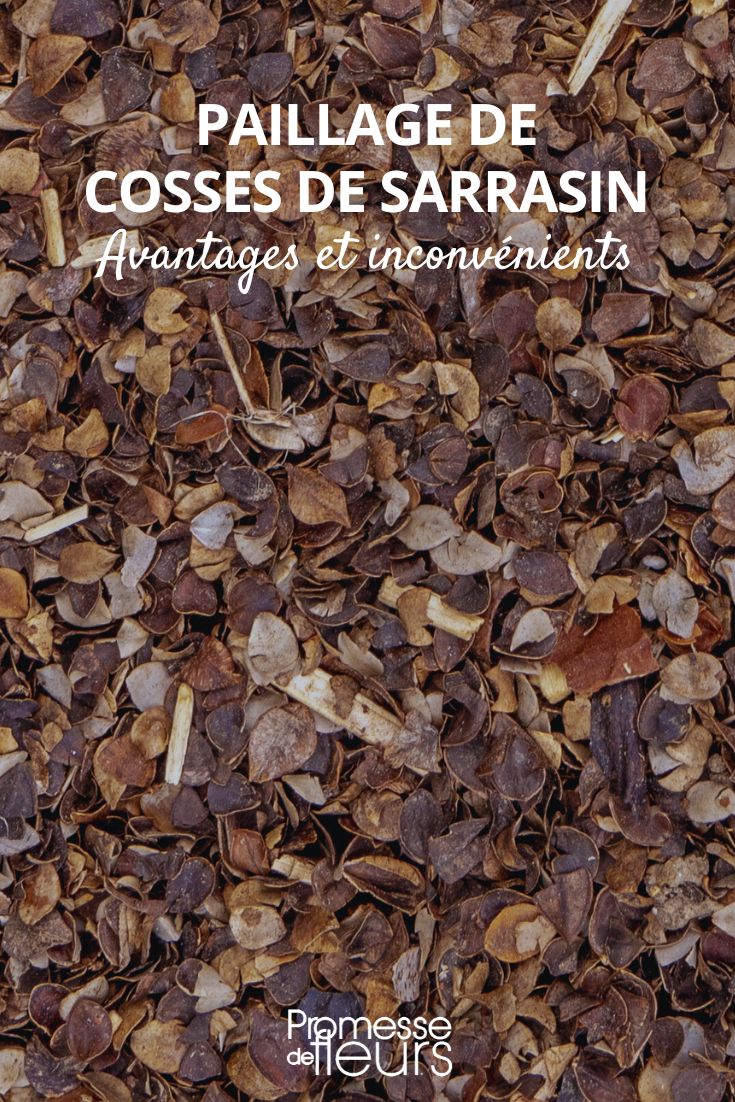
The buckwheat hull comes from an annual plant: common buckwheat or Fagopyrum esculentum, or “black wheat”, cultivated for its seeds and as a green manure. Buckwheat flour is made from the seeds and is widely used to make crepes in Brittany. The buckwheat hull is the very dark outer shell that surrounds the seed of buckwheat.
Buckwheat hull is a biodegradable material. It breaks down relatively quickly into humus, helping to feed the soil and promote the life of microorganisms and insects essential to its balance.
You can buy sacks in garden centres or online.
For example, at Promesse de fleurs, you can choose between a 50‑litre bag of organic buckwheat hulls or a 60‑litre bag of organic buckwheat hulls.
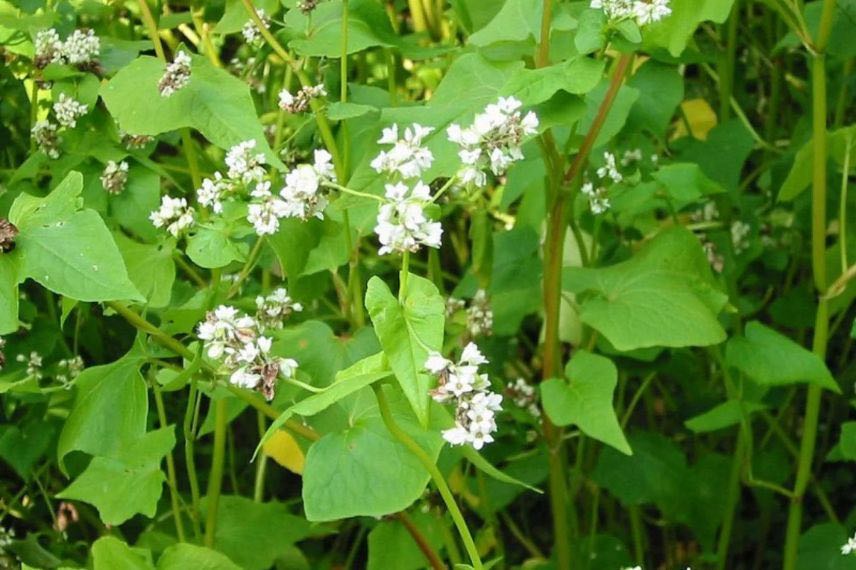
The buckwheat hull comes from common buckwheat or Fagopyrum esculentum
Read also
Mulching: Why? how?The benefits of buckwheat hulls
Buckwheat hull mulch shares benefits common to all natural, plant-based mulches:
- it is derived from a plant and is suitable for organic gardening
- it is biodegradable and rapidly transforms over the months into humus, nourishing the soil and promoting the life of microorganisms and insects.
- it protects the soil by insulating it from the weather and prevents it from being exposed or washed away by rain and wind. It also protects plants from frost, cold, heat and drought.
- it maintains soil moisture, which is very practical for plants prone to drying out. Buckwheat hulls have a high water-holding capacity. This helps limit soil evaporation and thus the number of waterings. By maintaining a certain moisture in the soil, buckwheat hull mulch also helps prevent the problem of crusting. This crust forms a hard, impermeable layer on the soil surface as watering continues. This crust prevents water from penetrating the soil properly and disrupts the hydration of the plantings.
- it prevents weeds from germinating and growing, which reduces the gardener’s weeding task and protects the plants from root competition.
- it isolates the fruits and leaves from soil moisture and limits the risk of mould and diseases
Buckwheat hull mulch also has particular characteristics :
- it deters slugs and snails from approaching plantings, as its domed appearance irritates the gastropods’ feet as they crawl to reach the young shoots
- in a dark colour, it is decorative and helps create colour contrasts with plants and light-coloured foliage
- it is light, easy to use and economical.
A 50-litre bag weighs only 7 kg and covers 1 m².
A 60-litre bag covers between 1 m² and 1.5 m² of soil.
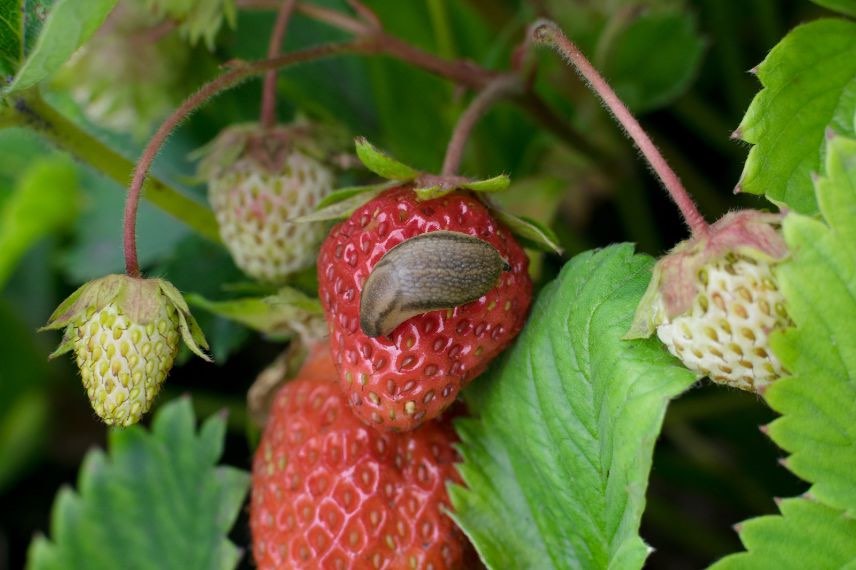
Gastropods dislike crawling over buckwheat hull mulch to reach their target
The drawbacks of this type of mulch
Buckwheat husks have, alongside their advantages, a few drawbacks.
- The main drawback you may find is its lightness, which makes it vulnerable to the weather. It can be blown away by wind or rain.
- Another possible drawback: It decomposes fairly quickly in the soil, and it must be renewed at least annually.
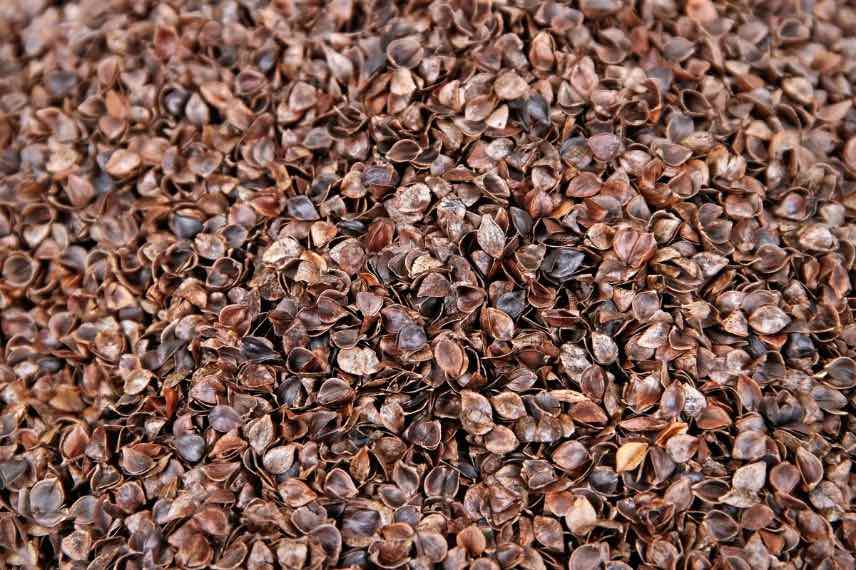
Buckwheat is a very light mulch, one of its few drawbacks, but it is ornamental
What are buckwheat hulls used for?
Buckwheat husks make an excellent mulch for all types of cultivation, whether ornamental, vegetable or for small fruits such as gooseberries, raspberries, blackcurrants and blueberries. It is suitable for trees and shrubs, for vines, and for border plants, whether annuals, biennials or perennials. It can be used both in the ground and for pot cultivation.
Buckwheat husks are preferably used in April or May, on soil that has been warmed and which you will have beforehand weeded. Spread the mulch to a depth of 2 cm for annual or low-growing plants and 5 cm for woody plants and shrubs.
During summer you can add a new layer of buckwheat husks at the base of drought-sensitive plants if necessary. Spread a layer of 1 to 2 cm.
This mulch should be renewed every year, at least partially.
For more about the advantages of mulching, read our article ‘Mulching: why, how? Which mulch to use?’
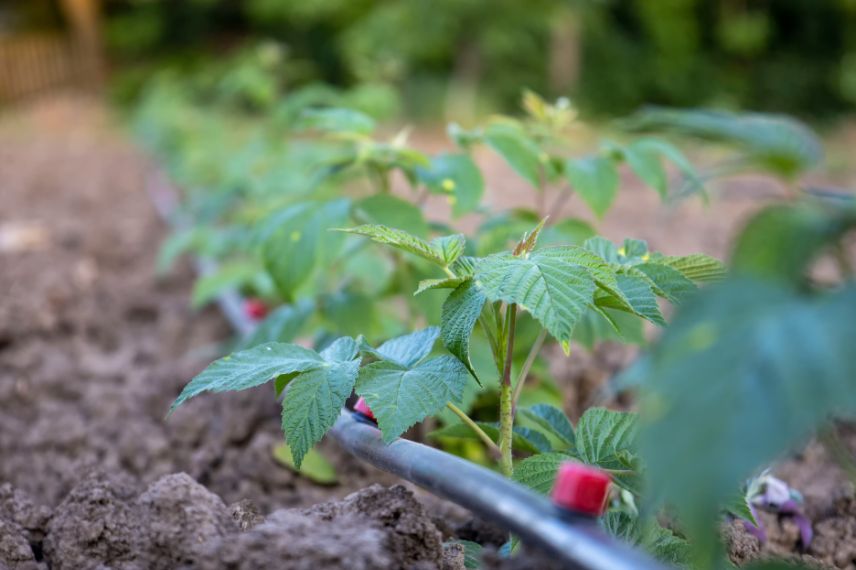
It’s best not to leave soil bare; buckwheat husks are suitable for all types of cultivation, including small fruits, especially as they improve the soil.
- Subscribe!
- Contents
Comments