





























Burnt lawn: what to do?
Our tips for reviving your lawn after the heatwave
Contents
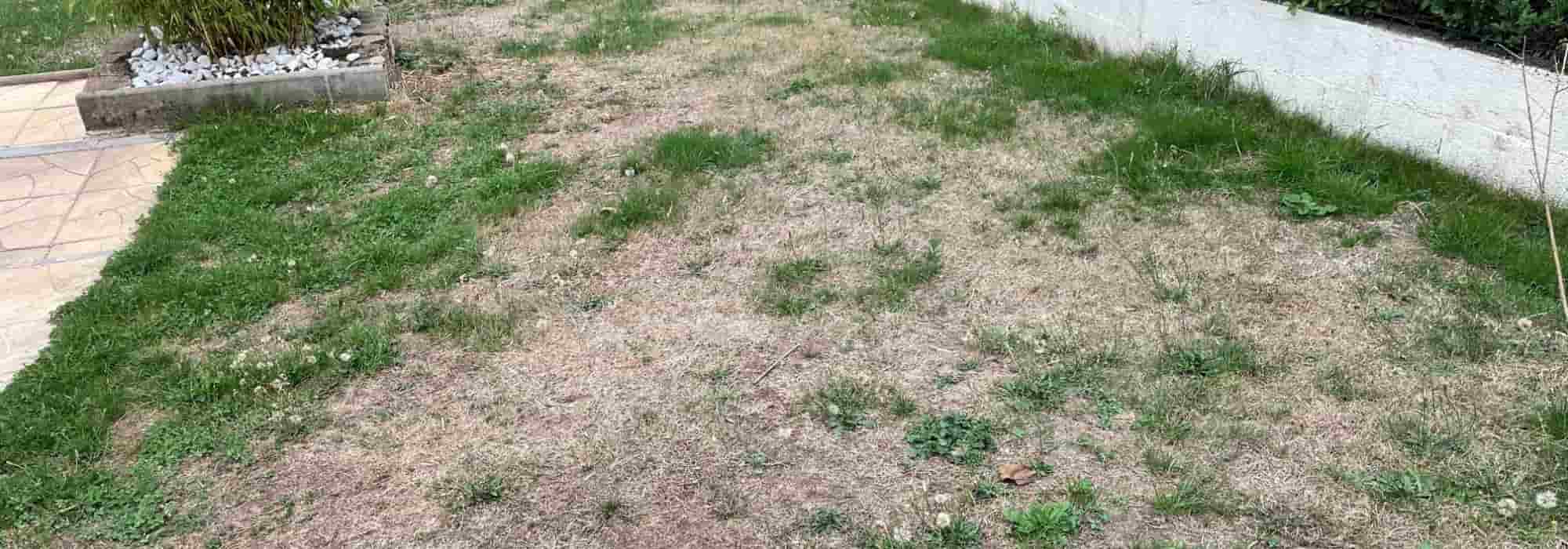
A beautiful lawn, lush and green, is a dream for us all. In spring, the lawn typically displays this lovely colour, growing thick, and it’s pleasant to walk barefoot on dense, fresh herbs. Unfortunately, with the arrival of summer, the lawn often looks rather dull. During heatwaves, the damage is even more significant: the lawn literally turns yellow, becoming speckled with brown patches, scorched by the sun’s rays. However, all is not lost, as the plants that make up your lawn are resilient. Once the intense heat has passed, a few simple actions are often enough to rejuvenate it and bring back its green. Let’s explore together how to respond to a lawn scorched by the heatwave.
→ Also, listen to our podcast on summer lawn care:

Is a sunburnt lawn dead?
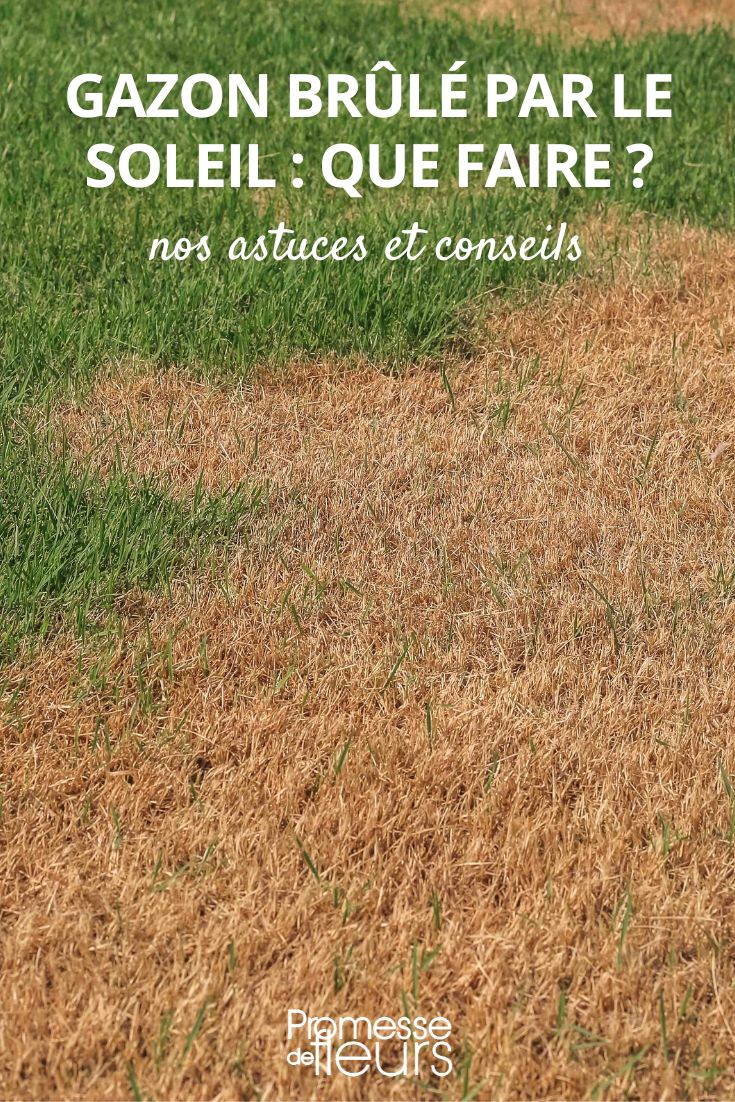
Each year, as summer ends, you despair at your lawn yellowed by the sun. This is even more true in years of heatwaves or drought when the blades of grass literally crack underfoot due to their dryness! Everything is scorched by the sun. Except perhaps the shaded areas… However, keep hope, as your lawn is a fighter!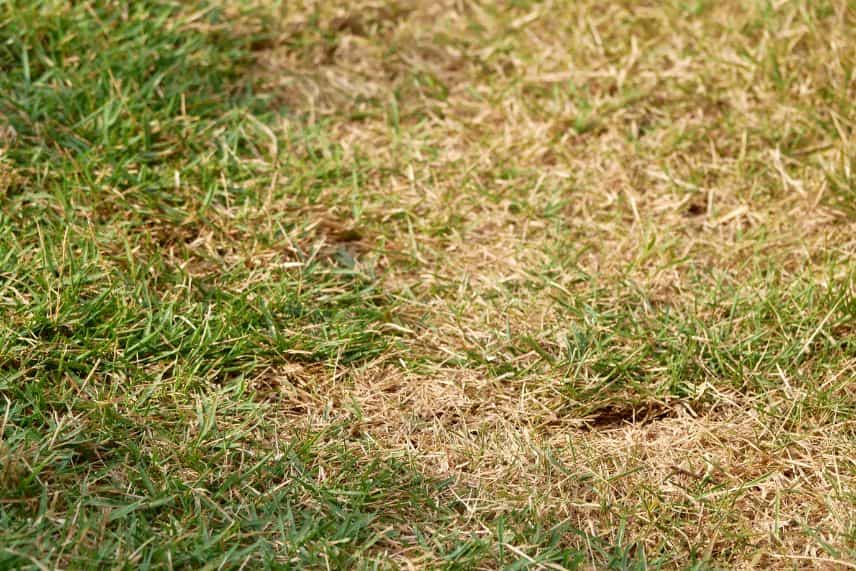
Admittedly, it may seem dead at first glance. But this is just a surface appearance. For your lawn is very much alive. Beneath the soil, the root system has survived the dehydration of the soil, just like the collars of all the varieties that make up your lawn. Your beautiful lawn, so lush in spring, has simply entered dormancy to cope with the heatwave periods.
Therefore, the best approach to take with a sun-scorched lawn is patience. Indeed, it will naturally green up again with the first drops of rain or the first heavy storm.
Read also
Lawn: essential tools for its upkeepShould you water a lawn that is too dry?
Obviously, in summer, you can water your lawn. But watering the lawn should never be done during the day. Why? First, because with the heat, water evaporates very quickly and does not penetrate the soil. Secondly, the water droplets that settle on the grass blades will act like a magnifying glass. Ultimately, the sun’s rays will burn your lawn even more.
The best times to water the lawn are therefore very early in the morning, so that temperatures are not too high and the sun’s rays are not too harsh. You can also water in the evening when the sun has set. This way, evaporation due to the heat of the soil will be less significant.
As for how often to water your lawn, it is better to do a good watering once a week than to water daily. This way, the roots will be less “lazy” and will seek out what they need more deeply.
However, during dry periods, some regions (increasingly common with climate change) implement water restrictions. Lawn watering is therefore rightly prohibited. If you have taken the precaution of installing water collectors (provided they are full!), feel free to water. Otherwise, be patient, as the rain will return.
Otherwise, the rain dance can be considered, but we cannot guarantee its success!
Should you mow your lawn during a heatwave?
During periods of drought, mowing your lawn is completely pointless. After all, what would you mow since the grass is literally scorched by the heat, resembling straw more than a lovely green carpet?
However, remember that mowing too short exacerbates lawn drying in summer, as the root system of the plants is shallower, making it less resilient to climatic fluctuations. On the other hand, with regular and sensible mowing in spring and autumn, your lawn should get through the summer without issues. Even during heatwaves!
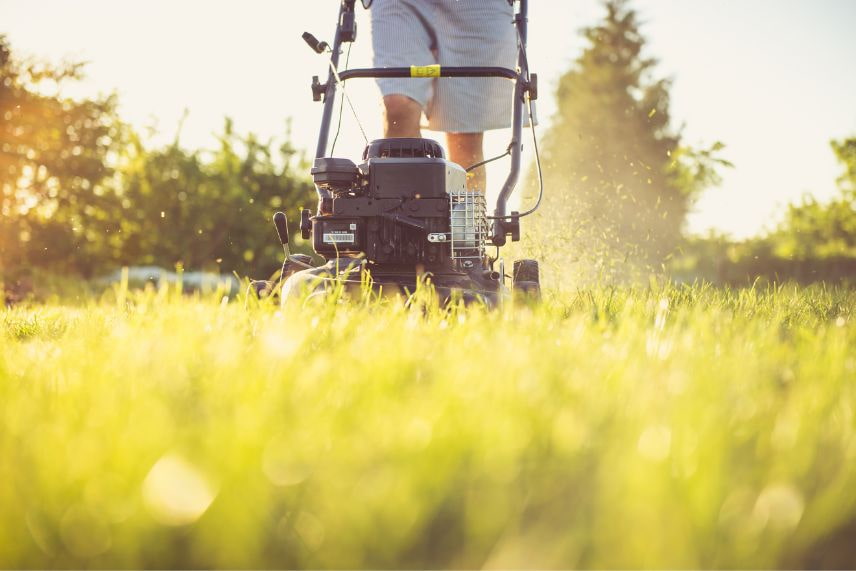 In summer, mowing is pointless
As a reminder, here are some tips for properly mowing your lawn:
- Don’t mow too short! Generally, professionals recommend mowing one-third of the height of the grass blades. However, this guideline also varies with the season. To keep it simple, you can aim for an ideal height of 4 cm to 5 cm depending on the seasons.
- Mow regularly! This is how you will prevent the proliferation of weeds. Generally, mow once a week in spring, reduce mowing in summer, and resume in autumn until October.
- Mulch before summer! Mow in mulching mode as soon as it starts to get very hot. This way, you will create a slight protective barrier against the sun’s rays.
What to do if your lawn is severely damaged by the sun?
Summer has been tough, punctuated by multiple heatwaves. The thermometer has consistently flirted with 40 °C, and drought conditions have been declared everywhere. Your lawn has particularly suffered, and large areas seem to be struggling to recover. Once summer is over, you can take action without having to start from scratch. Sometimes, it’s enough to intervene in patches from autumn.
Steps to rejuvenate your lawn:
- Scarification: this process helps eliminate moss (if any remains!) and burnt grass blades that form a dry, cracking culm. Additionally, you will provide some oxygen to the dormant plants. Whether you use a manual, electric, or petrol scarifier, finish the job with a rake!
- Topdressing: this process helps fertilise your lawn that has suffered from the heat. You can spread compost or a special lawn fertiliser rich in nitrogen. Don’t forget to water after fertilisation.
- Sowing a lawn re-seeding mix that benefits from rapid growth. Complete your sowing with a roller and good watering.
For further reading on these various techniques for rejuvenating your lawn after a long period of drought:
And what if you considered other alternatives?
With the anticipated (and already well underway) climate warming, heatwave episodes are likely to become recurrent and intensify year by year. And no region of the territory should escape this…
It may be time to replace your uniform, lush lawn with other types of lawns that are more resilient, as they are formed of robust grasses. Thus, lawns suited to the climatic conditions of southern France or dry ground, primarily composed of tall fescues, are very resistant to heat and drought.
Similarly, the Cynodon dactylon lawn or tropical grass proves to be very resistant to lack of rain while being hardy down to -9 to -12 °C. In contrast, the kikuyu lawn, composed of Pennisetum clandestinum, is best reserved for the Mediterranean and Atlantic coasts.
More radically, you can also replace your lawn with groundcover plants or reduce the area occupied by the lawn.
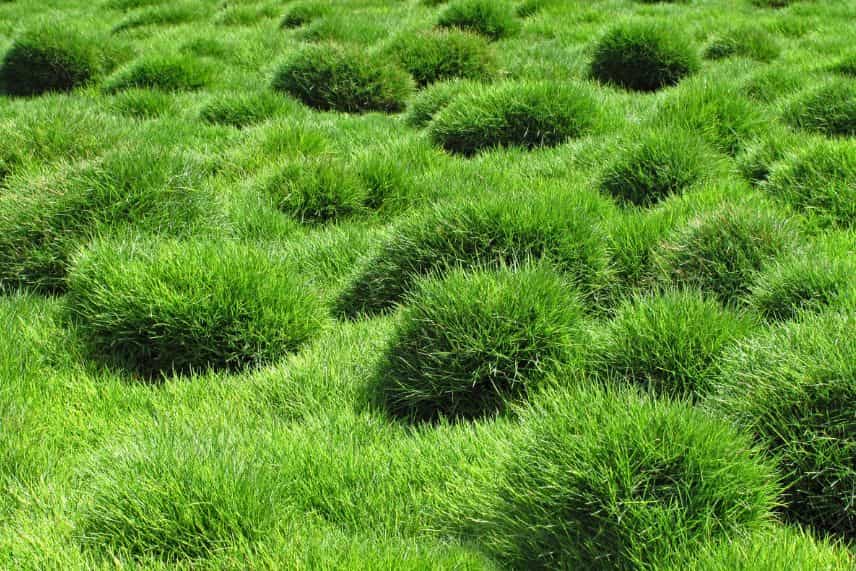
Zoysia tenuifolia is an alternative to lawn
Ingrid and Pierre provide you with a multitude of ideas in these articles: Replacing the lawn, ideas and solutions and Alternatives to lawn: 10 groundcovers to replace short grass meadow
- Subscribe!
- Contents
Comments