


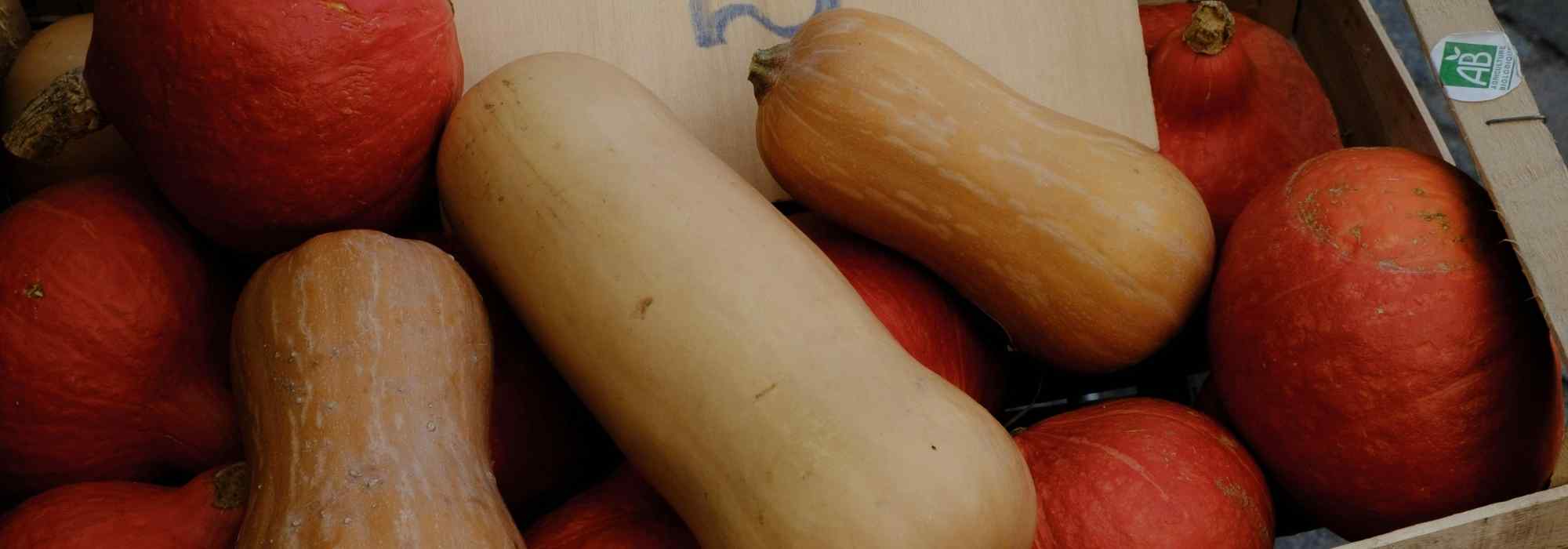
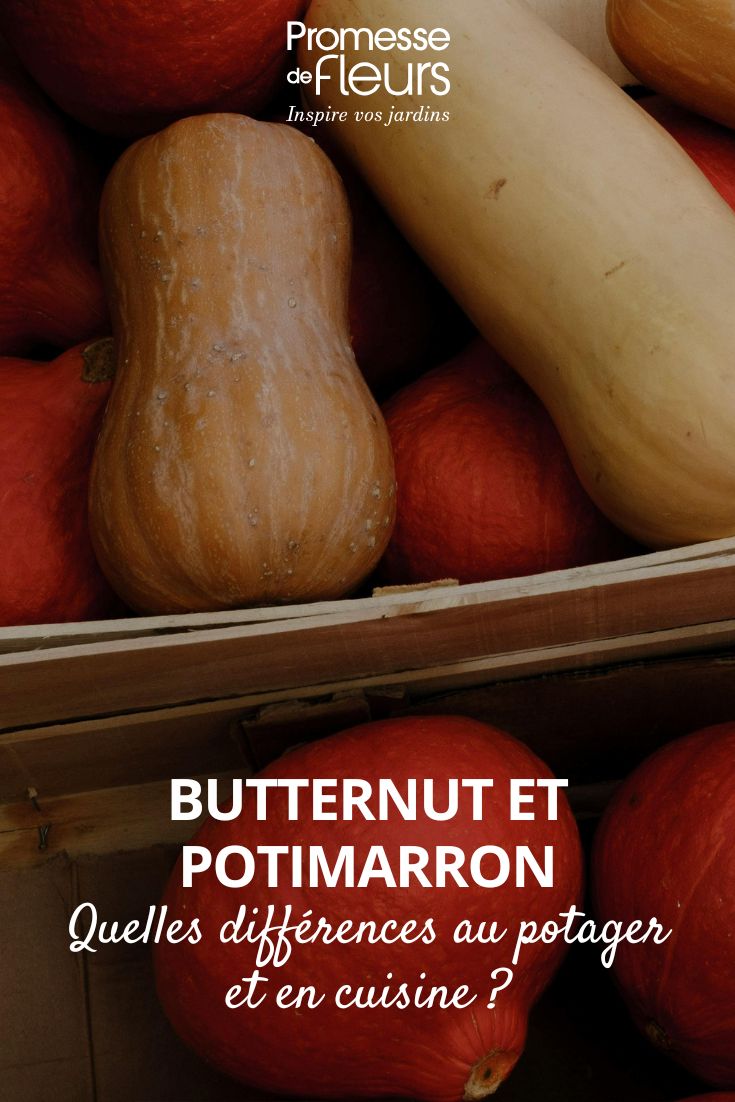
Butternut squash vs potimarron squash: what are the differences in the kitchen garden and in cooking?
Head-to-head: two very popular squashes that are easy to grow and cook
Contents
A head-to-head showdown? No, just in the vegetable garden and in the kitchen! Autumn stars, the butternut (Cucurbita moschata) and the potimarron (Cucurbita maxima) occupy a place of honour in the garden and in the kitchen. And, among the great family of cucurbits, they sometimes vie for the favour of gardeners and gourmets. If these two species of squash share the season and growing popularity, not least on market stalls, they display distinct characteristics that influence their cultivation, harvest and culinary preparation.
Let’s discover together what really sets the butternut squash apart from the potimarron, from the vegetable garden plots to the plate.

Butternut and potimarron, two squashes, distant cousins
Before turning to practical aspects, a detour into botany is in order to situate our two squashes, autumn’s jewels.
The Butternut, a musky squash
With its bottle-shaped, club-shaped or pear-shaped form—depending on taste and imagination—and its beige-ochre skin, the butternut squash is recognisable among all squashes. It is a species of musky squash (Cucurbita moschata), cousin of the Provençal musky squash, or of the Nice Long Squash. It is distinguished by a flared peduncle with five midribs, and a flesh that reveals musky notes, as its name readily suggests. Also called “doubeurre”, the butternut squash harbours a buttery flavour and a slight hazelnut taste.
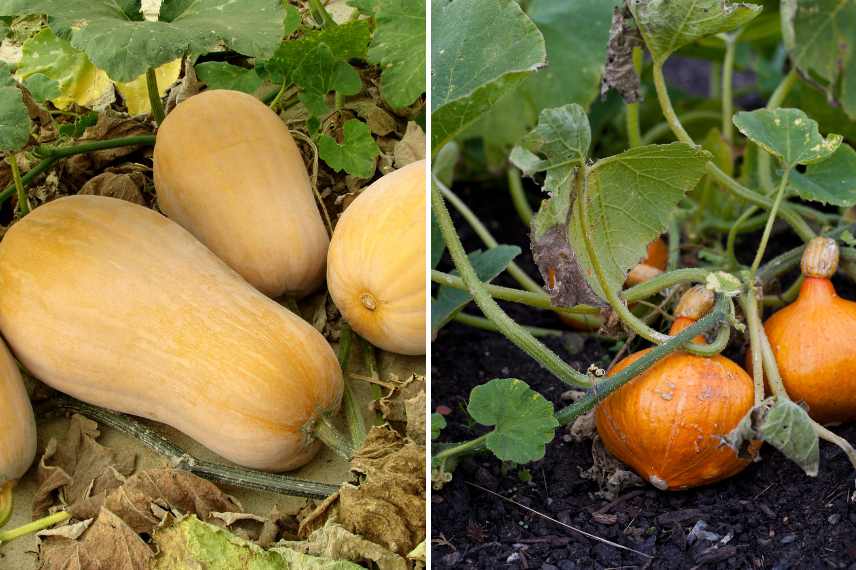
The butternut and the potimarron are two squashes from different species
The Potimarron, the chestnut-flavoured pumpkin
The potimarron belongs to the species Cucurbita maxima, just like the pumpkin and some gourds. Its shape is rounder, reminiscent of a spinning top or a large fig, and its colour is generally a bright red-orange. Its name derives from its characteristic chestnut flavour, a major gustatory attribute that sets it apart. Unlike the butternut, the potimarron is a hybrid, often derived from Japanese varieties, of which the best known are ‘Red Kuri‘ and ‘Uchiki Kuri’.
In a vegetable garden, the growing requirements are slightly different
If the butternut and potimarron are annual, vining plants that require rich soil and full sun, their botanical characteristics bring with them a few subtle nuances for the gardener.
Space for optimal growth
Both squashes are vining plants, which require plenty of space to develop. They typically need more than 2 square metres per plant, either horizontally or vertically. Indeed, these two varieties can be trained quite easily to climb a trellis or a mesh fence.
The butternut is reputed to be particularly vigorous, and its vines can spread quite far. It can also be late to bear fruit, needing a long warm season. Its fruits, elongated in shape, are borne on an angled peduncle.
The potimarron is also a vining plant, but its fruits form more quickly and the plant is generally earlier. The plant produces smaller and more numerous fruits, making harvest easier.
Disease susceptibility
Cucurbita moschata (butternut) are often considered to be more resistant to heat and summer diseases, notably powdery mildew, which can be the bane of Cucurbita maxima (potimarron). In hot regions, the butternut can therefore prove to be a safer choice.
Potimarron, although heat-loving, is more susceptible to powdery mildew and its growth can be slightly slowed by summers that are too hot or, conversely, too wet.
Harvest and storage
- Harvest of the potimarron takes place from September to October, often well before the butternuts, under good conditions. Potimarron, thanks to its hard and thick skin, is a champion of storage. Stored in a cool, dry and well-ventilated place, between 10 and 15 °C, it can keep for up to six months, or more. The dry and corky peduncle is the sign of its full ripeness.
- The butternut is often harvested later, sometimes up to the first light frosts, as it needs plenty of sun to develop its sweet flavour. Its storage life is also excellent, often between 6 and 12 months, partly thanks to the relatively thin skin that makes it less susceptible to knocks than some large squashes, but mainly thanks to the nature of the species Cucurbita moschata.
In the kitchen, the flavour showdown between the butternut squash and the red kuri squash
In cooking, the differences between butternut and potimarron are clearest and guide recipe choices.
Peeling and cutting
That is certainly the most obvious distinction between the two squashes, and above all the most pleasant for cooks.
- The potimarron’s major asset is its edible skin. Thin and rich in flavour, it softens perfectly during cooking, especially after roasting or in a velvety purée. This represents a considerable time saving, as peeling is unnecessary. Its top-shaped, more compact form makes hollowing out and dicing into cubes easier than with a butternut.
- The butternut skin is tougher and noticeably less pleasant on the palate once cooked, especially with large fruits. The butternut may therefore require peeling. Its bottle-shaped form, with the swollen base that contains the seeds and the long neck, rich in flesh, makes slicing into even slices or cubes easier after peeling. A handy tip to simplify peeling: simply steam or roast the butternut beforehand to soften the skin.
Texture of the flesh
- The butternut flesh is bright orange, firm but tender, with a melt-in-the-mouth texture and not very stringy after cooking. It tends to release slightly less moisture than potimarron, which makes it excellent for dishes that need to hold their shape.
- The potimarron flesh is denser, but also very melt-in-the-mouth. It is less watery than other squashes such as pumpkin, which allows purées and velvety soups with exceptional creaminess.
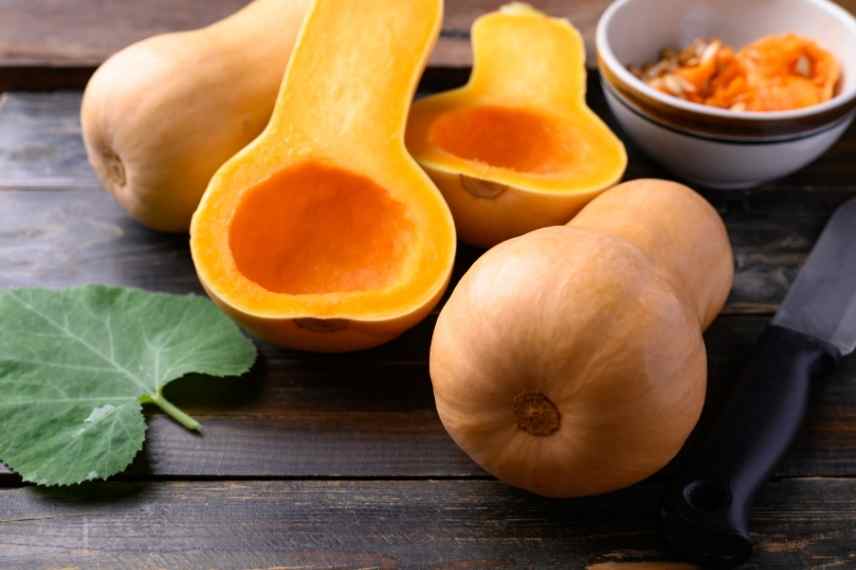
Butternut offers a sweet, buttery and slightly nutty flavour
Flavor
It all comes down to flavour. But verdict depends on personal taste!
- The potimarron offers a flavour that is sweet, pronounced, and strongly reminiscent of chestnut. This rich and earthy flavour often stands on its own, needing little seasoning to shine. It pairs particularly well with gentle spices (cinnamon, nutmeg), honey, but also strong savoury flavours such as bacon lardons, goat cheese, pecorino…
- The butternut offers a sweet, buttery flavour with a hint of hazelnut. It is particularly valued for its natural sweetness which makes it extremely versatile. Its flavour is less dominant than potimarron, allowing it to fit into a wider range of recipes without masking the other ingredients.
Read also
How to grow butternut squash? Our tipsCulinary preparation to tell the two squashes apart
Ultimately, the choice between butternut and potimarron often depends on the dish you have in mind:
Potimarron for velvety texture
With its autumn flavours, potimarron is perfect for:
- Creamy soups: Its density and its non-stringy texture make it the ideal candidate for rich, creamy soups, often without the need to add cream. Its chestnut flavour instantly brings autumn warmth.
- Risottos and gratins: It performs wonderfully in a risotto, releasing its velvety texture, or in a gratin, where its melt-in-the-mouth flesh and its bold flavour do not fade in the face of cheese.
- Roast: Roasted in the oven with its skin on, sliced or diced, it develops its chestnut-like flavour to the fullest. Delicious with a light glaze made from oregano, olive oil and honey!
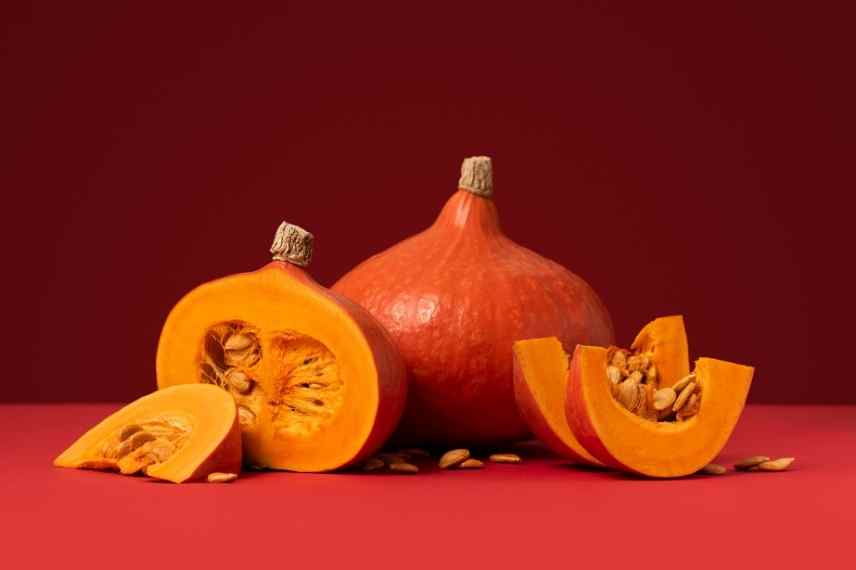
Potimarron offers a distinctly sweet flavour, and is reminiscent of chestnut
Butternut for sweetness
Butternut is particularly well suited to these preparations:
- Purees: Its melt-in-the-mouth texture and buttery flavour yield purees of unrivalled sweetness, perfect for delicate palates or babies.
- Roasted or fried dishes: Its firm flesh that releases little moisture makes it ideal for roasting in chunks (where it caramelises deliciously) or even cut into pumpkin fries, keeping a good bite.
- Sweet recipes: Its sweet and sugary flavour makes it the go-to squash for desserts (pies, muffins, cakes, Pumpkin reimagined). It can readily replace pumpkin in most American recipes.
- Lasagne and pasta: Its ability to form a soft cream makes it excellent for pasta sauces or as a layer in vegetarian lasagne, pairing well with more acidic or herbaceous flavours.
- Subscribe!
- Contents
Comments