





























Celery diseases and pests: identification and solutions
Treating and preventing diseases and parasitic pests of celeriac and celery
Contents
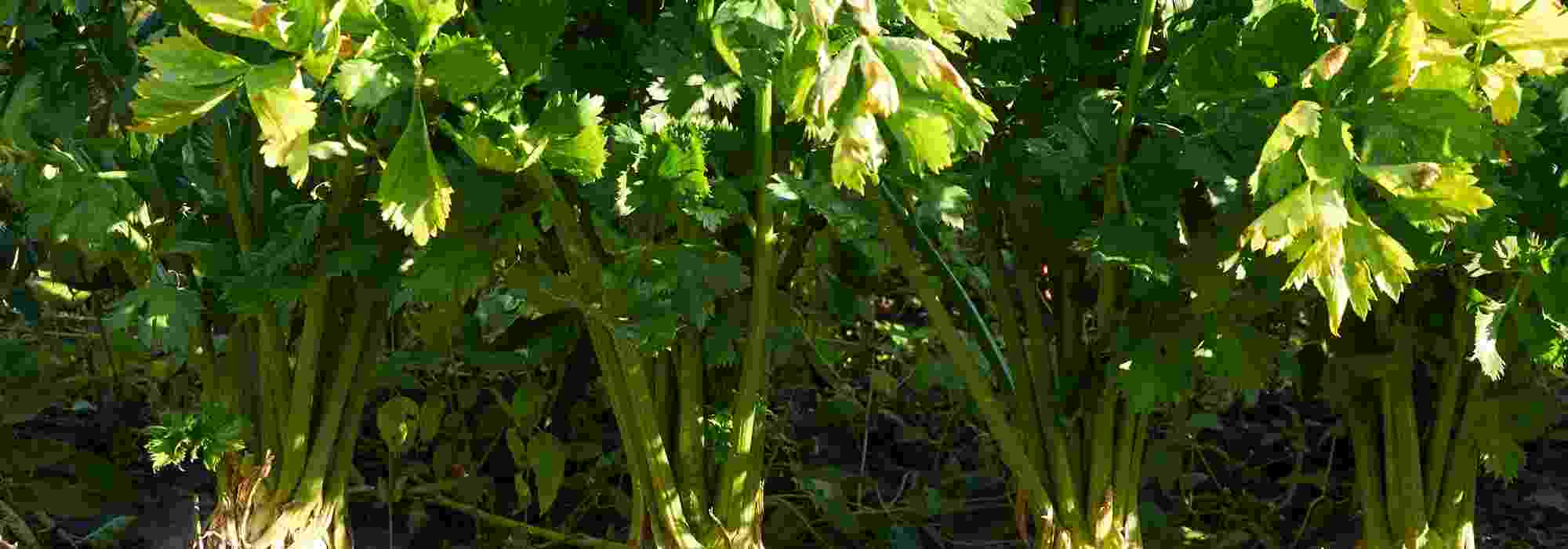
Celeriac, celery stalks, slicing celery… these three vegetables from the Apiaceae family, all derived from the ancestral marsh herb, delight us with their distinctive flavours. These vegetables, grown for their aromatic foliage or their fleshy, crisp roots, also offer undeniable medicinal and nutritional benefits. In the kitchen garden (or even in ornamental borders), celery stalks and celeriac are reasonably easy to grow, provided they have the best growing conditions.
Nevertheless, they can be susceptible to a few diseases and pest infestations. Find out how to identify them, treat them naturally and prevent their occurrence.
For further reading: Celeriac and celery: sowing, planting, growing and harvesting.

The main diseases of celery stalks and celeriac
Besides powdery mildew and downy mildew, two common garden diseases in humid and fairly warm years, celery can be prone to a number of other, more specific pathologies. To treat powdery mildew and downy mildew, I invite you to consult these two articles: Powdery mildew or white disease and Tomato: downy mildew, other diseases and pests.
Septoria, a destructive disease
Caused by the fungus Septoria apiicola, this disease is favoured by high humidity and a relatively warm temperature between 18 and 20 °C. The fungus overwinters on the residues of infected plants and on seeds. Multiplication and dispersal occur during the growing season on leaves, flowers and seeds.
Symptoms : Variable-sized brown-yellow spots, sometimes dark, marked with black specks, appear on infected plants. The tissues dry out. The destruction of the vascular system leads to the death of the portion of the plant above the affected area. Celeriac growth stops and remains small.
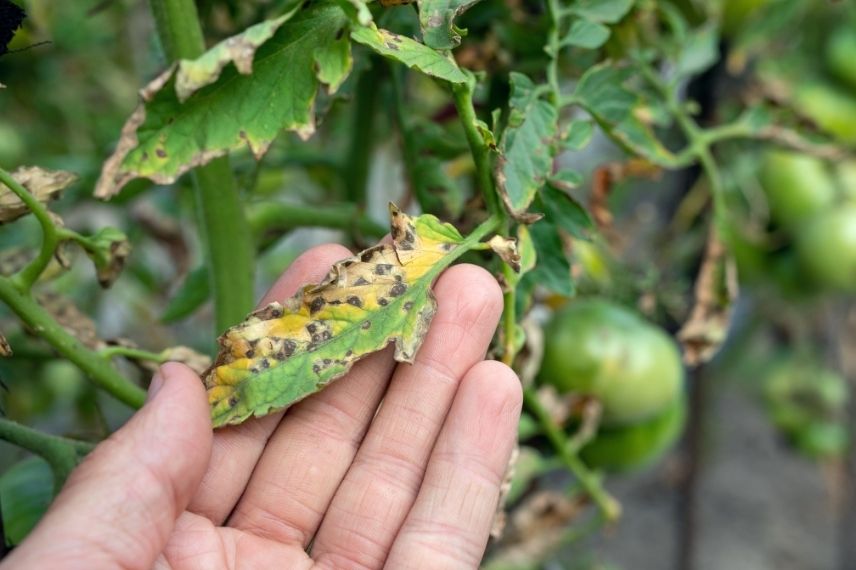
Septoria traces on tomato foliage
Direct control : It is necessary to destroy diseased plants and treat with the Bordeaux mixture.
Prevention :
- Use healthy seeds
- Soak seeds in water heated to 50 °C for 25 minutes
- Apply crop rotation rigorously
- Properly destroy plant residues after harvest
- Water celery with room-temperature water, preferably in the morning
- In wet weather, treat the soil and plants with horsetail decoction for three days in a row
- As a preventive, treat celery with an onion-skins infusion (100 g onion skins brought to a boil in one litre of water for 10 minutes. Let it infuse for one hour).
Sclerotinia or white rot
Caused by Sclerotinia sclerotiorum, this disease mainly affects the roots when conditions are warm and humid. This fungus causes celery root rot in soil or during storage.
Symptoms : The plant wilts first. Then a white cottony growth appears, followed by the development of black sclerotia, which can live for a year in damp soils and up to seven years in dry soils.
Direct control : There is no direct method of control
Prevention :
- Apply strict crop rotation
- Remove crop debris carefully
- Remove and destroy leaves of affected celery
- Plant later in the season
- Soak seeds in hot water as for Septoria
Celery apple scab or collar rot
This disease, transmitted by crop residues and seeds, is due to the fungus Phoma apiicola. It prospers under persistently wet conditions. The damage is generally fairly minor.
Symptoms : The celery roots become grey, then brown-reddish, with rough skin. The fungus causes rot in the affected areas and bacteria enter through the cracks. The roots rot in the soil or during storage.
Direct control : There is no method of control
Prevention :
- Apply strict crop rotation
- Remove crop debris carefully
- Remove and destroy celery leaves affected
- Plant later in the season
- Soak seeds in hot water as for Septoria
Celery mosaic virus (CeMV)
This virus is mainly transmitted by aphids on celery foliage. Then, year after year, it is transmitted through infected seeds.
Symptoms : The leaves become distorted and curl in on themselves. They may also discolor and whiten along the veins.
Direct control : Remove and destroy affected plants
Prevention :
- Control the virus vector, namely aphids
- Use healthy, certified seeds
- Maintain the plots by removing weeds
- Keep gardening tools clean
Boron deficiency
Sometimes called black heart disease, this boron deficiency often appears after excessive application of lime or potash. This deficiency occurs frequently in autumn.
Symptoms : The tips of the shoots are stunted, the leaves crack and split. The celery root becomes small, hollow and brown.
Direct control : Simply apply boron.
Read also
Crop rotationThe main pests that attack celery
Several pests have a penchant for celery. Starting with aphids. To learn more about this piercing-sucking insect that, on celery, promotes the development of mosaic virus, please see the article: Aphid: identification and treatment.
Otherwise, two flies are particularly fond of celery:
The carrot fly (Psila rosae)
This gleaming black fly produces two generations per year, the second causing more damage. The first generation flies from late April to July, the second from August onwards. They overwinter as larvae or nymphs in the soil in pale brown cocoons, or possibly on plant debris on the soil surface. Hot, dry weather inhibits the development of young larvae.
Adult flies swarm on nearby plants, from which they take to the air in the evening to land on the celery. Eggs are laid on the soil, where the larvae develop. After hatching, they penetrate the roots of celery roots (celeriac) where they bore galleries. The attacked plants die, the foliage often discolours to yellowish-red.
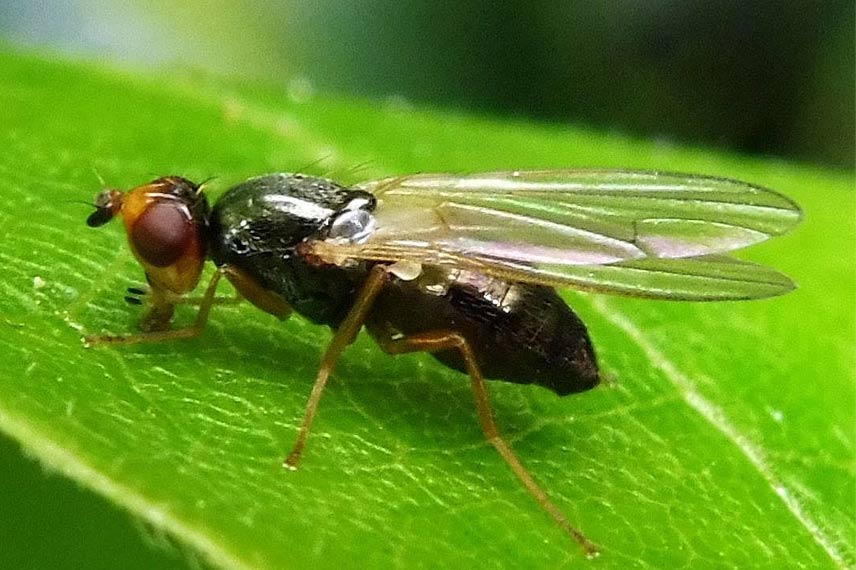
Carrot fly ©Barry Walter – iNaturalist
To prevent the invasion :
- Rotate crops on a minimum three-year cycle
- Grow celery with leeks, with chives, with garlic, with shallots and with onions
- Choose an open, windy site to plant celery
- Place sprigs of plants with repellent scents (lavender, tansy, garlic, fern…)
- Water celery twice a week with infusions of strongly scented plants (tansy, onion skins, garlic…)
- Monitor flight times with orange sticky traps
- Install an insect net from April to September
- Let your chickens loose in the vegetable garden in winter.
The celery leaf miner fly (Phylophylla heraclei)
This fly produces two generations per year, from April to June, and from July to September. They overwinter as pupae in the soil. Eggs are laid on the undersides of the leaves. Once hatched, the yellowish-white larvae penetrate the foliage where they bore galleries.
Biological and preventive control :
- Remove contaminated parts of plants
- Apply strict crop rotation
- Install an insect net from April to September
- Spray garlic manure or a fern manure
- Let your chickens loose in the vegetable garden in winter.
- Subscribe!
- Contents
Comments