





























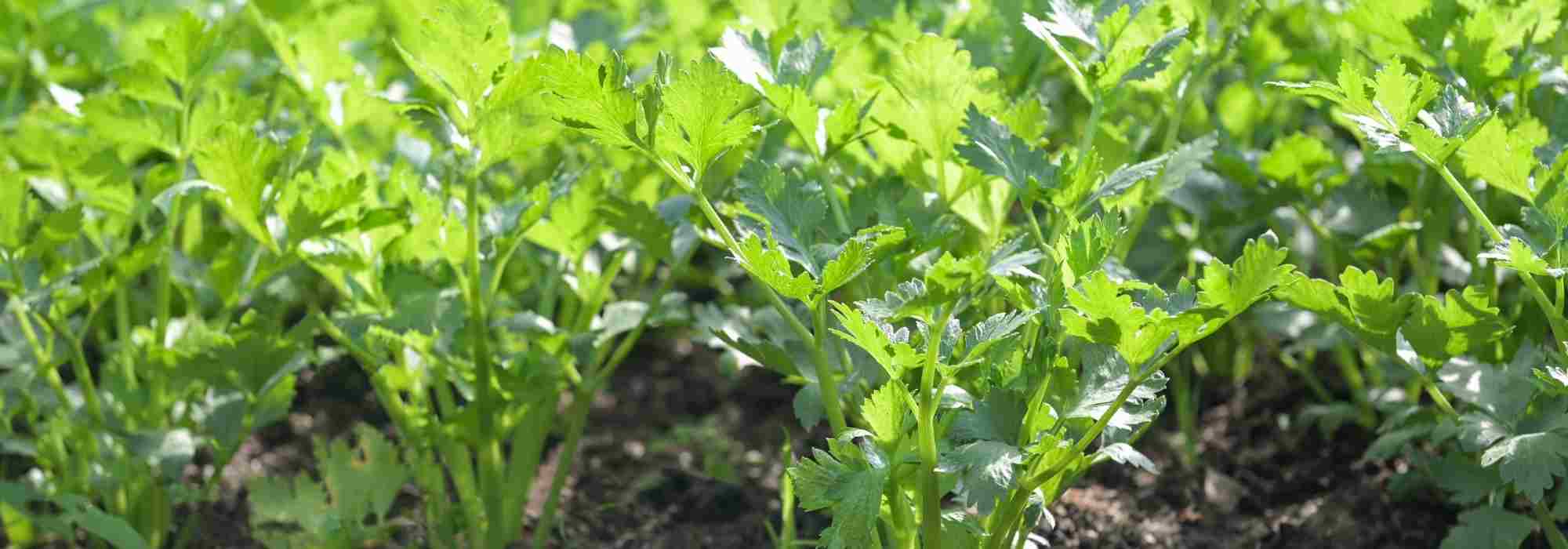
Celery: how to choose the best variety?
Our criteria-based tips for selecting your celery seeds or young plants
Contents
Direct descendant of marsh-ache, a plant cultivated since antiquity for flavouring dishes, celery is characterised by a strong and powerful flavour and aroma. Fruit of botanists’ labour, celery as we know it today only appeared in the nineteenth century. With a slightly aniseed flavour, celery is also said to possess nutritional virtues, which earns it the label of a detox vegetable.
In the garden, celery is a fairly easy vegetable to grow. Only sowing may seem tricky as the seeds take a long time to germinate. Planting young plants in pots or plug plants makes growing celery easier. Now to choose the best variety.
Discover our selection of celery varieties based on hardiness, early maturity and disease resistance…
Further reading: Celery root and celery: sowing, planting, growing, harvesting.

According to varieties
The celery, a vegetable of the Apiaceae family, (Apium graveolens) presents itself in three clearly distinct forms: celery stalks or ribbed celery (Apium graveolens var. dulce) whose stalks are eaten after blanching, celeriac (Apium graveolens var. rapaceum), recognisable by its large fleshy root with a crunchy flesh and the leaf celery (Apium graveolens var. secalinum), with very fine stalks and highly aromatic leaves. All originate from marsh celery that grew in damp areas in Asia and southern Europe. A long programme of botanical selection led to the celeries we eat today.
And depending on your culinary tastes, you will need to choose one or the other species. With celery stalks, the petioles, smooth or ribbed, often gutter-shaped, are used. Raw, they can be eaten as they are or in salads. Cooked, these stalks become tender. With celery root, it is the rounded and enlarged root, fleshy and irregular, with a rough, brownish and thick skin, and white to cream-yellow flesh, that is eaten raw or cooked. Nevertheless, the leaves of these two celery species are not discarded. They can flavour soups, sauces, vegetable juices, etc.
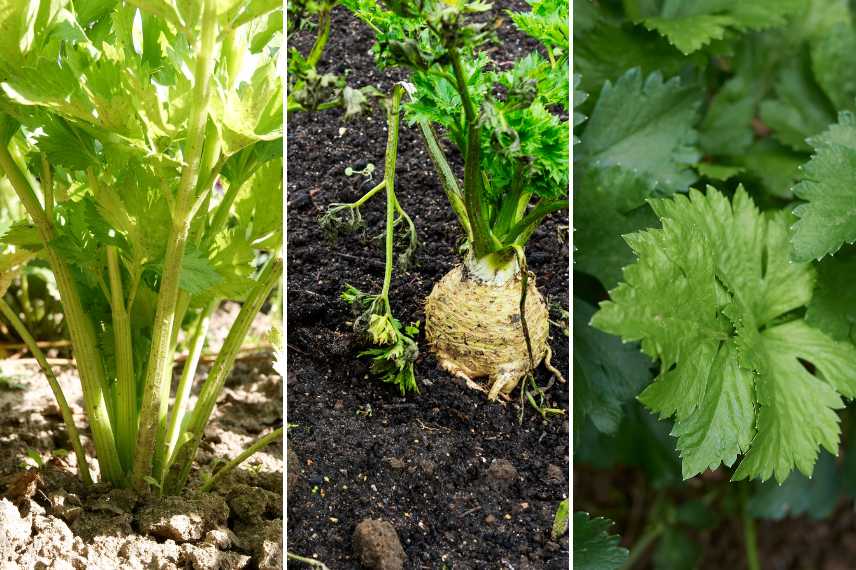
The three celery species, stalk, celeriac and leaf celery
So, when buying seeds, or young plants presented in pots or plug plants to transplant, keep your eyes open! It is clearly written on the labels celery root or celery stalk.
Read also
Succeeding in growing celeryAccording to their harvest period
In the kitchen garden, if you want to harvest celery stalks or celeriac over an extended period, you’ll need to choose varieties known for their early maturity, and others for later harvest.
For celeriac, the Prague Giant offers very large, round, white roots, fairly tall, lush green foliage. It is a relatively old variety known for its early maturity. Harvesting begins in September and continues through December. Whereas the Monarch variety is decidedly later. It yields round, smooth tubercules, perfectly suited to winter storage.
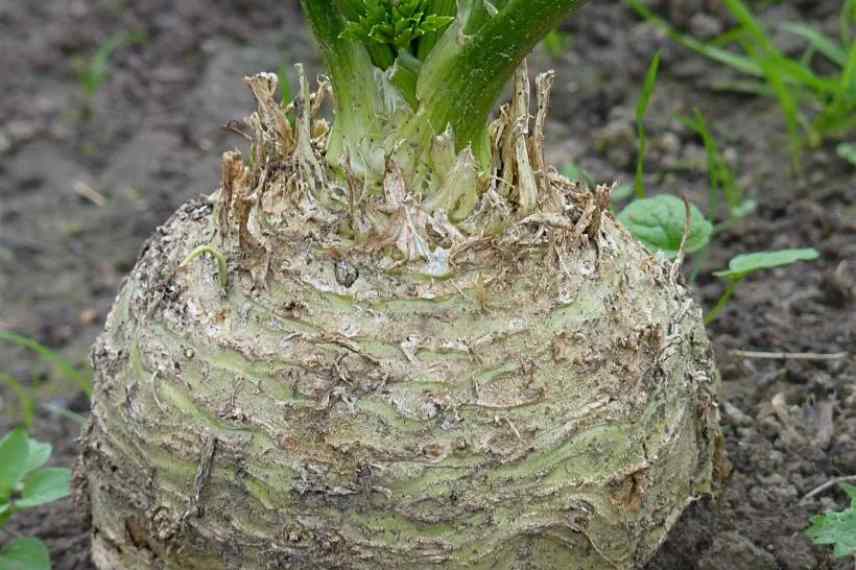
The Prague Giant variety
For celery stalks, some varieties are also renowned for being earlier. To begin with the ‘Plein Blanc Pascal’ variety which produces long, slightly channelled ribs. Harvesting takes place from August and can continue until November, depending on climatic conditions. The ‘Giant Golden Improved’ is also known for its precocity. This variety yields ribs that are rather fine, but well fleshy, hollow and tender. These petioles are distinguished by their pretty pale green colour, subtly shaded with golden highlights. Finally, the variety ‘Tall Utah’ is also early, since its harvest runs from August to October. The ribs of this celery stalk are long and well-filled, fairly wide and fairly thick, in dark green. The clump stands out for its upright and compact habit.
Based on flavour quality
Indeed, it’s all a matter of taste. Especially with celery! You either like it or you don’t. However, some varieties are widely acclaimed for their flavour. And when it comes to flavour, the variety Vert d’Elne takes first place among celery stalks. Recommended for spring cultivation, this variety offers thick and long midribs, smooth and very fleshy, in a very dark green. Anyone wanting to grow celery stalks can rely on this variety, regarded as a safe bet.
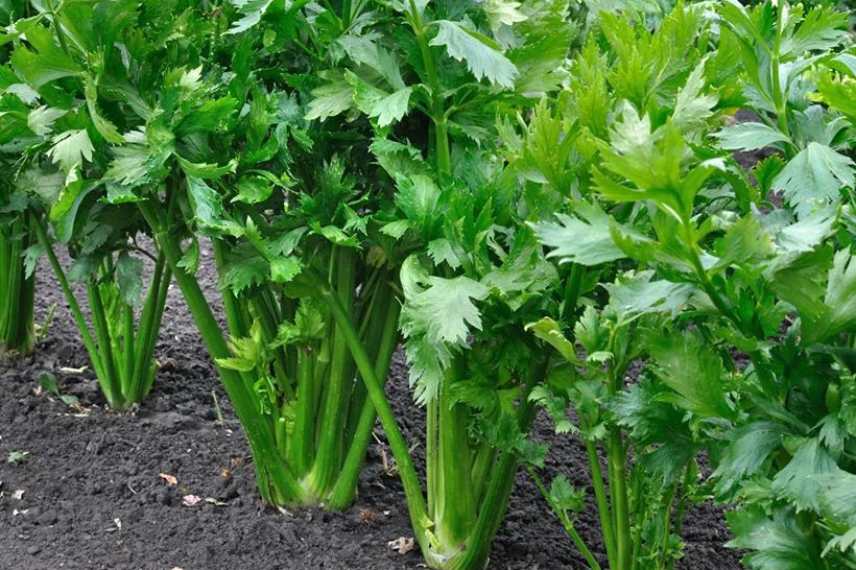 The variety Vert d’Elne</caption]
The variety Plein Blanc Doré Chemin 2 also falls into this category. It produces vigorous foliage, a pretty pale green colour flecked with golden highlights, and large, broad, fleshy midribs, rather smooth, displaying a delicate pale-yellow colour.
On the celeriac side, the variety Goliath stands out, offering beautifully round bulbs of top quality. Its flesh remains white when cooked. It is also a variety that stores well, does not hollow and peels very easily. The texture of its flesh is crisp, with a slightly sweet flavour.
According to the colour of the midribs
And, to mix things up, why not grow colourful celery. The Peppermint Stick celery variety stands out for its stems, white to light green, heavily striped with pink and dark green. These colours persist when cooked, which is sure to surprise your guests. Moreover, these stalks have an excellent, almost unique flavour, very fresh and intensely peppermint.
Another variety stands out for its coloured stalks: celery ‘Plein Giant Red’. In this variety, the stalks are more or less tinted dark red. With a unique flavour, this variety forms a stout plant, perfectly suited to an autumn harvest. The petioles are very thick, about 5 cm. Much less stringy than the white varieties, this celery has a very aromatic flavour, as the stalks do not need blanching.
Finally, the variety ‘Martine’ produces red-tinted stalks. With a very vigorous and compact habit, it is very decorative in the vegetable plot or even in an ornamental garden. Its leaves are also extremely fragrant.
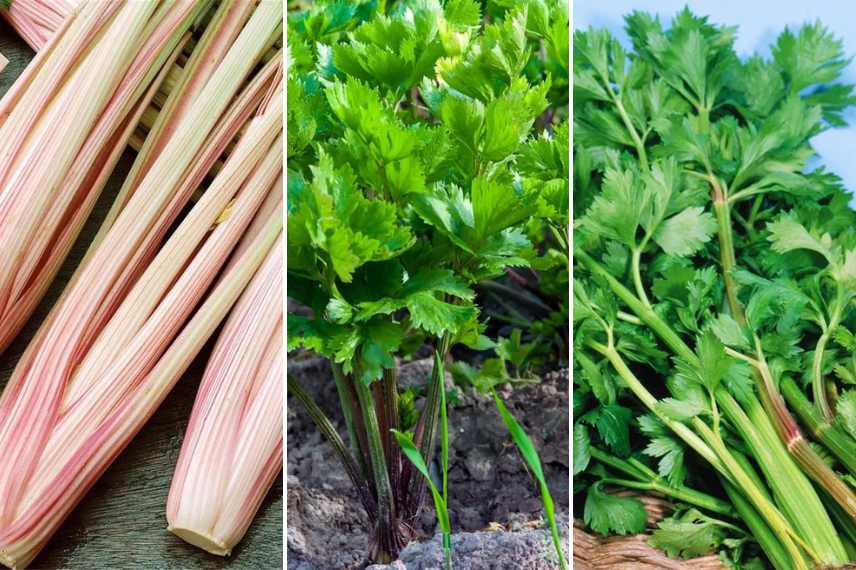
The varieties ‘Peppermint Stick’ (©La ferme de Sainte-Marthe), ‘Giant Red’ and ‘Martine’
Depending on their hardiness
Celery roots (celeriac) and celery stalks are harvested before the first frosts. Nevertheless, some varieties display greater cold resistance. This is the case with the variety ‘Monarch’, whose root can stay in the ground over winter. It is indeed a variety suited to harvesting and winter storage. It is markedly more resistant to the early frosts than other varieties. It yields a dense, large celeriac with well-clustered rootlets, making peeling easier.
‘Alba’ is also a celery root variety recognised for its cold resistance. Very productive, this variety offers large round roots, with rootlets, white flesh, a pronounced and delicate flavour and a firm, crisp texture.
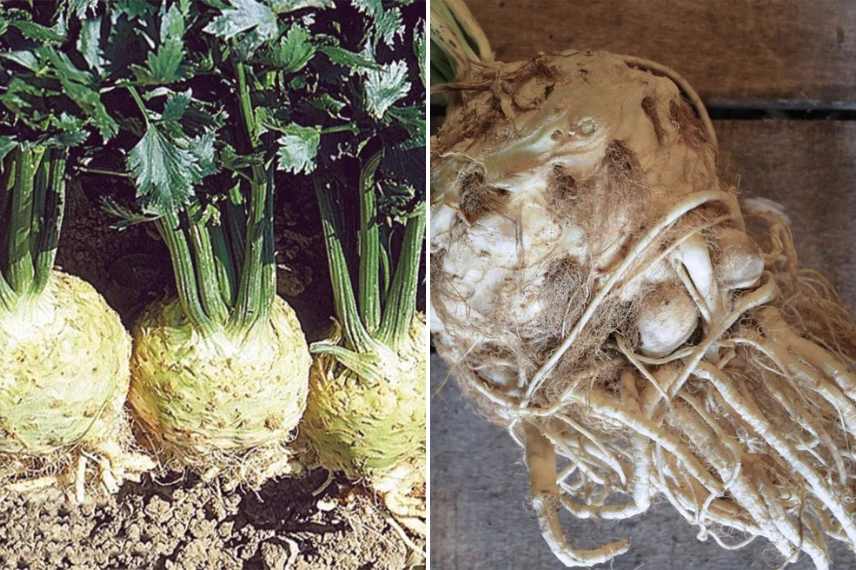
The Monarch and Alba varieties
Based on their disease resistance
Celery plants are fairly hardy, but they can still be susceptible to a few diseases, in particular rust and Septoria leaf spot. This latter disease is favoured by high humidity, especially in August. Some varieties are known for their disease resistance. Thus, ‘Alba’ and ‘Monarch’ appear resistant to Septoria leaf spot, whereas the variety ‘Goliath’ is more susceptible to rust.
- Subscribe!
- Contents

Comments