





























Choosing the right gooseberry bush
Our buying guide to choosing the best gooseberry variety
Contents
Oval, globose, translucent… the fruits of the gooseberry bush (Ribes uva-cripsa) are easy to recognise. With a diameter of 1 to 3 cm depending on the varieties, gooseberries benefit from a flavour that is more or less sweet, sugary or tart. And if you wonder why this small fruit bears such a name, it is simply because the English liked to make a sweet-and-sour sauce that paired well with fish, and particularly mackerel. In France, it is given other names just as odd and vivid: “raisin crépu”, “croque-poux”, “pétasse” or “gogotte”! Perhaps these names aren’t very appealing, which is why gooseberries are grown less widely than redcurrants. Yet it offers numerous benefits both in the kitchen and in the allotment.
The gooseberry bush is, in fact, a handsome, bushy shrub, quite vigorous, that hardly exceeds 1.5 m in height and 75 cm in width. It features deciduous, dentate and downy foliage, and very discreet greenish-white spring flowers. Very hardy (to -20°C), it can be grown in the ground or in a pot, preferably in partial shade, in cool to moist soil.
To help you choose among the many varieties of gooseberry, I invite you to discover our selection, arranged according to different criteria of flavour, cultivation, productivity…

Depending on the colour of gooseberries
The fruits of the gooseberry bush are easily distinguished from redcurrants. First of all, by their growth habit! Indeed, redcurrants grow in clusters while gooseberries are produced directly on the stems, more or less thorny depending on the variety. Gooseberries are therefore solitary fruits that are harvested one by one according to their ripeness. Whereas other currants are harvested in whole clusters.
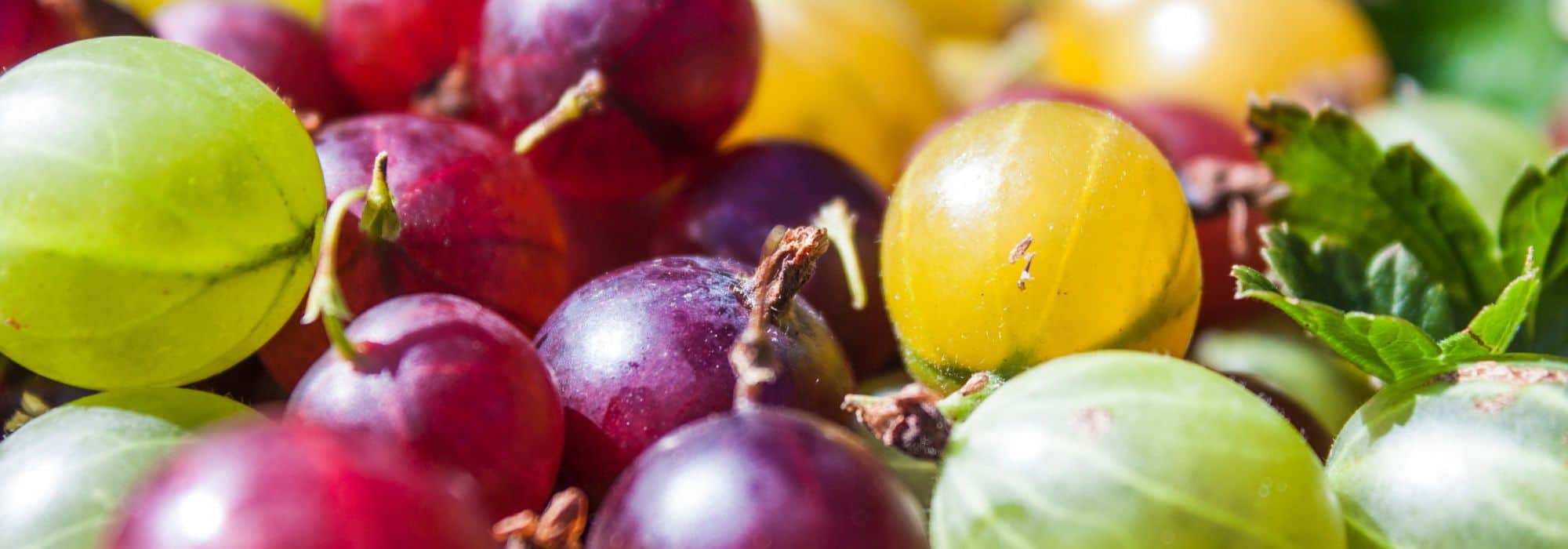
Gooseberries also differ by the size of their fruits, which are much larger, and translucent. They can take different colours depending on the variety. They are also rich in vitamins A, B and C and in minerals (calcium, iron, potassium and phosphorus) and are low in calories.
Green-yellow gooseberries
Some varieties of gooseberries offer berries whose colour ranges between green and yellow, more or less villous. As for the flesh, it is generally yellowish. Thus, the variety ‘Lady Sun‘ produces dark yellow fruits, very juicy. As its name suggests, the variety ‘Golden Drop‘ offers fruits more yellow than green. They are even a tangy yellow, and slightly downy.
The gooseberry Hinnonmaki Green is very interesting for its fruits largely tinted with pale green, with very pale flesh. By contrast, the fruits of the variety ‘Lady Delameen‘ are a very translucent green, and especially large in size.
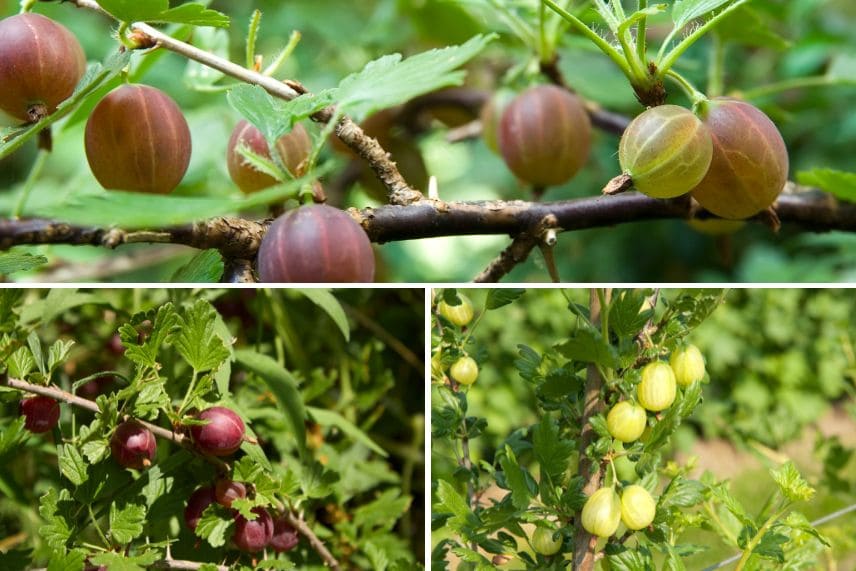
Gooseberries come in green-yellow, red or pink fruits
Invicta variety offers fruits of a pale yellow-green that look almost white. However, they are firm and juicy.
Red gooseberries
Certain varieties of gooseberries offer beautiful berries in a very dark red. ‘Captivator produces red-bordeaux fruits from the first year, with juicy, firm and well scented flesh. The gooseberry ‘Hinnonmaki Rouge offers rounded fruits of large size with a dark red epidermis and yellow flesh. The fruits of Freedonia are of a very characteristic wine-red colour, as are those of Winham’s Industry.
The berries of the variety Worcesterberry are also red but in a much lighter hue.
Pink gooseberries
The fruits of the variety Pixwell are pale green at first, then become reddish to pink-purple at maturity. As they acquire their almost plum colour, these fruits also become sweeter.
Read also
Currant bush: planting, pruning and careDepending on the flavour of berries
Gooseberries are very tasty fruits, with a fruity flavour that is at once sweet and tart. However, acidity is more pronounced in some varieties, while others display a much sweeter flavour. Thus, the variety ‘Freedonia’ is recognised for having a very fruity flavour, at once soft and sweet, well balanced. Just like ‘Golden Drop’ whose fruits are soft and sweet. ‘Captivator’ offers the same taste characteristics: its gooseberries are precisely balanced, perhaps a little more tart than sweet.
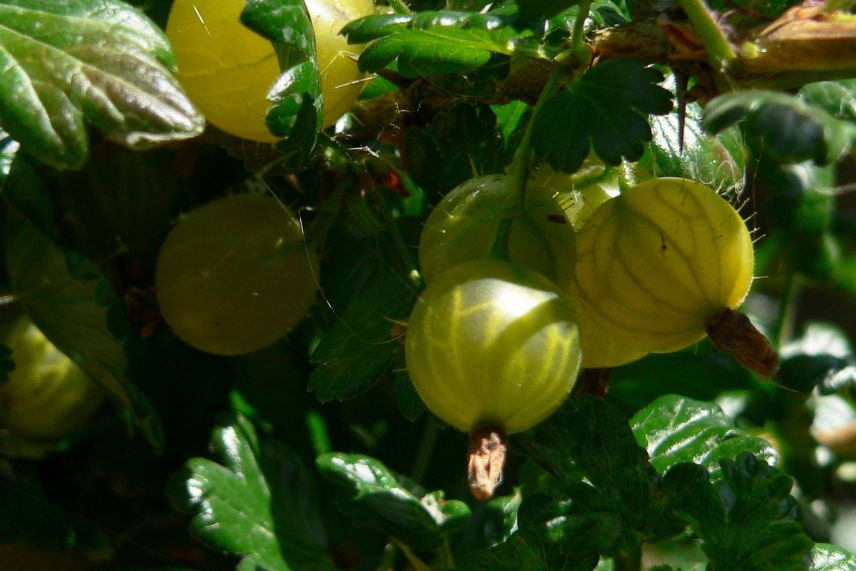 The gooseberries of the variety ‘Golden Drop’ are particularly soft and sweet</caption]
Plus acidulés sont les fruits de la variété ‘Lady Sun’ tout comme ceux de ‘Lady Delameen’. Pour autant, le sucre est parfaitement décelable à la dégustation. Les groseilles de la variété ‘Winham’s Industry’ offrent un fort taux de sucre, mais proposent une saveur très légèrement acidulée.
En revanche, chez les gros fruits de ‘Worcesterberry’, c’est l’acidulé qui l’emporte, mais délicatement, tout en finesse, pour faire palpiter les papilles. D’autant qu’ils sont très parfumés.
Pour rappel, les fruits apparaissent sur les branches charpentières de 2 à 3 ans, qu’il est recommandé de réduire des deux tiers pour favoriser et développer la ramification. En revanche, les anciennes tiges, mortes ou sèches, se rabattent au ras du sol.
According to productivity
Depending on the varieties, the gooseberry harvest takes place in July–August and lasts about a month. The fruits are indeed harvested as they ripen, one by one. On average, an adult plant yields between 1.5 and 3 kg of fruit per year. Gooseberry bushes are self-fertile, meaning that pollination does not require the presence of several plants. This is therefore a small fruiting plant that is very worthwhile to grow in the vegetable garden, with a lifespan of around 12 to 15 years.
Among the different varieties, some are recognised for their excellent productivity. This is the case for ‘Invicta’, which from July offers large oval fruits with yellow flesh, at once juicy and fragrant. With this variety, you are assured of a plentiful harvest, around 3 to 5 kg per plant. It is also a gooseberry bush that is highly resistant to the frequent diseases affecting this gooseberry species, namely powdery mildew and leaf spots. Its only small drawback that makes harvesting somewhat difficult lies in its very thorny habit. A pair of gloves is mandatory when harvesting the fruits.
Freedonia is also one of the most productive varieties. Less early than ‘Invicta’, this variety therefore produces from August round fruits with a pink-red skin and translucent pink flesh, fragrant and well balanced between sweet and tangy flavours. And, icing on the cake, this variety is practically inermous, which greatly facilitates harvesting.
As for ‘Pixwell’, an American-origin cultivar, it is also very productive. Depending on growing conditions, the harvest can reach up to 6 kg per plant of fruit with sweet flesh and a medium-sized, tangy skin, which turn from green to violet-pink as they ripen. The ideal for this variety is to harvest the fruits just between the green and red stages.
Based on ease of harvest
Gooseberry bushes make harvesting seem easy thanks to their size. In fact, this small, shrubby bush, with a rigid, upright or slightly arching habit, and with deciduous, mid-green and pubescent foliage, measures between 0.8 m and 1.5 m, with a spread to match quite closely. So there’s no need for a ladder or step ladder to pick gooseberries. This shrub also has its place in a fruit hedge with raspberries or blackcurrants.
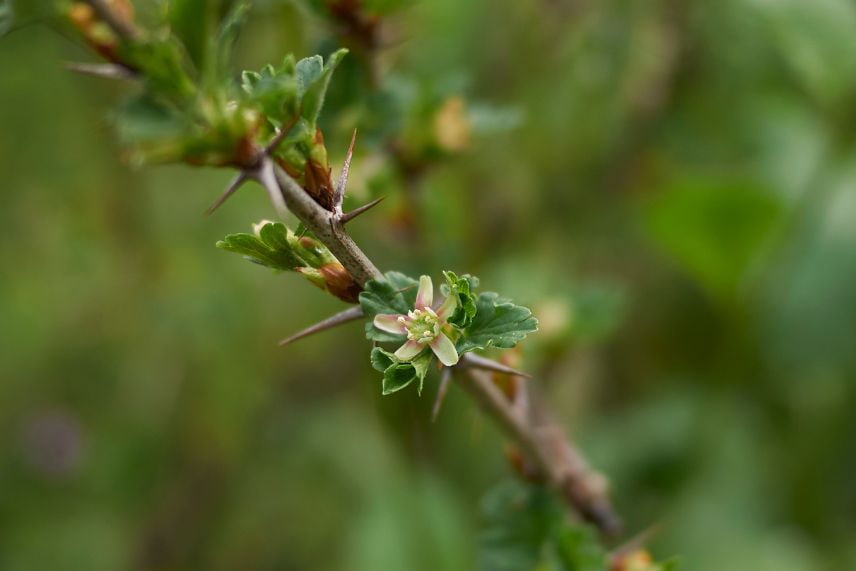
The thorns make picking gooseberries painful
The greatest difficulty in picking gooseberries lies in the thorns. Indeed, this shrub with slender shoots bears three-branched thorns on its stems, very sharps. The presence of these very sharp thorns can make harvesting tedious. Nevertheless, some horticultural varieties are recognised by their absence of thorns. To begin with ‘Captivator’, one of the few inermous varieties with fruits a fairly dark garnet red, with a tart flavour.
Another variety makes harvesting less painful: ‘Lady Sun’. Although thorny, this variety has noticeably fewer thorns than the other varieties. Another variety has the peculiarity of virtually having almost no thorns, namely ‘Freedonia’, a late-ripening variety that yields gooseberries that are nicely round with pinkish, slightly velvety skins.
To facilitate growing gooseberry bushes, they can also be espaliered. Olivier explains how to do this in a short video, filmed alongside Patrick Chantry.
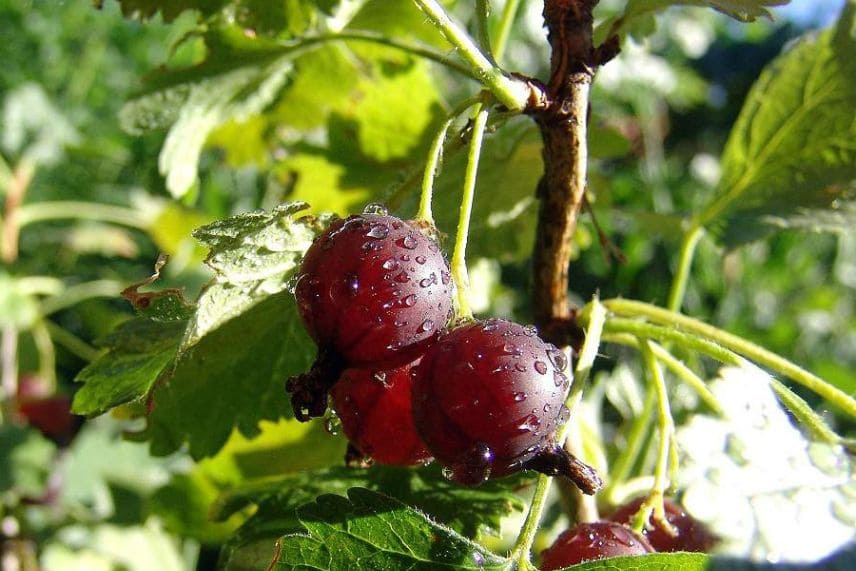
The variety ‘Captivator is inermous
Based on their disease resistance
The gooseberry bush can be susceptible to some fairly common diseases of fungal origin. Among the most common diseases, powdery mildew can be cited, identifiable by white, powdery patches on the leaves, new shoots and berries. Leaf spot disease is also fairly common on gooseberries, and particularly on gooseberry bushes. It is noticeable as spots that appear and enlarge on the foliage from June. Each spot has a pale centre with a brown margin. The leaves turn yellow and fall.
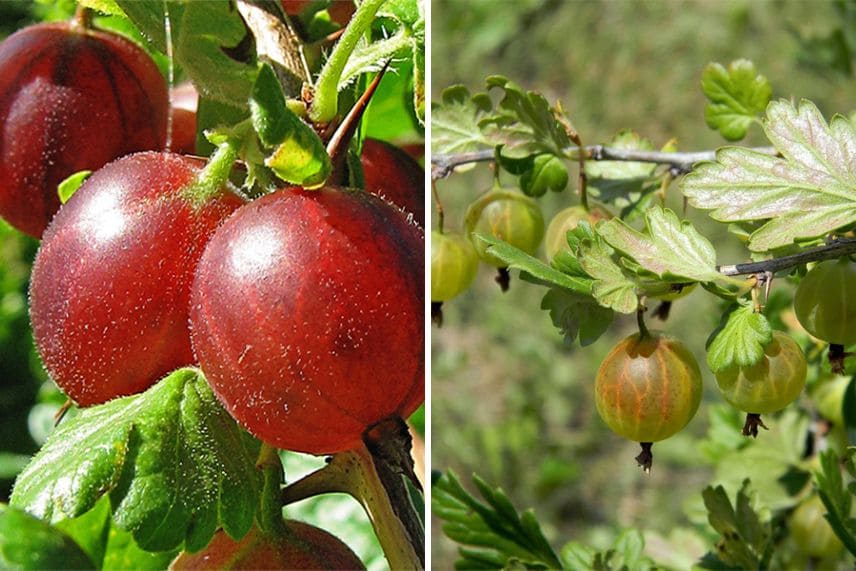 The varieties Hinnonmaki red and Hinnonmaki green show resistance to powdery mildew</caption]
Breeders have developed vigorous varieties, much more resistant to these fungal diseases. The varieties Hinnonmaki red and Hinnonmaki green are recognised for their great robustness, as are Worcesterberry and Freedonia.
- Subscribe!
- Contents

Comments