





























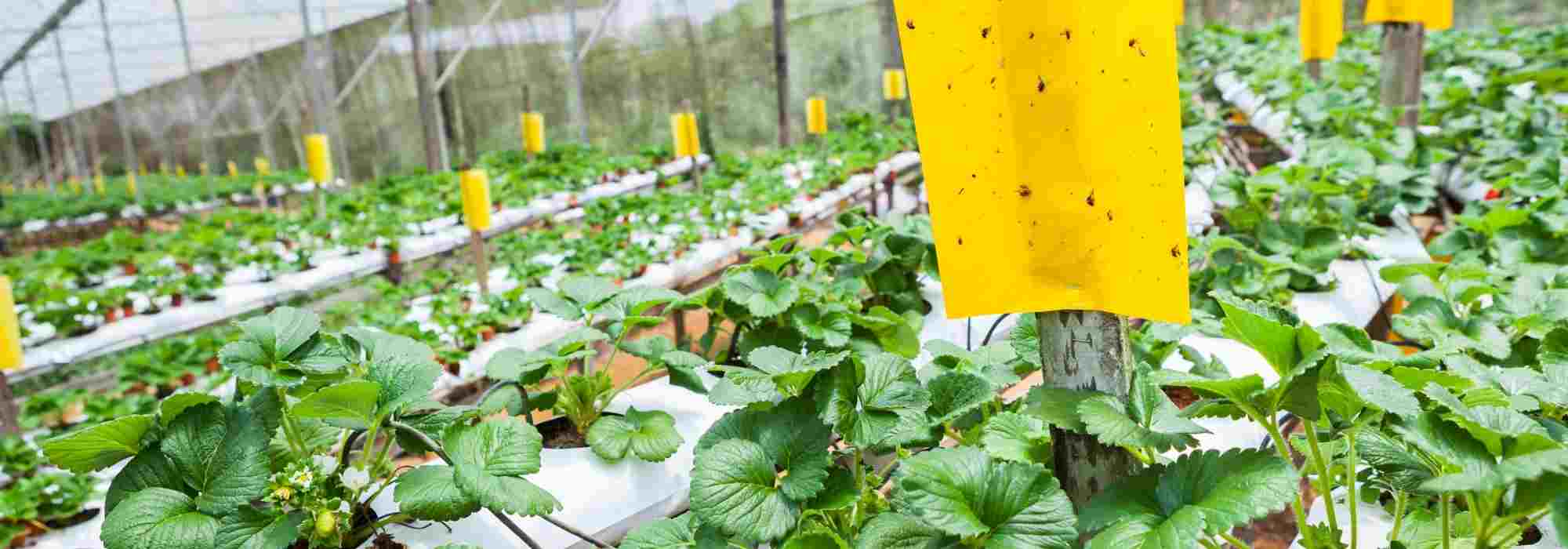
Chromatic traps: the solution for a pest-free garden?
All you need to know about the use, how they work and the effectiveness of these pest-control solutions
Contents
Aphids, thrips, whiteflies, fruit flies… Some pest insects show a certain persistence in visiting your vegetables and fruit from the kitchen garden or orchard, or your finest ornamental plants. Some of them even venture into your home to attack your indoor plants. All these pests tend to test your patience. Nevertheless, you make a point of banning the use of insecticidal products, even organic ones, which are not always selective, killing, without distinction, parasitic organisms and beneficial insects.
In terms of biological control of garden pests, colour traps can be effective. Discover how these colour traps work, where and when to place them, and, above all, their real usefulness.

What is a chromatic trap?
In “chromatic traps”, the term “chromatic” is used. In other words, these traps relate to colours. That is to say, they use colour to attract and capture pests that ravage the garden, allotment or orchard.
And unlike pheromone traps, which most often target males, chromatic traps are aimed at both males and females.
And that’s when the question many people ask arises: how can an insect distinguish colours? In fact, it’s all about frequencies. Insects’ compound eyes are more complex than ours, because they contain photoreceptors capable of absorbing light at frequencies higher than ours. Insects therefore have a broader spectral sensitivity than ours, but their vision is, in a sense, pixelated, because resolution is low and mainly made up of distinct points. Nevertheless, insects (and in particular bees, whose vision has been extensively studied by the German ethologist Karl von Frisch) have the ability to see colours across the spectrum, except red which they perceive less well than we do. And their eyes are even more capable as they see further into the ultraviolet than we can. Some insects can even distinguish colours at night! And others, such as flies, bees and mosquitoes, perceive polarised light, completely invisible to us.
Flowers are, moreover, very good at using insects’ colour vision to be pollinated. By also playing on their shape and scent, of course. For example, rockroses produce flowers that last barely a day. There is therefore urgency to pollinate them. That is why the sage-leaved rockrose (Cistus salviifolius) bears flowers with white petals surrounding a bright yellow centre, like a target for insects. As for the Portugal rockrose (Cistus x lusitanicus), it marks the base of each petal with a dark blotch to signal the path to nectar and pollen for pollinating insects.
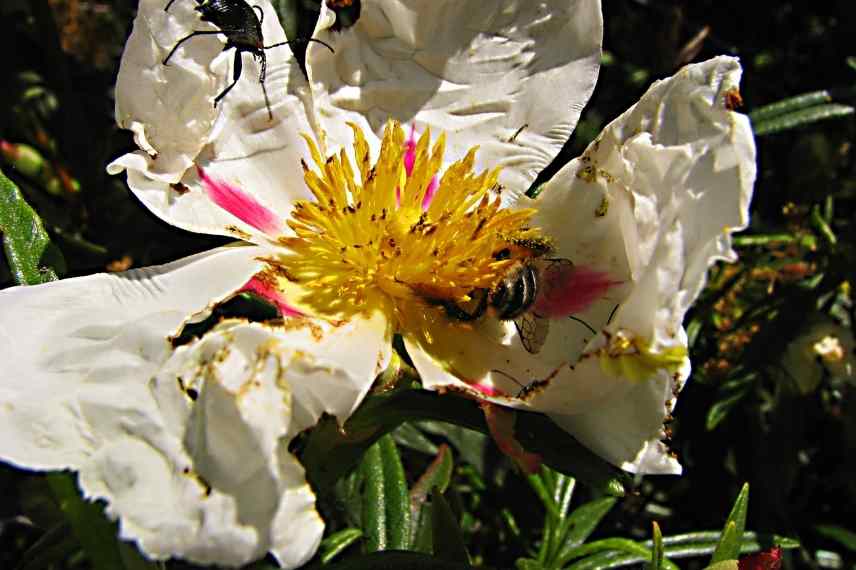
Rockroses know how to attract insects
Bref, these chromatic traps exploit the fact that insects are more or less attracted to certain colours. As most are sticky, insects stick to them and cannot escape. There are other traps that capture insects, others that drown them.
The different types of chromatic traps
Chromatic traps come in different colours. Indeed, different insects are sensitive to particular colours. The most common colour by far is yellow, a bright shade that is the colour of the stamens and thus pollen. Let’s look at the different colours offered by these chromatic traps, each targeting particular insects:
-
- The yellow chromatic trap: it attracts many insects such as whiteflies (aleurodes), winged aphids, the various flies (leaf miners, the fruit flies including the cherry fruit fly), thrips, moths, leafhoppers, scale insects…
- The orange trap is more specifically aimed at carrot flies that attack carrots, but also garden vegetables in the Apiaceae or umbellifers family (celery, parsnip, fennel, coriander, parsley…)
- The blue chromatic trap targets thrips in particular, sometimes nicknamed “storm pests” for their tendency to flourish before and after storms
- The green or white chromatic trap is intended for the olive fruit fly
- Red chromatic traps, rarer, are aimed at the Asian fruit fly which lays its eggs in red fruits, such as cherries.
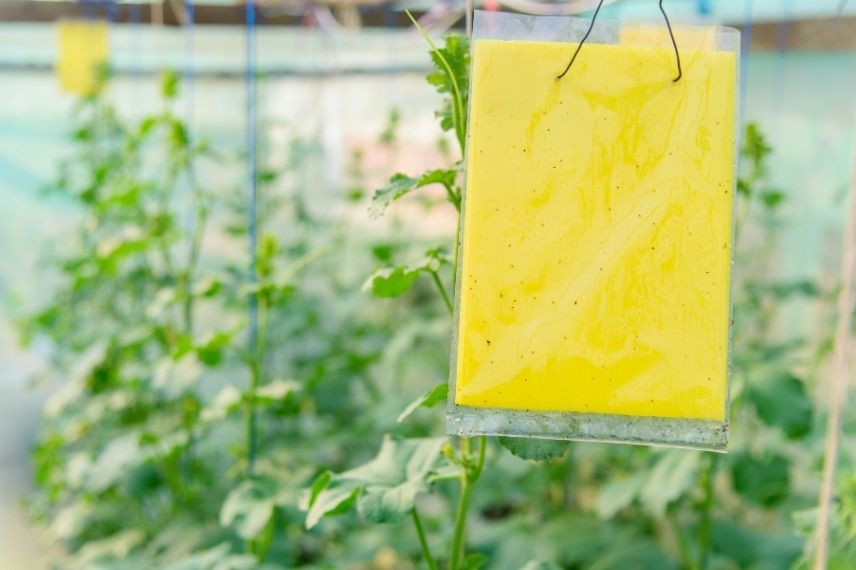
Yellow chromatic traps are highly attractive to many insects
The advantages of chromatic traps
Chromatic traps are therefore coloured, sticky plates that capture pest insects. They offer many advantages over other methods of pest control:
- They form part of an environmentally friendly approach, as they avoid resorting to chemical products, such as insecticidal products. These products are indeed prohibited for sale to private individuals, but are still used in agriculture and arboriculture. They therefore help reduce pest populations in a completely natural way, which is why they are authorised in organic farming.
- Chromatic traps are very easy to use. Ready to use, just hang them in trees, shrubs or plants affected by the insects. The floral chromatic traps are even more particularly suited to indoor plants, as they are sold with supports.
- Chromatic traps enable early detection of pest insects and effective monitoring of population trends. Indeed, these chromatic traps are equipped with grids that allow counting the number of insects with precision and thus estimate infestation pressure.
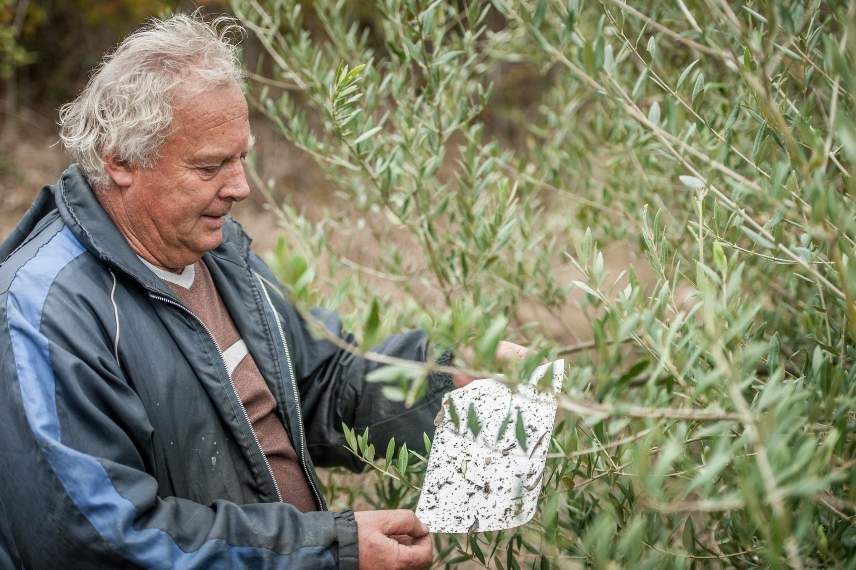
Chromatic traps enable early detection of pest insects
- They cover a broad range of targeted insects to cope with any infestation.
When and where to use these traps in the garden or indoors?
Chromatic traps are simple, effective tools for monitoring and reducing pest insect populations in the garden. However, to optimise their use, it’s important to know the best practices.
When to use them?
To be effective, chromatic traps are used throughout the life cycle of the target insects. Although slightly variable from species to species, their life cycle generally begins in spring and ends more or less in autumn. Indeed, several generations can succeed one another over the seasons, especially in spring and summer.
It is also advisable to anticipate the first appearances of insects a little, as a precaution, in order to deploy other complementary biological control measures.
Chromatic traps are therefore generally installed from March or April, depending on regions and climatic conditions. This period marks the insects’ awakening from hibernation to reproduce.
Where to use them?
Chromatic traps are placed close to host plants, or even inside the foliage. Thus, they hang from the branches of trees and bushes or are fixed to small supports, inserted in the middle of the vegetable garden or in the pot of houseplants.
Waterproof, chromatic traps withstand the weather.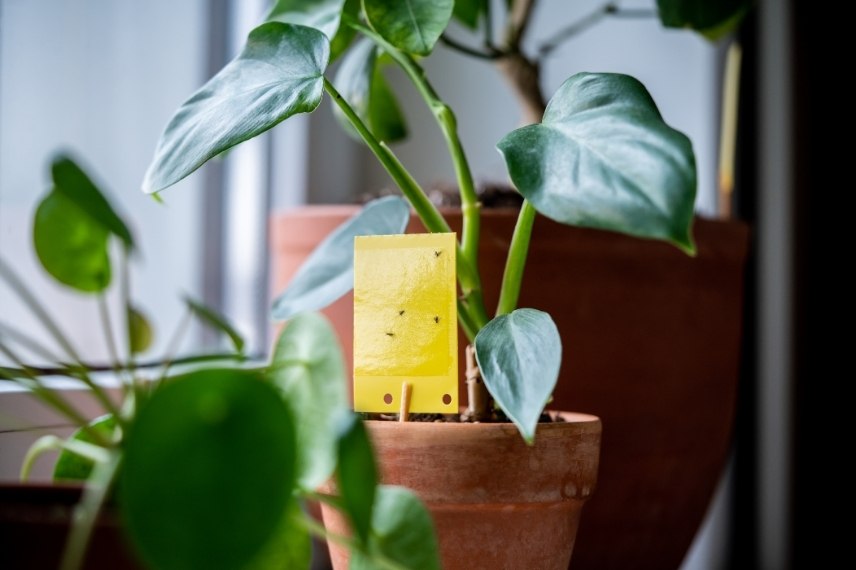
How to place them?
For the number of chromatic traps to place in an orchard, a garden, a vegetable plot, a greenhouse or a conservatory, you should always refer to the packaging. Indeed, effectiveness varies from one brand to another. Similarly, the number of traps to install depends on the size of the area and the intensity of the infestation.
However, it is essential to replace them during the season. When traps become dirty or saturated, they lose effectiveness.
Limitations of chromatic traps
Although relatively effective, these chromatic traps are not a miracle. And they harbour some non-negligible drawbacks:
- Their main drawback lies in their lack of selectivity. Indeed, these chromatic traps, and in particular the yellow ones, attract a large number of pest insects, but also beneficial insects, very useful in the vegetable garden. Thus, the hoverflies and the lacewings are easily trapped by these sticky panels, as are bees or bumblebees, essential for pollination.
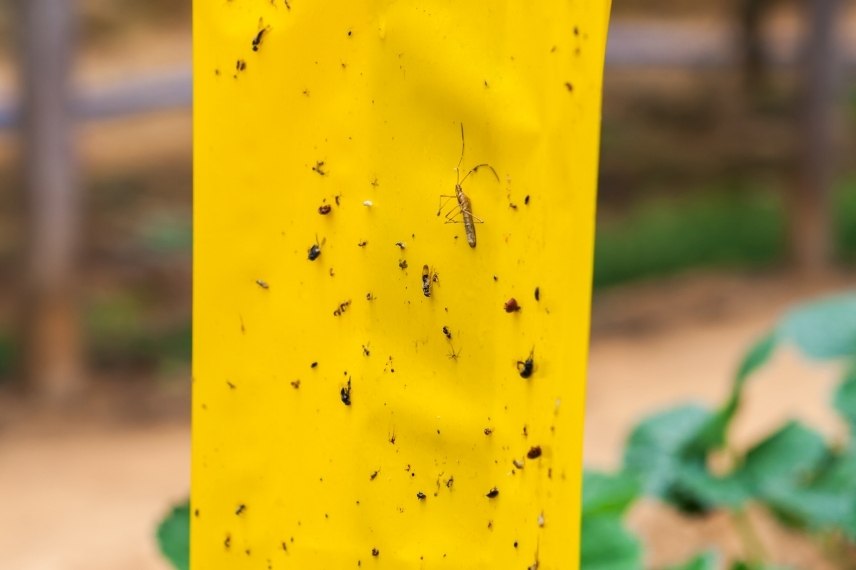
Chromatic traps are not sufficiently selective
- Chromatic traps capture only a portion of the insects present. Their effectiveness may be limited in the event of a large infestation.
- Chromatic traps address a symptom, but do not solve the root cause of the problem. Indeed, insect invasions can be linked to poor cultivation conditions or unfavourable climatic conditions.
- The visual impact can also be a drawback, especially for houseplants. Sticky panels aren’t particularly attractive.
That’s why chromatic traps are not a stand-alone solution, but rather a supplementary measure. They are very effective for spotting and assessing an attack, and, above all, for monitoring population trends. Ideally, they should be combined with other biological control measures such as pheromone traps, which are more targeted and selective, or the introduction of beneficial insects or natural predators such as nematodes. Finally, by promoting biodiversity, you will naturally reduce populations of pest insects.
- Subscribe!
- Contents
Comments