





























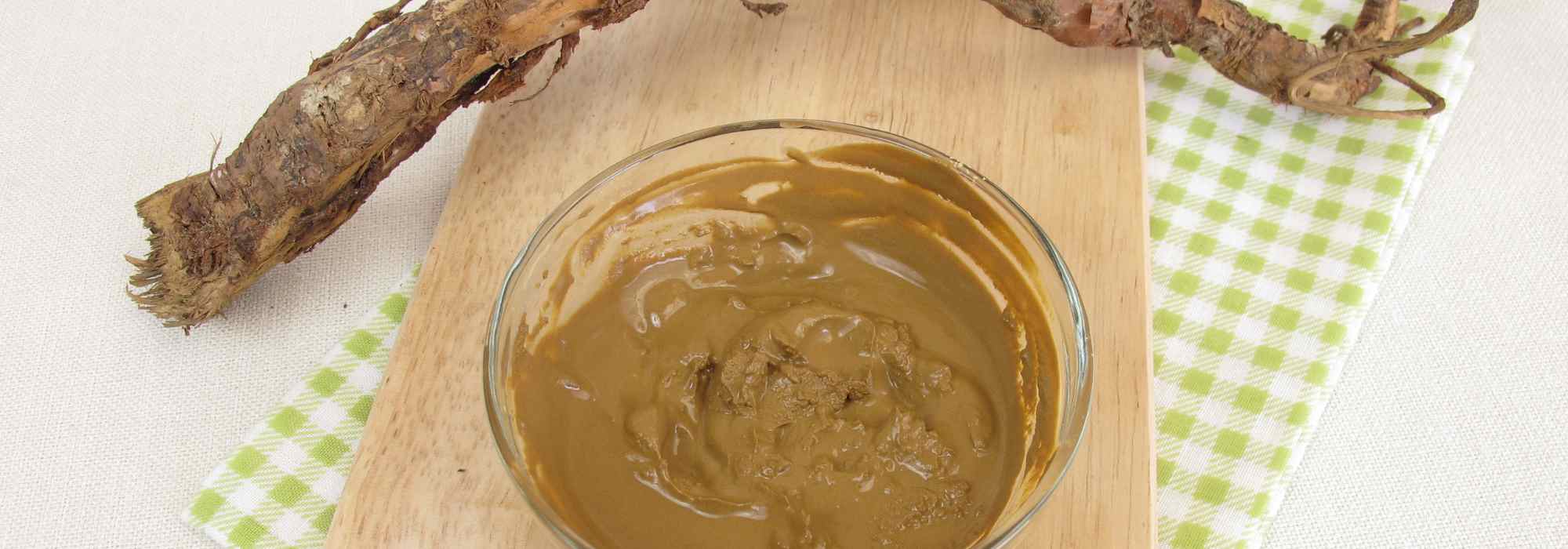
Clay: uses and benefits in the garden
an essential material
Contents
Clay is a natural material used by humans for millennia. Without clay, we would not have had pottery, tiles, ceramics, bricks, or wattle and daub walls… However, clay can serve many purposes in the garden, such as improving overly light soil, aiding in the pralinage of tree and bush roots, protecting against certain pests, or helping to heal large pruning wounds. Clay is also a preferred substrate for bonsai cultivation or in the art of Kokedama. This clay can be, depending on its uses: white (kaolin), green, black, red-brown, or expanded (clay balls).
→ Let’s discover all the types of clay and their uses in this advice sheet.

What is clay?
In the past, due to a lack of advanced microscopy equipment, all elements derived from rock with a grain size of less than 2 µm were classified as “clays”. Nowadays, in geological sciences, clay is considered to have a grain size of less than 4 µm, but in clay science, we refer to clay minerals or phyllosilicates.
Indeed, the clays found in our soils originate from the weathering of natural rock based on silicates or aluminosilicates.
Clay can be found in various forms: white clay or kaolin, green clay, black clay, clay soil… All types of clay are usable in Organic Agriculture.
Please note: A soil described as clayey contains between 30 and 40% clay. It is often compact and difficult to work with, allows little water to pass through, and becomes very dry and cracked in summer. Adding carbon and organic matter improves this type of soil: ramial chipped wood, flax flakes, dead leaves, bark…
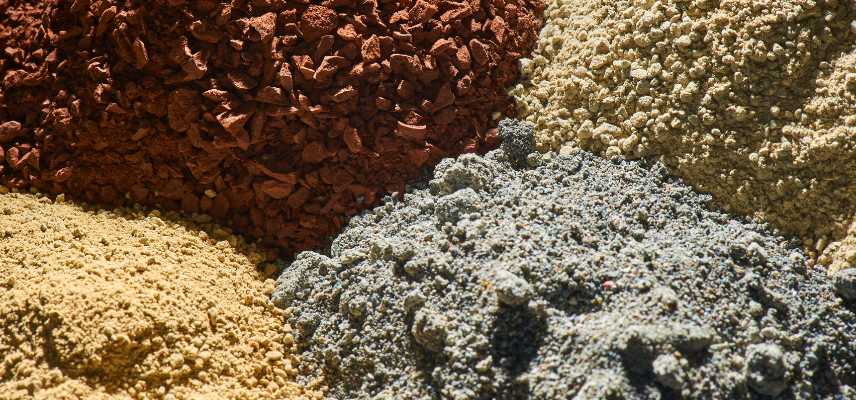
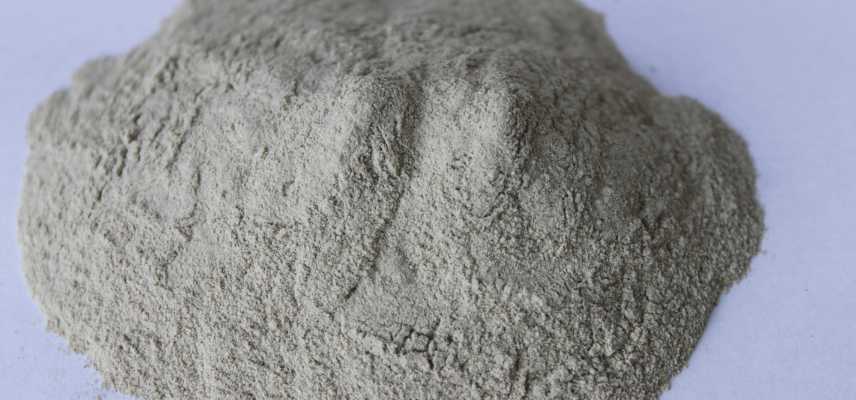
White clay or kaolinite
White clay is a white, crumbly clay composed of kaolinite, a type of aluminium silicate. Kaolin is used, among other things, in the manufacture of porcelain, in medicine, and in the preparation of eco-friendly paint.
In the garden, white clay can be used:
- to raise the pH of overly acidic soils;
- during the pralinage of bare-root trees and bushes;
- as an amendment for overly sandy soils that do not retain enough water (too draining). This clay will help retain water, bind soil particles, and improve nutrient absorption by plants;
- as a foliar application, especially in crops in the southern hemisphere. Diluted kaolin sprayed on plants protects leaves and fruits from sun damage;
- as protection against certain pests. Kaolin powder has a repellent effect on whiteflies, thrips, and aphids. However, white clay is also effective against cherry and olive flies.
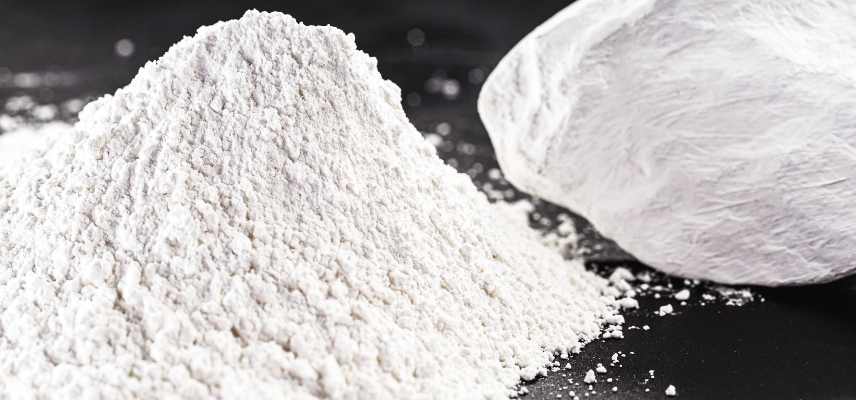
Green clay
Green clay is naturally rich in minerals and trace elements, notably iron oxide. This clay is used in medicine and cosmetics.
In the garden, green clay will be used as a “healing putty or plaster” on large pruning wounds. More economical, more ecological, and ultimately just as effective as ready-to-use commercial products, green clay will protect the wound from external aggressions (pests and moisture), while ensuring the wound remains free from pathogenous agents thanks to its antibacterial and antifungal properties.
Green clay can also prove to be a good solution for the pralinage of bare-root trees and bushes.
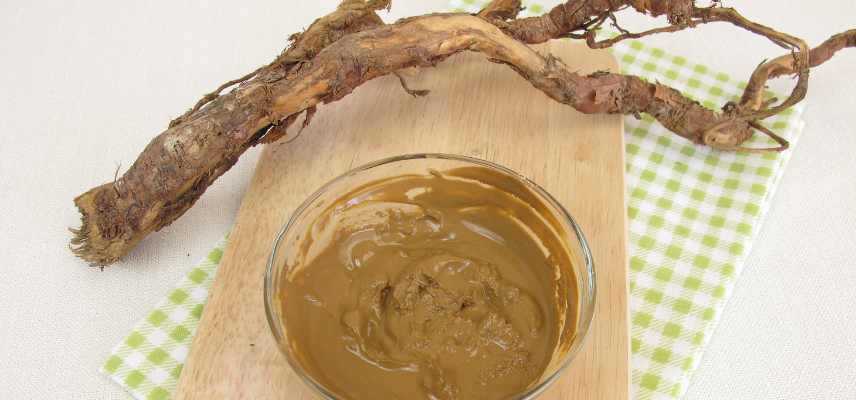
Bentonite clay or "fuller's earth
Bentonite clay (or Montmorillonite) is a colloidal clay, meaning it consists of tiny clay particles separated by only a few nanometres. Bentonite, or fuller’s earth, forms in the sea from layers of volcanic ash, from which silica gradually disappears. It is used in construction, the food industry, wastewater treatment, and even as cat litter.
In the garden, fuller’s earth or bentonite will be used to:
- combat diseases, such as scab, powdery mildew, or downy mildew: bentonite clay will create a protective film preventing diseases from attacking plants. Additionally, the wetting effect of a bentonite spray will enhance the beneficial effects of manures and decoctions;
- combat pests: similar to white clay, a bentonite spray will create an impenetrable physical barrier against insects (aphids, scale insects, codling moth…) and mites.
Black clay and red-brown clay
Little known in our region, black clay or ketho is also used in cosmetics. But, it is primarily in the art of Kokedama that this black clay is utilised. The floral art of Kokedama only emerged in Japan from the 1990s onwards. It involves creating a display with one or more plants, all without a container. The combination of substrate (including black clay) and mosses serves as the pot.
Staying in Japan, let’s take a look at the art of Bonsai. Akadama, a granular red-brown clay, is used as a neutral growing substrate for bonsais. Akadama is of volcanic origin. It can be defined as a type of “unfired clay”. The granularity and unique structure of akadama ensure that this substrate retains water and nutrients well, while paradoxically providing good drainage and excellent aeration around the roots.
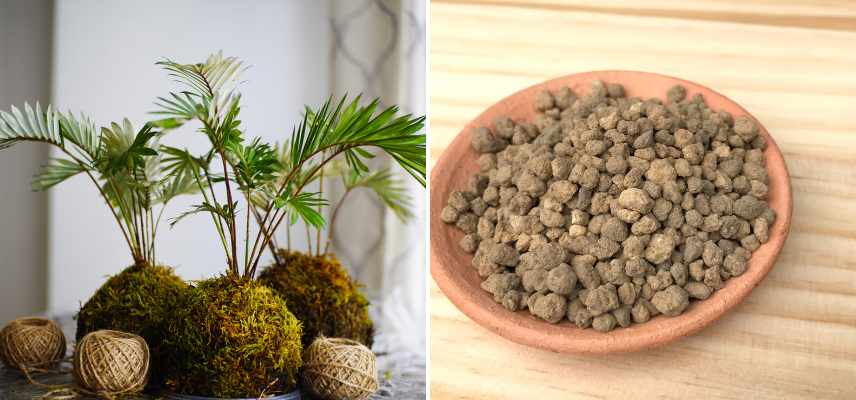
On the left, compositions of kokedamas. On the right, akadama used for bonsais.
Clay balls
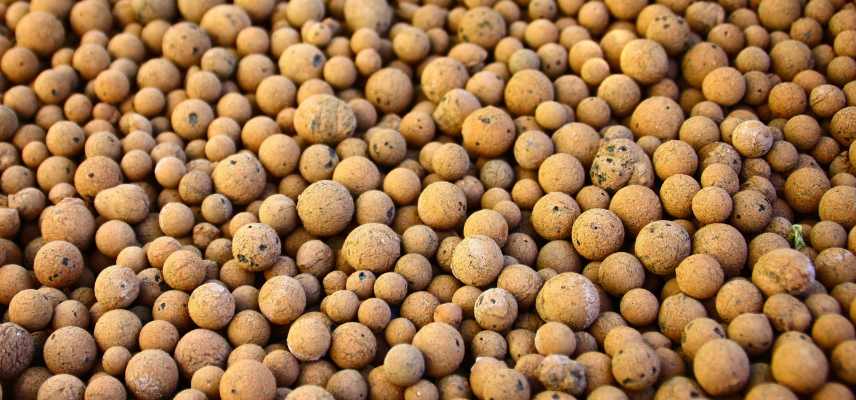
Clay balls are made from clay soil that has been expanded at high temperatures. The result is light, porous, and inert balls. Clay balls can be used:
- for drainage at the bottom of pots;
- to aerate the substrate for your pots and planters;
- as a decorative topping or mulch in pots or on small surfaces (the purchase price limits its use in the garden);
- to retain moisture in saucers under indoor plant pots;
- as a complement to bark for the “substrate” of epiphytic orchids.
Note: these clay balls are also now available in black clay.
Other uses of clay
More anecdotal, clay lumps can be used in the design of a natural pond without a liner. In practice, you dig the hole and cover the walls with a good layer of natural clay. The advantage is that you obtain a very ecological pond, where plants and wildlife will quickly colonise the medium. However, in case of drought, the pond will dry up quickly and the clay will crack. Additionally, muskrats or other animals can easily dig holes in the wall (but you can always add a mesh). The idea is good for creating ponds for biodiversity in natural areas or within a very large nature-oriented property. It is more delicate in a garden primarily intended for ornamental purposes.
Some birds need clay to strengthen or build their nests. This is the case, for example, with swallows. Placing a bit of clay soil in certain areas of the garden will help them a little.
Finally, let’s not forget our beloved terracotta pots. They are made from different types of clay that ensure porosity, thus allowing for gas exchanges.
- Subscribe!
- Contents
![[title]Utilisation de l'argile au jardin
L'argile est un matériau naturel aux multiples bienfaits pour le jardin. Enrichie en minéraux, elle améliore la structure du sol et favorise la rétention d'eau, ce qui est particulièrement bénéfique pour les plantes sensibles à la sécheresse. Pour profiter de ses avantages, mélangez de l'argile {glossary} en poudre avec le terreau lors de la plantation de vos végétaux. Vous pouvez également réaliser des cataplasmes d'argile pour soigner les blessures des plantes ou lutter contre les parasites. N'hésitez pas à explorer les différentes utilisations de l'argile pour optimiser la santé et la croissance de votre jardin. [/title]](https://en.promessedefleurs.eu/blogwp/wp-content/uploads/2023/01/Argile-utilisations-et-bienfaits-au-jardin.png "[title]Clay: Uses and Benefits in the Garden
Clay soil is often seen as a challenge for gardeners, but it can actually be beneficial when used correctly. Here are some tips on how to make the most of {glossary}clay soil in your garden:
1. **Improving Drainage**: Adding organic matter such as {glossary}compost or {glossary}manure to clay soil can help improve its drainage and prevent waterlogging.
2. **Nutrient Retention**: Clay soil has good nutrient retention properties, which can be advantageous for growing certain plants that require a steady supply of nutrients.
3. **Soil Structure**: Clay soil can help improve soil structure by providing stability and preventing erosion.
4. **Mulching**: Using a layer of mulch on clay soil can help regulate soil temperature and moisture levels.
5. **Choosing Plants**: Selecting plants that thrive in clay soil, such as {glossary}lavender, {glossary}roses, and {glossary}daylilies, can make gardening easier and more successful.
By understanding how to work with clay soil rather than against it, you can create a thriving garden with lush, healthy plants.")
Comments