





























Cotoneaster: the best varieties to plant up a slope
Selection of Cotoneaster groundcover
Contents
A shrubs easy to grow and very hardy, Cotoneaster is highly decorative in the garden. It bears evergreen or deciduous foliage depending on the species, which can take on flamboyant colours in autumn. It is covered with small white or pink flowers in spring and summer, then small round red or orange fruits appear in autumn. Adaptable to all exposures, climates and soils, the Cotoneaster displays, depending on the species, an upright or creeping habit, the latter being ideal for planting on a slope. Discover our selection of the best varieties of Cotoneaster to plant and landscape a slope.

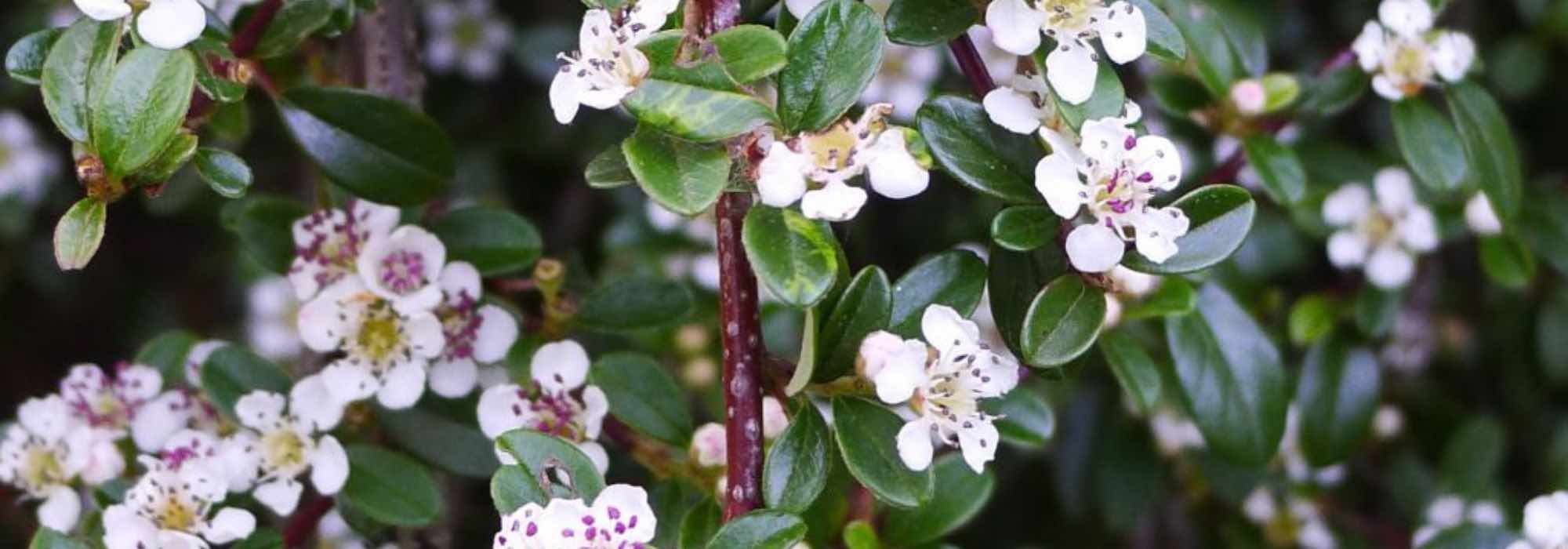
Cotoneaster horizontalis - creeping Cotoneaster
Very hardy and resistant to cold down to −29 °C, Cotoneaster horizontalis or creeping Cotoneaster is a very practical groundcover shrub for dressing a bare slope. This shrub has a horizontal, creeping habit, its shoots covered with small glossy dark green leaves that turn orange-red in autumn before falling. In May it flowers, producing small fragrant white and pink melliferous flowers. Then it becomes covered with small bright red berries that are very ornamental. It takes the form of a shrub that can reach 1.20 metres high and 3 metres wide. It is planted in full sun or partial shade and tolerates all types of soils, even rocky and calcareous ones. Economical with water, it tends to spread, but tolerates pruning very well.
On a slope, plant this Cotoneaster alongside evergreen ceanothus with blue flowering and a creeping juniper. If you like variegated foliage, also try the original Cotoneaster horizontalis ‘Variegatus’.
Read also
Cotoneaster: which to choose?Cotoneaster microphyllus - small-leaved cotoneaster
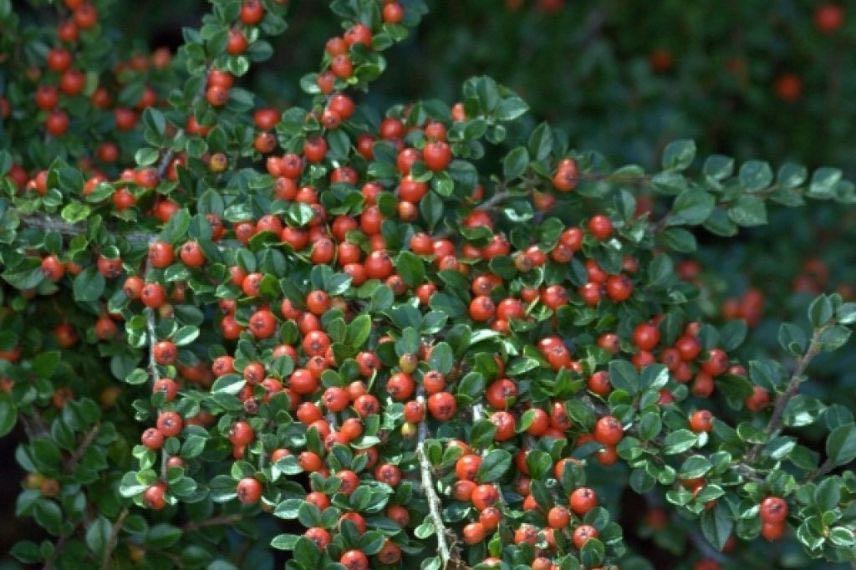
Cotoneaster microphyllus – small-leaved Cotoneaster is a small shrub groundcover 80 cm tall at ripeness and 1.50 m wide, with evergreen foliage. It bears small oval leaves, dark green above and grey beneath. Its white, melliferous flowering takes place in May and June, attracting melliferous insects. In September, the flowers are replaced by small, round, bright-red fruits, much appreciated by birds. Easy to grow, it can be planted in any type of soil, provided that it is well drained and in any exposure: sunny or shaded, taking care to protect it from winds.
On a slope, plant this Cotoneaster alongside shrub roses with clustered flowers or saxifrages, whose flowers will add colour.
Cotoneaster dammeri 'Evergreen' - Dammer's Cotoneaster
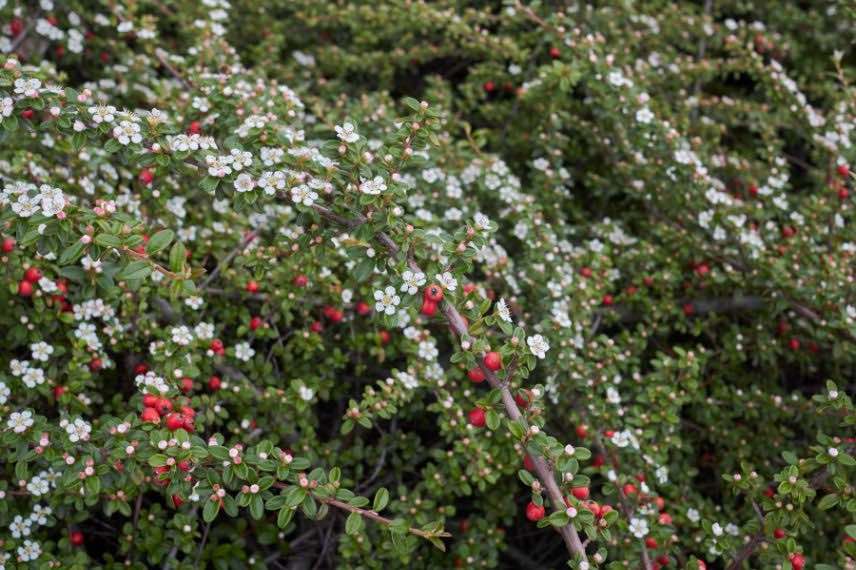
With its evergreen foliage, compact habit and vigorous growth, Cotoneaster dammeri ‘Evergreen’ – Dammer cotoneaster is an excellent groundcover shrub for dressing a large slope. It reaches 40 cm in height and spreads to 2 metres wide at maturity. Its dense foliage helps limit weed growth and greens bare soil thanks to its small, dark green, thick and leathery ovate leaves. In June it produces white flowering streaked with pink and slightly scented. These small single flowers then turn into small spherical red berries. Easy to grow and maintain, it thrives even in shade and in poor, dry soils. It is hardy down to −23 °C.
Plant it alongside a variegated-foliage euonymus such as Euonymus fortunei ‘Emerald Gaiety’ and a Forsythia ‘Marée d’or’ with golden-yellow spring flowering.
Cotoneaster adpressus - creeping cotoneaster
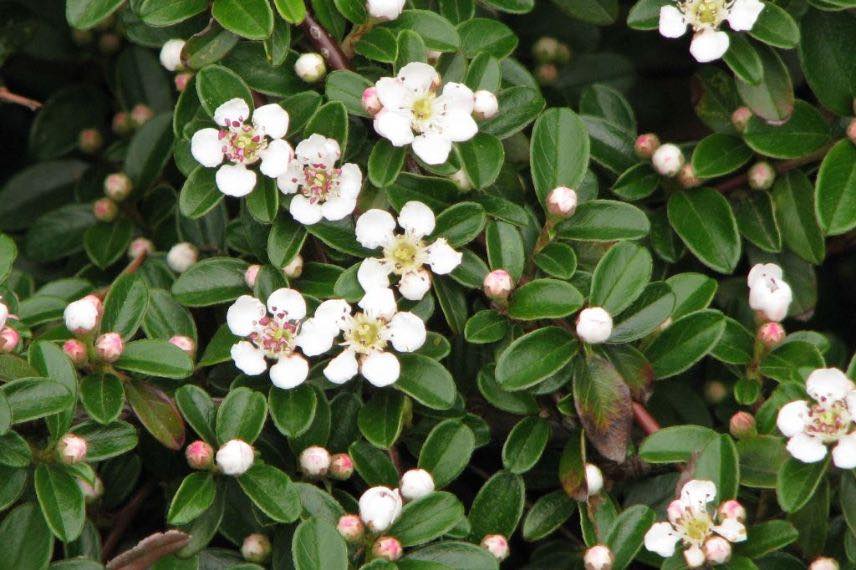
Awarded by the Royal Horticultural Society, Cotoneaster adpressus – creeping Cotoneaster is an excellent groundcover plant for landscaping a bank. Its dense foliage, light green in spring, turns dark in summer then red in autumn, before falling in winter. In May, small white flowers tinged with red appear. These are then replaced by small, decorative bright red berries. It reaches 35 cm in height and spreads to 2 metres wide. Undemanding in cultivation, it adapts to any type of garden, aspect and soil. It is hardy down to −34 °C, but does not like climates that are too warm or too dry.
This Cotoneaster can cover large areas of banks and sections of the garden that are difficult to grow in. It adds a neat touch and pairs well with shrubs with colourful foliage or flowering, such as Berberis.
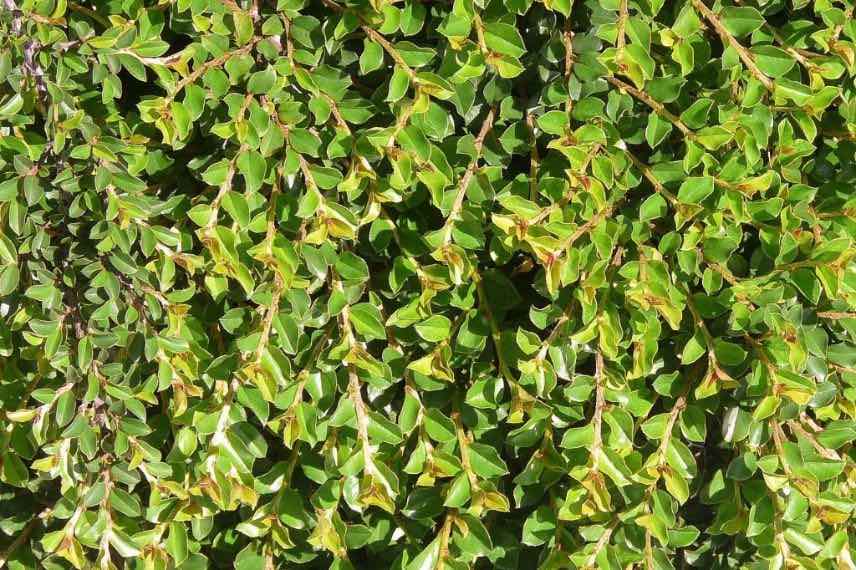
Cotoneaster suecicus 'Skogholm'
Of very rapid growth, the Cotoneaster suecicus ‘Skogholm’ allows quick, maintenance-free greening of an unsightly bank. This creeping shrub, 40 cm high and 2 metres wide, bears glossy dark green evergreen foliage, paler beneath on prostrate and vigorous branches. In May it is covered with a generous flowering of small single white flowers, followed by small coral-red berries, brightening the shrub into winter. Hardy to −23 °C, it tolerates all exposures and soils, requiring only a well-drained substrate.
Use it to cover a bank quickly and pair it with other creeping busshrubs hes such as junipers.
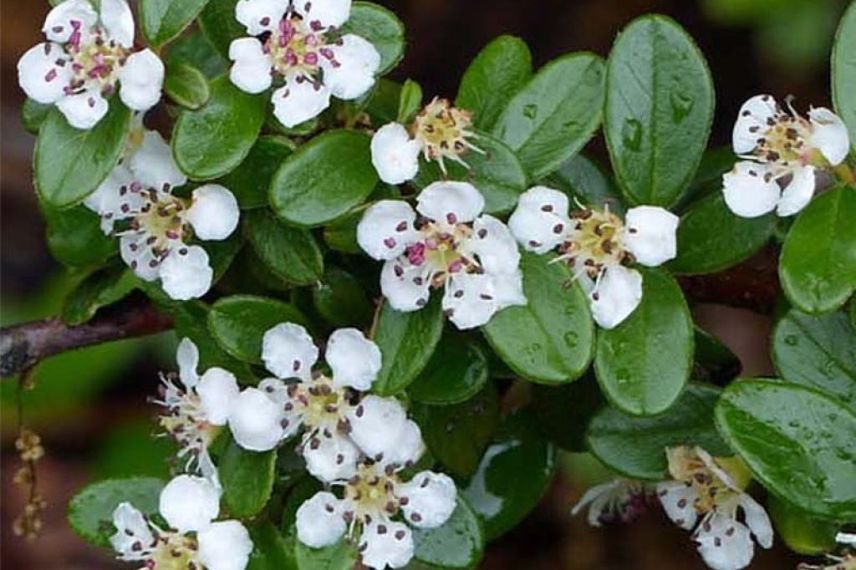
The Cotoneaster suecicus 'Coral Beauty'
The Cotoneaster suecicus ‘Coral Beauty’ is a distinctive shrub with its evergreen foliage and its small decorative coral-orange fruits, which last into winter. From June to July it is covered in white to pale pink flowering, which attracts pollinators. Hardy down to -23 °C, it grows in full sun or partial shade, in well-drained soil and is easy to care for. Mulch around its base to keep the soil cool in summer and prune it in March to balance its shape.
This Cotoneaster pairs well with dwarf conifers or other small shrubs to help green a slope.
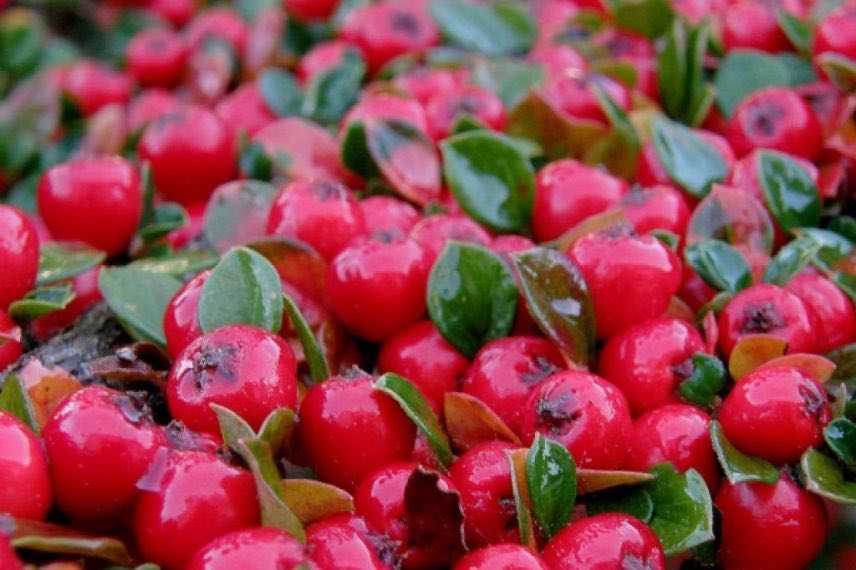
Cotoneaster procumbens 'Queen of Carpets'
Reaching up to 50 cm in height and 1 metre in spread, the Cotoneaster procumbens ‘Queen of Carpets’ covers the ground with a carpet of small evergreen leaves, dark green above and grey beneath. This ideal groundcover offers a white flowering in May and June, followed by small bright red fruits. Highly valued for covering banks or creating a low hedge, it’s a versatile plant that needs only well-drained soil and a sunny or partially shaded position.
It also pairs well with dwarf conifers.
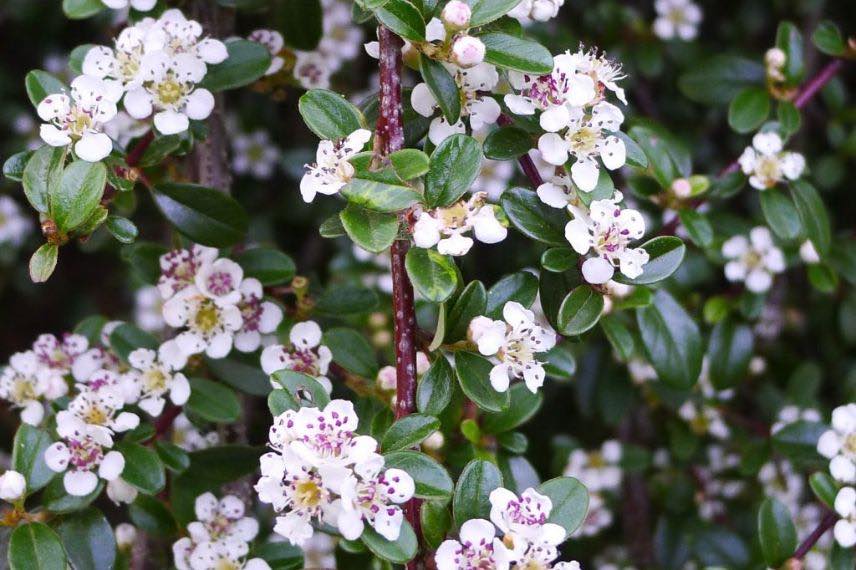
For further information
Discover other varieties by consulting our complete range of Cotoneaster.
To learn more about growing this shrub, consult our full guide on the planting and care of Cotoneaster.
- Subscribe!
- Contents

Comments