





























Courgettes: safe bets
Discover our selection of the best varieties of courgette to plant in the vegetable garden
Contents
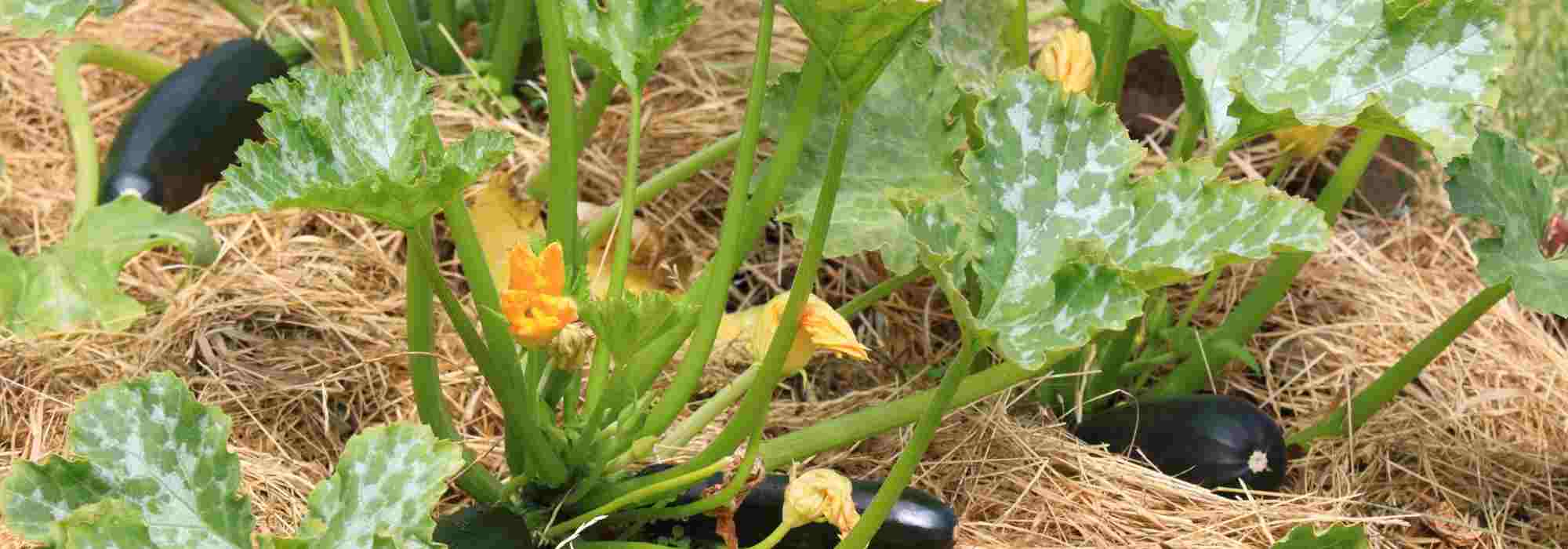
Undeniably, the courgette (Cucurbita pepo) belongs to the category of vegetables easy to grow in the vegetable garden, almost foolproof and highly productive. A member of the Cucurbitaceae family, the courgette thus thrives in all summer gardens, including those of beginners or less experienced gardeners. It can even be said that the courgette is among the vegetables most rewarding to grow: sowing is straightforward, as is planting and maintenance. Rich, deep soil, regular watering, good mulching, and success is assured!
With a variety of shapes, sizes and colours, courgettes allow you to vary the pleasures on the plate. And no need to worry, as the courgette is a very low-calorie vegetable, but rich in minerals and vitamins.
Nevertheless, to maximise the pleasures of tasting, the ideal is to plant several different varieties in the garden. Discover our selection of the best courgette varieties, essential for garden-to-plate.
For more information: Courgette: sowing, planting and growing in the vegetable garden.

Courgette 'Verte des maraîchers', the essential
If there is one courgette variety indispensable for the vegetable garden, or even on a balcony or terrace, it is the variety ofcourgette ‘Verte des maraîchers’. Classic, this courgette produces handsome oblong fruits about 20 cm long in the traditional club-shaped form. The skin is smooth, dark green, slightly cream-striated, the flesh fine, sweet and delicate. It is a courgette that benefits from excellent flavour quality, ideal for making gratins and ratatouille, thanks to the texture and firmness of its flesh.
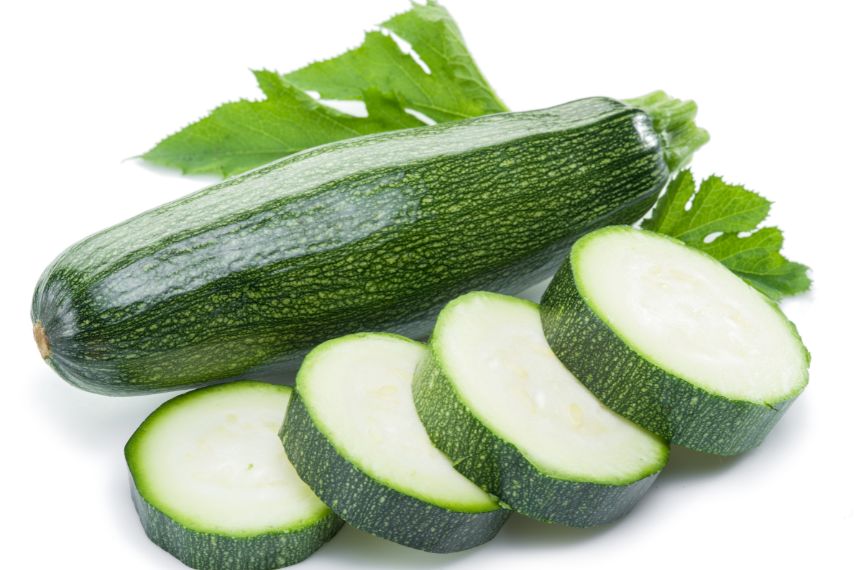 The courgette ‘Verte des maraîchers’ is certainly the most widely grown.
In the vegetable garden, this variety is by far the most sown and planted of all. Indeed, it possesses all the qualities. Not sprawling, it spreads to about 60 cm across. As its name suggests, its productivity makes it the market gardeners’ favourite courgette.
Moreover, it is easy to grow, even for novice gardeners. Relatively early, it produces its first fruits from June. And production continues through August–September. It adapts perfectly well to pot culture on a balcony, a terrace or in a courtyard.
Read also
How to choose your courgettescourgette ‘Ronde de Nice’, ideal for stuffing.
Here’s a charming little courgette, attractive and delicious. The courgette ‘Ronde de Nice’ stands out for its perfectly round fruits, around 8–10 cm in diameter. This rounded shape makes it the ideal candidate for stuffed courgettes in the Niçoise style, very traditional on the Côte d’Azur. But you can cook it in countless ways, in ratatouille, in gratin or pan-fried in a little olive oil. Under its light-to-dark green skin, slightly maculated with cream blotches, lies a tender, fine and melting flesh, slightly sweet. It is marked by fine midribs that are slightly raised. Each courgette can weigh up to 300–400 g if growing conditions are favourable. These courgettes have excellent keeping qualities, potentially for several months.
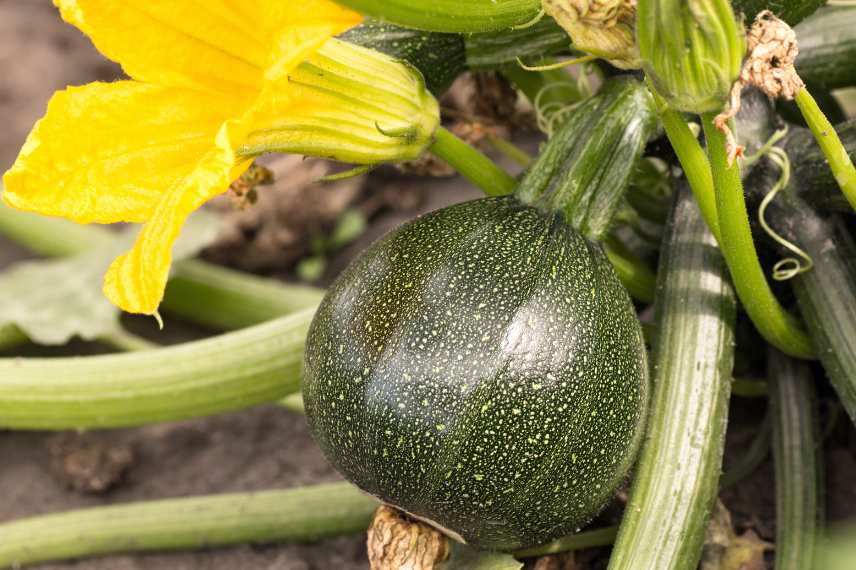
The courgette ‘Ronde de Nice’
In the kitchen garden, the ‘Ronde Nice’ proves productive. Each plant can yield up to 20 courgettes in a single season. It’s an early variety that begins producing from June and continues through August–September. Not sprawling, it requires a space of at least 1 m in diameter. Very traditional in the south of France, where it appeared in the early 20th century, this courgette variety is very vigorous. It is also of interest to grow for lovers of courgette flowers, as it is very floriferous.
Courgette 'Verte de Milan' or 'Black Beauty', classic yet productive
The courgette ‘Verte de Milan’, also known as ‘Black Beauty’, is an old variety, renowned for its productivity. It offers classic oblong, club-shaped fruits, about 20 cm long but they can reach up to 30 cm, with a smooth skin in a very dark, uniform green, particularly glossy. It is, in fact, this very dark epidermis that gives it the name ‘Black Beauty’. By contrast, the flesh of the fruits is white, soft and tender, especially when harvested young at 12–15 cm. Originally from Italy, this variety yields courgettes that can be cooked in a variety of ways.
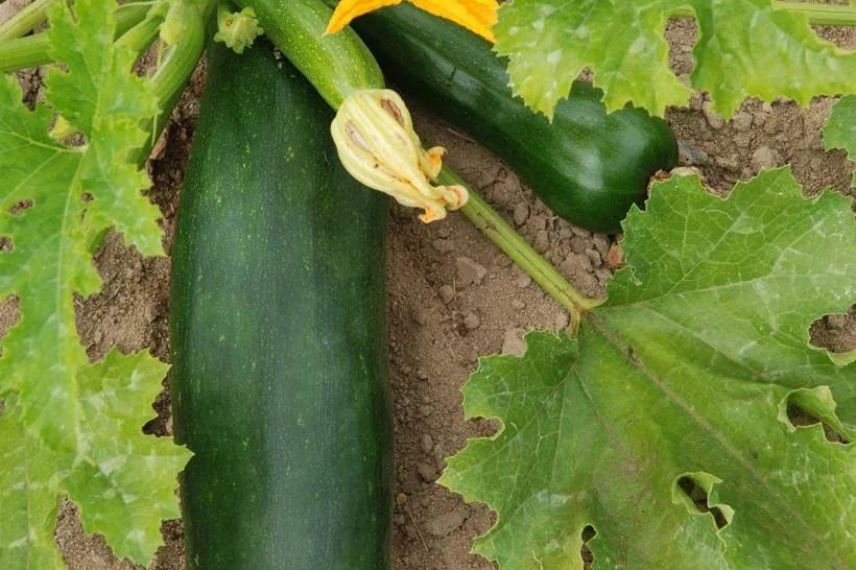
The courgette ‘Verte de Milan’
In the vegetable garden, this variety proves extremely productive. Not sprawling, it spreads over a compact area of about 50 cm in diameter. It is also a relatively early courgette that produces from June to September. A sowing on St John’s Day, 24 June, in regions with mild climates, can extend the harvests, this variety showing some resistance to cold (but not to frost!).
Read also
Growing courgettes in potsThe courgette 'Gold Rush F1' with golden-yellow fruits.
The courgette ‘Gold Rush F1’ is a hybrid with undeniable qualities. To begin with, its excellent flavour. The fruits, long and cylindrical, with a beautiful golden-yellow colour, have a fine pale cream flesh. They benefit from undeniable culinary quality with their fine, tender and slightly sweet flavour. That’s why this colourful courgette adapts to all culinary uses, including eaten raw. Its fruits reach 20 to 25 cm. Thus it is an original variety both in the vegetable garden and on the table that stores very well.
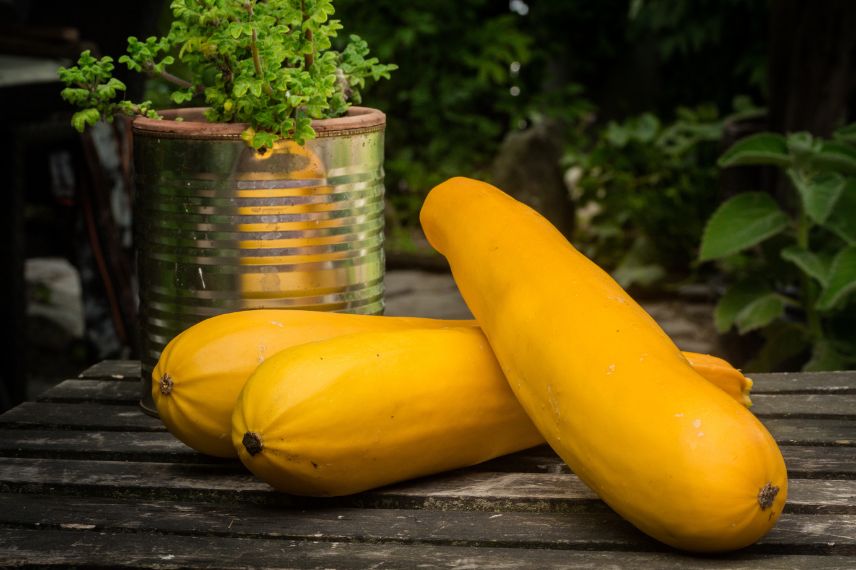
The courgette ‘Gold Rush’
In the vegetable garden, this is a variety that proves very productive. Not a trailing plant, it spreads to about 1 m in diameter with a height of around 50 cm. It begins bearing its first fruits from July and the harvest continues through August–September.It is also known for its relative resistance to the most common diseases.
The courgette ‘Greyzini’ or grisette of Provence
The courgette courgette ‘Greysini‘ (or ‘Greyzini’), known as ‘Grisette de Provence’, is a variety with fruits having light-green skin, heavily veined with grey, and white flesh. This flesh is particularly fine and tender. This is why, to appreciate its flavour, it is recommended not to overcook it so that it retains some firmness and crunch. This is also why it should be harvested young, when the fruits have reached 8 to 12 cm. The fruits can reach a weight of 1.5 to 3 kg.
In the vegetable garden, this courgette variety proves productive, yielding 4 to 7 fruits per plant. Not sprawling, it spreads to a diameter of 1 m. It is also a popular variety for the rapid formation of its fruits. Forty-five days after sowing, the first courgettes are ready to be enjoyed. This early variety is therefore recommended for impatient gardeners!
The courgette 'Coucourzelle', a semi-early, large-fruited variety.
Of Italian origin, the courgette ‘Coucourzelle’ is a variety prized by the most discerning gourmets. Indeed, the white flesh of its fruits is of great delicacy and exceptional tenderness, especially when they are harvested young. Very long, around 30 cm, the courgettes of this variety are bi-coloured, dark green striated with broad pale green shades. The skin is perfectly smooth.
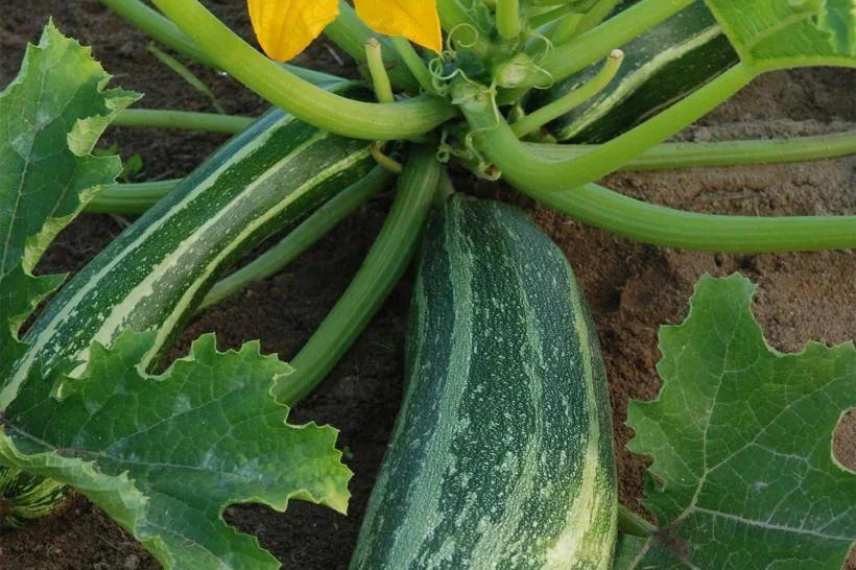
The courgette ‘Coucourzelle’
Very old variety, relatively traditional, the ‘Coucourzelle’ is semi-early to harvest from May–June. With a bushy habit, this courgette spreads to about 1 m wide and 50 cm high.
The 'Sebring' courgette with slightly sweet fruits.
Thecourgette ‘Sebring F1’ is an F1 hybrid variety that produces beautiful cylindrical, long, very slender fruits bearing a lovely golden-yellow colour. This colour also holds up very well when cooked. Much prized by gourmets, these courgettes have flesh of great delicacy, with a mild, slightly sweet flavour. This flesh ranges from pale green to white. The fruits of this variety are very fleshy and tasty, making it a genuine benchmark in the yellow courgette category. And the more they are harvested, the tastier they are. Especially with their flower still attached.
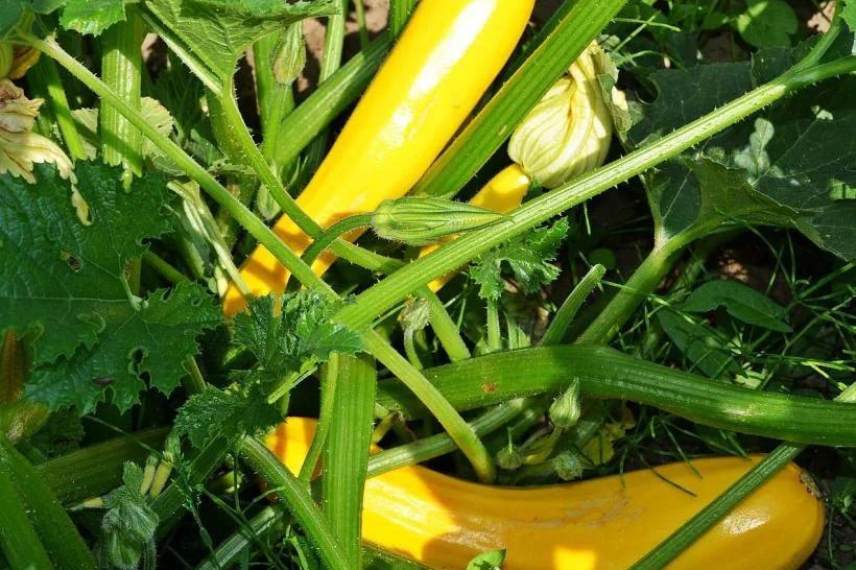
The Sebring courgette
In the garden, this courgette proves productive, vigorous and early. Not sprawling, it reaches around 30 cm in height with a 50 cm spread.
Courgette 'Astia F1', productive and compact.
If you have a small garden or a simple balcony, this courgette variety is for you. Indeed, courgette ‘Astia’ offers a very compact habit that allows it to fit into small spaces. It hardly exceeds 80 cm in spread and 45 cm in height. Nevertheless, the foliage remains airy, which makes harvest easier. Despite its compact habit, this courgette proves very productive, bearing attractive fruits that are long, regular and homogeneous, with a thin dark-green skin. The flesh remains relatively crisp when cooked.
A very productive variety over a long period (provided you harvest the fruits regularly), ‘Astia F1’ has another major advantage: it is much more resistant than other varieties to powdery mildew, the most common disease of courgettes. All these qualities have earned it an award from the prestigious Royal Horticultural Society.
The courgette 'Lorea', the white-fruited hybrid
La courgette ‘Lorea F1’ est une variété hybride qui se distingue par la couleur de ses fruits longs et fins, cylindriques et légèrement recourbés . En effet, la peau de ces courgettes arbore une délicate couleur blanche à vert très pâle qui fait toute sa typicité. Quant à la saveur de sa chair, elle est plutôt douce et sucrée. Si vous la récoltez jeune, encore dotée de sa fleur, c’est une merveille !
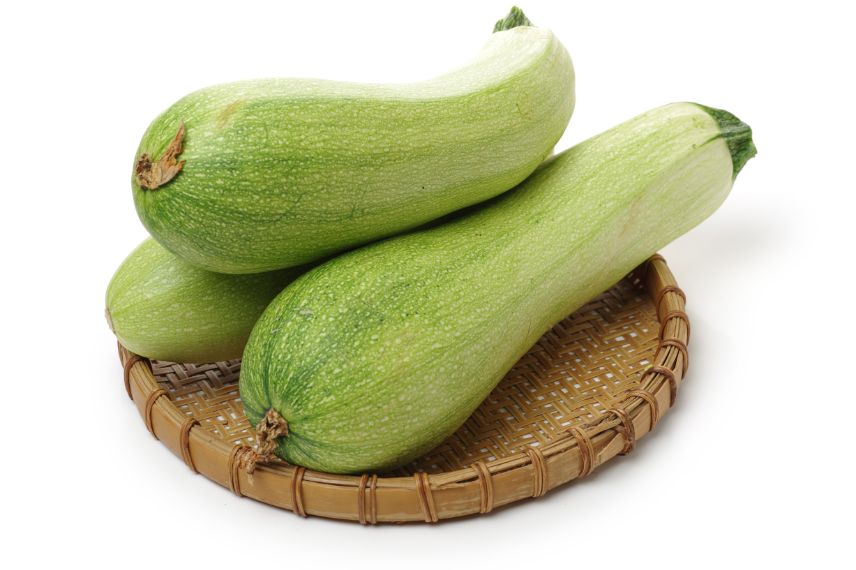
The courgette ‘Lorea F1’
In the vegetable patch, this variety is very productive, a tad late but vigorous. If you pair it with green-fruited varieties and yellow-fruited varieties, you’ll have a garden that’s a sight for sore eyes.
To learn more about courgette.
- Discover the best companion plants for courgettes in the vegetable garden
- Subscribe!
- Contents
Comments