





























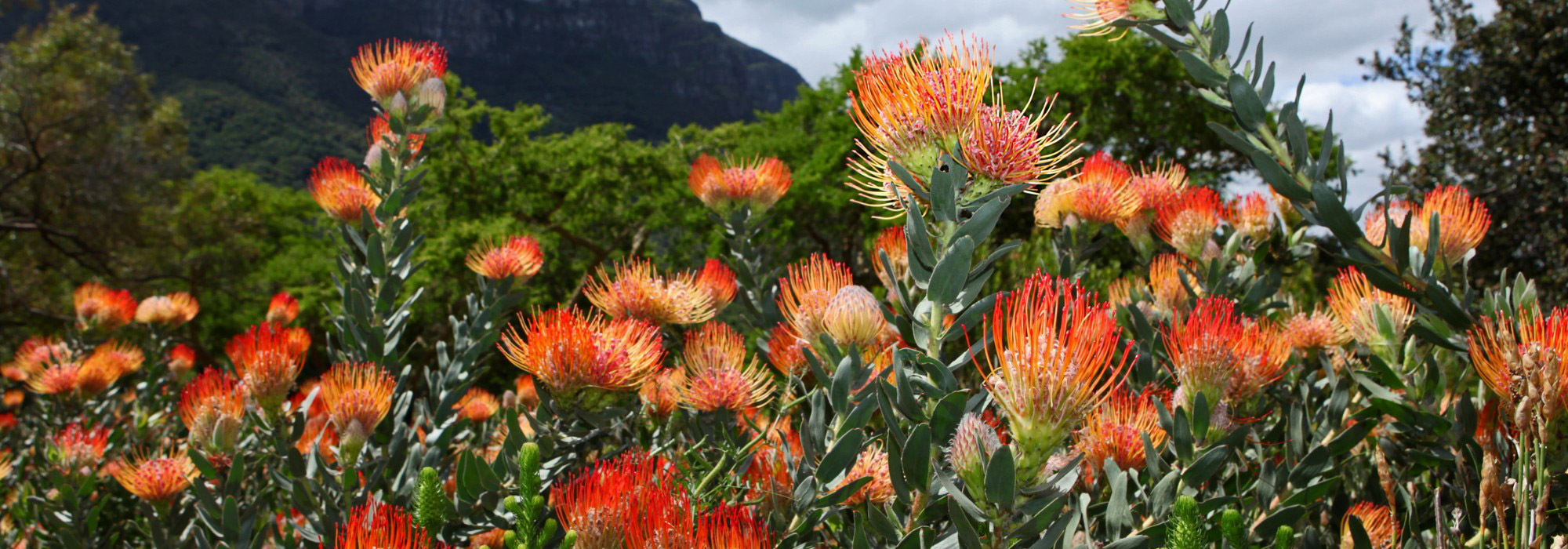
Create an exotic, immersive garden inspired by vegetal Safari
To create a true South African eden
Contents
This trend draws its roots from the lush and colourful landscapes of South Africa! The magnificent, lush South African plants are adorned with flowers in vibrant colours and transport us far from our shores. Plumbago, Crinum, Kniphofia, or Agapanthus invite us to a plant safari, without having to leave our garden. Lush foliage and vibrant flowering combine to create an exotic, escapist atmosphere. Here are our tips for bringing a little piece of Africa into your garden, on the terrace or balcony, for an escape! → Also discover our Plant Safari inspiration on pages 30–31 of our Spring–Summer 2024 catalogue.

For what type of garden?
From the smallest balcony to the grandest garden, passing terraces and inner courtyards, whatever space you have, you can transform it into a South African Eden. The only imperative: choose the plants to suit the site and climate. Depending on the region, it will be planted in the ground or in large pots that can be moved indoors for the winter. If an exotic or tropical garden proves naturally suited, as exotic plants are already in their element there, a city garden, a terrace or a balcony, provided they have enough sun and warmth, can also welcome the beautiful South African beauties! If you live north of the Loire or in a region with harsh, rainy winters, a large-scale setup is not advised. The key is to recreate a microclimate suited to these plants, often quite frost-prone, even if some prove hardier than they seem. In less clement regions, outside the Côte d’Azur and the Atlantic coast, you will therefore rely on a profusion of pots or large tubs carefully selected to receive sun and a sheltered aspect, which you will store away from the rigours of winter.
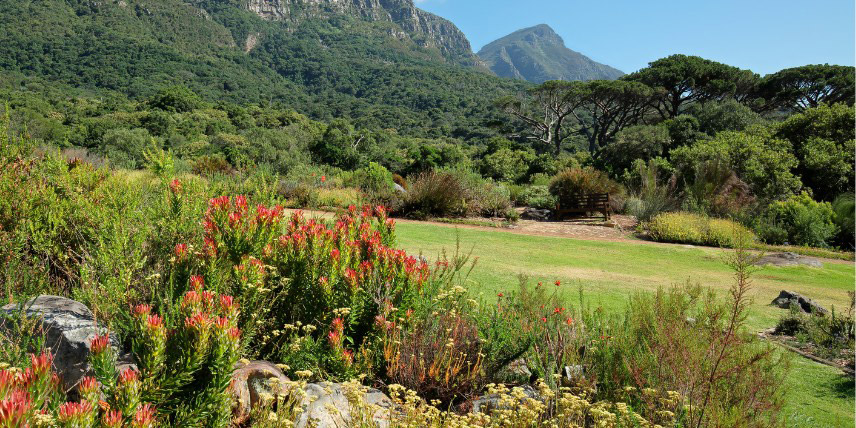
The Safari Vegetal trend garden draws on the landscapes and flora of South Africa. Here, Kirstenbosch National Botanical Garden in Cape Town.
Read also
10 hardy plants for an exotic dry gardenWhat ambience?
Southern Africa’s mountains, nature reserves, the Cape of Good Hope, rocky plains or verdant valleys… South Africa surprises with its diversity of landscapes and microclimates. In a safari-inspired plant display, we celebrate the beauty and richness of South African flora, seeking to bring colour and light to the maximum to evoke a sense of warmth. The ambience is warm, exotic and transportive, evoking vast spaces and lush nature of South Africa. The vibrant colours of flowering displays and the generous shapes of the foliage of South African plants are like radiant treasures brought back from this botanical journey. It is an eclectic garden where shimmering colours and luxuriant foliage mingle harmoniously. The plant selection features perennials or shrubs native to South Africa, exuberant, with a bold exotic habit, and flowers in vibrant colours that invite escape.
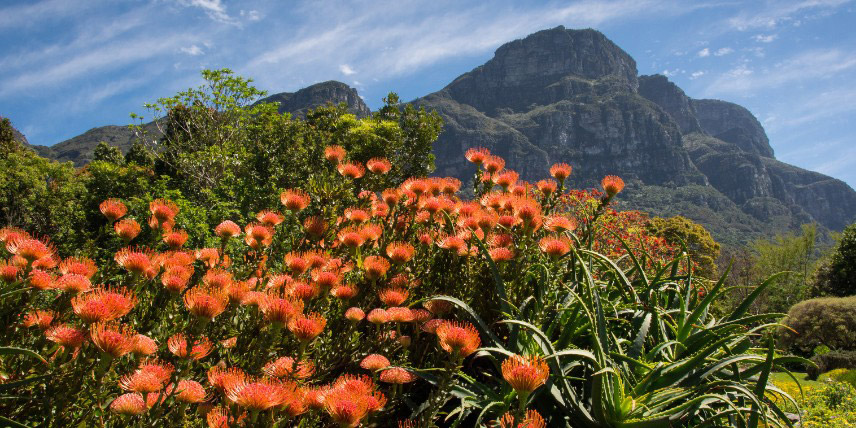
Leucadendrons and Aloes at Kirstenbosch Botanical Garden
Sensational flowering
The flowering displays of South African beauties are impossible to ignore. Generous and spectacular, they allow you to craft extravagant displays in the garden, or even in large pots on the terrace. Introduced with restraint, they are the stars of the display. The bigger the space, the more you can indulge in oversized forms, vibrant hues and eccentric growth habits. Some South African plants, such as Strelitzia reginae (or bird of paradise) or the Melianthus major, feature bold, architectural foliage that helps create anchor points in your garden and delineate the different zones. These architectural plants add volume and height. Others, such as the Dierama pulcherrimum (nicely nicknamed angel’s fishing rod) or the Phygelius capensis, have slender and elongated stems, as well as delicate and airy flowers, perfect for bringing lightness and movement.
The colour palette is vivid and vibrant, allowing for contrasting colour combinations. The orange flowers of Leonotis leonurus and Kniphofia, and the blue flowering of Plumbago capensis, provide dynamic, bold or soothing colour accents under the summer sun. These flowering displays with vivid colours contrast strongly with the foliage, adding extra appeal. The foliage of South African plants is just as important as their flowers in defining an exotic ambience. They also display a wide diversity of textures, ranging from fine to delicate (as with Anisodontea capensis) to fleshy and leathery, like the large leaves of Strelitzia.
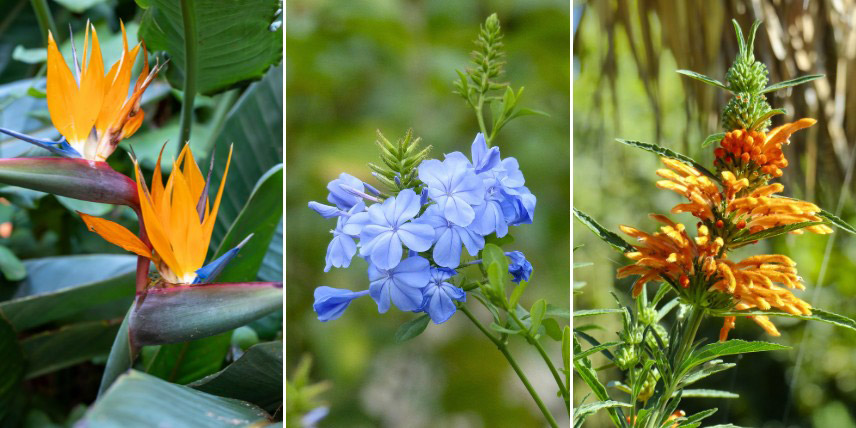
Strelitzia reginae, Plumbago capensis et Leonotis Leonurus
Read also
How to create a dry exotic garden?Which plants for a botanical safari?
To recreate this lush, transportive atmosphere, we are predominantly seeking generous plants with tropical accents that we can admire in the ground in the sheltered gardens of the milder regions of our country or in large pots elsewhere, which we will place on the terrace throughout the lovely season. It should be noted that many South African plants do not tolerate temperatures below -5°C. This is why we will, as far as possible, favour the hardier plants among the existing palette. These plants from Africa appear exceptionally floriferous and colourful, as comfortable in the ground as in large pots. They, however, require plenty of sun! Indeed they love sunshine and need warmth to fuel their interminable flowering. We therefore rely on a mix of perennial plants, bulbous plants, shrubs and climbers to stage this travelling garden:
- the Plumbago capensis: the Cape leadwort is a semi-climbing shrub that captivates with delicate sky-blue flowers gathered in clusters, which bloom from June to October. Its celestial flowering adds a touch of freshness and lightness while offering a striking contrast with the other, more flamboyant South African plants.
- the Leonotis leonurus: also known as “lion’s tail,” this hardy, woody perennial shrub, is cloaked in magnificent orange flowers arranged in spikes, from July to October. Melliferous, it attracts bees and butterflies, creating a lively and joyful atmosphere.
- the Gloriosa rothschildiana: this bulbous climber, also called Malabar Lily, produces all summer red flowers with yellow throats and undulating, elongated petals, giving it a unique and elegant look. Frost-sensitive, it is usually grown in a pot.
- the Melianthus major: a undershrub not very hardy with a fern‑like appearance whose leaves release a peanut or cocoa scent when crushed. In spring and summer, this spectacular foliage which rises to over 2 m in height and persists in mild climates, is adorned with red spikes just as remarkable.
- the Anisodontea capensis ‘El Rayo’: this charming mauve semi-perennial shrub forms a bush covered in hibiscus-pink flowers. Hardy to -8°/-10°C in well-drained soil, it adds a romantic touch.
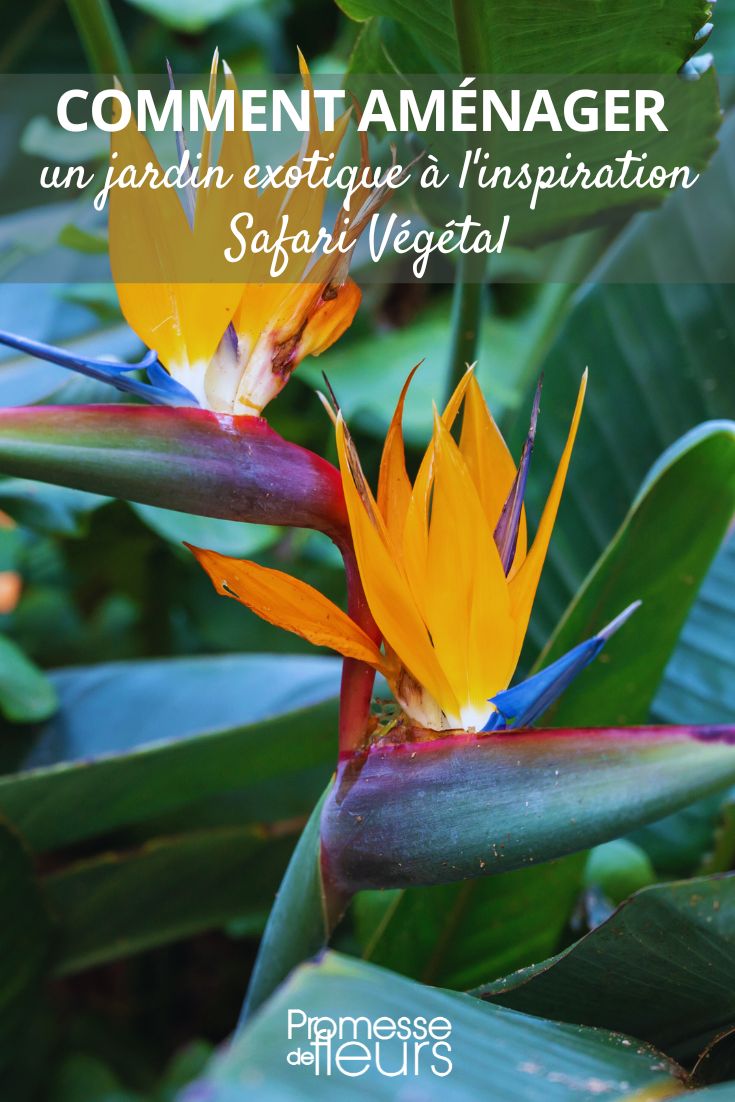
- the Strelitzia reginae: also known as the bird of paradise, this iconic perennial plant of South African gardens produces flowers in the shape of a bird’s head, in vivid colours (orange and blue). Frost-tender, this exotic flower par excellence is easily grown in a pot.
- the Podranea ricasoliana: this vigorous trumpet creeper is adorned from summer to the first frosts, with pink trumpet-shaped flowers. Ideal for dressing a wall, a pergola or an arbour; it is an excellent climber for a southern-style garden that is otherwise easily grown in pots, to be overwintered in winter in cold regions.
- the Tecomaria capensis: this other South African trumpet creeper, more shrub-like than climbing, but just as frost-tender, produces numerous clusters of tubular yellow-orange flowers from late summer to autumn. Capable of climbing up to 4 m in height, it can be grown in the garden in our milder regions, and also lends itself to container cultivation, overwintering in winter in colder regions.
- the Crinum powellii ‘Rosea’: despite its exotic appearance, this bulbous plant is quite frost-hardy (-12°C) in well-drained soil. It bears elegant pink trumpet-shaped flowers that open from summer to autumn.
- the Leucadendron ‘Fireglow’: this handsome South African shrub is distinguished by its bright red bracts, which unfurl between February and April, and its evergreen foliage. With an intensely exotic look, it fears the cold and is grown in the ground only in coastal gardens spared from heavy frosts, in pots it should be stored indoors during winter outside the orange zone.
- the Kniphofia: these perennials with spectacular summer flowering, ranging from orange to yellow, withstand our rather cold winters (-10 to -15°C).
- the Dierama pulcherrimum: the “angel’s fishing rod” is a perennial that bears delicate pendulous bell-shaped flowers, in shades from pink to purple, from June to September. Native to the damp meadows and marshes of South Africa, it favours light, moist soil. Moderately hardy, this infinitely graceful plant also thrives in a large pot.
- the Phygelius capensis: the Cape fuchsia forms a very floriferous shrub graced with long red-orange bells from spring to autumn. Hardy to -12°C, it can be planted in ground in many regions.
- the Agapanthus ‘Black Jack’: an elegant and refined variety, with umbels of a very dark violet with blackish reflections, awarded at the Chelsea Flower Show 2023. Hardy to -10°C, its foliage persists in winter in mild climates.
- the Proteas: shrubs not very hardy (down to -4°C) but truly fascinating with their large flowers in leathery pink to red bracts. Pot cultivation is preferable, outside the mildest zones of our country, and overwintering should be arranged from the first frosts.
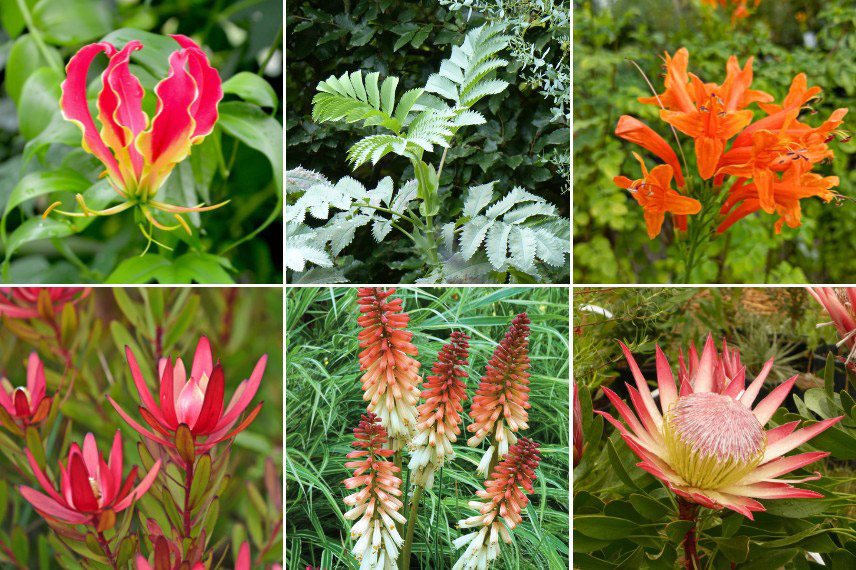
Gloriosa rothschildiana, Melianthus major, Tecomaria capensis, Leucadendron, Kniphofia ‘Orange Vanilla Popsicle’ and Protea ‘Pink Crown’
- Subscribe!
- Contents
Comments