





























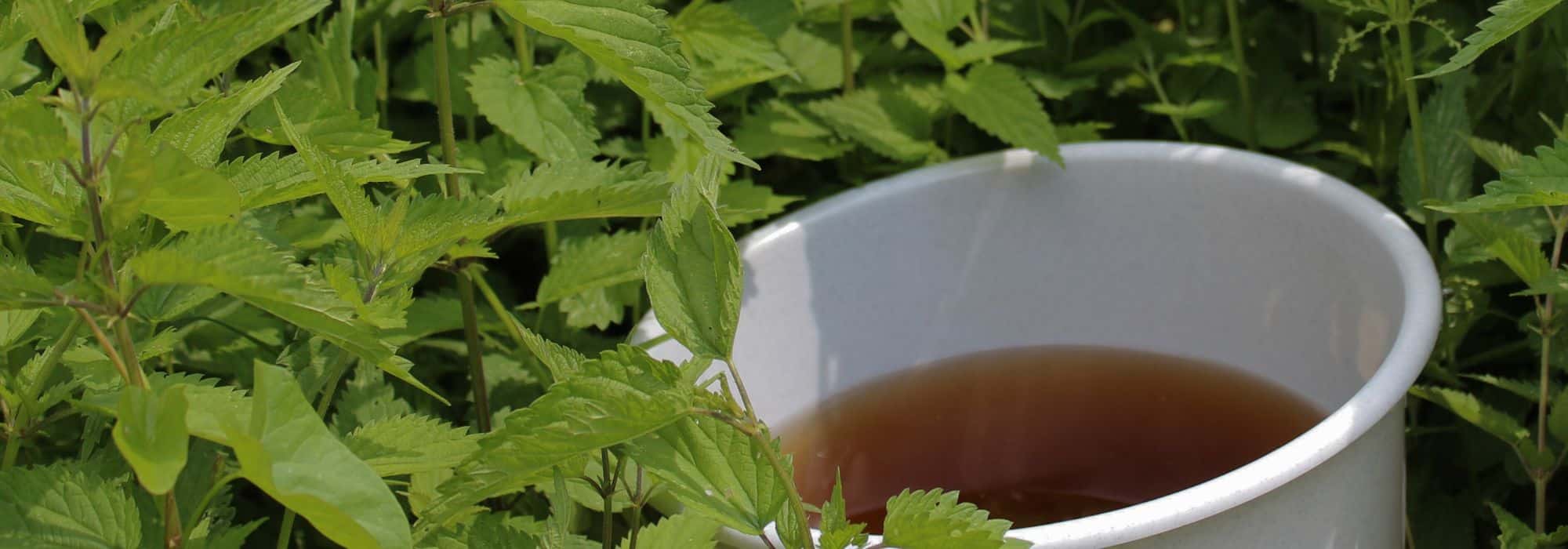
Decoction and manure for the garden: what are the differences and why using them?
Practical guide to successful organic gardening
Contents
Organic gardening is an increasingly widespread practice, which involves growing plants without using synthetic chemical products. To combat diseases and pests, organic gardeners rely on natural preparations, such as decoction and manure. Although these two preparations are made from plants, they show notable differences in terms of preparation and use. In this article, we will take a closer look at decoction and manure to better understand their specificities.

Decoction: a preparation made from boiled plants
A decoction is a liquid preparation obtained by boiling parts of plants (leaves, roots, stems) in water for 10 to 30 minutes. This process extracts the active constituents from the plants through heat. The decoction is then cooled and filtered before being used soon after preparation, as it keeps for only a short time.
It is particularly effective at addressing specific plant problems, such as fungal diseases (downy mildew, powdery mildew, etc.) or insect attacks, thanks to its high concentration of active substances. Generally, it is applied as a spray onto the leaves of the plants.
Preparation:
- Chop the aerial parts of the plants (leaves, stems…).
- Immerse them in one litre of water.
- Bring to the boil and simmer gently for 10 to 30 minutes.
- Let cool, then filter the solution.
Examples of decoctions :
- Horsetail decoction: Strengthens plants’ natural defences, stimulates growth and combats cryptogamic diseases (downy mildew, powdery mildew) and repels insects (aphids and red spider mites).
- Comfrey decoction : Growth stimulant and natural fortifier, rich in potassium and calcium.
- Nettle decoction : Strengthens plants’ natural defences, stimulates growth and combats aphids, red spider mites and cryptogamic diseases. Rich in nitrogen and iron.
- Fern decoction : Repels slugs and snails thanks to its unpleasant odour.
- Garlic decoction : Repels aphids, thrips and fights cryptogamic diseases thanks to its antibacterial and antifungal properties.
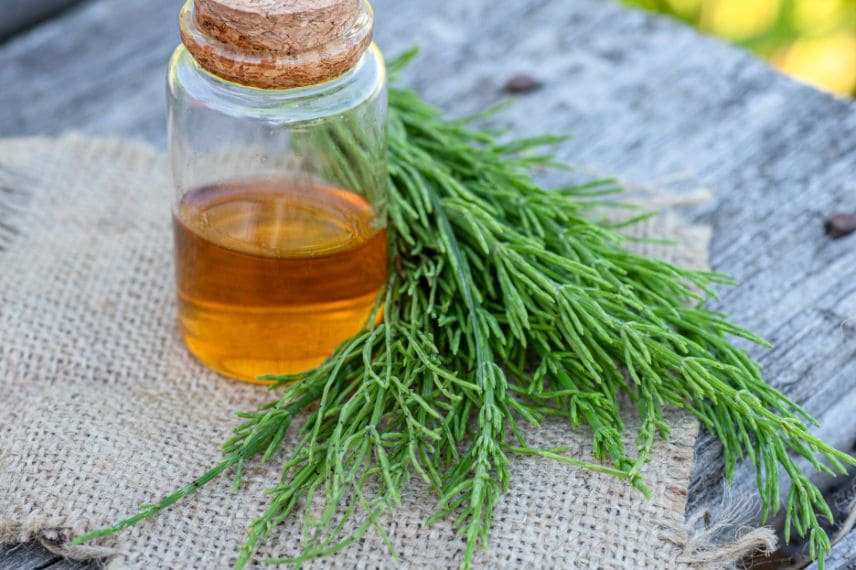
Horsetail decoction
Read also
Comfrey manure: recipe, use and benefitsManure: a preparation made from fermented plants
Manure is a liquid preparation obtained by macerating plants in water for several days (10 to 15 days generally), or even several weeks. This maceration enables the fermentation of the plants, releasing active compounds. Once the fermentation process is complete, the preparation is filtered. The manure will then be diluted in water before use, as it is highly concentrated.
Manure can be used in gardening in various ways. It can serve as a natural fertiliser, by providing nutrients to plants. It can also stimulate plant growth, by promoting the development of roots and leaves. Finally, the manure can be used as a pest repellent, by repelling harmful insects.
Preparation:
- Chop the plants (leaves, stems, roots…).
- Place them in a plastic container with non-chlorinated water.
- Stir daily and allow to ferment for 10 to 15 days.
- Filter the solution and dilute before use.
Examples of manures :
- Nettle manure : Strengthens the plant’s natural defences, stimulates growth (rich in nitrogen and iron) and repels aphids, spider mites and powdery mildews.
- Tansy manure : Repels whiteflies, aphids and caterpillars.
- Horsetail manure : Strengthens the plant’s natural defences and fights blight and powdery mildew, and repels slugs.
- Fern manure : Repels slugs and snails thanks to its unpleasant odour for these molluscs.
- Garlic manure : Repels harmful insects (aphids, thrips) and fights cryptogamic diseases thanks to its antibacterial and antifungal properties.
- Elder manure : Strengthens the plant’s natural defences and combats harmful insects (aphids, mites) and cryptogamic diseases.
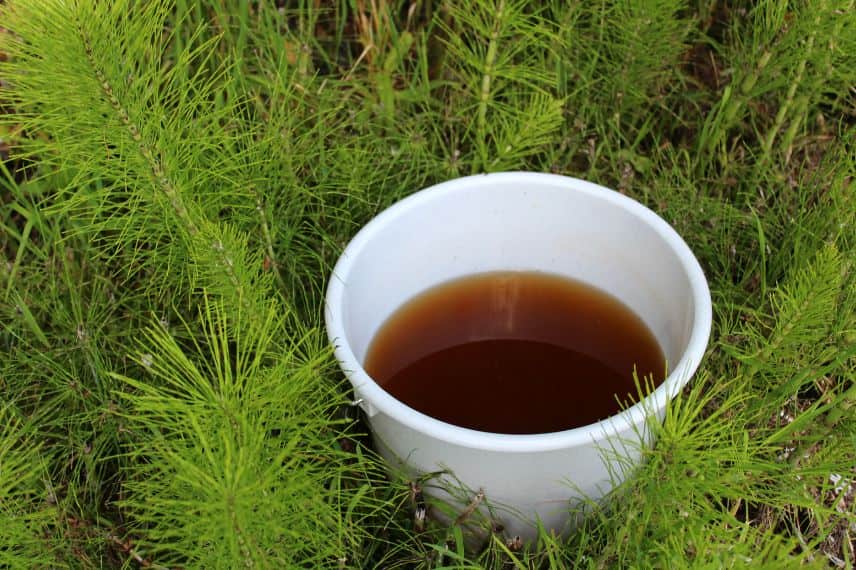
Horsetail manure
Decoction and manure: what are the differences?
Although decoction and manure are both plant-based liquid preparations, they differ notably in terms of preparation and use:
- A decoction is obtained by boiling plants in water, whereas manure is obtained by letting plants macerate in water.
- Decoction is generally used to combat diseases and pests, whereas manure has a broader action, capable of acting as a fertiliser, growth stimulant or repellent.
- A decoction acts quickly and effectively against diseases and some insects, but its duration of effectiveness is shorter. Whereas manure has a slower action and less powerful, but more durable and fertilising.
- Decoction should be used promptly after preparation, as it keeps for only a short time. Manure, on the other hand, keeps longer, provided storage conditions are observed
Read also
Nettle manure: how to make it?To learn more about manures and decoctions
Also read our articles:
- Repellent plants to be used as manure and decoctions to protect crops
- Stimulating plants to be used as manure and decoctions to boost your crops
- Subscribe!
- Contents
Comments