





























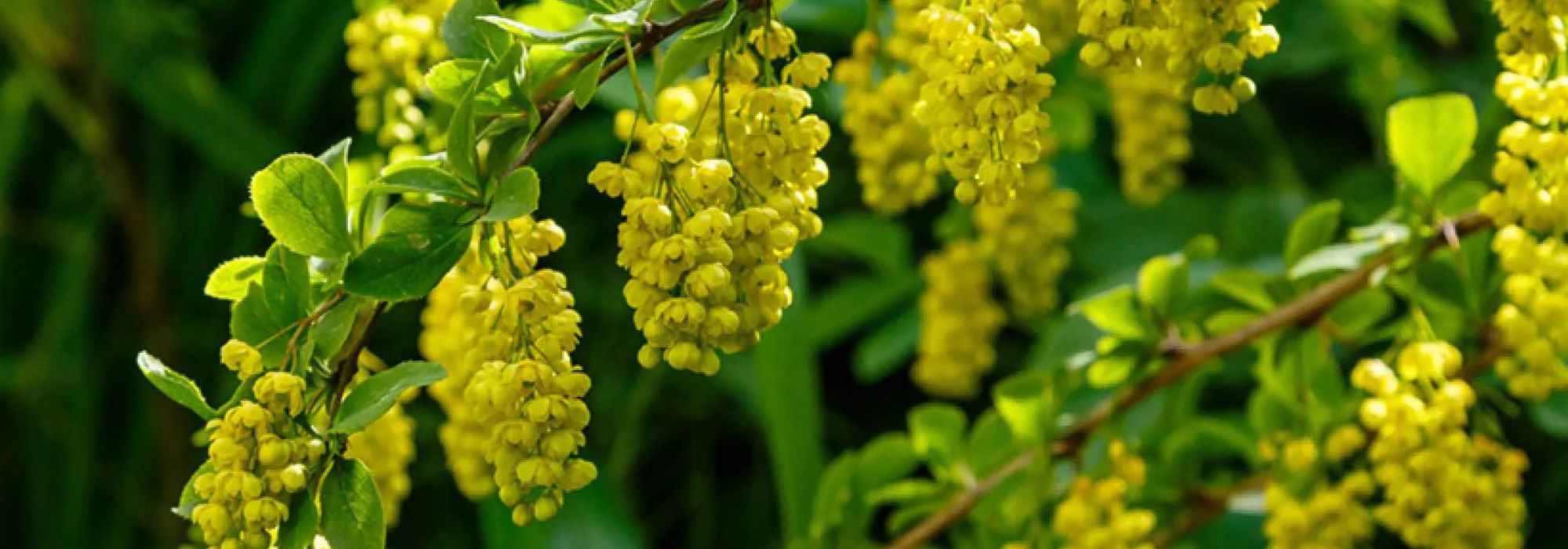
Decorative-flowering barberry: our tips to choose and plant this colourful shrub
Flowers in abundance in spring
Contents

Our selection of Berberis with decorative flowering
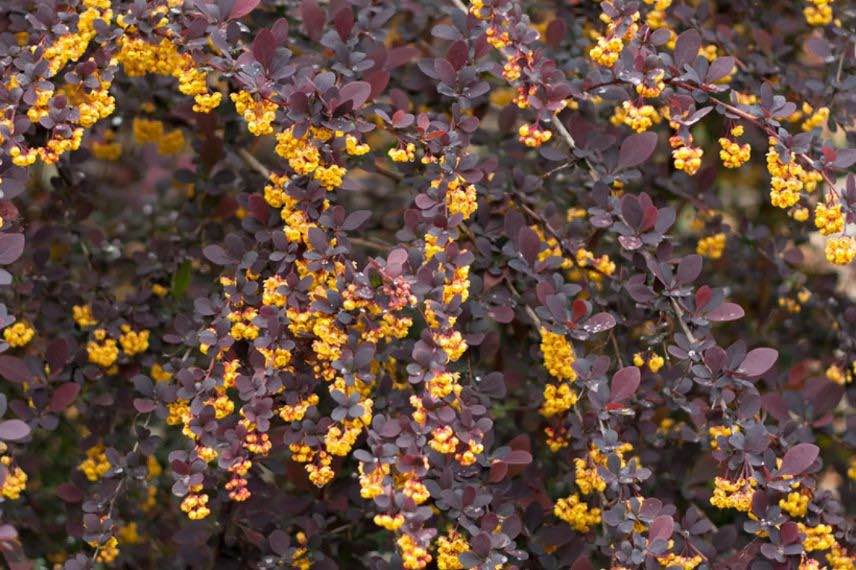
Berberis ottawensis ‘Superba’
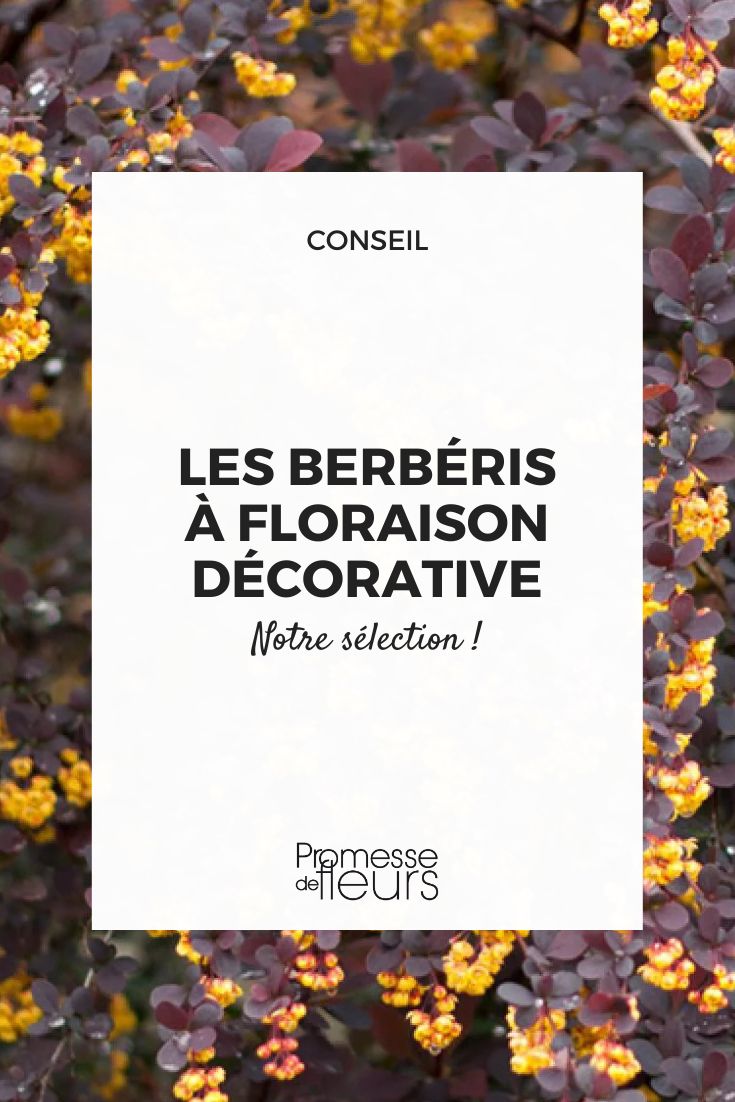
Berberis ottawensis ‘Superba’ is a vigorous and spectacular hybrid, appreciated for its pendulous clusters of yellow flowers in spring, which contrast with its purple-tinged foliage. In autumn, this foliage turns a brilliant crimson-red, offering a striking display. This bushy, dense shrub reaches 2.5 m in height and width. Ideal as a defensive hedge, as a specimen or in a border, it also attracts pollinators in spring and birds thanks to its persistent red berries in winter.
‘Superba’
Berberis koreana
Originating from Korea, the Berberis koreana captivates with pendant clusters of bright yellow and luminous flowers, which appear in May–June. These flowers give way to red, fleshy and decorative fruits in September, highly appreciated by birds and usable in jams. This deciduous shrub with dark red variegated foliage in spring reaches 1.5 to 2 m in height. Its leaves take on a fiery red hue in autumn, enhancing the plant’s decorative appeal.
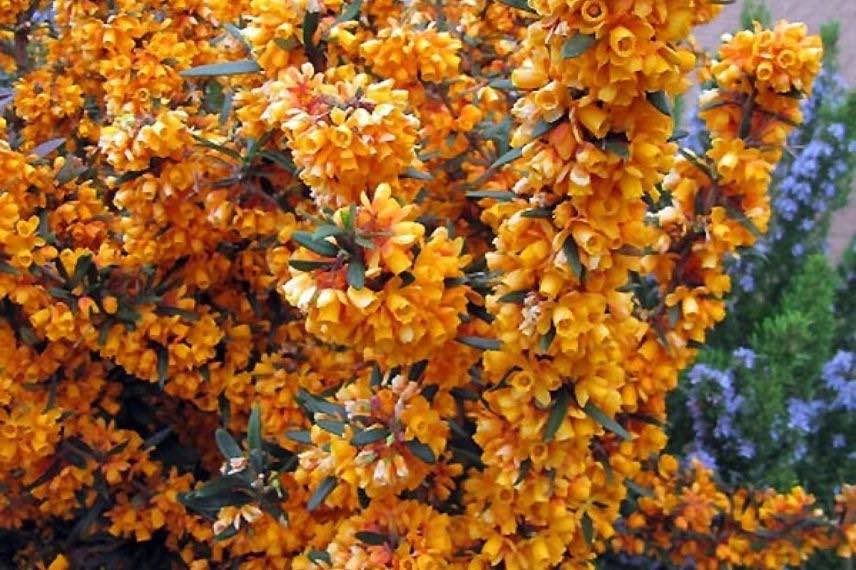
Berberis linearifolia ‘Orange King’
Berberis linearifolia ‘Orange King’ stands out for its bright orange spring flowering, brilliant and silky, which begins in April. This flowering, sometimes remontant into autumn, appears as small umbels of 2 to 4 flowers above dark-green, glossy foliage. Evergreen and hardy, it forms a shrub about 1.75 m tall. Versatile, it fits into an informal hedge, a border, or even in a container on a terrace, where it offers spectacular flowering and glossy red fruits late in the season.
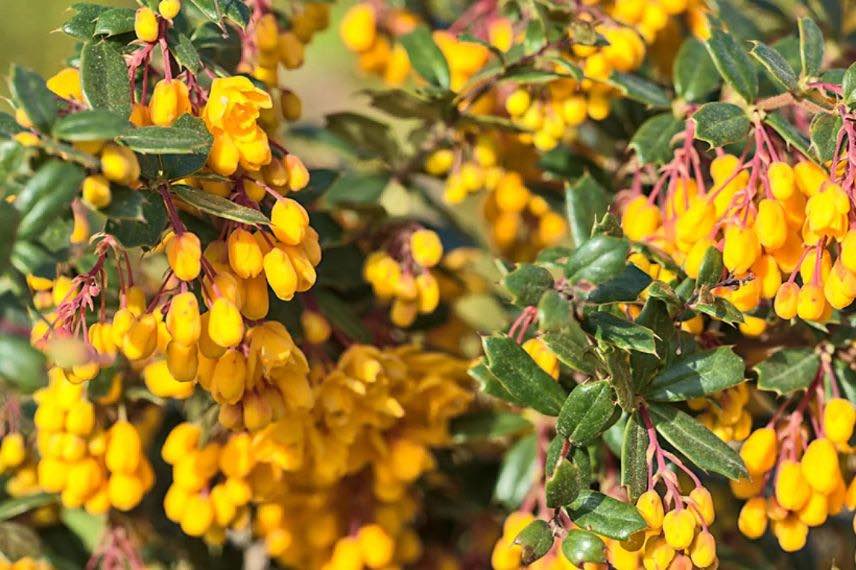
Berberis frikartii ‘Amstelveen’
Berberis frikartii ‘Amstelveen’ charms with pendant clusters of bright yellow flowers tinged with red in spring (April–May). Its evergreen, dark-green glossy foliage, with a nearly white reverse, takes on warm red-orange tones in autumn and winter. This low, spreading shrub reaches 1 m in height and 1.20 m in width, making it perfect for borders, slopes or rockeries. After flowering, it bears small blue-pruinose berries in summer, adding an extra decorative dimension.
‘Compacta’
Where to plant Berberis?
For a healthy Berberis, it is recommended to plant it in full sun or partial shade. Light directly influences the quality and abundance of flowering.
Berberis adapts to many soil types, making it a relatively low-maintenance plant. However, it prefers well-drained soil, as it dislikes stagnant moisture. Light, stony or slightly calcareous soils pose no problems. Avoid soils that are too compact or waterlogged, especially in winter. If your soil is too clayey, plan to incorporate sand or gravel at planting to improve drainage.
Berberis is a very versatile bush that can be used in several ways in the garden:
- In a defensive hedge : With its sharp thorns, Berberis is perfect for forming an impenetrable natural barrier to intruders (including animals). It is often paired with other defensive bushes such as Pyracantha.
- In a decorative hedge : Paired with flowering bushes, it contributes to the creation of a colourful and varied hedge all year round.
- In isolation or in a bed : Planted alone or within a bed, it draws the eye with its foliage colours and its vibrant flowering. It is an excellent way to add depth and contrast to borders of bushes or perennials.
- In pot or container : For small compact varieties, cultivation in a pot is perfectly feasible. Install it on a terrace or balcony to enjoy its ornamental value all year round.
Our practical tips
- Do not plant too closely : Allow at least 80 cm to 1 m apart between Berberis to allow them to develop without crowding.
- Careful with the thorns : Wear gloves when planting and pruning, as the branches are very thorny. This characteristic is useful for forming defensive hedges, but it may surprise you if you’re not expecting it.
- Anticipate growth : Some Berberis varieties can reach 2 metres high and wide, while others remain very compact. Think about the desired final effect before choosing the place to plant it.
How to pair them?
Berberis is a versatile bush that fits easily into all garden styles. With its colourful foliage, its bright flowering and its decorative berries, it offers multiple pairing options to create balanced and attractive scenes all year round.
Pairing foliage colours
Berberis with purple or red foliage pair wonderfully with shrubs with light, gold or variegated foliage. For example, a purple Berberis contrasts perfectly with Philadelphus ‘Innocence’ (mock orange) Philadelphus ‘Innocence’ (mock orange) with white-variegated foliage. The grey or silvery foliage of Santolina or Artemisia also provides a striking contrast.
Play with staggered flowering
For a garden that flowers all year round, it’s wise to pair Berberis with shrubs that have staggered flowering. For example, a Berberis with spring flowering pairs well with Weigela florida that blooms in summer, or with Cornus alba whose red stems decorate the garden in winter. This complementary pairing ensures year-round appeal.
Create diverse and defensive hedges
Thanks to its sharp thorns, Berberis is a top choice for defensive hedges. To avoid a hedge that is too uniform, it can be paired with other defensive shrubs such as Pyracantha or Holly. For a softer, more flowering mixed hedge, it can be integrated with shrubs such as Photinia ‘Little Red Robin’ or Viburnum tinus. This diversity of shapes and colours offers a living and ever-changing hedge through the seasons.
Structuring borders
Berberis adds structure to shrub or perennial borders. Its dense foliage and thorny shoots allow you to create backdrops for borders or focal points. It can be paired with delicate grasses such as Stipa tenuifolia, or with flowering shrubs such as Spiraea × vanhouttei (Van Houtte Spiraea) or Ceanothus ‘Puget Blue’. This variety of forms and colours offers a living, changing hedge through the seasons.
Emphasise decorative berries
Berberis often produces autumn berries, red, blue or black depending on the variety. To prolong this decorative effect, they can be paired with other berry-bearing shrubs such as Callicarpa (purple berries) or Cotoneaster. These berries are not only decorative, they also feed birds, making Berberis an excellent choice for a wildlife-friendly garden.
‘Orange King’ doesn’t disappoint with its abundant flowering
Read also
How to create a Berberis hedge?Care and practical tips
Pruning
Berberis pruning is straightforward and unobtrusive. For deciduous species, pruning is carried out just after flowering, usually in May–June. This intervention helps to maintain a neat, bushy habit and stimulates the production of new colour shoots. For evergreen species, a light pruning at the end of winter is sufficient to remove dead or damaged branches. If Berberis is used as a defensive hedge, an annual pruning in late summer helps to maintain a dense and impenetrable structure.
Watering
Berberis is a shrub hardy and drought-tolerant once well established. After planting, it is advisable to water regularly during the first year to ensure a good root establishment. Thereafter, it requires no further watering, unless there is a prolonged drought.
Fertilisation
Berberis does not have high fertiliser requirements. However, a well-decomposed compost or manure application at the base in spring can stimulate growth and strengthen flowering. This is especially useful for Berberis grown in pots, which have fewer nutrients.
Diseases and pests
Berberis are generally hardy and not prone to diseases, but they can sometimes be affected by the powdery mildew (a white felt on the leaves) or the rust (orange spots). To prevent these diseases, it is advised to air the base of the shrub during pruning and to avoid excess moisture. Preventive treatments with sulfur or Bordeaux mixture in early spring help to anticipate these problems.
Gardener’s tips
- Be mindful of the thorns: When pruning or maintaining, wear thick gloves to avoid injury from its sharp spines.
- Leave the berries on the shrub: They attract birds that love them, contributing to garden biodiversity.
- Mulch at the base: In summer, mulching around the base of Berberis reduces water evaporation and suppresses weed competition.
- Subscribe!
- Contents
Comments