




























Difficult plants to grow in pots
Reasons not to install them on the balcony or terrace
Contents
Before you fall for a lovely plant to place on your balcony, terrace, or in a pot in your garden, make sure to check the needs of the plant you like. Its requirements for light, water, wind resistance, development at ripeness, and hardiness. Just as you might buy a piece of furniture on a whim (well, unless it doesn’t fit through the door), always consider the existing conditions in your home and think about where you want to place your pot before succumbing to a plant. Plants are the enemies of impulsive or unconsidered purchases. Moreover, less visibly, some plants have root developments that are not compatible with pot planting.
If you have a balcony or terrace, think of your space as you would a room and analyse your specific conditions beforehand to choose the most suitable plants. You will be rewarded after a few small years. Discover in our article the reasons not to plant certain plants in pots.

Plants that need space to thrive
According to their mode of development, plants do not occupy the same surface area on the ground, visible above ground or underground with their root system. Some plants grow significantly by expanding each year. This is emblematic of Peonies, for example, which benefit from being grown in open ground for this reason. They quickly feel cramped in pots with their compost, limited in their flourishing. On the other hand, given the longevity of the Peony and the time it sometimes takes to settle before flowering, planting in open ground is necessary for this majestic perennial: you plant it for at least two human generations!
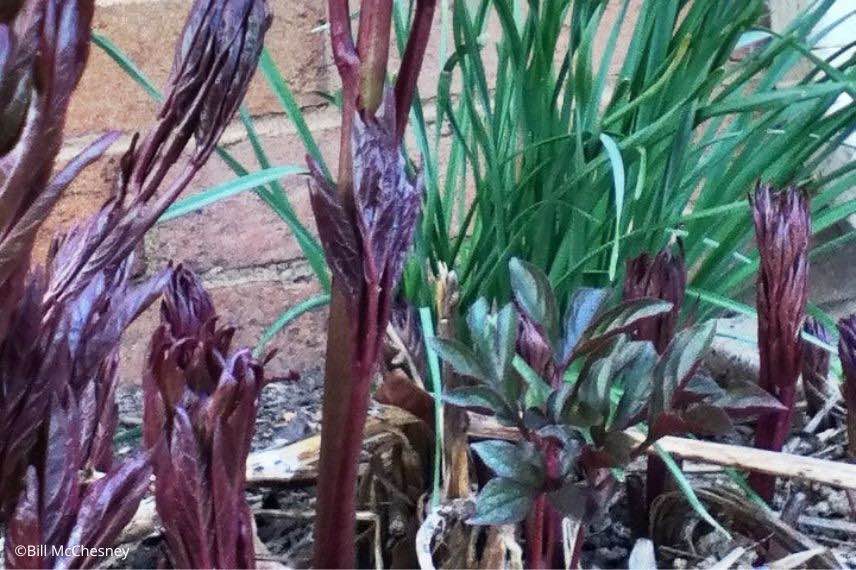
In spring, each year, the young shoots of herbaceous Peonies occupy an increasingly larger space
Read also
The ABC of Pot PlantingPlants with taproots
Other plants have a root system consisting of a taproot, which will burrow deep into the soil. These plants will quickly encounter a frustrating limitation in pots, which is not the right place for them. They need deep soil to thrive. This is the case with the Oriental Poppy, for example. Its long, thick root requires deep soil. The same goes for Eryngiums or Blue Thistles. These plants are too constrained by the limited depth of a pot. They will quickly stagnate. It is important not to insist on choosing a plant that is unsuitable for the medium you intend to place it in, as inevitably, you will end up losing it. By starting your pot planting with your space and its characteristics in mind, you can always create a beautiful and lush area, with satisfaction. The choice is vast.
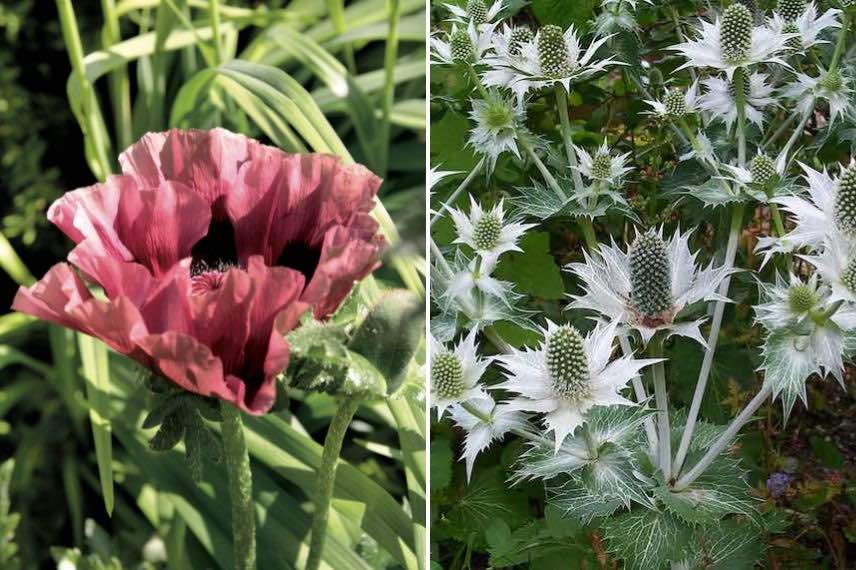
Papaver orientalis and Eryngium
Thirsty plants
Let’s now talk about plants that require a high level of humidity to support their growth and flowering. In open ground, they can find this without too much watering, in soils that retain moisture well. In pots, however, the substrate, even when carefully chosen for good water retention, dries out much more quickly. On one hand, because its quantity is small, it warms up faster, and in a porous container like terracotta, for example, water evaporation is even more rapid. Often, plants with abundant and generous flowering are considered to be thirsty: they are greedy for fertiliser to bloom well, and they also require plenty of water. If their foliage is soft, fine, with large leaves, and if their flowers are impressive or they bloom continuously over a long period, they need moisture in the soil or should be watered very regularly in pots. Think, for example, of Rhododendrons or Azaleas, Fuchsias, Impatiens, and perhaps some Hydrangeas. There is another plant that is often seen planted in large containers, which does not fit these descriptions, but it is easy to observe when it is lacking water: the Bamboo. While bamboo does have a practical limit to its expansion in these containers, how many are dehydrated, yellowing, and losing their foliage?

Azaleas and Rhododendrons are very floriferous; they need to be supported by frequent watering
Tender plants
Just as potting substrate warms up more quickly, it also freezes faster in winter than the garden soil. It is always important to consider the hardiness conditions of your plant and whether it is suitable for your region. For this, USDA guidelines are invaluable. Compared to hardiness ratings expressed in degrees or USDA zones, a potted plant loses 1 to 2 degrees of hardiness in a pot and sometimes more under poor conditions (cold winds, wet, poorly drained soil). The advantage is that a potted plant can be moved; theoretically, you can shelter it. The caveat is that most of the time, it will need a very bright, unheated space.
→ See our article on USDA zones in France.
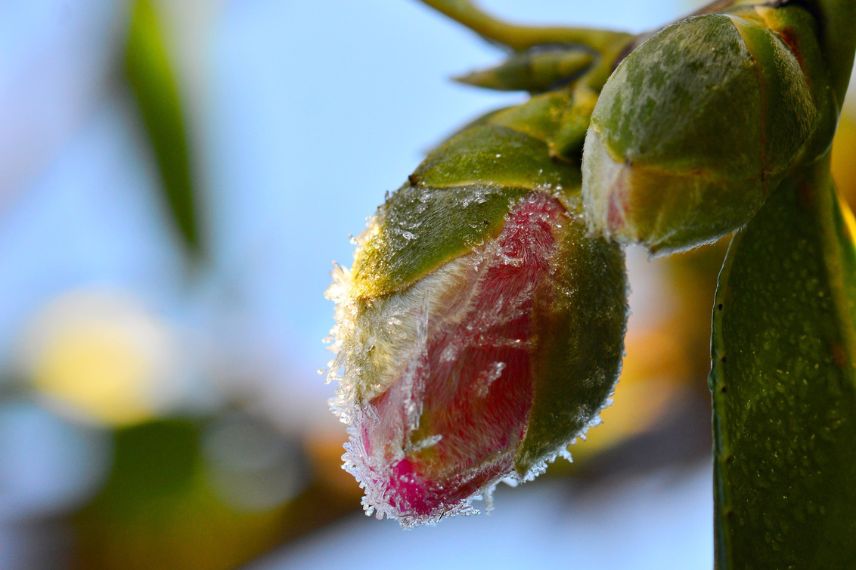
A frozen Camellia bud
Large-growing plants
A shrub or a tree seen in a garden centre in a pot may look harmless and quite cute, but it often grows much larger than we admit. In a pot, you might think that you will prune it regularly or that the pot will restrict its growth. This is true, but is it desirable? Especially since many will struggle in these conditions. Large-growing shrubs or trees are not suitable for pot planting. However, many of them have a dwarf variety. Dwarf varieties of shrubs and trees are often available, and these are the only ones you should choose to plant in pots. Once again, do not constrain their size and needs to your desires.
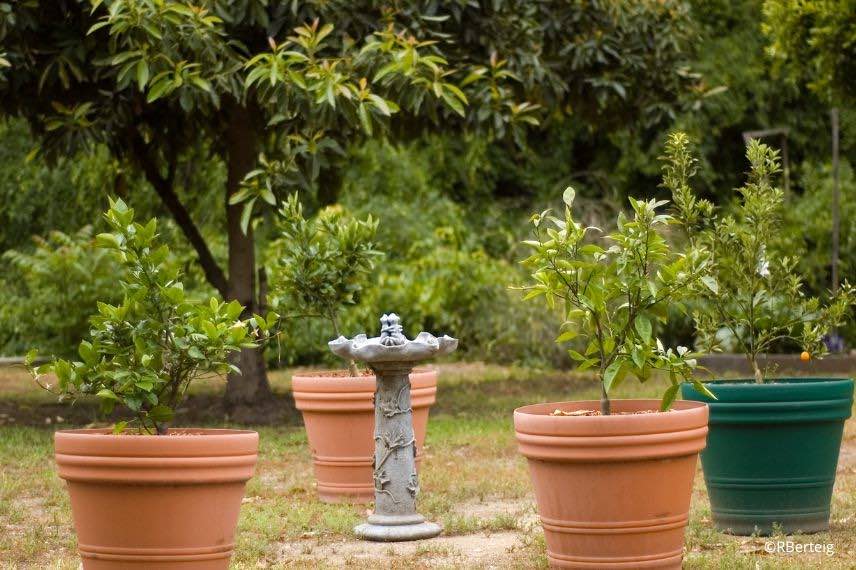
Dwarf citrus trees in large pots
The issue of drought and the tiger mosquito
Let’s add a chapter here to discuss the tiger mosquito, which is present in many regions. It is recommended and necessary to prevent the proliferation of the tiger mosquito by not allowing standing water outside your home. Therefore, be careful not to leave saucers under potted plants with water. While in summer, your plants might appreciate the excess water from the saucers, it is best to avoid leaving them or using a saucer. Adapt your plant choices to these conditions and opt for heat and dry soil plants. Obviously, this advice is equally applicable to the hot and dry summers we are increasingly experiencing. Choose your potted plants with the idea and perspective of spending the summer on a terrace, balcony, or garden where they can withstand a bit of water restriction or very hot days.
Consider Mediterranean plants, plants from the Canary Islands or South Africa, from warm regions, if their hardiness conditions can adapt to your area or if you have a place to winter them. Think of Sedums, Houseleeks, Sages, Perovskias, and all drought-tolerant perennials. Also, check out our section on drought-resistant shrubs. Ensure they are well-suited for pot planting. However, this does not mean they can live without watering! Regarding bulbs, spring-flowering ones appreciate dry soil once their flowering is over. Similarly, it is easier to maintain a cool substrate in spring than in summer, making spring-flowering perennials and shrubs easier to manage in pots.
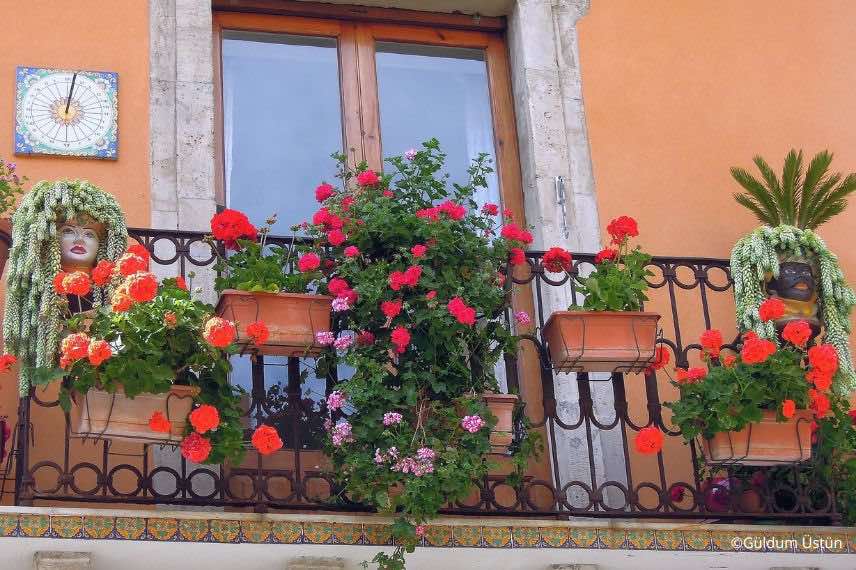
A balcony in Sicily with beautiful Sedums in pots (in face pots)
- Subscribe!
- Contents
Comments