





























Discover 5 exotic fruit trees to grow in France
with our tips for successful planting and care
Contents
When exotic fruits acclimatise to our climates, the gourmet gardener’s interest awakens. Let the gustatory surprises begin! Pitaya, guava, avocado tree or banana tree come from distant lands and yield surprising harvests of tropical or exotic fruits! If they prove fairly frost-sensitive and require mild winters, they can fruit here, provided certain conditions; we recreate their original medium, i.e., warm and humid. In our regions with the harshest winters, they can easily be grown in pots to be kept in a greenhouse, in a conservatory, or even in a flat during the off-season. It is a new orchard revealed as an invitation to a journey of discovery, with no need to travel thousands of kilometres. Discover the new varieties of fruit trees to grow in France that join our catalogue!

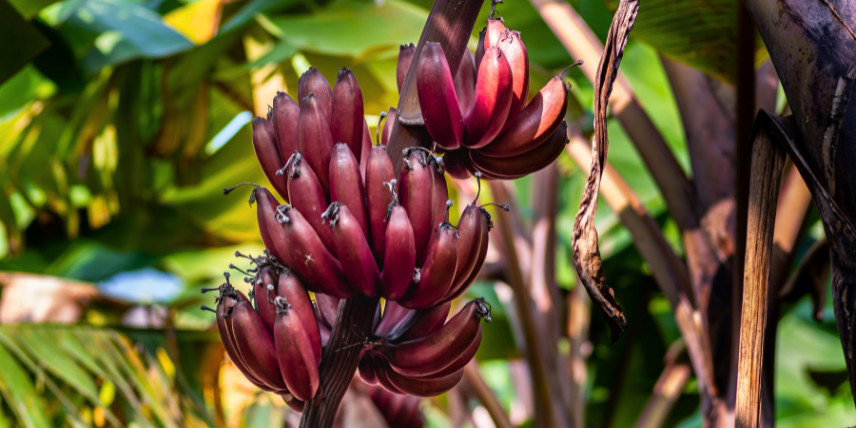
Red Dacca dwarf banana - Musa acuminata
The dwarf red banana tree ‘Red Dacca‘ (Musa acuminata in Latin) is a rare banana tree variety in cultivation! It is distinguished by its modest size, typically not exceeding 2 m in height and 1.50 m in width. Small proportions that allow it to be grown under our latitudes, in a pot, indoors, in a greenhouse or conservatory or even in the house, kept warm, to shelter it from the cold in winter, as soon as night-time temperatures fall below 10 °C. In our regions, it is therefore grown only in tubs or large pots in a rich, well-drained substrate, but it can be taken outdoors during the warm season, from May–June to late August–early September. In these conditions and if it benefits from sufficient water, warmth and light, it will reward you with small pink bananas, about 10 cm long, deliciously sweet with a hint of raspberry flavour. Their skin is pink-tinged when ripe. They reveal pale yellow, creamy and melt-in-the-mouth flesh. The foliage, luxuriant, is composed of large green leaves. Flowering takes place in summer and takes the form of a long inflorescence, pendulous, formed of purple bracts which gradually reveal yellow and cream flowers, followed by the fruits. This tropical plant prefers warm and humid climates. It is important to maintain constant humidity around it, especially in summer, and to protect it from cold and drying winds.
Read also
7 exotic vegetables to discoverAvocado tree 'Hass' - Persea americana
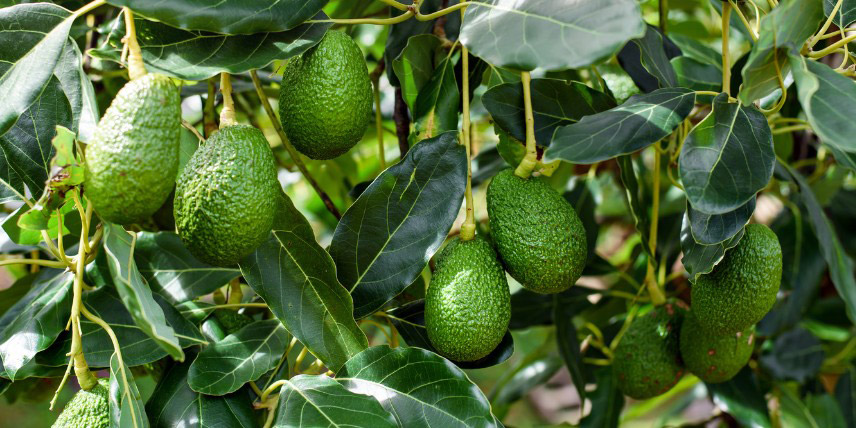
The ‘Hass’ avocado tree is a beautiful self-fertile variety, capable of self-pollinating. Frost-tender (to around -4°C), it is only grown in open ground in the zone known as the orange tree zone, i.e., along the Mediterranean fringe. It then prefers sun and protection from strong winds. In cooler regions, it is recommended to grow the avocado tree in a pot, preferably in a greenhouse or conservatory, or on a balcony that is well exposed and sheltered from winds. When winter temperatures drop too low, it is essential to bring it indoors into a bright frost-free room, but not heated. If it can climb up to 7 metres in height when grown in the ground, its pruning is limited to 2–3 metres when grown in a pot. The leaves are a deep, glossy green and are densely arranged on the branches, giving the tree a dense, luxuriant appearance all year round.
When the conditions are right, it yields fruits of good size which are distinguished by their thick and pebbly skin, which takes a brown-purple hue at ripeness. The flesh of Hass avocados is fibre-free and has a smooth, almost creamy texture that melts delicately on the palate. Their flavour, slightly sweet and subtly aromatic, evokes hazelnut. With proper care and an optimal combination of warmth and humidity, it is possible to obtain avocados after 4 to 8 years of cultivation. Patience and perseverance are therefore essential to enjoy these delicious fruits!
Pitaya, red dragon fruit - Hylocereus undatus
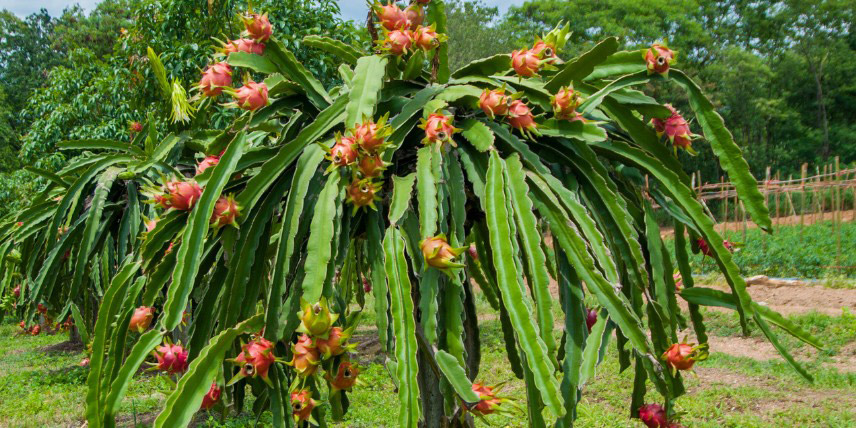
Hylocereus undatus, more commonly known as pitaya or dragon fruit, is an astonishing species of climbing cactus. Native to Mexico, this tropical plant requires a warm, frost-free climate to grow and to produce, after six or seven years of cultivation, the famous dragon fruits, both decorative and edible. In our latitudes, it is essential to grow Hylocereus undatus in a pot so that it can be brought under glass or into a bright, heated shelter at 10°C during winter. This curious cactus produces long, green, succulent stems that are somewhat spiny. Supported on a stake to climb, it can reach 1.5 m in height and then resembles a small palm. In our climate, flowering typically begins in June. The flowers, white and bell-shaped, are spectacular, measuring up to 35 cm long and 25 cm in diameter. They open at dusk and emit a vanilla scent during the night. To obtain fruits, at least two plants are required and manual pollination must be carried out at night, because in its native regions, bats are responsible for it!
The fruits, appearing after effort, patience and ideal growing conditions, present themselves in an astonishing oval, scaly form of fuchsia pink, contrasted by green scales that turn yellow. The Hylocereus megalanthus is another species whose fruits are distinguished by their yellow colour. The white flesh, speckled with small black seeds, offers a sweet flavour, but balanced. Grown in a large tub and supported on a stake, this climbing cactus will add a touch of originality and exotic appeal to a greenhouse or conservatory.
Read also
7 exotic aromatic plants easy to growGuava 'Limon' - Psidium guajava
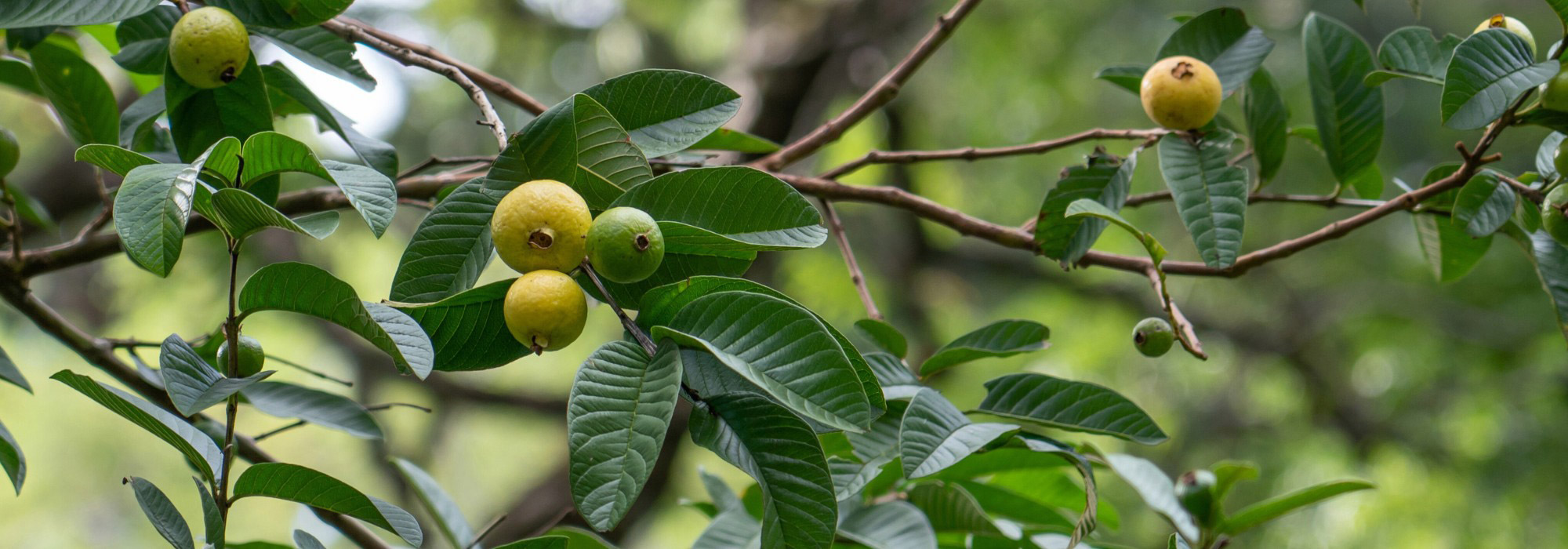
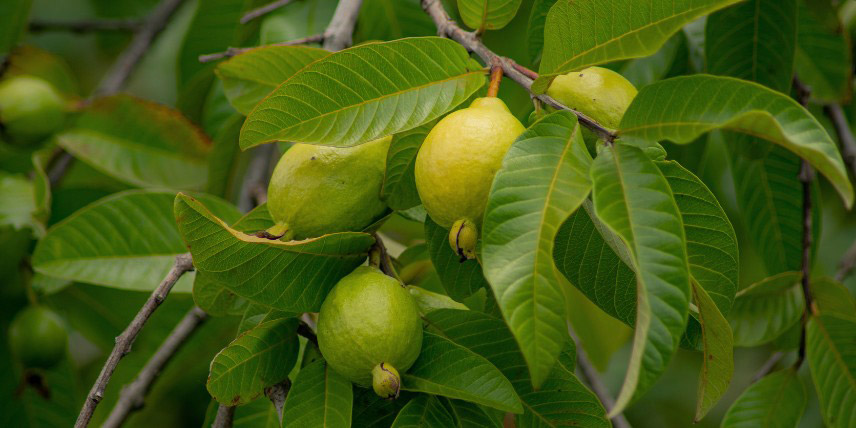
Another small fruit tree from tropical to subtropical regions. Not very hardy(it tolerates down to -3°C once well established), the Psidium guajava ‘Limon’ or “yellow lemon guava” cannot be grown in the open ground except in the mildest regions of our country, in the orange-tree zone. Elsewhere, it is recommended to grow it in a pot, like a citrus plant, and to bring it indoors in winter into a bright, frost-free space, in a greenhouse or a lightly heated conservatory. In Mediterranean coastal gardens, it can be planted in the ground, by the sea, as a hedge, or as a solitary specimen. Under our latitudes, it reaches about 3.5 m in height and about 2 m in width. When grown in a pot or regularly pruned, it forms a small tree with deciduous, bright green, glossy foliage, more bushy than arborescent. It takes on shimmering autumn colours before shedding its leaves.
This exotic fruit tree blooms with pretty, fragrant white flowers in May–June, which later bear fruit—the guavas. Green, then yellow, they have earned them the nickname “sand plums” when ripe between August and October, and they contain a yellow, juicy, sweet-tart pulp, highly appreciated for its pleasant fragrance. Although self-fertile, the guava will bear more fruit in the presence of another plant. The flavour of its small guavas, both sweet and tart, will delight the most discerning palates.
Cherimoya tree – Annona cherimola
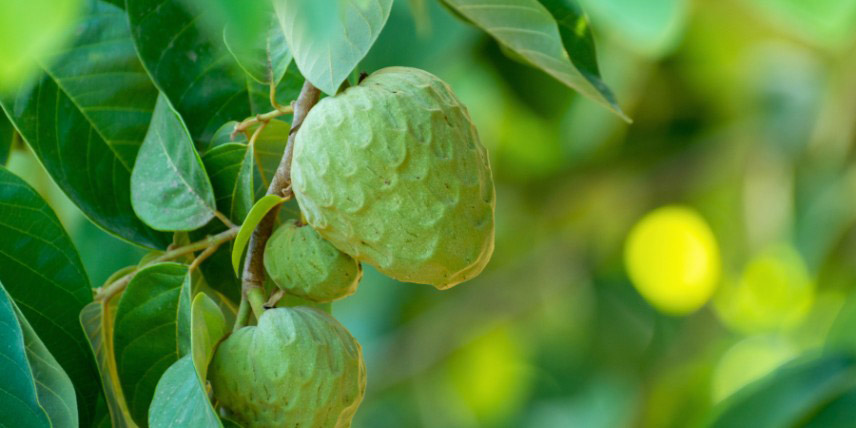
The Annona cherimola, also known as the cherimoya, is an evergreen bush native to South America, valued for its delicious fruits that resemble small green pineapples. This evergreen tree, not widely grown in our gardens, belongs to the Annonaceae family, such as Asimina triloba or Paw Paw. Its low hardiness (down to -4°C) and the requirement for a long hot summer for the maturation of the fruits limit its cultivation in open ground to the mildest zones along the Mediterranean coast. It thrives on the Côte d’Azur, particularly enjoying Menton’s micro-climate, which limits its range. In other regions, the cherimoya should be grown in a tub and brought indoors in winter in a cold greenhouse, like an orangery plant. It is recommended to prune it at the end of each winter to keep it at 2 m or 2.5 m tall, so that it can be overwintered easily.
The cherimoya forms a tree with a short trunk, about 4 to 5 m tall, clad in handsome dark green foliage. The pendulous leaves give the plant a very distinctive silhouette, broader than tall. Yellow flowers appear from May to July: fertilisation is carried out manually to obtain fruits of satisfactory size. It fruits after 3 to 4 years of cultivation, producing small heart-shaped apples with a green reticulated skin. The fruits ripen slowly, over 5 to 8 months. These mini-apples can be eaten with a teaspoon and contain a white, deliciously sweet pulp, with black seeds which, however, are best spat out!
- Subscribe!
- Contents

Comments