





























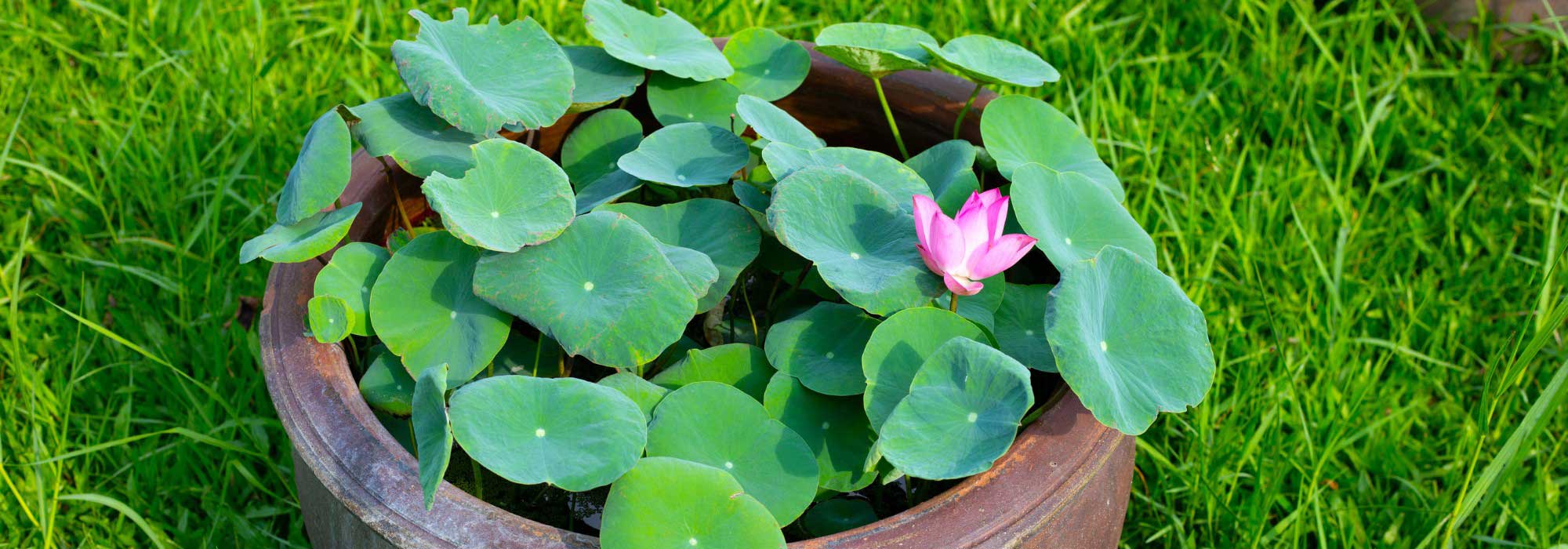
Discover the bowl lotus or how to grow a mini lotus in a pot
Our tips for successfully growing a dwarf lotus in a pot
Contents
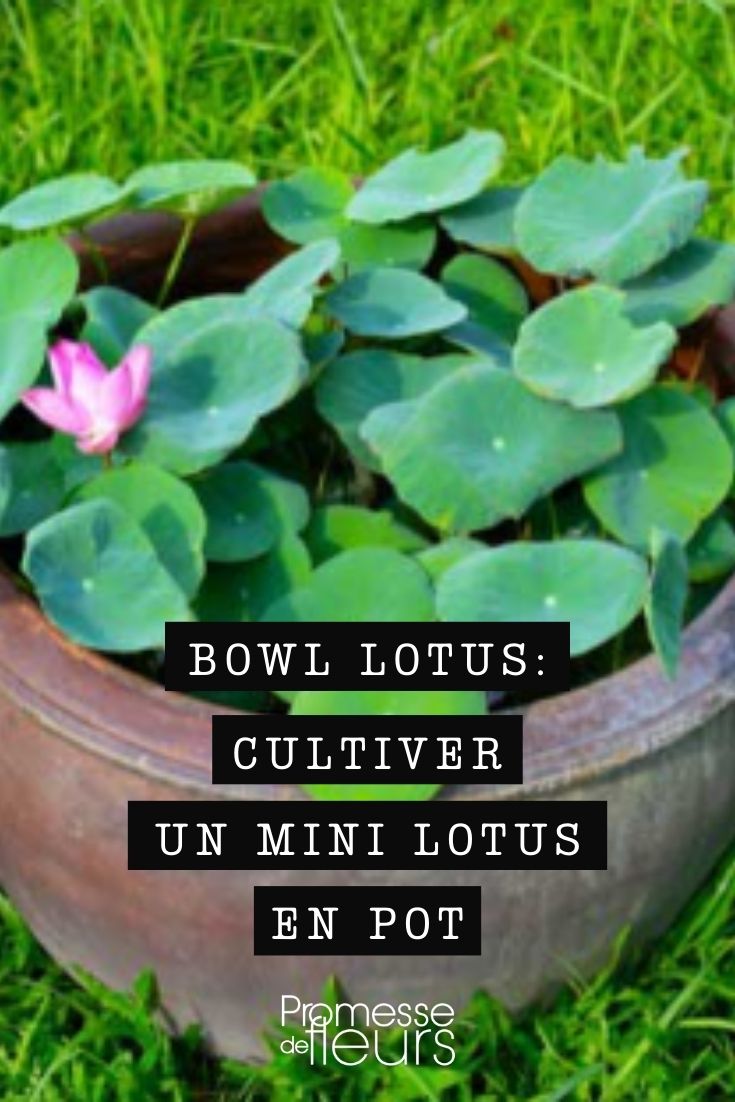
The Bowl lotus, or mini-lotus is an extra-dwarf variety of lotus specially suited for pot culture. Unlike standard-sized lotus varieties that require deep ponds, the Bowl lotus is so small that it can thrive in a bowl! It thrives in shallow water, basins, half-barrels, and other watertight containers, which makes it ideal for small spaces such as balconies, terraces or miniature gardens. Its compact size and its flowers as colourful as those of larger varieties make it a highly regarded aquatic perennial highly appreciated. Discover how to plant it successfully so that it flowers in summer on your patios and balconies.

Which varieties of mini lotus should I choose?
The Mini or Bowl Lotus are extra-dwarf varieties of sacred lotus. They possess all the attributes of the Nelumbo nucifera, the sacred lotus or lotus of the East, but display more compact proportions. These small specimens are just as floriferous and hardy if their rootstock is kept submerged, out of reach of frost. Their majestic flowers, surrounded by pretty round floating leaves, no larger than 5 to 20 cm in diameter, emerge from the water all summer, rising sometimes only 5 cm above the surface. These miniature lotuses are particularly suited to small, watertight containers for flowering a terrace or balcony. By comparison, the broad leaves of the Nelumbo nucifera, the type species, can reach 60 cm in diameter and rise up to 1.50 m above the water surface. Among the varieties of mini Lotus or Bowl Lotus:
- Nelumbo ‘Double Bonheur‘ : it produces beautiful crumpled flowers in double cups, pink and white, which open at around 35–40 cm above the water surface.
- Nelumbo ‘Tricolore’: it offers flowers 10–12 cm in diameter, in flat cups, white edged with pink and pale yellow, rising to only 40 cm above the water.
- Nelumbo ‘Angel Wings’: another miniature lotus that offers fragrant white flowers, measuring 10 cm in diameter. With petals slightly twisted, they seem to dance on the water, rising only about 30 cm above it.
- The Nelumbo ‘Pygmaea’ series : it groups adorable dwarf lotuses (barely taller than true Bowl Lotuses) that offer cup-shaped white flowers (Nelumbo ‘Pygmaea White’), pink (at ‘Pygmaea Pink’) and ‘Pygmaea Red’), peach to cream (‘Pygmaea Cream’), or yellow (‘Pygmaea Yellow’ ) slightly scented rising to a maximum of around 55 cm above the water surface.
→ Discover our collection of mini lotus for small ponds!
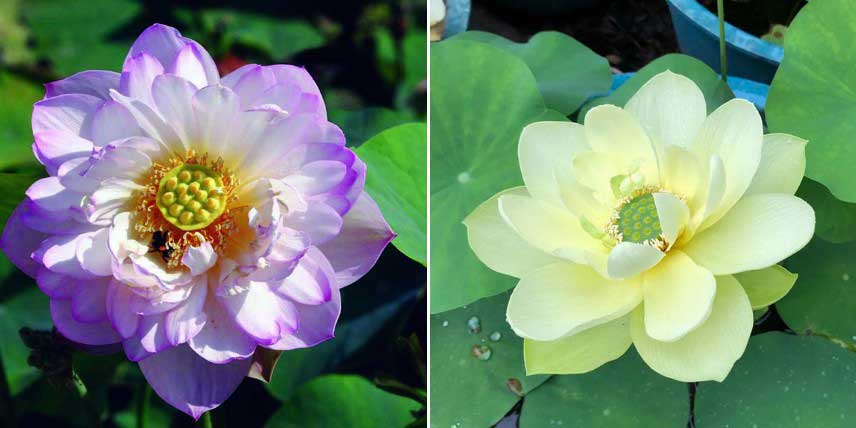 The dwarf Nelumbo ‘Double Bonheur’ and ‘Pygmaea Yellow'</caption]
When and where should I plant a Bowl lotus in a pot?
The lotus bowl is ideally planted in spring, between April and June, after the last frosts, when the temperature begins to stabilise. The lotus appreciates warmth and requires a water temperature of at least 21°C to begin growth properly. It thrives particularly well when the water temperature ranges between 21°C and 30°C. In regions where winters are harsh, it is best to wait until the water reaches at least 10°C before planting, which generally corresponds to the end of spring. It is essential to place it in a very sunny spot, receiving at least six hours of direct sun per day to promote abundant flowering. Avoid overly shaded areas, which would limit its ability to flower.
What type of pot should you choose?
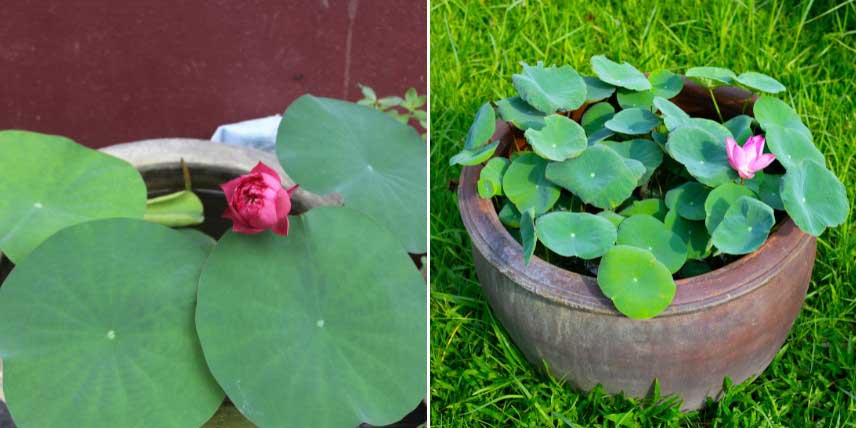
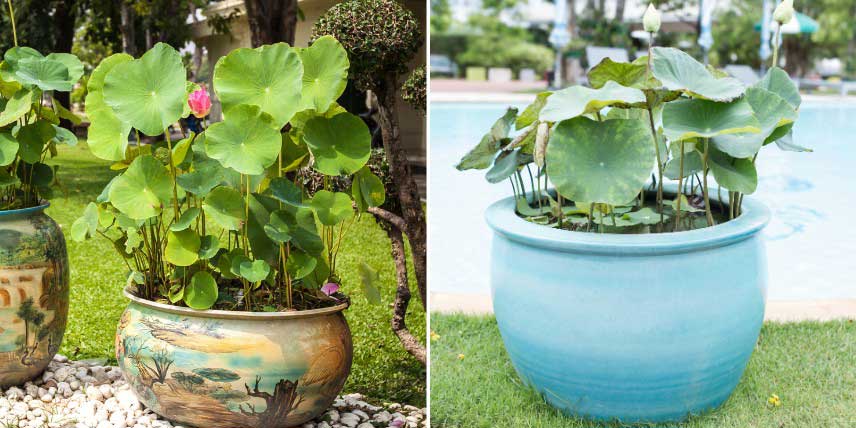
Bath tub, basin, small barrel, tub, zinc bath, plastic pot, ultra-vintage porcelain washbasin set… There are many containers to house your mini-lotus. All watertight containers are usable. Make sure the pot has no drainage holes, as the lotus must remain immersed in water at all times. The minis or bowl lotus have a very small rootstock. They need a container that is wider than it is tall, 15–30 cm in diameter and up to 60 cm deep, depending on the variety. In a shallow pond, planting in pots or submerged baskets is also feasible. It is recommended to plant only one Bowl lotus per pot. Each lotus rootstock needs enough space to spread and develop properly.
Which growing medium should you choose?
The substrate used for the Lotus Bowl should be dense, rich and… muddy. A clayey or loamy soil is ideal, as it remains stable underwater and provides the nutrients the plant needs. Avoid light or organic potting mixes that float or decompose quickly. You can use a special mix for aquatic plants or simply a good loam garden soil free of stones, then add small pebbles on top of the substrate or a handful of pozzolana to weigh the plant down and prevent the soil from floating.
How to plant a Bowl Lotus?
- Fill the pot with clay-based substrate up to about 10 cm from the rim.
- Place the lotus rootstock horizontally on the substrate, with the buds pointing upwards.
- Cover the rootstock with a thin layer of substrate, no more than 2–3 cm, ensuring the growth points are flush with the surface of the substrate.
- Slowly fill the pot with water until the rootstock is submerged to prevent soil from rising to the surface. Mini or Bowl lotuses require 10 to 60 cm of water depending on the variety.
- Cover everything with 1–2 cm of pozzolana or a pebble
- Leave the pot in the sun so that the water heats up quickly.
How to care for a Bowl lotus?
Water level
Keep a constant water level, with a depth of 10 to 20 cm above the substrate. During hot periods, regularly check the water level and top up as needed to compensate for evaporation.
Fertilisation
After planting, fertilise your Bowl lotus only after the appearance of the first 3 or 4 leaves rising above the water surface, usually towards the end of May to early June. Then, each year, at the start of the growing season, and then once a month during the growing season, apply a fertiliser suitable for aquatic plants (for example: Osmocote — duration 5 to 6 months), at a rate of 1 to 2 cones each time.
Pruning
Pruning isn’t essential, but it helps keep the plant healthy. Remove yellowing leaves and spent flowers to encourage new shoots and to prevent disease.
Winter protection
The lotus is hardy down to -12°C, provided it remains submerged to avoid frost damage. If you live in a region with harsh winters, it is advisable to bring the pot indoors into a greenhouse or a frost-free place, such as a garage or a basement. Keep the rootstock moist and cease fertilisation during this dormancy period.
Diseases and pests
Diseases are rare with Bowl lotus, but problems can occur if conditions are not optimal. Rootstock rot can occur when the water is too stagnant and air circulation within the container is poor. Aphids can also attack the leaves, without harming the health of the lotus.
→ For more on aphid control, read our advice sheet: Aphids: identification and treatment
- Subscribe!
- Contents
Comments