





























Diseases and parasitic pests of Abutilon: how to identify, prevent and treat them?
Our tips
Contents
Abutilon, sometimes called “Chinese lantern” or “flowering maple”, produces elegant flowers on delicate foliage, it is a popular ornamental plant among gardeners. Rather hardy, this plant is largely resistant to most diseases, but is susceptible to common garden parasitic pests, especially under inadequate growing conditions.
In this article, let’s explore the most common problems of abutilon, their causes, and natural and effective solutions to treat them. Cultivate your abutilon with our practical tips to maintain its health and fully enjoy its magnificent flowering!

Diseases
Powdery mildew
Abutilon is fairly resistant to diseases. It can, however, be susceptible to powdery mildew.
Leaves have a white, powdery coating, resembling talc. This powdery coat can gradually spread across the entire leaf, and sometimes onto the stems and buds.
If untreated, the affected leaves yellow, dry up and fall. Young shoots are particularly vulnerable and may stop growing. If infection is severe, the plant can become seriously weakened, hindering growth and flowering.
Powdery mildew develops mainly when certain environmental conditions are present:
- High ambient humidity: an overly damp atmosphere promotes the proliferation of fungal spores.
- Poor air circulation: confined or crowded spaces create an environment conducive to the disease.
- Temperature fluctuations: large day–night variations increase the risk of powdery mildew.
Fortunately, powdery mildew can be controlled provided action is taken promptly:
- Remove the affected parts: cut away immediately the infected leaves or stems to prevent spread. Destroy these parts (do not compost).
- Spray natural fungicides: prepare a solution based on bicarbonate of soda (1 teaspoon in 1 litre of water, with a little black soap as a wetting agent). Spray over the entire plant, paying particular attention to the affected areas. Sulphur in powder or solution is also very effective, but avoid using it in hot weather.
Prevention remains the best way to protect your Abutilon:
- Space plants apart: ensure good air circulation around your Abutilon by avoiding overcrowding with other plants.
- Avoid overwatering: water at the base of the plant, taking care not to wet the leaves.
- Preventive treatment: use sprays of horsetail decoction or nettle manure, which bolster the plant’s natural defences.
Note that in Abutilon pictum and Abutilon striatum, mosaic virus, or is also observed, which causes yellow variegation on green leaves, kept for its aesthetic appeal, as this virus otherwise has little effect on the plant.
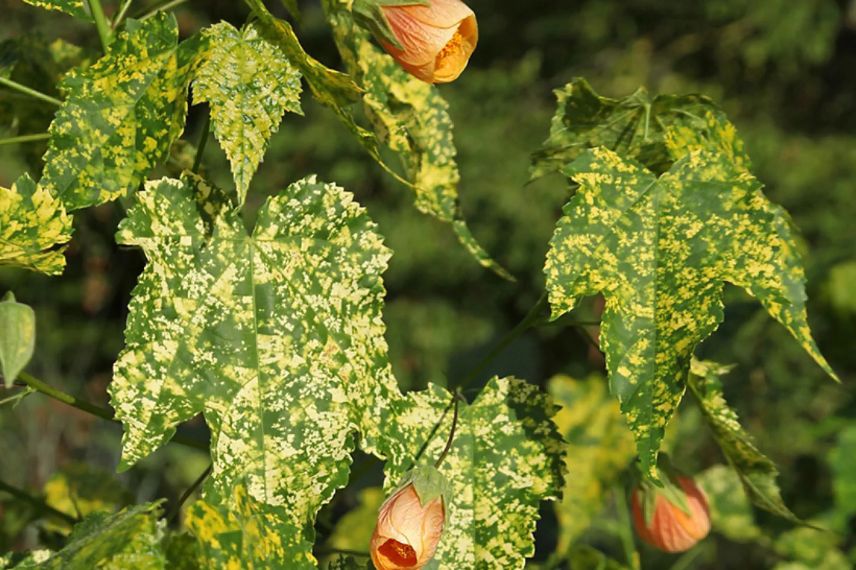
The variegated yellow foliage of Abutilon pictum or striatum is due to mosaic virus
Read also
Abutilon : planting, pruning, careParasitic
The following pests can affect Abutilons:
Aphids
These small green, black or yellow insects mainly attack new shoots and flower buds.
Visible aphid colonies cluster on stems, buds or the undersides of leaves. Leaves are curled or deformed. A sticky honeydew may attract other pests, such as ants.
You can treat simply:
- Dislodge aphids with a jet of water.
- Mix one tablespoon of black soap in a litre of water and spray directly onto the aphids.
- Introduce ladybirds or lacewings to the garden to control aphids in an environmentally friendly way.
Thrips
These tiny elongated insects feed on leaves and flowers, especially in dry conditions.
Thrips are visible only when looked at very closely, but their effects are more noticeable: small silvery or black specks on leaves, discoloured or deformed leaves and flowers. Leaves turn yellow and drop.
More difficult to eradicate, natural attempts include:
- Increase humidity around the plant to reduce attractiveness to thrips.
- Apply neem oil as a spray over the entire plant, especially under the leaves.
- Attract and trap adult thrips with blue sticky traps or pheromone traps.
- Pyrethroid insecticides are effective if other solutions are insufficient.
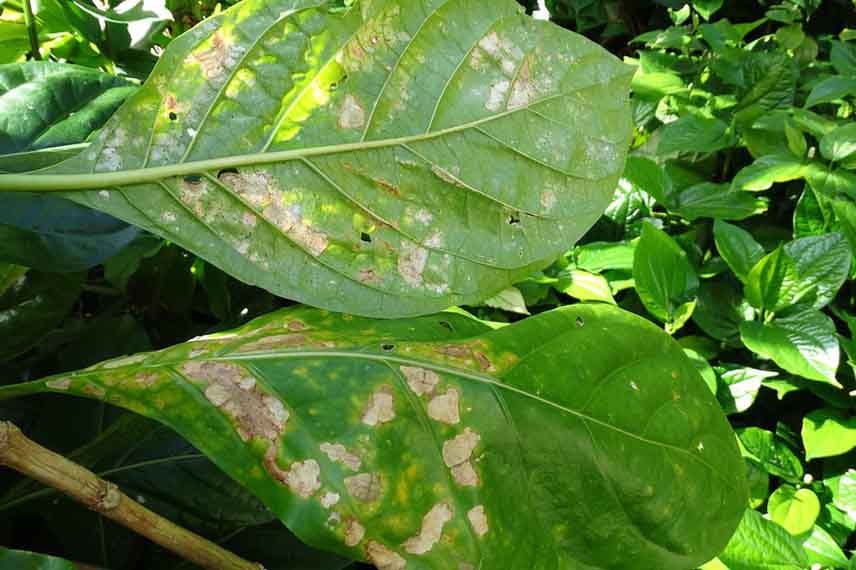
Damage caused by thrips ©Scot Nelson
Mealybugs (powdery or shield)
Mealybugs are pests that cling to stems and leaves, sucking sap from the plant and slowing growth.
Visible symptoms are cottony masses (mealybugs) or small brown patches (shield mealybugs) on stems and leaves. Leaves yellow and deform. Growth is slowed or stopped.
Solutions:
- Use a cotton swab dipped in 70% alcohol to remove mealybugs.
- Apply a mixture of oil, black soap and diluted alcohol in water.
- Regularly inspect the plant to detect mealybugs as soon as they appear.
→ Read our article on treating mealybugs.
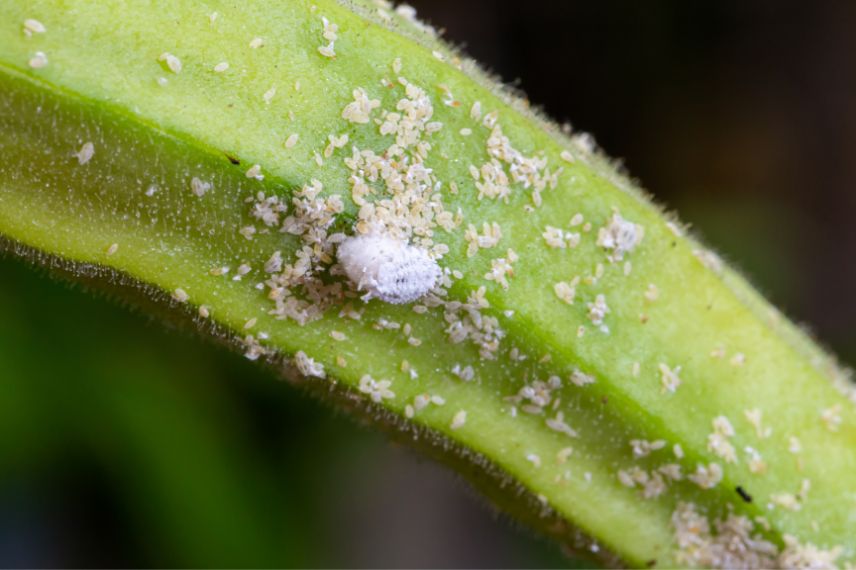
Mealybug
Red spider mites
These microscopic mites appear in dry conditions and cause significant damage to foliage.
Fine webs on the undersides of leaves may be observed. Leaves yellow, dry out and drop.
Solutions:
- Hose the plant down.
- Increase humidity and regularly mist the plant and around it to counter their proliferation.
- Introduce beneficial mites such as Phytoselulus persimillis to control red spider mites.
→ Read our fact sheet for treating red spider mite infestations.
Snails and slugs
These pests feed on Abutilon leaves and flowers, especially after rain or at night. They cause irregular holes in leaves and flowers. Slime trails may be seen on the plant or the soil.
Spread crushed eggshells, sand or coffee grounds around the plant to deter these pests. Place beer traps or damp boards nearby to catch slugs and snails. If necessary, use iron phosphate-based baits, safe for other animals.
Indoor parasite: Aleurodes (whiteflies)
When Abutilon is grown in a pot and needs to be overwintered to protect it from frost, in a veranda, an unheated greenhouse, a winter garden or a frost-free outbuilding, it may be attacked by whiteflies. These small whiteflies feed on the plant’s sap, causing visible damage and weakening Abutilon.
When touched, small white insects fly away. General weakening of the plant and slowed growth are observed.
Solutions:
- Place yellow sticky traps near the Abutilon to capture adult whiteflies, or introduce a beneficial insect.
- Use a lukewarm water and black soap solution (one tablespoon per litre of water) with a few drops of vegetable oil to clean leaves and deter whiteflies.
→ Read our article on whiteflies.
General prevention tips for a healthy plant
To keep an Abutilon in good health, prevention is the best solution. A well-cared-for plant is less vulnerable to disease and pest attacks. Here are key measures to protect your Abutilon throughout the year:
- Choosing the right location: pay attention to the growing conditions your Abutilon needs. It thrives in sun in regions with cool summers or in partial shade in hot climates, sheltered from strong winds, in fertile soil, remaining cool in summer and well-drained. Abutilon dislikes confined spaces: give it room!
- Boost the Abutilon’s natural defences: feed the Abutilon with a balanced fertiliser (type NPK 10-10-10) to promote growth and strengthen its defences. Apply the fertiliser about every 4 to 6 weeks during the active growth period (spring and summer). Enrich the soil with well-rotted compost or manure to improve the plant’s overall health.
- As a preventive measure, apply horsetail decoctions (rich in silica) to boost resistance to fungi such as powdery mildew. Use nettle manure to stimulate the plant’s vigour while repelling certain pests.
- Remove dead branches to aerate the plant and limit refuges for pests. Also prune any parts damaged by insects or diseases as soon as they appear.
- Regularly inspect the leaves (both sides), the stems and the buds to quickly detect symptoms of disease or the presence of pests. Act at the first signs to limit the spread.
- Attract natural allies. Plant nectar-rich flowers such as lavender or yarrow nearby to attract natural predators such as ladybirds, the lacewings or the hoverflies, which feed on aphids and other pests. Also encourage insectivorous birds by installing nesting boxes.
- Prefer organic solutions to avoid harming beneficial insects and to preserve the garden ecosystem.
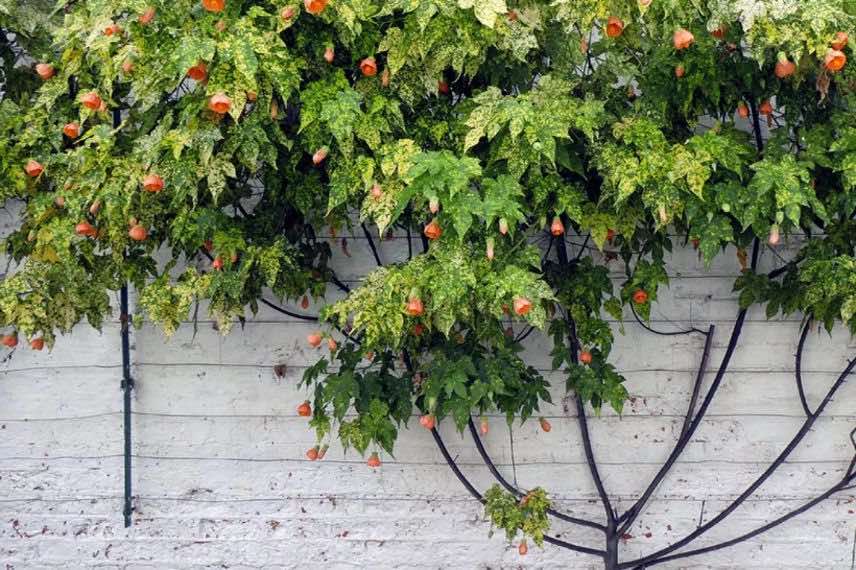
Abutilon doesn’t like confined spaces. Give it room.
- Subscribe!
- Contents
Comments