





























Diseases and parasitic pests of Anisodontea
Fighting diseases and parasitic pests of the Cape mallow
Contents
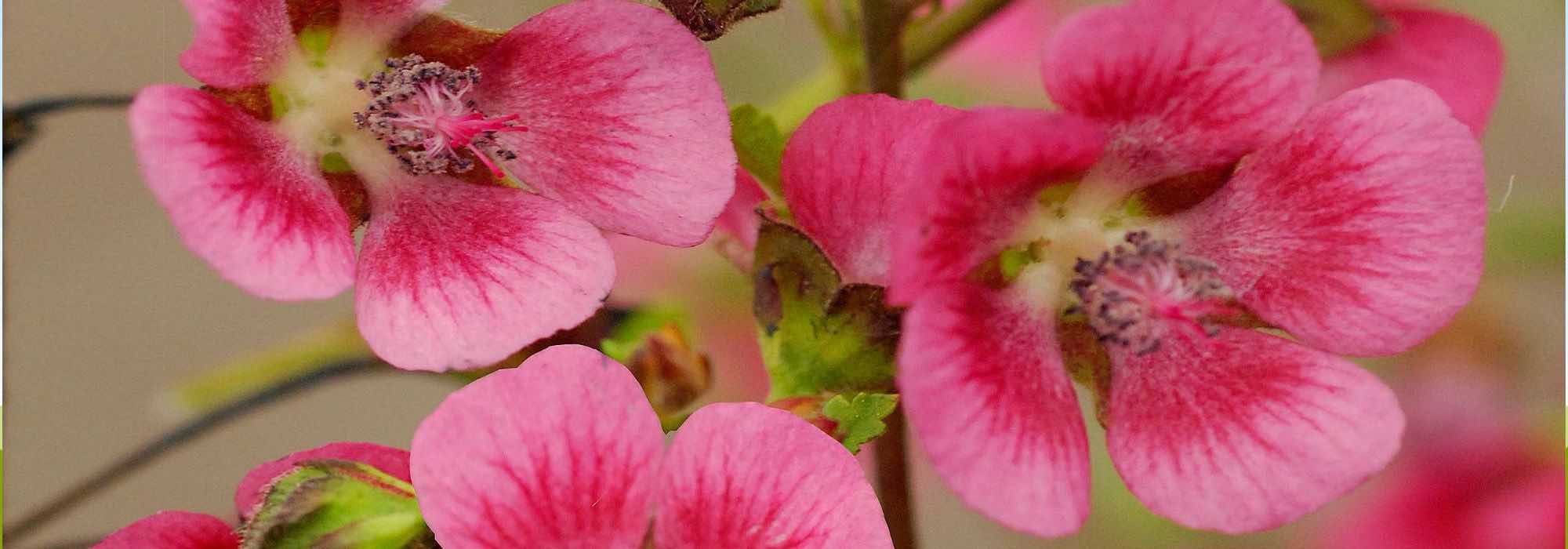
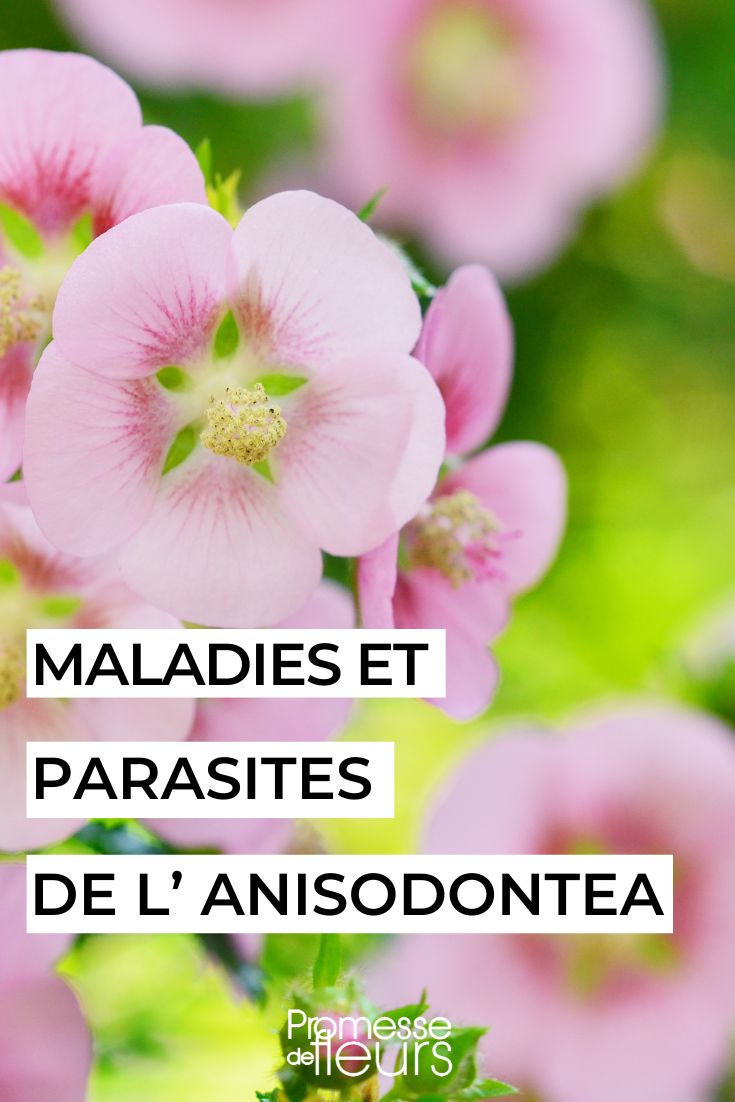
Anisodontea, also known as Cape Mallow, is a bush native to South Africa, prized for its abundant flowering. Its lobed and evergreen foliage is covered with small pink flowers, sometimes white, from summer to the first frosts. Its flowers resemble those of hibiscus. The shrub, fast-growing, can reach up to 2 metres in height and can be trained as an upright shrub or on a single stem. It can also be used in a hedge or border. Hardy to -8 to -10°C, it can be grown in a pot to overwinter in a sheltered place in regions with cold winters. It is a relatively undemanding plant that loves sun and dry, well-drained soil. When grown in good conditions, Anisodontea is not particularly susceptible to disease. However, it can be attacked by certain parasites and is susceptible to excess moisture at the roots. Discover what can affect Anisodontea’s health, its symptoms, prevention methods and possible treatments to maintain its beautiful flowering and healthy growth.

Red spider mites
Cultivated in a greenhouse or conservatory, Anisodontea can be attacked by red spider mites. These tiny mites are formidable and difficult to see with the naked eye. They pierce the plant and they develop in a warm, dry atmosphere at a phenomenal rate. They colonise mainly indoor or sheltered plants, as well as on balconies. The plants eventually can no longer photosynthesise and perish.
Symptoms
We observe spider webs on Cape mallow that resemble silk. White, yellowish or greyish spots may also appear. The leaves dry up and fall.
Prevention methods
There are several ways to prevent red spider mites. First, give them what they fear: humidity — by spraying the leaves of the bush with water, preferably in the evening. You can also add compost rather than fertiliser. In particular, avoid nitrogen-rich fertilisers that are likely to attract the mites. You can also spray a horsetail decoction or a nettles manure as a preventive on the bush.
Treatment
- Under cover or in a greenhouse, you can use biological control and rely on natural predators of the red spider mite such as the Phytoselulus persimillis. This small mite, also red and tiny, feeds on the eggs, larvae and adults of the red spider mite. Chrysopes are also natural predators of red spider mites as their larvae eat the eggs of these mites.
- Other treatment besides biological control: prepare solutions that you spray on the Anisodontea. You have a choice between two solutions. The first consists of 20–25 drops of rosemary essential oil which you will add to 3 or 4 drops of liquid dish soap and 5 ml of rapeseed oil. Then simply dilute this mixture in 1 litre of water. The second preparation involves making a garlic decoction by mixing 30 g of garlic in 1 litre of water. Spray every 3 days for 2 weeks to eliminate the eggs.
- Finally, if the Anisodontea is too badly affected by red spider mites, the ultimate solution is to pull it up and burn it.
For more information, see our article: “Red spider mite: Identification and treatment”.
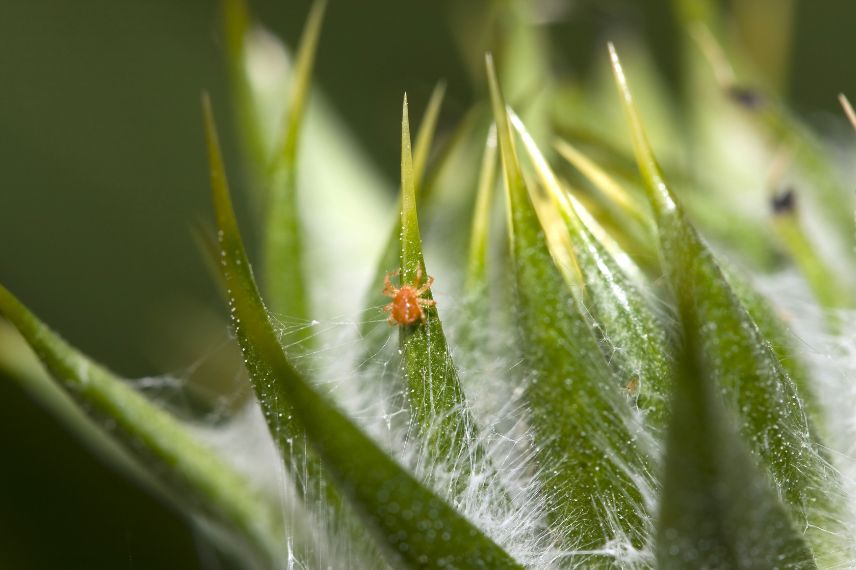
Red spider mite in close-up
Read also
Growing Anisodontea in potsWhiteflies
These small whiteflies feed on plant sap, weakening the plants, creating entry points for fungi and viruses, and can even kill the plant. They thrive in warmth and appear in April and May in greenhouses and indoors, then in June and July outdoors. Like aphids, they excrete a sticky substance called honeydew that is then coated with a black powdery or sooty mould. This latter is in fact the manifestation of a cryptogamic disease caused by a fungus.
Symptoms
We recognise whiteflies by swarms of tiny white flies that disperse when you approach the Anisodontea or spray it. They measure about 3 mm in length, reproduce at a startling rate and suck sap from the plant, weakening it and sometimes killing it. On the underside of the leaves, you can also observe eggs and 2 mm-long larvae that remain motionless.
Prevention methods
Whiteflies dislike cool conditions below about 10°C and humidity, so you can open your greenhouse doors or take your Anisodontea outside when it rains. You can also spray the Anisodontea with nettle manure. Another type of prevention: plant near your Anisodontea repellent plants against whiteflies such as the Tagetes, basil and arnica.
Treatment
Among natural treatments against whiteflies, you can use natural predators, spray effective solutions or create traps to catch the adult whiteflies.
- If you opt for biological control, you can use the whitefly predators which are: the tiny wasps Encarsia formosa and Eretmocerus eremicus, the tiny bugs Macrolophus pigmaeus and Dicyphus hesperus, the small black ladybird Delphastus pusillus.
- If the whitefly attack is in its early stages, make a whitefly trap. Take a piece of yellow cardboard and cover it with honey or glue. The drawback with this trap is that the yellow attracts insects in general, not only whiteflies.
- Another option: spray a solution on the leaves of the shrub. Use a mix of water, black soap and a few drops of vegetable oil to remove the eggs and larvae from the leaves. Or spray with rose geranium essential oil at 20 drops of essential oil diluted in 1 litre of water. If the whiteflies are in small numbers, you can try removing them from the infested leaves by brushing with a brush or a paste dipped in vegetable oil.
For more information, see our article: Aleurode or whitefly: identification and treatment.
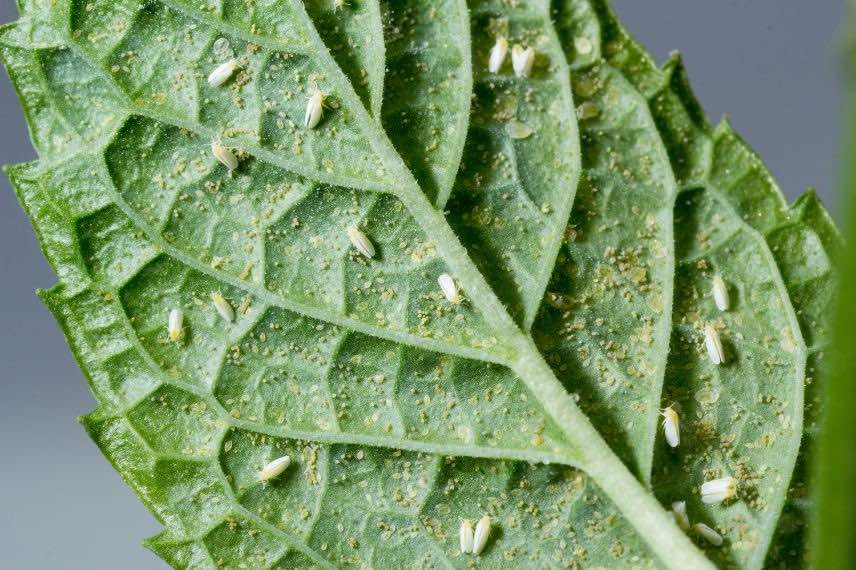
Whiteflies
Mealybugs
Mealybugs appear as small cottony masses or dark scales stuck under the leaves and on the stems. These tiny insects suck the sap, weakening the plant and sometimes causing black sooty mould due to the honeydew they excrete.
Symptoms
Small white and cottony spots, or brown ones. The foliage becomes yellow and is covered with a sticky, dark-hued substance. The plant tends to produce fewer flowers.
Prevention
Regularly inspect your plants to detect any early signs of infestation. A well-ventilated environment and proper watering are key preventive measures. If your Anisodontea is in a greenhouse, take it outdoors outside the cold period to improve ventilation.
Treatment
70% alcohol applied directly to the mealybugs with a cotton bud can effectively eliminate them. A spray of diluted black soap in water also acts as a natural treatment against mealybugs.
For more information, see our advice sheet: “Mealybug: identification and treatment”.
In addition, discover our article: Identify the main pests and diseases of plants, as well as our complete guide on the planting and care of Anisodontea.
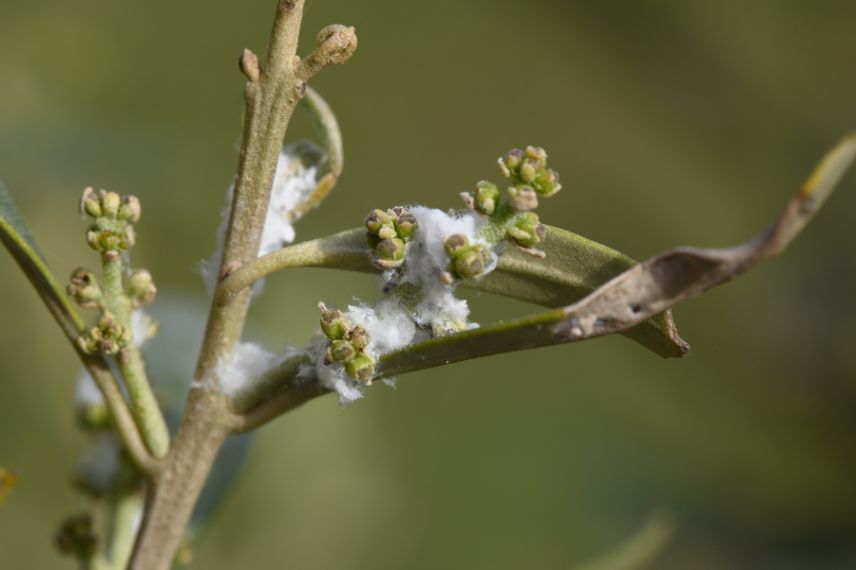
Powdery mealybugs
- Subscribe!
- Contents
Comments