





























Diseases and parasitic pests of Aspidistra: identification and treatment
Although hardy, the cast iron plant can be affected by cultivation problems
Contents
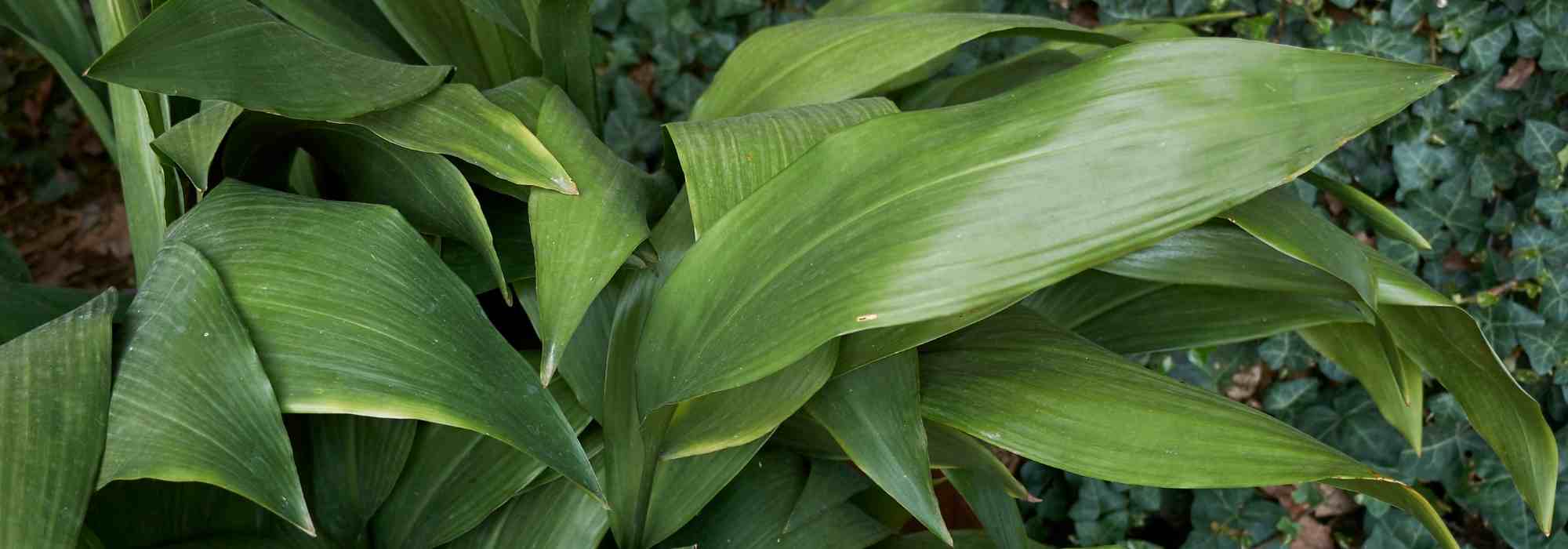
If there is one indoor plant renowned for its robustness and resilience to all cultivation challenges, it is certainly the Aspidistra eliator, also known as Aspidistra elatior or cast iron plant. In addition to being easy to live with, this houseplant is very handsome with its long, broad, strap-like and lanceolate leaves in a glossy green. But this indoor plant, hardy down to -12 to -15 °C, can even be grown in the ground, in partial shade. Its clump of beautiful leaves will make a striking display there.
That said, this plant, grown indoors as well as outdoors, can occasionally be prone to a few cultivation issues, linked to pest outbreaks or diseases.
Discover our tips for identifying, treating naturally and preventing pests and diseases affecting Aspidistra.

A few tips on growing and caring for Aspidistra
Most plant diseases and parasites occur when plants do not benefit from cultivation conditions that meet their needs. Thus, plants suffer and become more susceptible. This is all the more true for Aspidistra, which is marketed as an indoor or outdoor plant, fairly easy to live with, robust, even virtually indestructible, despite minimal maintenance and watering.
However, by meeting its needs, you will considerably reduce the risk of pest or disease attacks.
Potted, Aspidistra therefore needs a perfectly drained substrate, such as a special indoor plant potting mix supplemented with perlite or vermiculite. In the ground, the soil should be drained, fertile and humus-bearing, fairly light and tending to be acidic. In terms of exposure, Aspidistra tolerates rooms with little light or semi-shaded or shaded exposures. 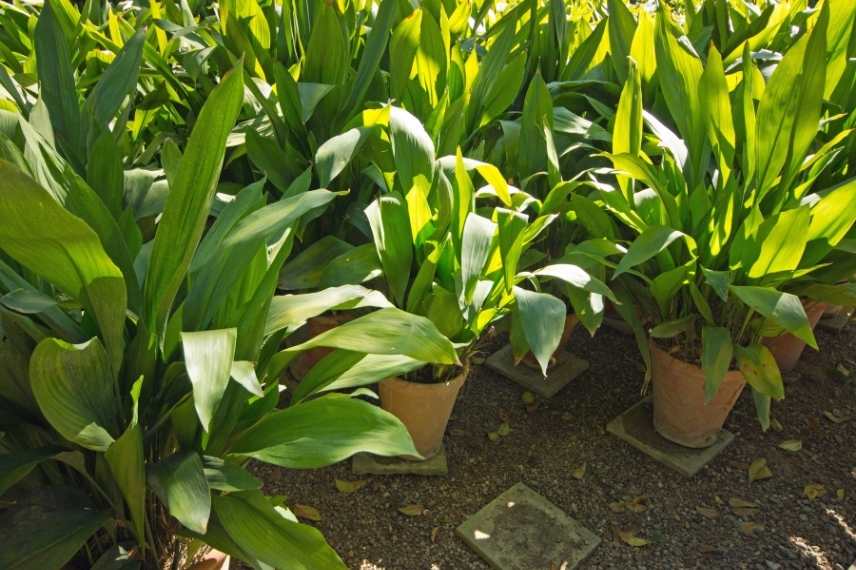
As for maintenance, it is fairly simple: moderate watering once to twice a week in spring and summer, twice a month in winter. And, for Aspidistra grown in the ground, watering is only necessary during hot summer weather. A fertiliser for indoor plants is recommended twice a month for potted Aspidistras.
Parasitic pests that attack Aspidistra
If your Aspidistra is grown as an indoor plant, the main pests that can attack the foliage are the mealybugs and red spider mites. And it’s important to act quickly as these insects have a tendency to multiply very rapidly. Outdoors, it is mainly slugs and snails you need to watch.
Mealybugs
On indoor plants such as Aspidistra, mealybugs, soft-bodied, are the most common. They are distinguished by the cottony masses that appear on the leaves and stems. Mealybugs pierce the leaves and suck the sap from the plants. If the infestation is substantial, the foliage turns yellow and drops. It is essential to treat very quickly, as a mealybug invasion affects the plant’s health. It can even trigger the development of sooty mould. 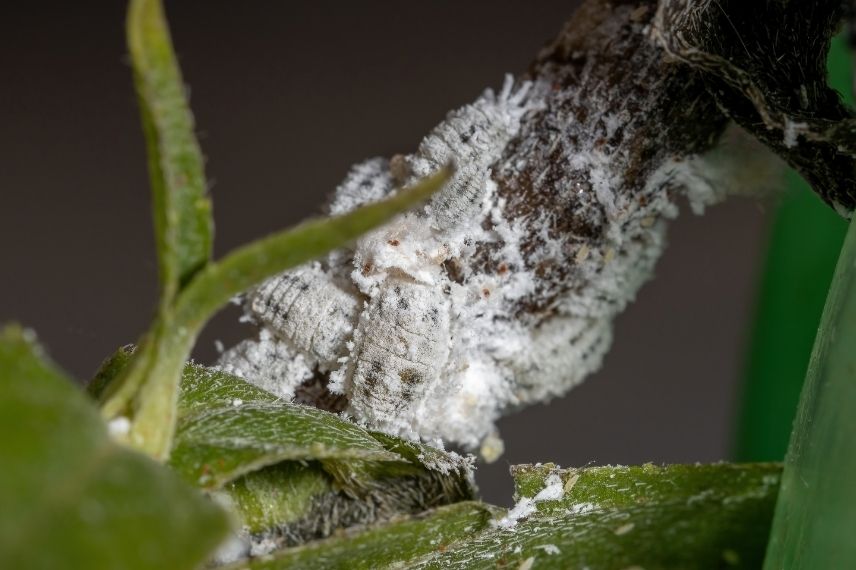
Mealybugs generally appear in conditions that are too dry or in a room subject to drafts.
How to treat?
- Isolate the Aspidistra to prevent invasion of other plants
- Scrape off the powdery masses with a brush or soft-bristled brush, or even with a fingernail. You can also use a cotton bud dipped in alcohol
- Spray a solution prepared with one litre of water, 50 g of Marseille soap or black soap and 100 g of denatured alcohol, onto the undersides and uppers of the foliage. This spray can be repeated every week. For greater effectiveness, you can add rapeseed oil to this preparation
How to prevent mealybugs?
- Ventilate the room regularly in which your Aspidistra sits
- Don’t crowd indoor plants to allow air to circulate
- Take your Aspidistra outside in spring and summer keeping it in partial shade. Mealybugs do not like warm and dry atmospheres. You should still bring it indoors at night. In addition, beneficial insects such as the ladybirds, the green lacewings or other beneficial insects can be very effective against mealybugs.
Red spider mites
Despite their name, these insects are not spiders. They are tiny mites, otherwise known as web-spinning mites. Invisible to the naked eye, red spider mites are usually noticed by the fine webs woven over the foliage. These sap-sucking insects appear when the atmosphere is too warm and too dry.
The numerous punctures cause the foliage to pale to a silver-grey, then dry out and drop.
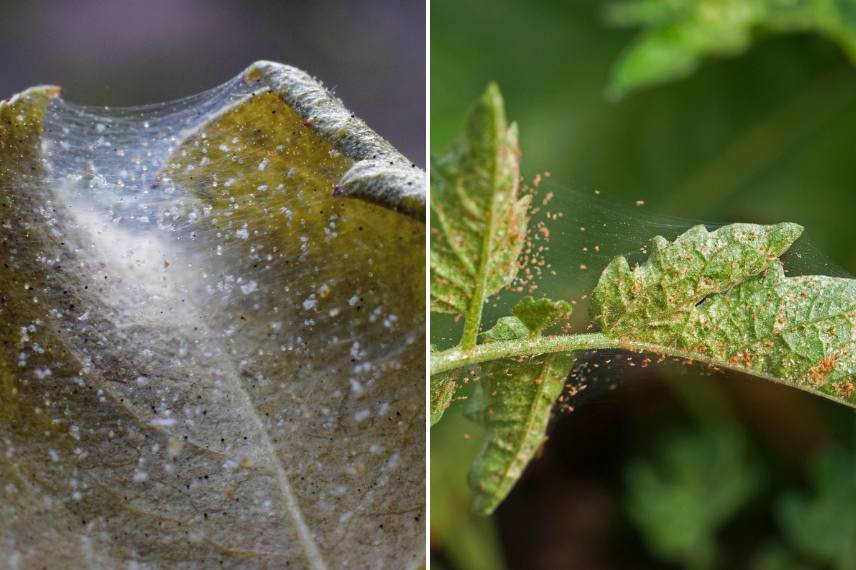
Red spider mites and their webs.
How to treat?
- Rinse the foliage with a jet of water in the shower or outdoors
- Make three to four spray applications, at 48-hour intervals, of a garlic decoction diluted to 30%, i.e., 70 g per litre of water, if the infestation is heavier
How to prevent red spider mites from appearing?
With the Aspidistra, the best way to prevent red spider mites is to ventilate the room very regularly. A summer stay outdoors is also beneficial. You can also mist the foliage from time to time and use a cloth to wipe it clean.
Slugs and snails
Outside, it is a very different danger that threatens the Aspidistra’s foliage. And particularly the tender spring shoots that emerge. Indeed, slugs and snails are fond of this tender foliage. Ingrid details precisely how to combat these voracious gastropods in this article: Slugs: 7 ways to fight effectively and naturally.
Diseases affecting Aspidistra
Once again, poor growing conditions or inadequate care are what cause the appearance of diseases or minor cultivation problems. By adjusting the care given to your plant, the symptoms quickly lessen.
- The leaves of your Aspidistra are turning pale, or even yellowing: this may be a sign that your plant is getting too much sun. Move it to a shadier room, or simply take it away from the window.
- Brown spots appear on the foliage? Are the leaf margins browning? Your Aspidistra is probably getting too much water. Space out the watering and wait until the top layer of the soil is dry to at least one centimetre before watering again.
- The foliage of your Aspidistra withers, turns yellow, then browns, and eventually drops? Is your plant looking poorly? It is certainly root rot due to overwatering. To verify this diagnosis, simply remove the root ball from the pot and inspect the root system of your Aspidistra. If the rhizomatous root system is brown and soft, it is indeed root rot. You will need to remove the potting mix around the roots, then remove the brown rhizomes with a well‑disinfected pruning shear. Then, simply repot the root ball into fresh, well‑draining potting soil and a pot with drainage holes. To prevent this problem, you should limit watering and wait for the potting soil to dry on the surface between waterings. Likewise, be sure to remove any residual water from the saucer or cachepot after watering.
- Subscribe!
- Contents
Comments