



Diseases and pests of Black-eyed Susan
Identify and naturally manage pests and diseases of Thunbergia.
Contents
The Thunbergia, or Black-eyed Susan, grown as an annual plant, is sown or planted as a plug plant to flourish for a season. It can be installed in the ground or in a pot. Sensitive to cold, it requires temperatures above 10 °C. Thus, it can be grown perennially if sheltered during winter in a conservatory or greenhouse. It is in these confined conditions that it may be susceptible to pests and diseases, although you may also encounter some cases of pest attacks outdoors in summer.
It is worth noting that this is a plant that is not very sensitive to various issues when provided with the conditions and situation it prefers for growth. Specifically, it should be protected from cold winds, given warmth, and supplied with enough water in summer, along with light, rich soil or substrate. When winter arrives and it is indoors, it is important that it benefits from air circulation and an atmosphere that is neither too dry nor too humid.
Let’s review the few assaults that the Black-eyed Susan may face and the natural solutions available.

Root rot
A potted Thunbergia can be prone to root rot, which is caused by overwatering or by moisture that stagnates in the pot or at the bottom of the pot. This is especially likely to occur indoors, where it is more difficult to gauge watering because water evaporates more slowly. In this case, remove the root ball from its container, carefully untangle the roots, inspect them, and cut away any that are not white using pruning shears. Then rinse the bottom of the root ball with clear water. To prevent this, you can place the plant in a terracotta pot. Porous, it significantly limits this kind of issue, as water does not stagnate and evaporates quite quickly. You can certainly also reduce watering, but if you switch your pot to terracotta, it may not be necessary. Observe as you go.
The parasites
Black-eyed Susan is not very susceptible to pests, especially when grown outdoors. However, let’s list a few parasites that may be interested in your Black-eyed Susan:
- Mealybugs: white and immobile, these are micro-insects found on the underside of leaves. They are characteristic of warm, confined environments and feed on the sap of plants. To prevent their appearance, it is best to ensure good ventilation for the plant. You can remove them with a cotton swab soaked in 90° C alcohol. Then rinse the plant with clear water. For an even more effective action, you can mix in 1 L of water: 1 teaspoon of black soap, the same amount of methylated spirits, and rapeseed oil. Mix and spray the plant, and again 30 minutes later. Repeat every 8 days until the mealybugs are gone.
To learn more, read Virginie’s article on mealybugs.
- Whiteflies (aleurodes): when you approach the plant, the aleurodes flutter for a few seconds, forming a white cloud. You can also spot eggs and larvae on the underside of the leaves. To eliminate whiteflies, spray a solution of black soap and water, mixed with a bit of vegetable oil.
Read Olivier’s article on aleurodes to discover other possible treatments.
- Red spider mites: The leaves of your plant may discolour during an attack by these tiny mites. They dislike humidity. Spray non-calcareous water daily on the foliage to get rid of them.
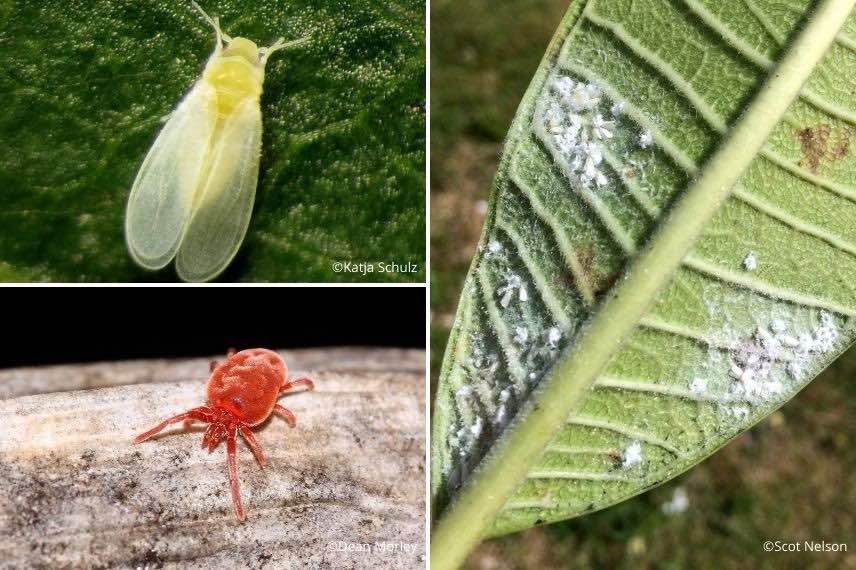
Top left, whitefly, right mealybugs, bottom, red spider mite
- Aphids: well-known to gardeners, aphids can become severely invasive. They are often green or black and are easily visible on the plant. However, once again, black soap in a spray (mixed with water at a rate of 15 to 30 g per litre of water) proves effective against them.
Read Virginie’s article on aphids.
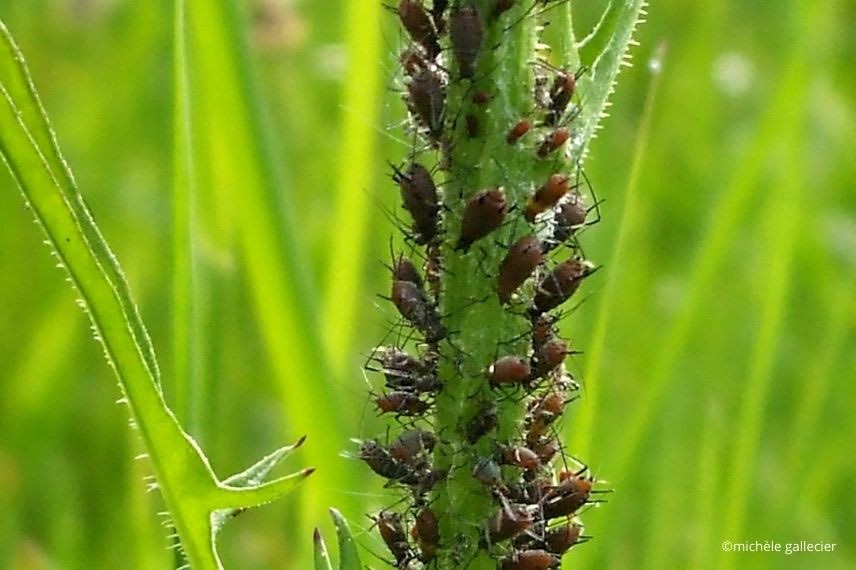
Black aphids
Discover other Black-eyed Susans
View all →
Available in 1 sizes

Available in 0 sizes

Available in 1 sizes

Available in 2 sizes

Available in 1 sizes
Available in 1 sizes
Available in 1 sizes
Fungal diseases
Powdery mildew is a fungal disease that can eventually affect your Black-eyed Susan. It is characterised by the appearance of a white-grey fluff that gradually covers the entire plant. On ornamental plants, it will not impact the plant’s life, aside from the aesthetic inconvenience and the possibility of spreading to nearby plants. Here too, confined environments promote its occurrence, as do warm and dry conditions.
As a preventive measure, provide your plant with good air circulation and avoid wetting the leaves during watering.
For treatment, here’s the star of natural remedies, black soap! Use it at a rate of 3 tablespoons mixed with 5 litres of lukewarm water and 5 teaspoons of bicarbonate of soda. Spray once a week to halt the proliferation of fungi.
For more recipes against powdery mildew, read Virginie’s article on powdery mildew or white disease.

Powdery mildew on a cabbage leaf
- Subscribe!
- Contents
Comments