





























Diseases and pests of Jasmine
Identification, prevention, and natural solutions for treating jasmines
Contents
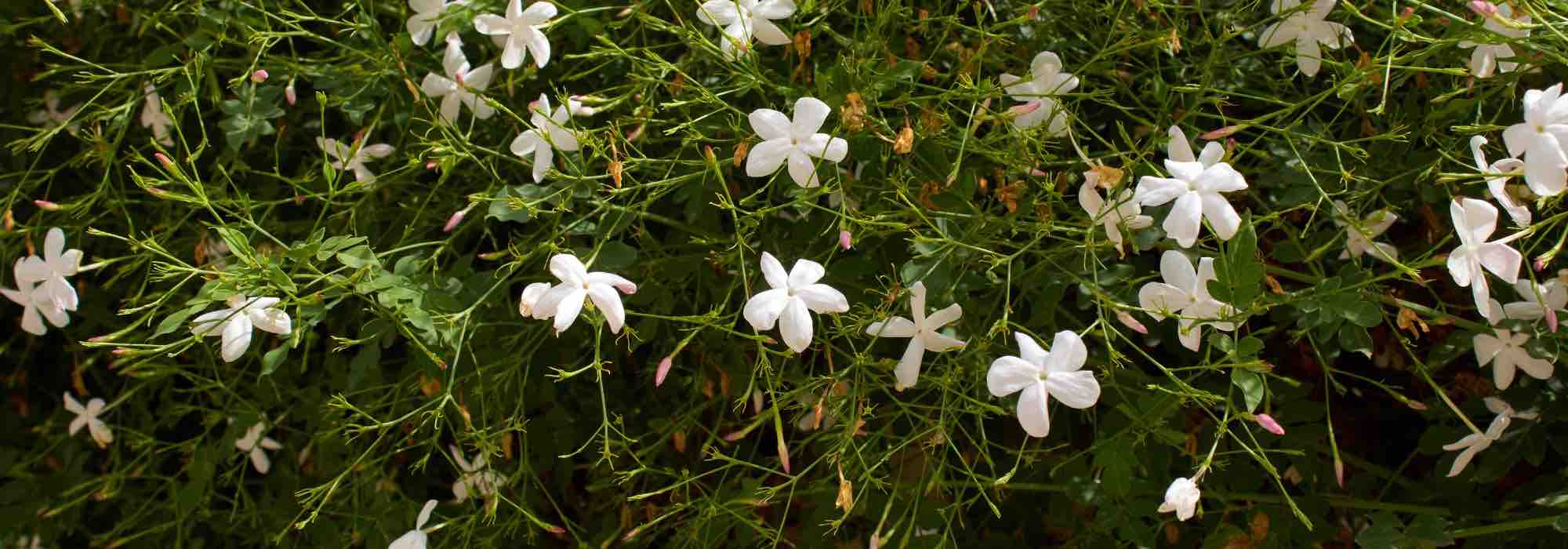
Jasmines delight us with their generous, fragrant star-like flowering. These climbing plants easily adorn all types of supports: trellises, railings, screens, pergolas, arbors… They can be grown both in the ground in the garden and in pots on the terrace or balcony.
Easy to cultivate, jasmine simply requires soil rich in organic matter, well-drained (water does not stagnate) and rather cool (moist without excess). In terms of diseases and pests, these plants have few enemies. However, poorly adapted growing conditions can make them more susceptible to pests and lead to cultivation issues: sticky leaves, drying leaves, spots, etc.
Let’s see how to identify, prevent, and treat pests or diseases of jasmine naturally.

Mealybug
Description and Symptoms
Mealybugs are small piercing-sucking insects, like aphids. They target tender young shoots, stems, and flower buds. While mealybugs rarely cause premature death of a jasmine plant, they weaken it and open the door to other pests or diseases by feeding on its sap. Most importantly, mealybugs secrete a sticky substance called honeydew, which promotes the development of sooty mould. This fungal disease, identifiable by a sort of black soot on the foliage and stems, hinders proper photosynthesis and impacts the plant’s growth.
Mealybugs thrive in relatively confined spaces, combining heat and humidity. Therefore, they are mostly found on jasmines grown in greenhouses or indoors. The warmer it is, the faster their development.
The female mealybugs that attack plants are oval-shaped, covered in white, cottony or waxy filaments. They can lay several hundred eggs, which explains their proliferation. Unfortunately, mealybugs are often detected too late.
In terms of symptoms, you will notice yellowing of the foliage, the presence of sticky droplets, soot, and clumps of white secretions.
Prevention
Regularly monitor your plants so you can act quickly if symptoms are spotted. A large number of ants can be an indicator of mealybug presence, as they protect them from predators (just like with aphids) to feed on their honeydew.
Care for the growing conditions by favouring airy atmospheres. If possible, take your jasmine outside during fine weather.
Encouraging biodiversity helps ensure the presence of natural predators of mealybugs, such as lacewing larvae. Create wild corners, install insect hotels and shelters, plant melliferous flowers, avoid using pesticides, etc.
Natural Treatments
It is not easy to get rid of mealybugs on jasmine. If you spot their presence early enough, it is possible to simply dislodge the unwanted pests with a jet of water. In the case of a mild infestation, you can also remove them by hand using a piece of cotton or cloth soaked in soapy water. Rinse with clear water afterwards.
Heavily affected shoots can be pruned to limit proliferation.
As always, we advise against using chemical insecticides, which are non-selective and harm all insects, including beneficial ones.
As a treatment, you can use a natural insecticide based on black soap. Mix one tablespoon of black soap and one tablespoon of vegetable oil (such as rapeseed) in one litre of warm water. Place in a sprayer. Shake before spraying on the affected parts of the plant. Apply in the early morning or late evening, out of direct sunlight. Repeat the treatment after a week if necessary.
For more information: “Mealybug: Identification and Treatment”
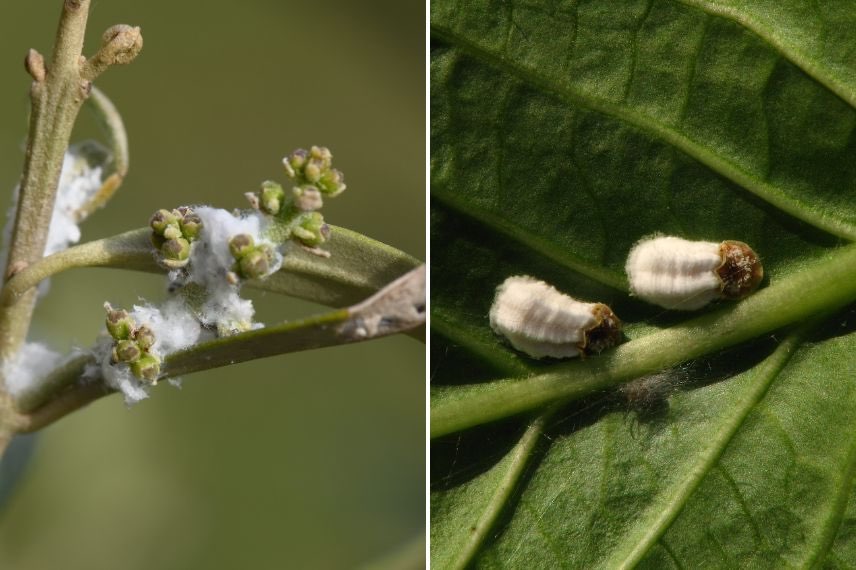
Mealybugs are mainly found on greenhouse or indoor jasmines
Read also
Jasmin : planting, pruning and careRed spider mites
Description and Symptoms
Red spider mites are tiny arachnids that suck the sap from jasmines. They measure barely 1 mm, making them difficult to identify with the naked eye. These pests proliferate in dry, warm, and somewhat confined atmospheres. This is often the case in greenhouses, on balconies, or indoors. Females can lay around a hundred eggs, which will develop in just a week when heat conditions are favourable in summer.
You will spot these pests by the presence of webs on the plants, resembling spider silk, which is how they got their name. The leaves also have yellow or white spots, dry out, and eventually fall off. Finally, red spider mites impact the plant’s photosynthesis and can lead to its decline.
Prevention
Even though jasmines thrive in soils rich in organic matter, avoid excessive nitrogen. Over-fertilised soil makes the plant more appealing to pests, as well as more fragile.
Spray the foliage of jasmines in dry conditions early in the morning or late in the day. Red spider mites do not appreciate humidity. Similarly, keep the soil moist for longer by applying an organic mulch at the base of your jasmine plants.
Although their effectiveness is not scientifically proven, horsetail or nettle manures are used preventively and curatively by many gardeners. They are said to stimulate the plant’s natural defenses, thus limiting the consequences of a pest attack.
Discover our tutorials “How to make horsetail manure?” and “How to make nettle manure”.
Finally, here again, promote biodiversity to encourage the natural predators of red spider mites to come and feed in your garden.
Natural Treatments
In case of infestation, use a natural insecticide based on black soap, as you would to combat scale insects (see dedicated paragraph).
Some gardeners also recommend garlic decoction to eliminate red spider mites.
A plant that is too infested will unfortunately not survive: cut it back and dispose of it to prevent the spread to other plants.
For more information: “Red Spider Mite: Identification and Treatment”
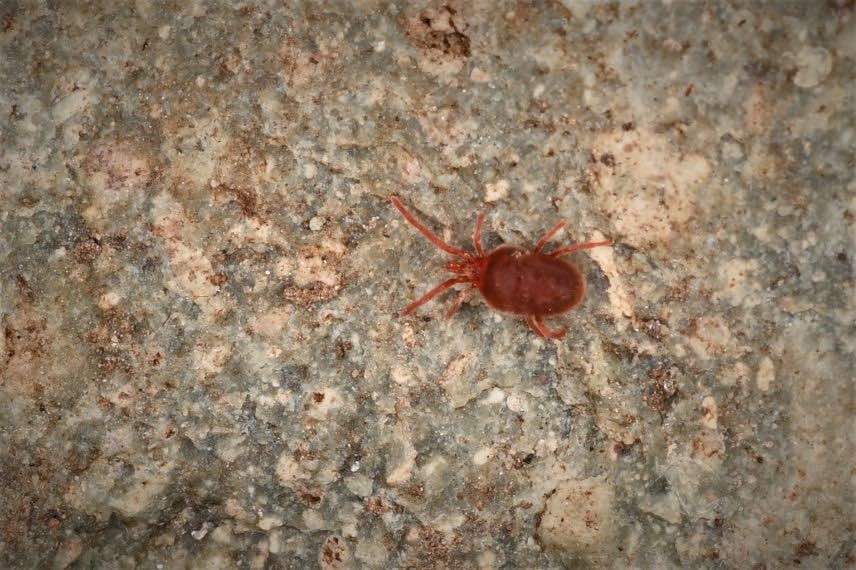
Red spider mites are typical pests of dry and confined atmospheres
Aphids
Description and Symptoms
Aphids are certainly among the most well-known pests for gardeners. Their presence is recognised by the sticky clusters on the leaves: this is honeydew, similar to that produced by scale insects. By secreting this honeydew, aphids also pave the way for the development of sooty mould, a fungal disease.
The leaves and young shoots may curl, twist, and deform. Flower buds are also targeted by these piercing-sucking insects, which feed on sap.
Prevention
Preventive measures are the same as for the previously mentioned pests:
- regular observation of jasmines, to enable quick intervention;
- care of growing conditions for a naturally resistant jasmine;
- maintaining a good balance in the garden to attract aphid predators, such as ladybirds or lacewings.
Natural Treatments
If they are few in number, aphids can be removed by hand or with a jet of water. The most affected stems or leaves can be pruned.
In case of infestation, spray a natural insecticidal soap, as with the treatment for scale insects (see dedicated paragraph).
For more information: “Aphid: Identification and Treatment”
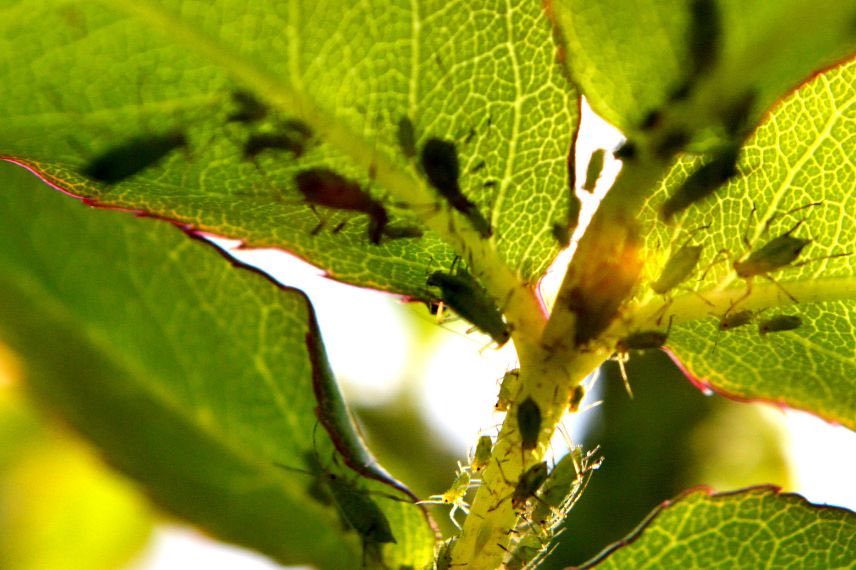
Aphids, common in the garden
Read also
5 Jasmines with decorative foliagePowdery mildew
Description and Symptoms
Powdery mildew is a cryptogamic disease caused by a fungus. It is identified by the white-greyish farinose fluff it leaves on leaves, stems, and flower buds.
This disease subsequently causes drying, followed by leaf drop, as well as deformation of young shoots.
Cryptogamic diseases are often favoured by a combination of heat and humidity in a confined atmosphere. Powdery mildew can thus appear as early as spring.
Prevention
Care for the growing conditions of your jasmines to make them more resistant to pests and diseases. For example, watering and fertilisation should be carried out regularly, but without excess. Also, maintain good planting distances between your plants to promote natural air circulation.
Avoid planting jasmine in an area previously infected by a cryptogamic disease, as spores can survive for a long time in the soil.
To limit the appearance of powdery mildew and other cryptogamic diseases in general:
- always use clean cutting tools, previously disinfected, to avoid transmitting diseases between your plants;
- quickly remove dead leaves, broken or damaged branches, which create entry points for diseases;
- avoid wetting the foliage of your jasmine during watering (if necessary, install a drip hose at its base).
Natural Antifungal Treatments
Remove affected parts as soon as the first symptoms appear and dispose of them at a waste facility (not in compost).
To treat powdery mildew naturally, spray a sulphur-based fungicide, such as Bordeaux mixture. Note: this powder is usable in organic farming, but remains controversial. Its massive use can indeed eventually imbalance soils and promote the development of fungi, creating a true vicious circle.
Plant manures are also used to combat cryptogamic diseases. Nettle and horsetail manures should be diluted in water and sprayed on the affected parts in the evening.
To learn more:
– “Powdery mildew or white disease”
– “Everything you need to know about cryptogamic diseases”;
– “Bordeaux mixture and other copper-based treatments in the garden”;
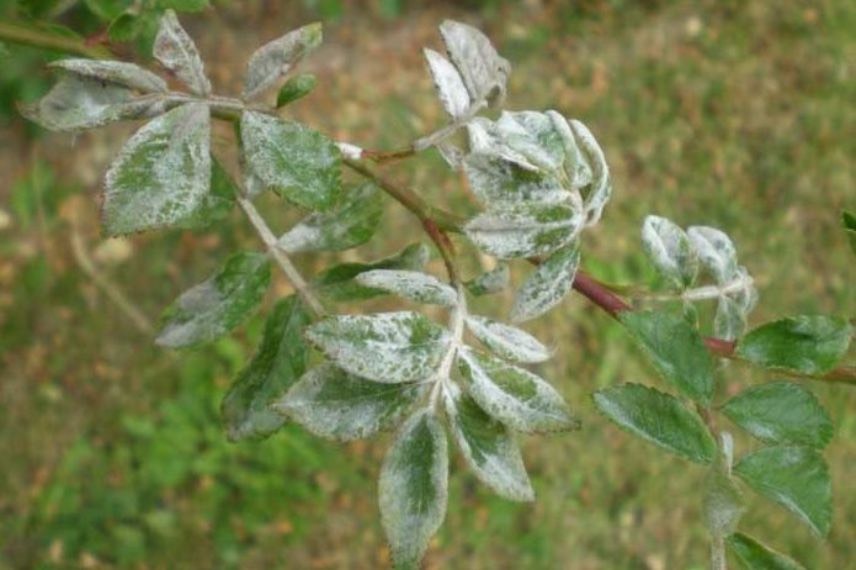
Powdery mildew appears as a white fluff (here on a rose bush)
- Subscribe!
- Contents
Comments