





























Diseases and pests of oaks
Everything you need to know for their care and prevention
Contents
Oaks are giants among trees, symbolising strength and longevity. Yet, even these colossi of nature are not immune to attacks from various diseases and pests. The impact of these issues can range from minor aesthetic nuisances to serious threats to the health and survival of oaks. From powdery mildew to wilting, as well as defoliating caterpillars and mites, a multitude of problems can threaten their health.
→ Discover in this advisory sheet the symptoms of these diseases and pest attacks and, most importantly, the measures you can take to prevent, control and promote the health of your oaks for years to come.

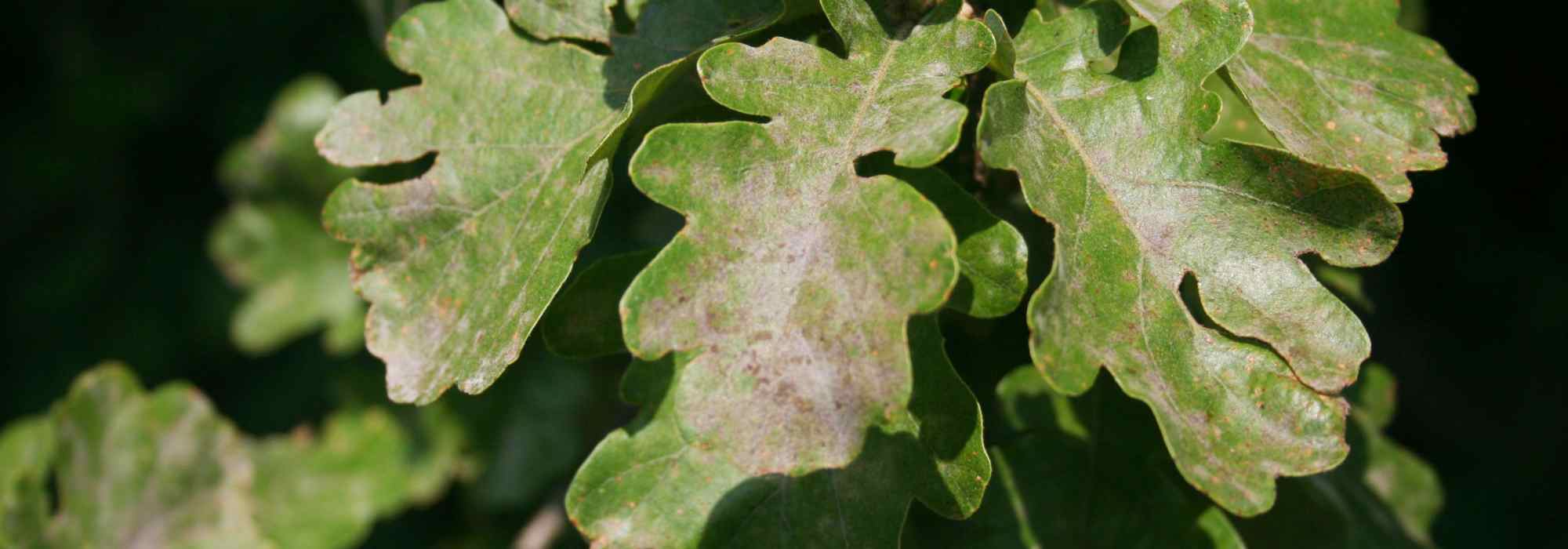
Powdery mildew of Oak
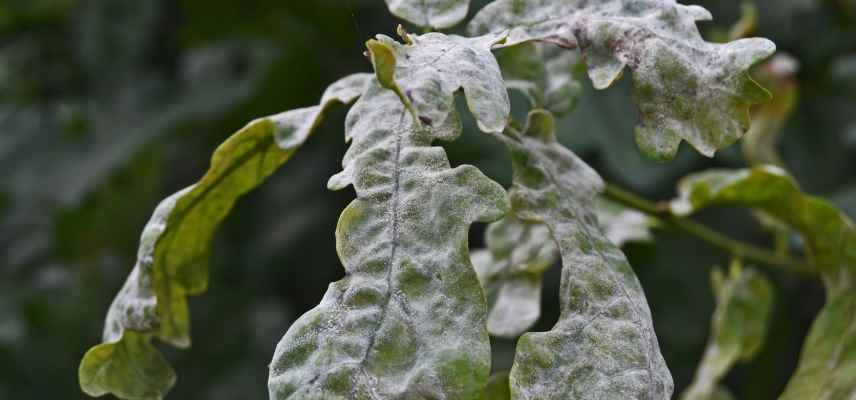
Powdery mildew is a fungal disease that affects a wide variety of plants, including oaks. It is caused by various species of fungi from the Erysiphales family. Powdery mildew typically manifests as a white or grey powder on the leaves and stems of the tree. This white-grey “powder” is actually an accumulation of fungal spores. As the disease progresses, the leaves may discolour, twist, wilt, and eventually fall from the tree.
Powdery mildew is usually spread by the wind, which carries the fungal spores from one plant to another. Warm and dry conditions promote the spread of powdery mildew, although the fungus can survive in a wide range of conditions.
Treatment and Prevention
There are several approaches to treating powdery mildew on oak. Infected branches and leaves can be removed and disposed of to prevent the spread of the fungus. There are specific fungicides that can be applied to control powdery mildew. However, the tree’s life is not really at risk and growth is only slightly affected. Powdery mildew is mainly unsightly, so do not treat unless necessary, but ensure good air circulation around your trees.
To prevent the occurrence of powdery mildew, it is important to regularly monitor your oaks for any signs of infection. General good maintenance of the tree, such as pruning to ensure good air circulation, can also help prevent the disease. Note that there are also varieties of oaks resistant to powdery mildew that you might consider planting, such as Red Oak or evergreen oaks in general (Holm Oak for example).
→ Discover in this advice sheet everything you need to know about powdery mildew.
Read also
Oaks: planting, pruning and careOak Decline Disease
Ink disease, also known as root rot, is a serious fungal disease that affects a variety of trees, including oaks. It is primarily caused by fungi of the genus Phytophthora, particularly Phytophthora cinnamomi, Phytophthora cambivora, and Phytophthora quercina. Ink disease mainly affects the Red Oak, the Green Oak, and the Cork Oak.
Ink disease first manifests as yellowing and wilting of the leaves. The tree may also exhibit reduced growth and premature leaf drop. As the disease progresses, the tree may begin to lose its branches and show signs of general decline. Below ground, the roots of the tree may show signs of rot and, in severe cases, may turn black and resemble ink, hence the name of the disease.
Treatment and Prevention
The spores of the fungus responsible for ink disease can be spread by water, especially in poorly drained soils. Phytophthora fungi prefer moist soils, meaning trees in these conditions are particularly at risk. The best way to prevent ink disease is to ensure proper soil management, including avoiding poorly drained soils and ensuring adequate irrigation. Additionally, it is important to regularly monitor trees for signs of disease.
There is no definitive cure for ink disease once a tree is infected. Severely affected trees usually need to be felled to prevent the spread of the disease.
American Oak Wilt
Oak wilt is a serious fungal disease that affects oaks, particularly red oaks and other species of American oak. It is caused by the fungus Bretziella fagacearum (formerly known as Ceratocystis fagacearum). In Europe, although currently the affected individuals are still relatively rare, the relevant forestry management authorities take the matter very seriously, and monitoring is maintained to prevent the spread of this disease from North America to our forests.
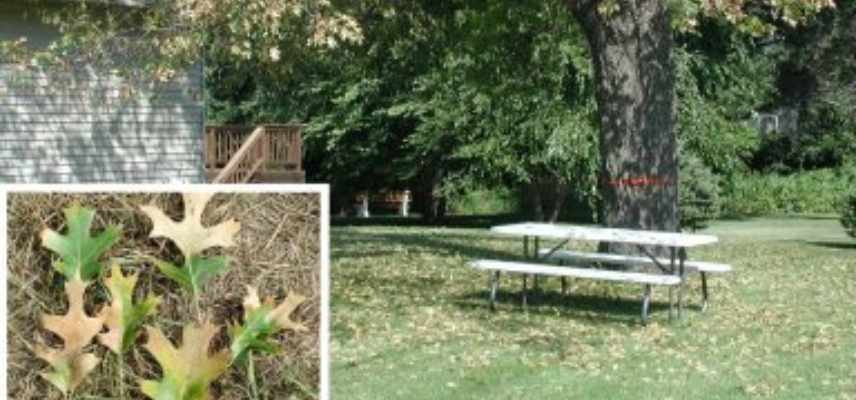
Oak wilt is characterised by progressive wilting and yellowing or browning of the leaves, often starting at the top of the tree or at the tips of the branches and spreading downwards. The leaves may also exhibit brown margins or dead areas between the veins. In advanced cases, the leaves may fall prematurely, but they often remain attached to the tree even after dying. If the bark of the tree is removed, dark streaks or spots may sometimes be observed in the wood. The fungus that causes oak wilt can spread in several ways. It is often carried by beetles, primarily the twolined chestnut borer in our region, which feed on the wood of infected trees and then transport the fungal spores to other trees. The fungus can also spread through the roots of an infected tree to a healthy tree.
Treatment and Prevention
The best way to prevent oak wilt is to regularly monitor trees for signs of disease and to avoid practices that may encourage the spread of the fungus, such as pruning during the active months of beetles. It is also recommended to destroy the wood of infected trees to prevent the spread of the disease. There is no curative treatment for oak wilt. Severely infected trees generally need to be felled to prevent the spread of the disease. In some cases, neighbouring trees can be protected by cutting the roots to interrupt the spread of the fungus.
Read also
Oak gall: what is it?the Colourful Canker of Oak
Colour canker, also known as brown oak disease, is a deadly fungal disease that affects oaks and other tree species. It is caused by several species of fungi, including Ceratocystis fagacearum in North America and Ceratocystis platani in Europe. The first sign of colour canker is usually the appearance of cankers or wounds on the tree’s bark. These cankers can expand in concentric circles and produce discolouration ranging from brown to black. As the disease progresses, the tree may show signs of wilting, leaf drop, and general decline. If the bark is removed around the infected areas, brownish or purplish streaks may be observed in the wood. Fungal spores can be carried by wind or water, or may be moved from tree to tree by insects. The fungus can also be transmitted by contaminated pruning equipment.
Treatment and Prevention
Preventing colour canker primarily involves regularly monitoring trees for signs of disease and ensuring good pruning hygiene. It is also important to avoid tree stress, such as drought or injuries, which can make them more vulnerable to infection.
There is no curative treatment for colour canker. Severely infected trees usually need to be felled to prevent the spread of the disease.
The root rot
Honey fungus, also known as root rot, is a fungal disease, often caused by various species of fungi from the genus Armillaria, including the honey-coloured Armillaria.
Symptoms of honey fungus can vary, but they include progressive decline of the tree, premature leaf drop, reduced growth, and, in severe cases, tree death. Underground, the tree’s roots may show signs of rot, and fungal structures called rhizomorphs that resemble black threads may sometimes be observed. In some cases, clusters of fungi may also be seen at the base of the tree.
It is worth noting that fungi from the genus Armillaria primarily spread through their rhizomorphs, which can grow through the soil and infect the roots of other trees. However, this fungus can also survive in dead wood, meaning the disease can spread from stumps of dead trees or infected firewood.
Treatment and Prevention
The best way to prevent honey fungus is to maintain good tree health, as stressed or weakened trees are more susceptible to infection. This can include proper watering, fertilisation, pruning, and improving soil drainage. It is also important to remove dead or infested wood that may harbour the fungus.
There is no definitive cure for honey fungus. Treatment generally involves felling and removing infected trees to prevent the spread of the disease.
The Oak Processionary Caterpillars
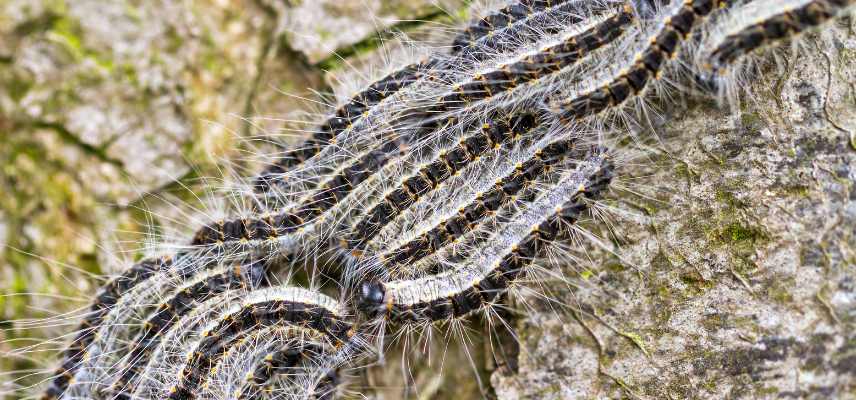
The oak processionary caterpillar (Thaumetopoea processionea) is a species of moth whose larva (the caterpillar) is considered a major pest for oaks, as well as other tree species, in many regions of Europe. Processionary caterpillars are easily recognisable by their distinctive behaviour of moving in a “procession” one behind the other, hence their name. They have a greyish colour and are covered in long urticating hairs.
Oak processionary caterpillars feed on the leaves of oaks, which can lead to the weakening of the tree and, in extreme cases, its death. Severe infestations can completely defoliate a tree.
Treatment and Prevention
There are several methods to control oak processionary caterpillars. This may include the removal and destruction of caterpillar nests, the use of pheromone traps to catch adult moths, or the application of organic or chemical treatments.
Warning!: Oak processionary caterpillars also pose a risk to human and animal health. The urticating hairs of the caterpillars can be released into the air and cause skin, eye, and respiratory irritations in people and animals that come into contact with them. Caution is advised!
Other defoliating caterpillars on oaks
Other caterpillars can also target the foliage of oaks, causing minimal damage in the end. Moreover, birds will quickly help to regulate the “invasion” on your trees. The caterpillars of butterflies that feed on oak leaves are mainly: the Oak Silk Moth (Lasiocampa quercus), the Oak Tortrix (Tortrix viridana), and the Gypsy Moth (Lymantria dispar).
The oak gall
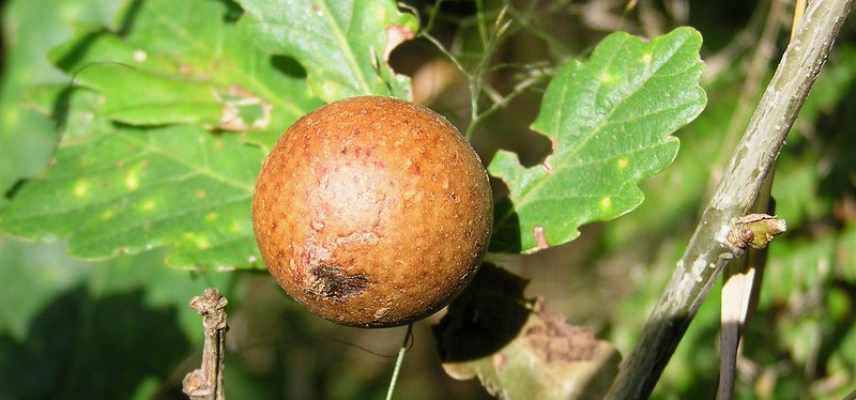
Oak gall (note that it is spelled with two “l”s) is not strictly speaking a disease. It is a reaction of the plant caused by tiny mites from the Eriophyidae family. These mites infiltrate the tissues of the tree, leading to deformations known as “galls.” These galls can take many different forms, ranging from small round bumps to complex and ramified growths. They can be various colours, often green or red at first, then turning brown over time. Galls typically appear on leaves but can also form on buds, branches, and sometimes even on roots.
Oak galls are more of an aesthetic concern (though…) than a real danger to the health of the tree. Oaks can tolerate a certain amount of galls without suffering significant damage. However, in very rare cases of severe infestation, the tree may lose a large portion of its leaves, which can weaken it and make it more susceptible to other stresses.
→ If you want to learn more about galls in general, read: Plant galls: what are they?
- Subscribe!
- Contents
Comments