





























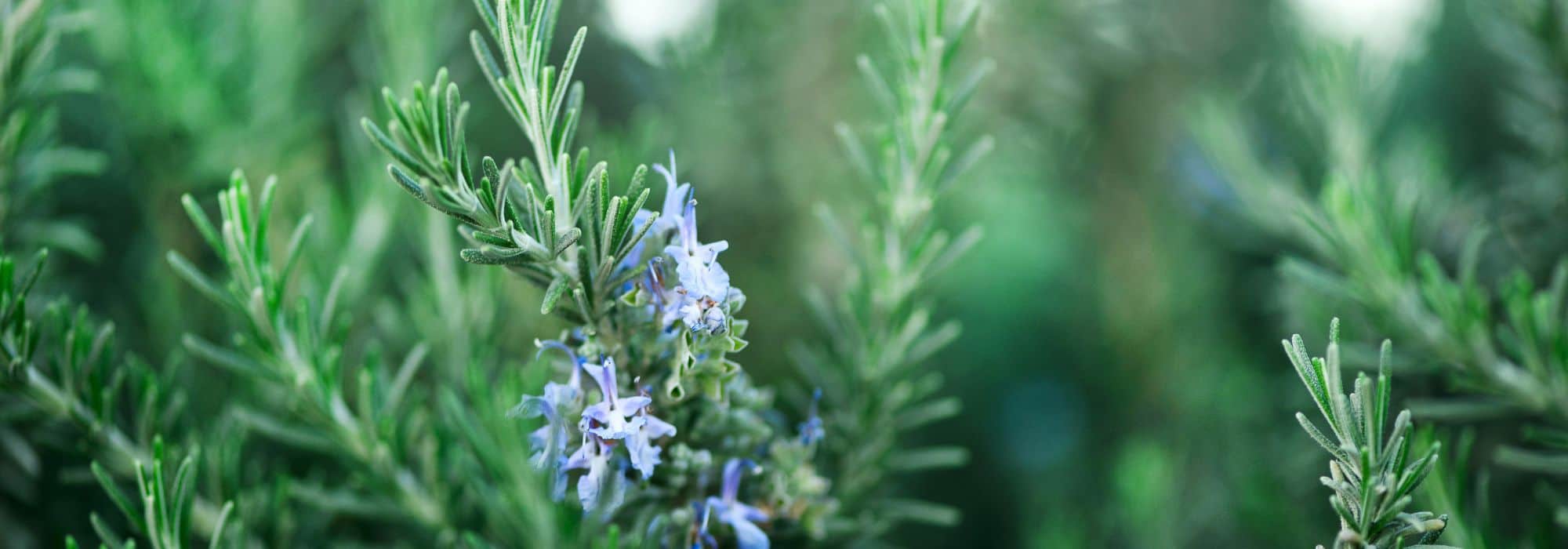
Diseases and pests of rosemary
How to naturally identify and treat diseases and pests of rosemary?
Contents
Mediterranean emblematic plant, rosemary (Rosmarinus officicnalis) distils its camphor scents in gardens across the territory. Its particularly aromatic leaves flavour many dishes, allow for the creation of fragrant infusions, and help deter certain pests in the vegetable garden. Particularly robust, rosemary fears nothing, as it is resistant to drought, cold, difficult soils, and sea spray. It is also an aromatic plant that is not very susceptible to diseases and pests, provided it is given the cultural conditions that suit its Mediterranean temperament. However, it can sometimes be affected by viruses or pests that are relatively easy and natural to treat.

The rosemary beetle
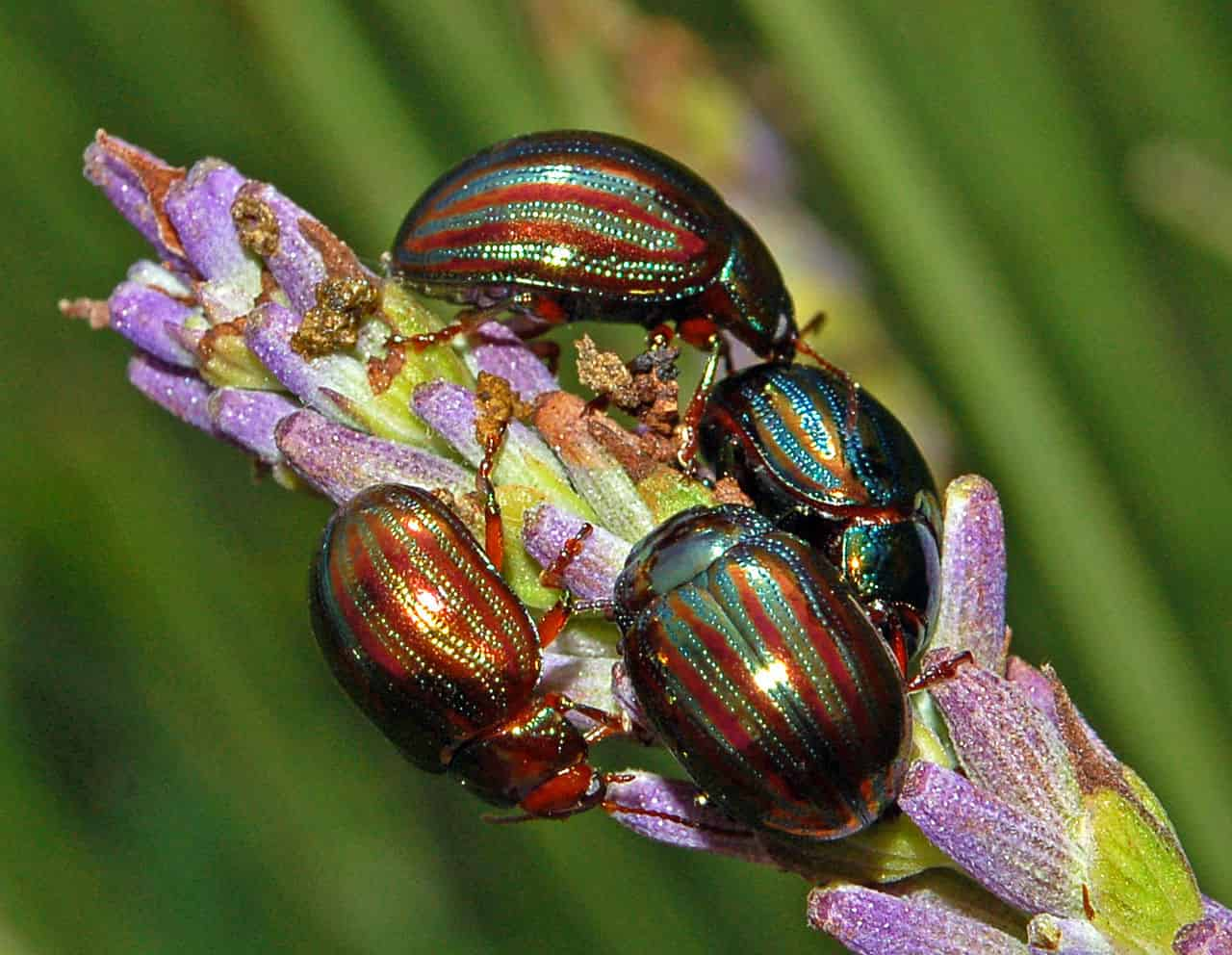
The rosemary beetle (Chrysomela americana) is a phytophagous beetle that has a preference for the leaves of rosemary but also for lavender. However, it can also attack thyme and lemongrass. With a sharp appetite, it is completely disregarded by predators, which can exacerbate its population explosion. Only its larvae can be eaten by a species of paper wasps.
©Hectonicus
Identification
The rosemary beetle is the size and shape of a ladybird, but it is not one. Its metallic-reflective thorax is indeed striated and not dotted. It lays its eggs under the leaves of rosemary. The larvae then develop, feeding abundantly on their host plant. During pupation, they take refuge in the soil.
In practice, the beetles first attack the young shoots of rosemary, nibbling on them. In summer, they take a break before resuming their feeding at the end of August. In the case of a population explosion, the entire shoot can disappear. Otherwise, the damage is minor and may go unnoticed.
Natural Treatments
- Manual collection of adults before laying is the most effective method to combat an infestation, either in spring or late summer, during mating. Simply place a sheet or umbrella under the rosemary plants, which should be vigorously shaken.
- If the invasion is confirmed, the only solution is to prune the affected shoots or those with visible eggs in autumn.
- A treatment based on pyrethrum should only be used in the case of a severe attack, as this insecticidal treatment, although natural, makes no distinction between the beetle and other insects.
To learn everything about beetles, read François’s article: Beetles: identification, damage, and treatment
Read also
Rosemary: planting, benefits, harvestThe rosemary leafhopper
The leafhopper is a jumping and piercing hemipteran, closely related to butterflies due to its waxy wings. After mating, which occurs from late May to early August, it lays eggs under the leaves of the host plant, enveloping them in a covering commonly referred to as “cuckoo spit.”
Once hatched, the larvae begin their destructive work, targeting the leaves of rosemary, from which they consume the sap.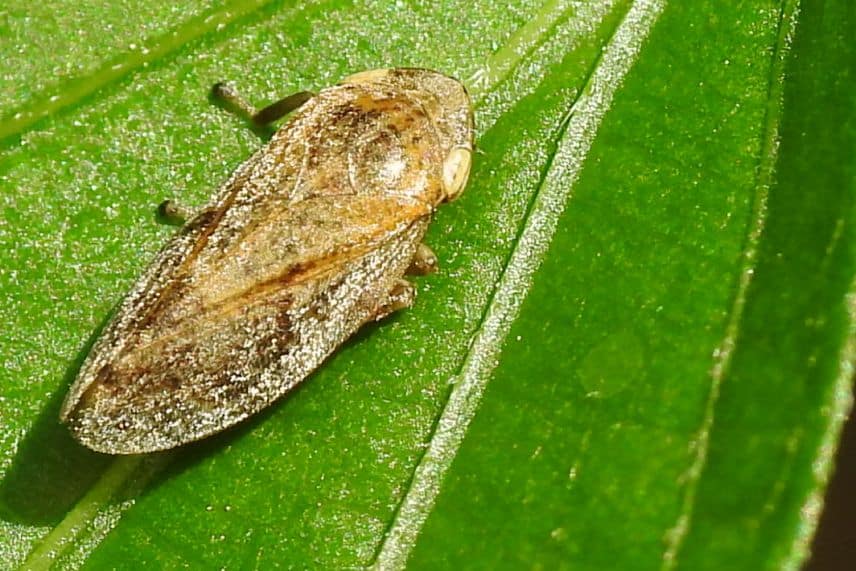
Identification
In general, leafhopper attacks are quite superficial. They are noticeable due to the appearance of yellow spots and discolouration on the plant’s leaves. You can also easily distinguish the white foam that protects the eggs, which can simply be removed with a strong jet of water.
Prevention
Birds, particularly blue tits, are predators of leafhoppers. Installing a birdhouse and bird feeders is enough to attract them.
Natural Treatments
A spray made from black soap can eradicate leafhoppers, insects from the same family as aphids. Simply dilute 10 g of black soap in one litre of lukewarm water. After cooling, spray either early in the morning or in the evening.
To learn more about leafhoppers, read Virginie D.’s text: Leafhopper, sharpshooter and cuckoo spit
Discover other Rosemary
View all →
Available in 0 sizes
Available in 3 sizes
Available in 1 sizes
Available in 3 sizes

Available in 2 sizes

Available in 1 sizes

Available in 2 sizes
Available in 2 sizes

Available in 2 sizes
Available in 1 sizes
Fungal diseases
Typical of the south, rosemary thrives in sunny locations and easily withstands drought. It also prefers dry, sandy, even poor soils. The key is that the soil must be very well-drained.
If you plant your rosemary in heavy, humus-bearing soil where drainage is not fully ensured, it opens the door to fungal diseases. Several fungi can affect rosemary:
- Phytophthoras: these are fungi that attack both the roots and the collar, leaves, or stems
- Botrytis cinerea or grey mould, which is recognised by a grey fuzz on the leaves
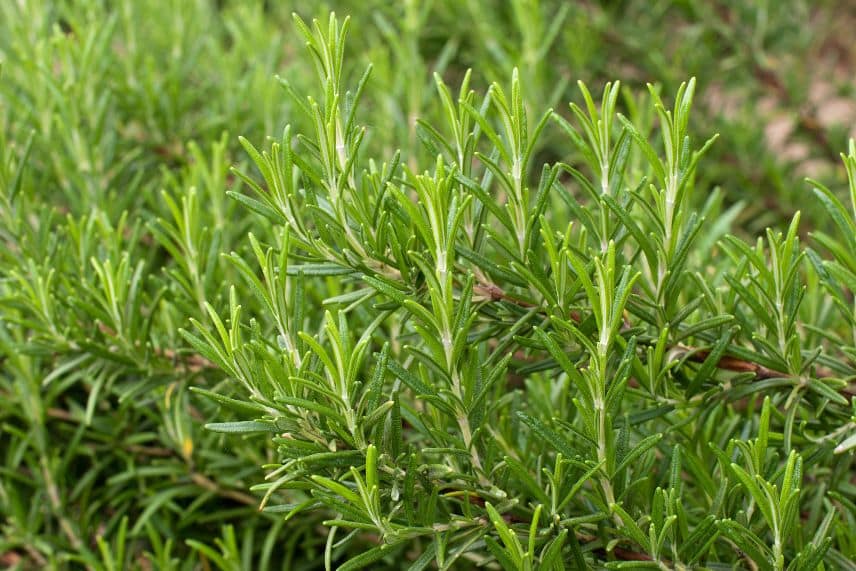 A rosemary plant in heavy, damp, poorly-drained soil is at risk of developing fungal diseases
Prevention
It is essential to avoid anything that facilitates the spread of fungi:
- Do not plant the different rosemary plants too closely to ensure adequate air circulation
- Water only very moderately at the base during extreme heat. Overall, rosemary does not require watering
- If rosemary is in a pot, always remove water from the saucer
- As a last resort, move your rosemary to plant it in perfectly drained soil
Natural Treatment
The only relatively effective treatment against fungal diseases is horsetail decoction. This decoction is prepared with 100 g of fresh horsetail leaves that will macerate in one litre of water for 24 hours. Then, boil for 30 minutes, and let cool and infuse overnight.
The decoction should be sprayed, diluted to 10%, in the evening. Never spray horsetail decoction during the day.
Learn to distinguish the different fungal diseases with Marion’s article.
- Subscribe!
- Contents
Comments