





























Diseases and Pests of the Sweet Chestnut: Symptoms, Prevention, and Treatments
Better understanding for better care
Contents
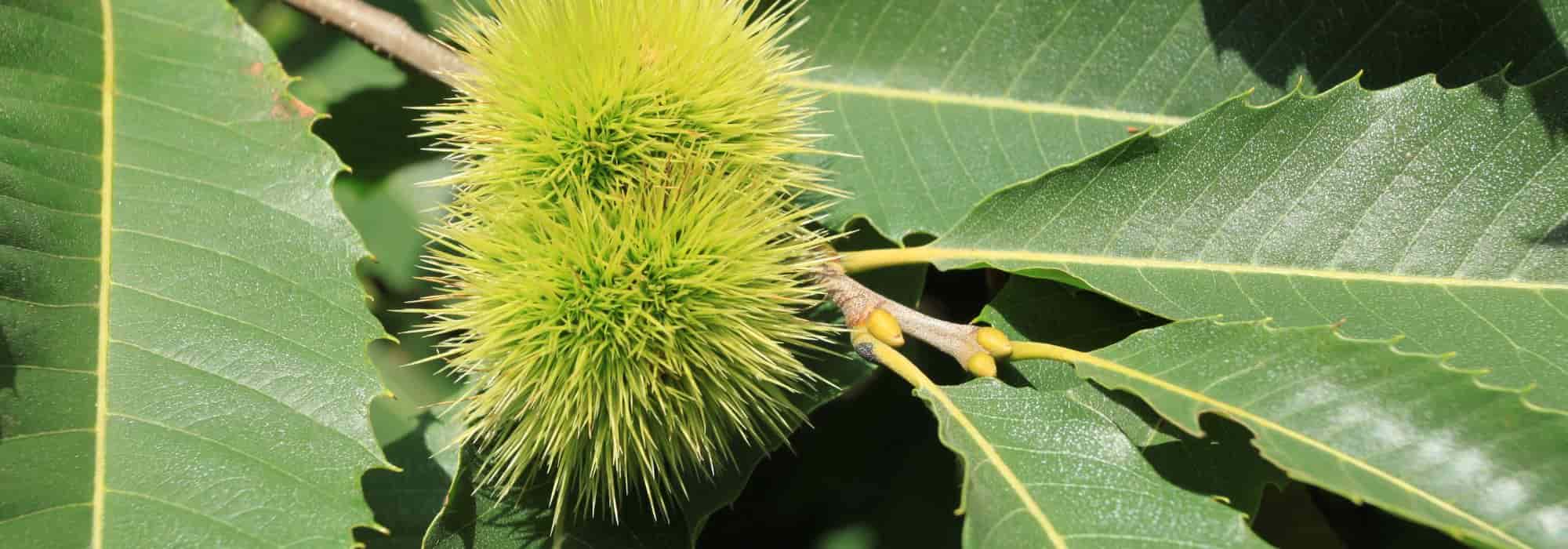
If you want to plant a sweet chestnut (Castanea sativa), a large tree from the Fagaceae family, in your garden, it is essential to understand its needs and weaknesses. The sweet chestnut requires a deep, light, rich, and acidic soil, as well as a sunny location. However, it does not require any special maintenance. Yet, the sweet chestnut is one of those trees that suffers from climate change and disruption. In fact, over the last century, and particularly in recent years, many sweet chestnut plantations have been affected by diseases or pests that develop and spread quickly.
Let’s explore together what are the main diseases and parasitic insects that affect sweet chestnuts? And most importantly, how can we naturally prevent and treat these sweet chestnuts?
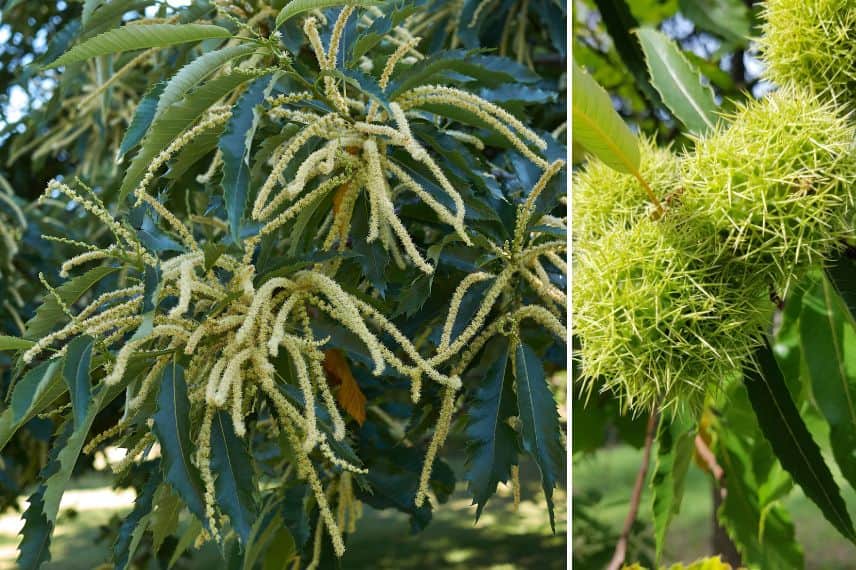

The sweet chestnut canker
What is this disease?
The chestnut canker is a cryptogamic disease caused by the fungus Cryphonectria parasitica (Endothia parasitica in its imperfect form). Originating from Asia, it entered Europe through Italy in 1938. It primarily affects chestnuts, but also oaks (Quercus) and maples (Acer).
This fungus resides under the bark of trees, in the form of agglutinated mycelium. Spores are dispersed by the wind and can contaminate other trees. Contamination is generally very rapid and severe, especially on young specimens or weakened trees.
The fungus causes a slowdown in sap flow.
Symptoms
- Appearance of orange spots on the bark of the trunk and then the branches that eventually turn red
- Splitting of the bark
- Appearance of suckers on the stems
- Drying out of the branches.
Seedlings and young trees under 15 years old may decline and die if the trunk and its main branches are attacked. In contrast, it is rarer for mature trees to die.
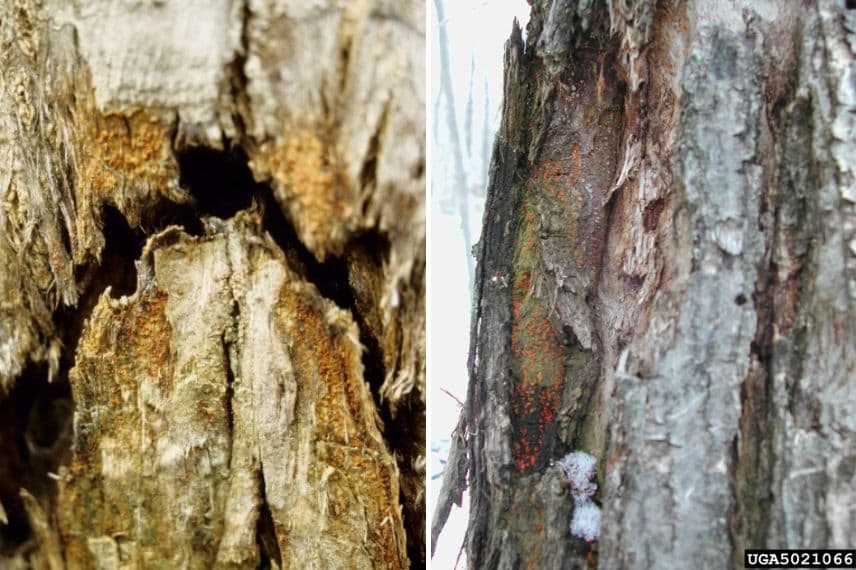
©Joseph O’Brien and ©Department of Conservation and Natural Resources of Pennsylvania
Preventive measures and treatment
- Cut the affected branch and burn it
- Cure the canker
- As a preventive measure, it is recommended to prune, that is, to cut back dead or diseased branches of a tree.
The ink of the sweet chestnut
What is this disease?
This disease has caused severe damage to chestnut forests in the 19th and 20th centuries. Today, it significantly affects trees growing along the Atlantic coast and in Île-de-France, regions where the climatic conditions are rather humid and warm. Climate change is only accelerating its development process.
This disease is caused by a micro-organism, Phytophthora cinnamomi or Phytophthora cambivora. They spread through the water in clay soils where they particularly thrive. They attack the roots and the collar. The disease spreads very quickly and attacks the root system.
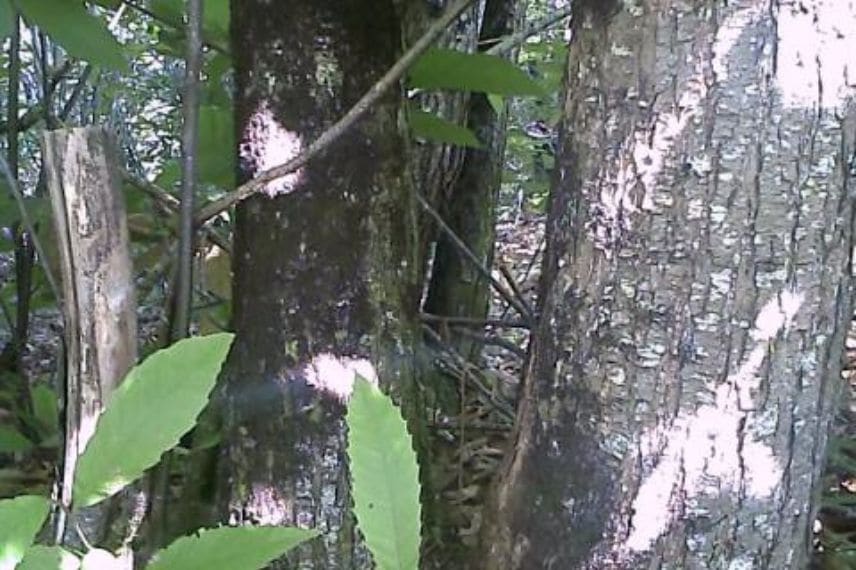
Black ink disease on a chestnut tree (©Abrahami)
Symptoms
- Root rot that is infested with spores forming a sort of black ink that oozes from the base of the trunk
- Black necrosis on the roots and the base of the trunk
- Poorly developing leaves that wilt and dwarf, which may also turn red or yellow
- Weak shoots
- Desiccated twigs
- Dead branches
The tree eventually dies within one to five years.
Preventive measures and treatment
Currently, no treatment exists. The only solution is to cut down the tree before the proliferation affects the entire forest.
Prophylaxis remains the most effective measure to prevent the appearance of this disease. It is therefore essential to plant varieties that are less susceptible to ink disease in perfectly drained soil. The varieties Maraval, Marigoule, and Marlhac have good resistance to diseases.
Additionally, the transport of potentially contaminated soil should be avoided when planting a chestnut tree.
It is also important to avoid any water stress.
It should be noted that any suspicion of black ink disease on a chestnut tree should be reported on the Vigil’encre app or on the INRA website.
Discover other Chestnut trees
View all →
Available in 2 sizes
Available in 1 sizes
Available in 1 sizes
Available in 1 sizes
Available in 1 sizes
Available in 1 sizes
Available in 1 sizes
Available in 1 sizes
The chestnut gall wasp
What is this insect?
The chestnut gall wasp (Dryocosmus kuriphilus) is a small black wasp with yellow legs, measuring 2.5 to 3 mm in length, native to China, which appeared in Europe in the 2000s. It reproduces through parthenogenesis, meaning without mating. The female lays about 100 to 150 eggs, deposited in the buds between June and August. The larvae overwinter in the buds and then pupate between May and July before emerging as adults.
Symptoms
The first symptoms appear in spring:
- Galls are visible on the leaf buds
- The leaves are deformed
- The shoots develop poorly
- Flowering and fruiting are disrupted
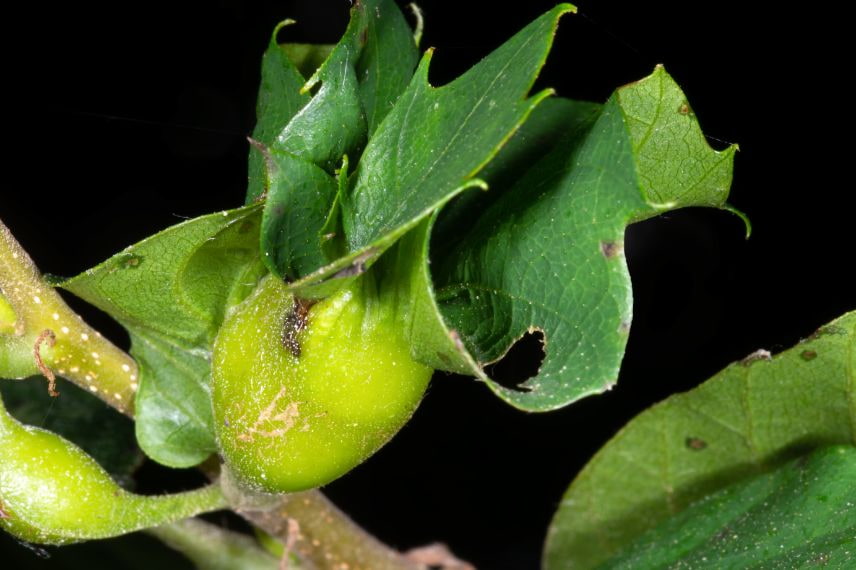
Gall caused by the chestnut gall wasp
Preventive measures and treatment
There is no method to combat this hymenopteran.
Prevention is key:
- Monitoring the buds in spring to detect the presence of galls
- Pruning and burning infested shoots
Biological control using another wasp species, Torymus sinensis, has shown good results in areas where chestnuts are fairly common, such as Ardèche. This biocontrol agent lays its eggs inside the galls on the larvae of the gall wasp.
Read also
Harvesting and storing chestnutsThe disparate xyleborus
What is this insect?
Xyleborus dispar is a beetle that attacks sweet chestnuts, oaks, and beeches. It gets its name from the size difference between the male (1.8 to 2.4 mm) and the female (3 to 3.8 mm). The latter, fertilised by the male, takes flight from late March to early April, or even until May depending on the weather.
Once it has found its target, it burrows galleries, one penetrating and the others circular, in the wood where it lays its eggs. At the same time, the galleries are invaded by the spores of fungi that it carries. The mycelium develops there and serves as the primary food source for the larvae. Upon reaching adulthood, both male and female mate within the galleries themselves.
Symptoms
- Wilting of leaves on young shoots or branches
- Exudation of sap emerging from small black holes scattered on the trunk and branches (possibly accompanied by sawdust)
- Clearly visible galleries in the wood of broken branches
- Weakening of the tree.
Preventive measures and treatments
- Destruction of attacked branches
- Setting up red sticky traps filled with ethyl alcohol
- Providing fertiliser to stimulate tree growth (as Xyleborus dispar primarily targets young or weakened trees)
Diseases and Pests of Chestnuts
Other insects or diseases particularly affect chestnuts:
The chestnut tortrix
The chestnut tortrix (Pammene fasciana) is a moth that flies from early June to early August. It primarily targets young, still green burrs, causing them to drop. In fact, it is the larvae that feed on the lamina and then on the burrs, before entering the developing fruit to consume its contents. Once satiated, the larvae move on to other burrs.
How to combat it?
- Install pheromone traps
- Spray with Bacillus thuringiensis
The chestnut weevil
The chestnut weevil (Cydia splendana) is a nocturnal moth whose larvae devour the insides of chestnuts before and during the harvest, in the same manner as the tortrix.
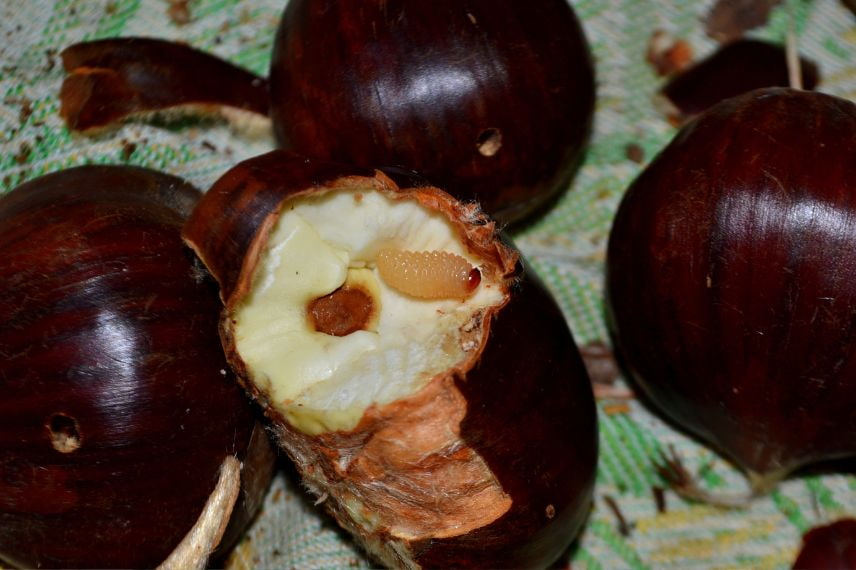 Larva of Cydia splendana in a chestnut
How to combat it?
- Dig around the base of the chestnut trees to expose the overwintering larvae. The cold of winter will exterminate them
- Use bait traps and pheromone traps specifically designed for weevils
- Encourage predators such as great tits and earwigs by installing insect hotels and nesting boxes
- Spray with the bacterium Bacillus thuringiensis
The chestnut weevil
This is a beetle that also targets acorns. Measuring 6 to 9 mm, it is covered in yellowish to greyish pubescence and has a long rostrum. The female lays her eggs in the chestnuts, and the larvae remain there for about forty days before boring a hole to exit and hibernate. The fruits fall prematurely.
How to combat it?
- Dig around the base of the chestnut trees to bring the larvae to the surface
Black rot of the chestnut
This disease is caused by the fungus Ciboria batschiana, which develops on last year’s chestnuts or on acorns. It is recognised by the appearance, between September and December, of grey-brown apothecia, shiny and cup-shaped.
Soaking the chestnuts for a few days helps eliminate any trace of spores.
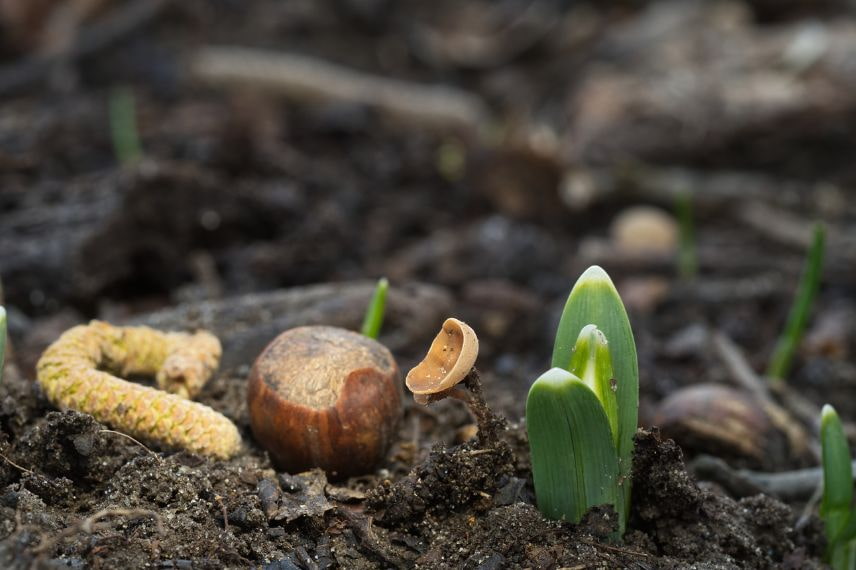 Ciboria batschiana developing on a chestnut
- Subscribe!
- Contents
Comments