


Diseases and pests of Viburnums
Identification, natural treatments, prevention
Contents
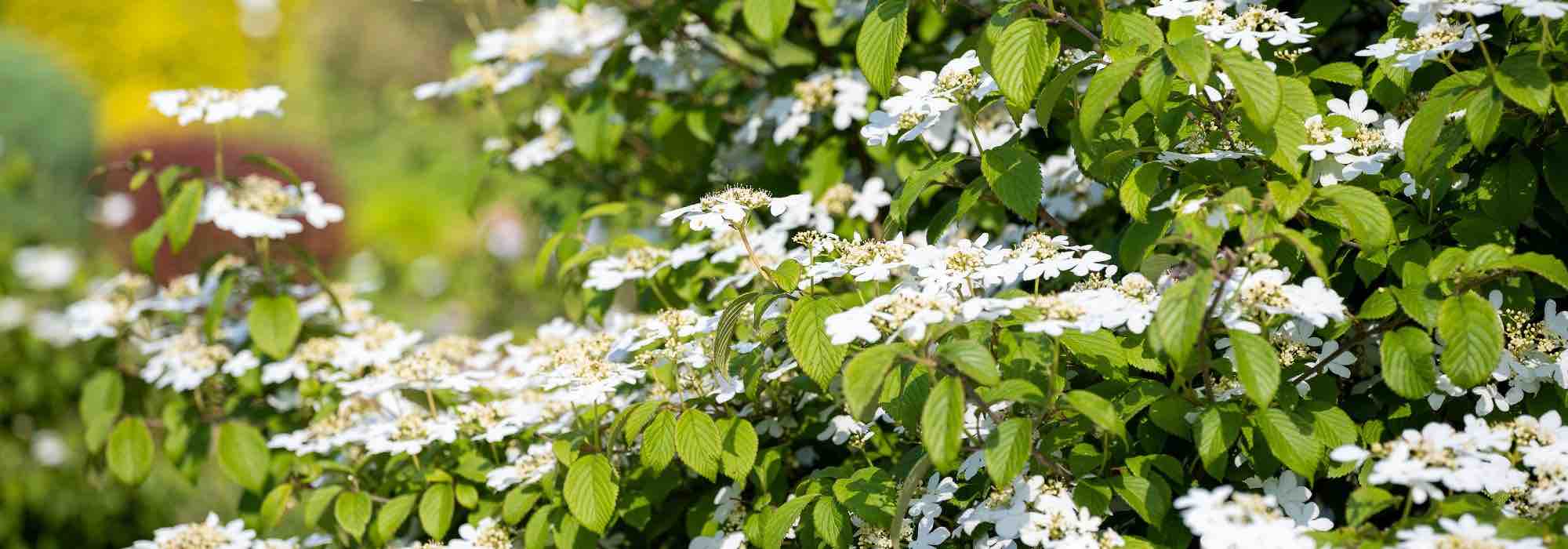
Viburnums, are ornamental shrubs valued sometimes for their evergreen foliage, colourful in certain species, often for their abundant flowering in large flat or spherical corymbs. These plants are generally hardy and relatively easy to grow in good conditions. Viburnums usually prefer well-drained soil and tolerate a range of soil types, but they prefer it to be slightly acidic to neutral. Regular watering is necessary to keep the soil slightly moist, especially during dry periods. A layer of organic mulch around the base of the plants can help retain moisture.
In suitable growing conditions, viburnums typically do not pose any issues. However, there is a small collection of diseases and even more pests that can trouble them, some of which only target specific species. Discover our tips for identifying, treating naturally, and preventing issues to ensure beautiful viburnums in your garden.

Powdery mildew
Powdery mildew is a common fungal disease that can affect viburnums. It manifests as a powdery, whitish coating on the leaves, stems, and flowers of viburnums. This coating consists of fungal spores and can gradually cover the surface of the infected organs. As it develops, powdery mildew can lead to yellowing, wilting, and deformation of the leaves, as well as stunted flowers.
Powdery mildew thrives in moderate to warm temperatures with dry air. Periods of dry weather followed by high humidity can promote infection. Viburnums weakened by unfavourable growing conditions, such as poorly drained soil, lack of sunlight, or nutritional deficiencies, are more vulnerable.
There are several natural treatment methods to control powdery mildew, which are quite simple to implement, using baking soda, garlic, and milk.
Prevention is essential to avoid infection by powdery mildew. Ensure you plant your viburnums with adequate spacing between plants. This allows for good air circulation and reduces conditions conducive to the development of powdery mildew. Mulch to prevent soil dryness. Provide the right growing conditions for your plants, those they appreciate. Horsetail decoction can help strengthen your plants.
→ Read Virginie’s article to learn more about appropriate treatments for powdery mildew.
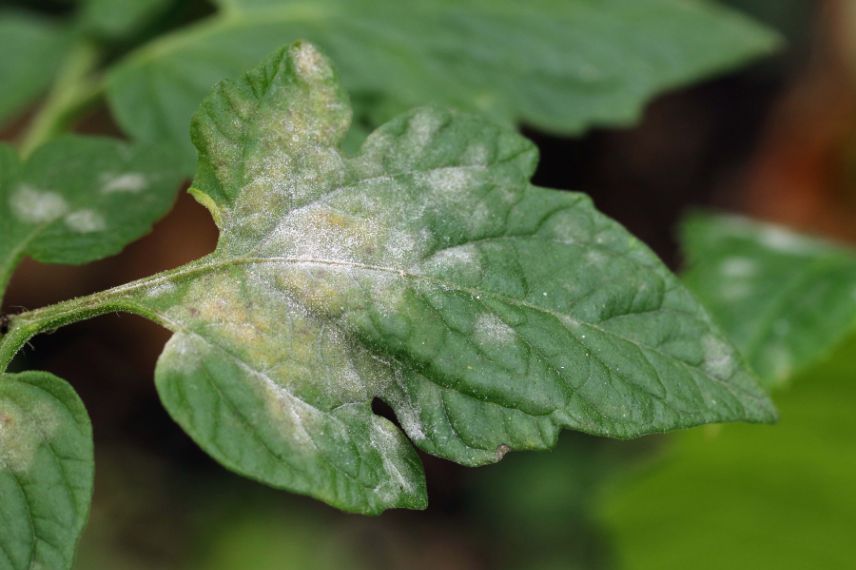
A characteristic felting of powdery mildew
Armillaria
Armillaria, also known as honey fungus, is a rare fungal disease that can affect viburnums. It causes root and collar rot in the plant. Typical symptoms of armillaria include leaf wilting, branch dieback, and eventually the death of the plant. When examining the roots and collar of the infected plant, a white cream or pale yellow mycelium may be observed.
The fungus can persist in the soil for many years. If viburnums are planted in contaminated soil, they may become infected. Injuries caused by gardening activities, mechanical damage, or other factors can provide an entry point for the fungus. Damaged roots are more vulnerable to infection by armillaria.
There is no curative treatment for armillaria. When you observe symptoms of armillaria, uproot the plant and burn it.
Armillaria thrives in poorly drained, moist soils. Ensure that the soil is well-drained by amending it if necessary. This will help prevent moisture accumulation and reduce conditions favourable to fungal growth.
Healthy plants are more resistant to diseases. Provide your viburnums with optimal growing conditions, including adequate exposure, regular but not excessive watering, and balanced fertilisation. A healthy plant is better equipped to cope with armillaria infection.
→ Read Eva’s article to learn more about Armillaria.
Black spot disease or downy mildew
The black spot disease or Marsonia is a fungal infection that can affect viburnums. It is caused by different fungi. It is characterised by the appearance of round or irregular black or brown spots on the leaves of viburnums. These spots can develop and merge, causing yellowing of the leaves and premature leaf drop. Black spots can also appear on the stems and flowers of viburnums.
The black spot disease develops in conditions of heat and high humidity. Periods of damp weather, combined with moderate temperatures (between 16 and 20 °C), create an environment conducive to the spread of the fungus responsible for the disease.
There is no effective treatment to control black spot disease. Therefore, in the event of an infestation one year, plan a spraying of Bordeaux mixture as a preventive measure in the following spring. Horsetail decoctions are beneficial. However, collect fallen leaves and burn them.
A healthy plant is better equipped to cope with the infection. Plan adequate spacing between viburnums when planting to promote good air circulation and reduce stagnant humidity. Avoid watering the leaves of viburnums, as this can facilitate the development of the disease. Water at soil level to maintain adequate moisture without excessively wetting the leaves. Fertilise in a balanced manner.
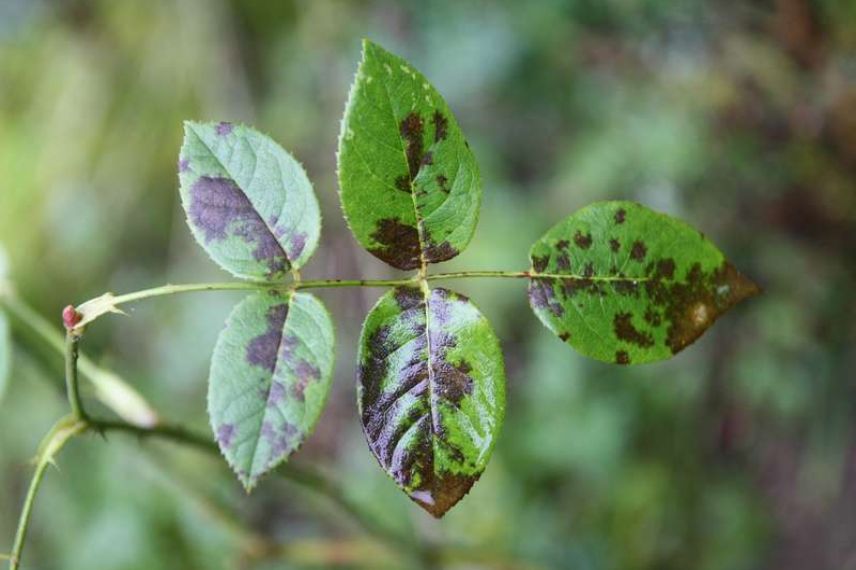
Black spots, here on a rose
Viburnum Leaf Beetle
The Viburnum Beetle, scientifically known as Pyrrhalta viburni, is a common pest of viburnums, particularly certain species such as Viburnum opulus or Snowball Viburnum. These insects can cause significant damage to viburnums, affecting both leaves and buds. The Viburnum Beetle is a small insect measuring about 5 to 7 mm in length. Adults have an oval and flattened body, brown in colour, with black elytra and distinctive black antennae. The larvae of the Viburnum Beetle are pale yellow to light green and have a slightly incurved shape. They feed on the leaves of viburnums, causing considerable defoliation if the infestation is severe.
Infestations of the Viburnum Beetle occur in warm and dry environmental conditions. If the environment does not provide enough natural predators to control the populations of the Viburnum Beetle, they can rapidly increase and return in subsequent years. Larvae appear in May and adults in July.
Cut off the parts of the plant infested with larvae. Immerse them in a basin to drown them. The following spring, in May, inspect the viburnum, and if you spot any larvae, act quickly by crushing them between your fingers (with gloves if you prefer). In June, the larvae descend into the soil. Install a sticky band around the trunk to trap them. Scratch the soil to expose the descended larvae to predators.
Encourage the presence of natural predators such as ladybirds, hoverflies, and birds in your garden. These insects and animals feed on the larvae and adults of the Viburnum Beetle, helping to control their populations. Plant attractive flowers for beneficial insects.
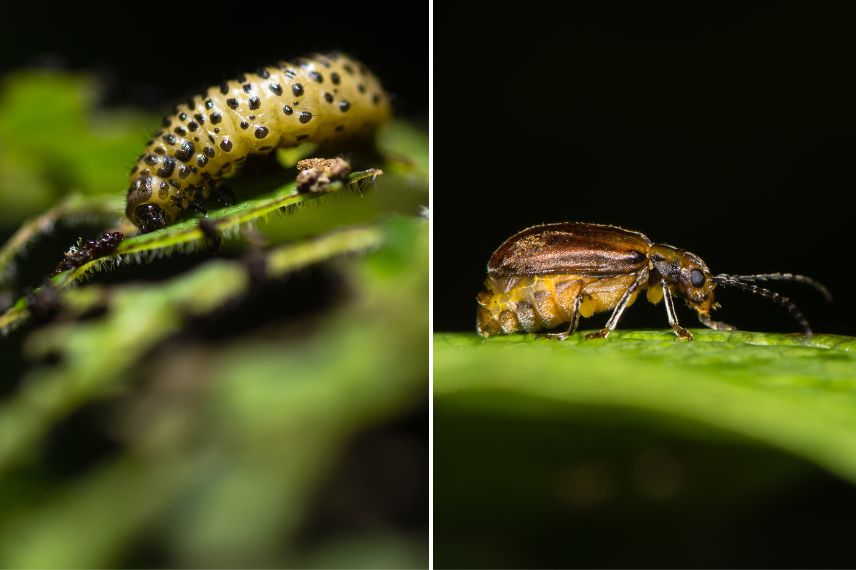
The larva and female beetle
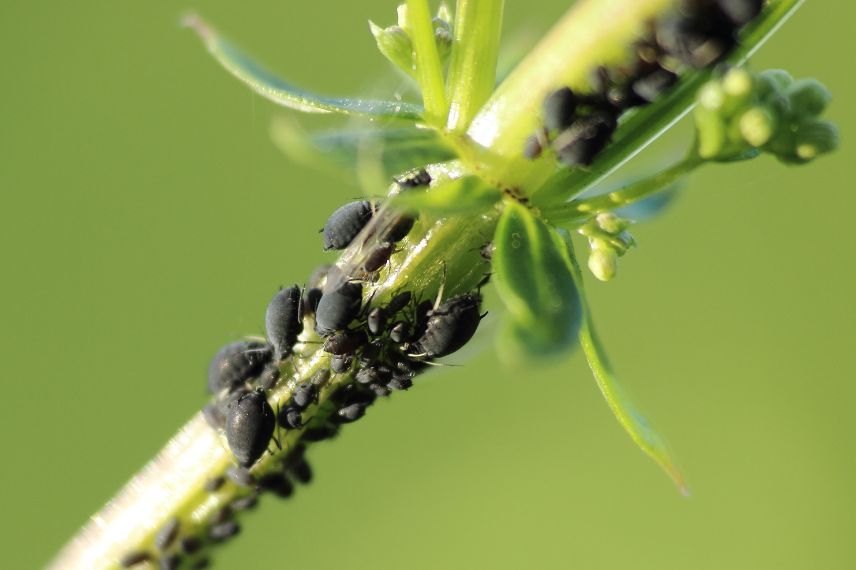
Aphids
Aphids are small insects that feed on the sap of plants. They can cause a general weakening of the plant and promote the development of fungal diseases.
Spray the infested leaves with a solution of mild soapy water made from black soap. This helps to dislodge and kill the aphids. Encourage natural predators of aphids, such as ladybirds, hoverflies, and lacewings, by maintaining an environment conducive to their presence. Avoid using broad-spectrum insecticidal products that may harm these beneficials.
→ Read Virginie’s article to learn more about aphids.
Weevils
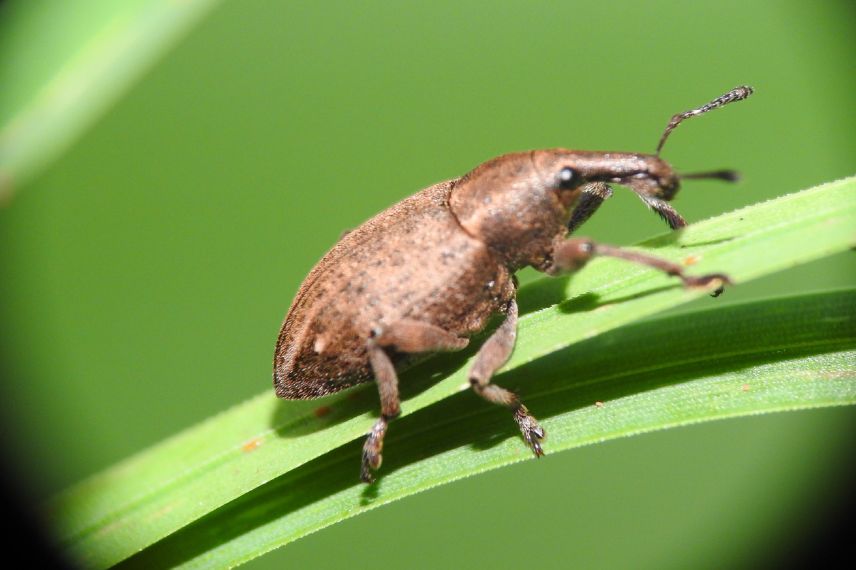
Weevils are beetles that puncture the leaves of viburnums. Clean the base of the viburnum and place a cardboard on the ground. The weevils will take refuge there and become trapped. Another option is to shake the branches over a bag spread on the ground to make them fall, then dispose of them. Treatments with beneficial nematodes, microscopic worms that feed on weevil larvae, can also be used to control weevil populations. They can be applied to the soil around the bases of the viburnums.
Thrips
Thrips are tiny sap-sucking insects that can cause deformities in the leaves and flowers of viburnums. On the leaves, they initially appear as tiny spots, followed by silvery-grey marbling. The leaves dry out and fall off. Thrips thrive in warm, dry weather.
Install blue sticky traps near the viburnums to capture flying thrips. This reduces the number of adult thrips. Treatments with black soap and neem oil help to reduce infestations.
Increase humidity by managing your watering and misting the foliage in the evening, only during warm, dry weather to avoid fungal diseases.
→ Read Solenne’s article for more information on thrips.
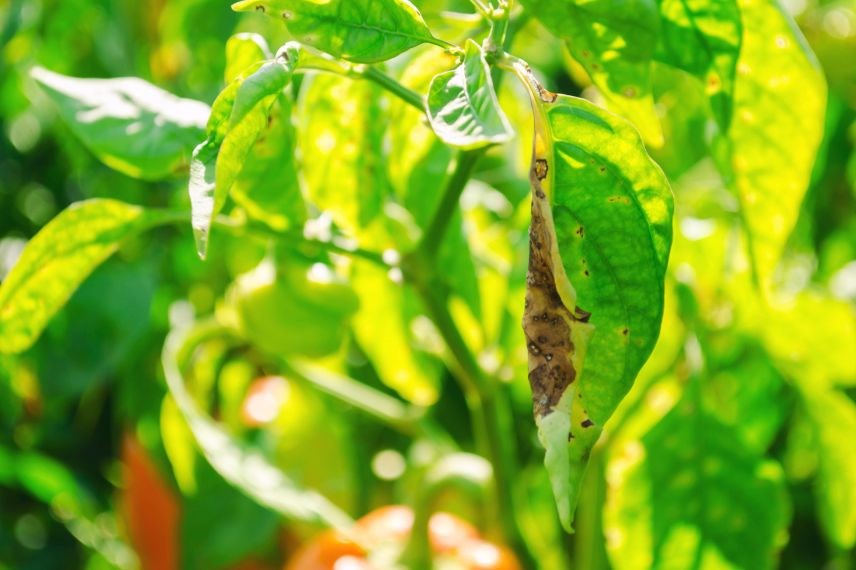
Damage caused by thrips on leaves
Other diseases on certain species of Viburnum
Some diseases and pests are present on certain species.
- Viburnum opulus, for example, is specifically susceptible to the black bean aphid (Aphis fabae).
- The viburnum beetle (Galerucella viburni) primarily targets Viburnum opulus, but can also affect Viburnum tinus and Viburnum lantana. This predator is a beetle that can cause significant damage.
- Whiteflies are interested in Viburnum tinus (see diseases and pests of Bay Laurel).
- Viburnum davidii is susceptible to Phytophthora, as is Viburnum plicatum, which is also vulnerable to black spot disease.
- Subscribe!
- Contents
Comments