





























Diseases and pests of Virginia creeper
Identifying, preventing and treating
Contents
The Virginia creeper is an ornamental climbing plant, highly valued for its striking foliage, which turns red and orange in autumn. Hardy and easy to grow, it is rarely affected by diseases or pests. However, adverse conditions can weaken this plant and make it more susceptible. In this article, we present the main diseases and pests of Virginia creeper, along with preventive measures and appropriate treatments to preserve its beauty.

Fungal diseases of Virginia creeper
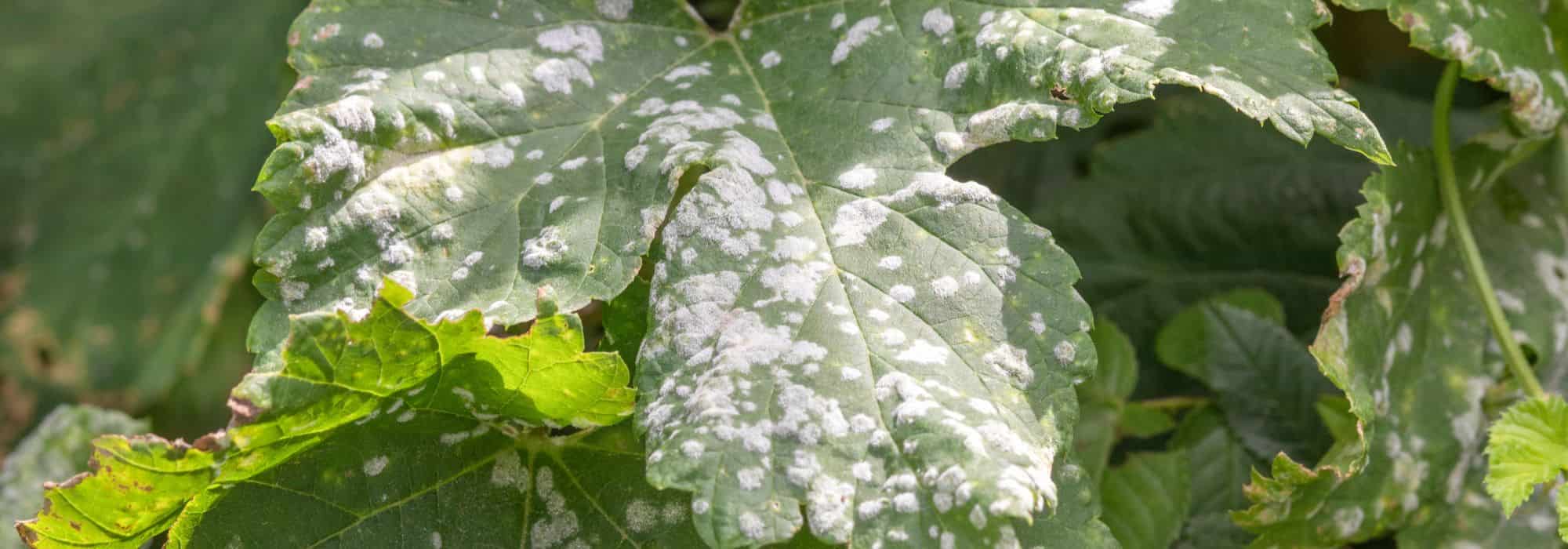
Powdery mildew
Powdery mildew, or the white disease, is a fungal disease that can affect Virginia creeper, though it is rare on this plant. Ugly as it may be, powdery mildew does not threaten the plant’s survival.
- Symptoms: Appearance of a white powdery coating on leaves and stems. Leaves may yellow, become misshapen, and then drop prematurely.
- Prevention:
- Prune regularly Virginia creeper to thin out overly dense branches and promote good air circulation around the leaves.
- Avoid over-watering or watering the foliage.
- Spray horsetail manure or nettles as a preventive measure to strengthen Virginia creeper’s natural defences.
- Curative treatment :
- Apply a baking-soda-based treatment : Mix 1 teaspoon of bicarbonate of soda and 1 tablespoon of soft soap in 1 litre of water. Spray this solution on the affected parts, early in the morning or late in the day. Repeat every 10 to 15 days until the symptoms disappear.
- Alternative: Sulphur is a natural fungicide effective against powdery mildew. Apply it as a spray on the infected leaves, following the doses recommended on the packaging.
- Prune and remove the affected parts to limit spread.
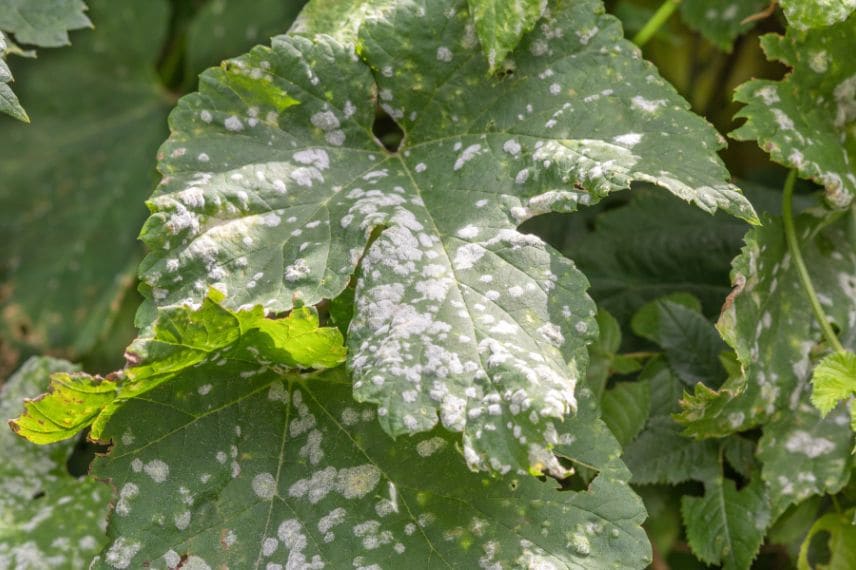
Vine leaves affected by powdery mildew.
Rust
Rust is a fungal disease that causes orange or brownish spots on leaves. It appears when humidity is high and air circulation around the leaves is insufficient. It can weaken the plant if not treated promptly, though it is not usually deadly to Virginia creeper.
- Symptoms: Small yellowish to brown-red spots on the underside of leaves, often accompanied by powdery pustules (the spores). The affected leaves drop prematurely.
- Prevention:
- Well-drained soil helps prevent the buildup of stagnant water and thus rust. If your soil is too compact, incorporate sand or organic matter (compost, leaf mould) to make it lighter.
- Prune regularly Virginia creeper to thin its foliage and allow good air circulation.
- Apply a copper-based preventative treatment (Bordeaux mixture) at the start of spring, as leaves begin to develop, and reapply during humid springs.
- Alternative: Spray horsetail manure or nettles, which have antifungal properties and strengthen the Virginia creeper’s natural resistance to diseases.
- Curative treatment :
- Cut and remove the affected leaves as soon as you notice the disease to limit the spread of spores.
- Apply a natural copper-based treatment (Bordeaux mixture) or prepare a solution by mixing 1 teaspoon bicarbonate of soda and 1 tablespoon of soft soap in 1 litre of water. Spray directly onto the affected leaves.
- Alternative: garlic decoction. Boil 100 g of crushed garlic in 1 litre of water, let cool, strain. Apply this mixture by spraying onto the infected areas for its antifungal properties.
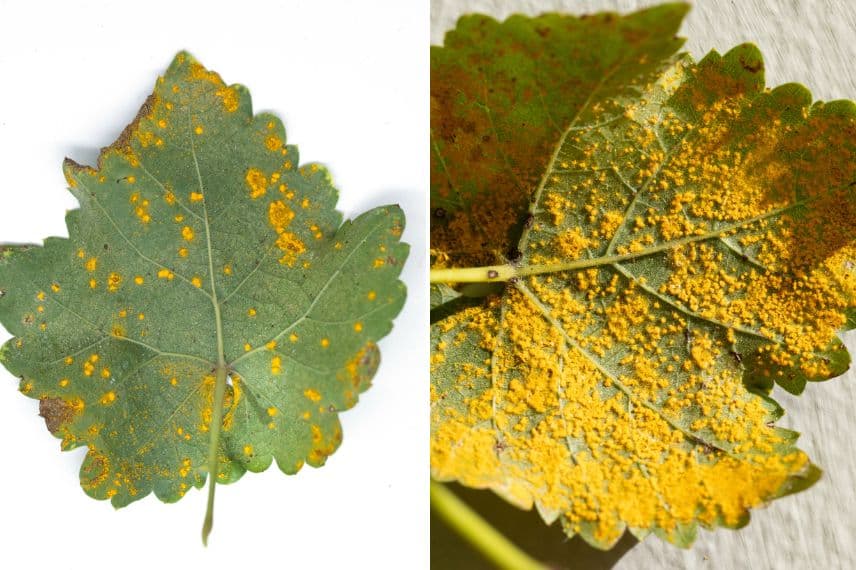
Vine leaves affected by rust.
Grey mould (Botrytis cinerea)
Grey mould is a fungal disease that affects Virginia creeper, though it is relatively common. This fungus thrives in conditions of high humidity, mainly in autumn.
- Symptoms: A greyish down appears on the leaves and stems. They then turn brown, soften, rot and may emit an unpleasant odour. This down is made up of fungal spores.
- Prevention:
- Prune regularly to lighten the branches and improve ventilation.
- Reduce watering, especially on the foliage, and water only at the base of the plant.
- Mulch the soil to limit splashing and maintain uniform moisture.
- Curative treatment :
- Cut and remove the affected leaves, stems or other parts. Disinfect your tools after each cut to prevent spreading the fungus.
- Garlic decoction: Steep 100 g of garlic in 1 litre of boiling water, let cool, strain, then spray onto the affected areas.
- Bordeaux mixture can be used as a curative, though it is more effective preventively.
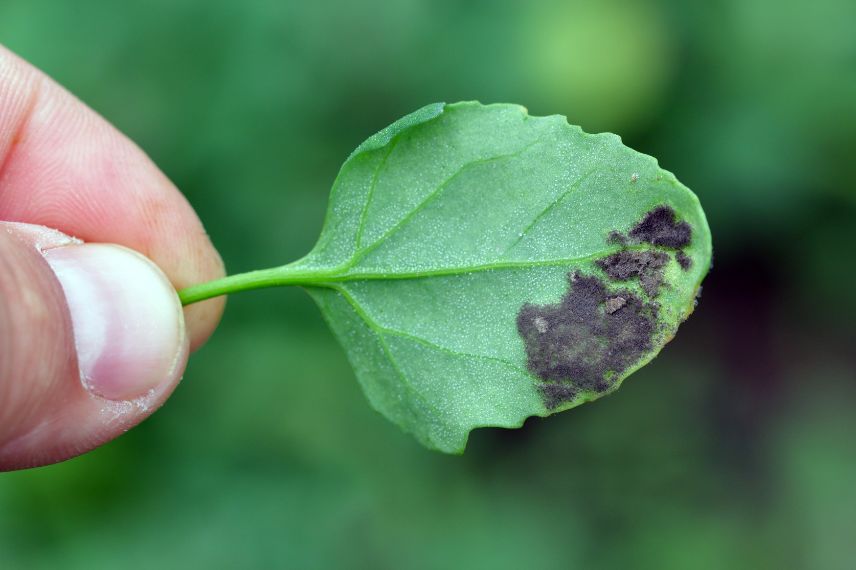
Grey mould (Botrytis cinerea) on a goosefoot leaf.
Note :
After treatment for fungal diseases, apply a natural fertiliser rich in potassium and phosphorus to help Virginia creeper recover more quickly.
Pests of Virginia creeper
Aphids
Although aphids are rare on Virginia creeper, they can sometimes invade its young shoots in spring or early summer, especially when conditions are favourable (warm, dry weather). These small sap-sucking insects feed on the young plant’s sap, weakening the stems and promoting the development of mould such as sooty mould.
- Symptoms:
- Green, black or yellow aphids (depending on species) cluster at the tips of young shoots or on the undersides of leaves.
- Infested young leaves and shoots curl or deform under aphid feeding. They yellow and may drop, weakening the young plant.
- Aphids excrete a sticky substance called honeydew, which promotes the appearance of sooty mould, a black mould covering the leaves.
- Prevention:
- Encourage natural predators that feed on aphids, such as ladybirds, hoverflies and lacewings. Install shelters for these insects (for example, insect hotels) and avoid pesticides that could eliminate them.
- Spray nettle manure or horsetail manure (250 ml of nettle manure for 5 L of water) on the leaves in spring to stimulate the Virginia creeper’s natural defences.
- Monitor regularly your plants, especially in spring, to detect any early infestation.
- Curative treatment:
- Rinse the leaves with a jet of water to dislodge the aphids.
- Spray a solution of black soap (50 g of soap per 1 litre of water) directly on the aphids and the infested areas. Repeat the operation every 3 to 5 days until complete disappearance of the insects. Carry out this treatment early in the morning or late in the day to avoid burning the leaves.
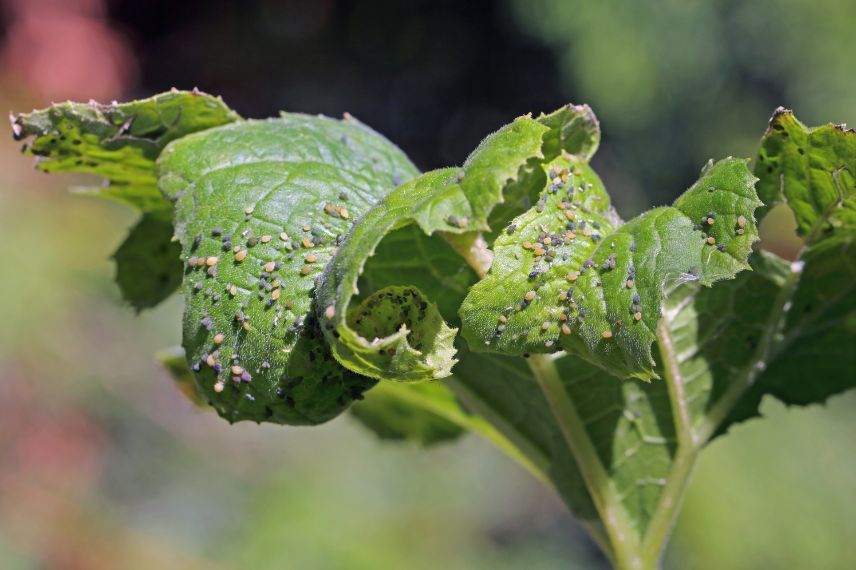
This leaf curls under aphid attack.
Scale insects
Scale insects, and in particular the mealybugs, are among the most troublesome pests for Virginia creeper when conditions are favourable, such as high humidity or a general weakness of the plant. These sap-sucking insects feed on the sap, weakening the plant and making it more vulnerable to other stresses or diseases.
- Symptoms: You will notice white cottony masses (mealybugs) or brownish insects with hard shells fixed to the stems and undersides of the leaves. Leaves may yellow, wilt, and then drop. Mealybugs produce a sticky substance, honeydew, which promotes the development of sooty mould, a blackish fungus that covers the leaves.
- Prevention:
- Inspect the stems, the undersides of the leaves and the nodes at least once a month, particularly in spring and summer.
- Encourage natural enemies such as ladybirds, lacewings or hoverfly larvae in your garden.
- Plant Virginia creeper in a well-ventilated spot to limit favourable conditions for scale insects.
- Wipe suspect areas with a soft cloth dampened with a mixture of water and 70% alcohol to remove the first scale insects before they proliferate.
- Curative treatment:
- Use a black soap-based solution: Mix 1 litre of warm water with 1 tablespoon of liquid black soap and 1 tablespoon of vegetable oil (rapeseed oil or neem, etc). Spray this mixture on the infested areas. Repeat once a week until scale insects disappear.
- Use a soft cloth or cotton swab dampened with 70% alcohol to carefully remove the scale insects fixed in place.
- Prune heavily affected parts, taking care to disinfect your tools after use.
- Apply compost or a natural fertiliser rich in potassium to bolster the Virginia creeper’s defences after treatment.
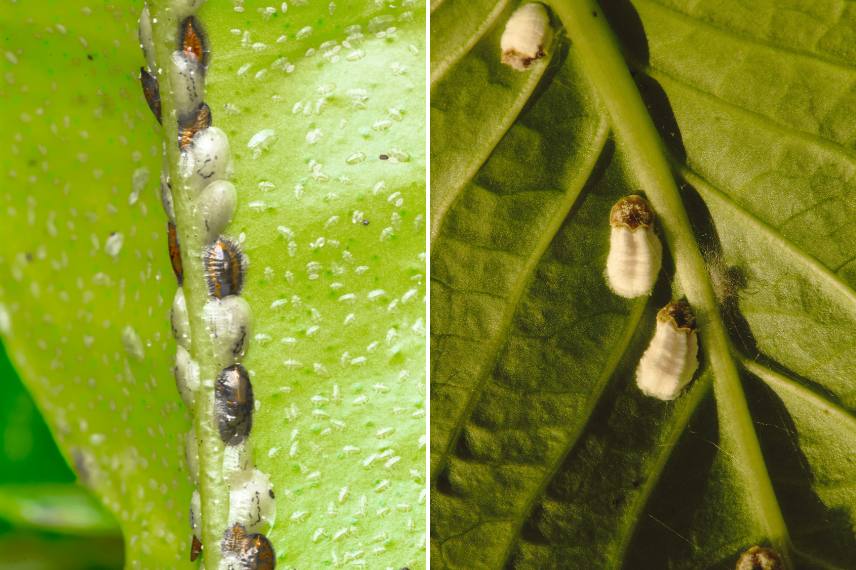
Mealybugs on the undersides of the leaves
Tetranychus mites (red spider mites)
Tetranychus mites are tiny, widespread mites that attack many plants, including Virginia creeper. These parasites appear mainly in hot, dry weather. The infestation is not fatal, but can weaken the plant.
- Symptoms:
- You will notice fine webs on the undersides of the leaves and among the stems. These tiny red or yellow mites (about 0.5 mm) are difficult to spot.
- Small yellow or greyish spots appear on the upper surface of the leaves, often grouped in a speckled pattern.
- Affected leaves gradually yellow, dry up and drop prematurely.
- Prevention:
- Spray the foliage with water regularly in summer (late in the day to avoid scorching the foliage) to increase ambient humidity, which disrupts the mites’ life cycle.
- Encourage natural allies, such as predatory mites (Phytoseiulus persimilis), ladybirds or lacewings, which feed on spider mites. Install insect hotels.
- Inspect the undersides of leaves and sheltered areas to detect infestations quickly.
- Curative treatment:
- Use a moderate jet of water to rinse the leaves, especially the undersides, to dislodge the mites and their webs. Repeat every 2 to 3 days.
- In cases of heavy infestation, dilute 30 to 50 ml of liquid black soap in 1 litre of warm water. Spray on the undersides of the leaves and on the infested areas. Repeat weekly until disappearance.
- Neem oil is an effective treatment against tetranychus mites. Mix a few drops with water (including with the above black soap recipe) and spray onto the infested foliage.
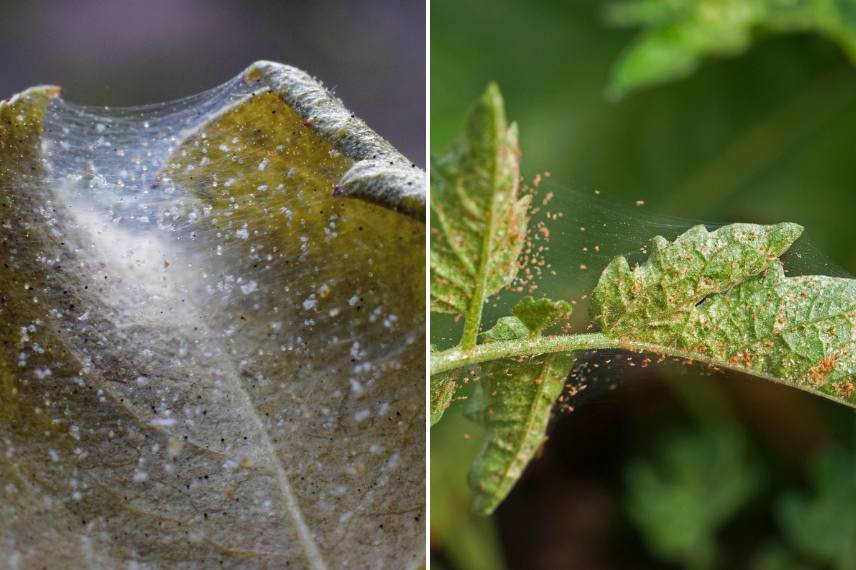
Red spider mites and their webs.
Our growing tips for a healthy Virginia creeper
- Exposure: Plant Virginia creeper in a sunny or partly shaded spot. It also tolerates shade, but its autumn colours will be less vibrant and growing conditions less favourable.
- Soil: Ensure the soil is well-drained, does not become waterlogged, and is moderately rich. Virginia creeper will adapt to most soils; however, growing conditions may be less favourable.
- Pruning: Prune regularly to control its growth and promote good air circulation.
- Care:
- Remove dead leaves in winter to prevent disease.
- Fertilise lightly in spring, with an application of compost or a balanced fertiliser to support the growth of new shoots.
- Subscribe!
- Contents
Comments