


Dragonfly and damselfly: what role do they play in the garden?
Discover how these insects contribute to the balance of your garden
Contents
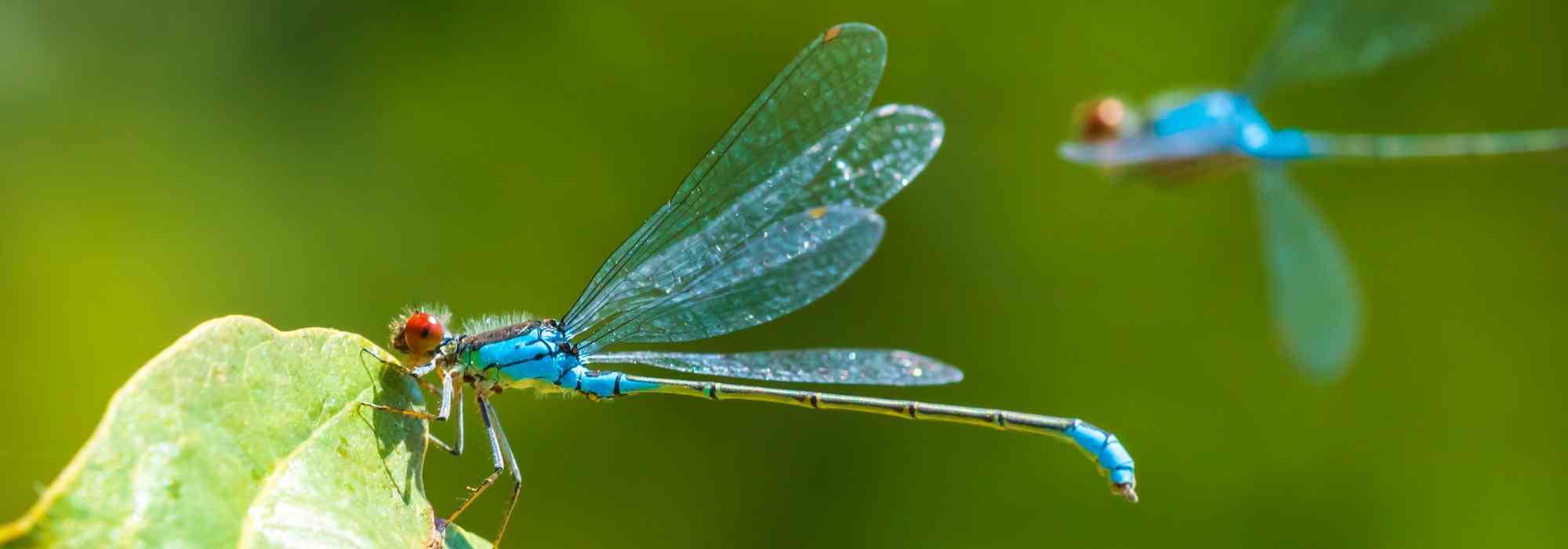
Dragonflies and damselflies, belonging to the order Odonata, are distinguished by their shapes and behaviours: dragonflies, robust, hold their wings outstretched at rest, while damselflies, slimmer, fold their wings along their bodies. As beneficial insects, they play a crucial role in gardens by naturally controlling pest populations such as mosquitoes and flies, thereby promoting biodiversity and helping to maintain ecological balance. Their presence also signals good environmental health in a garden, highlighting the importance of preserving varied habitats to support their survival and that of other species.
The dragonfly, a recognisable insect like no other…

A bit of entomology...
Dragonflies and damselflies are insects that belong to the order Odonata. Dragonflies are grouped in the suborder Anisoptera and damselflies, smaller but biologically close, in the suborder Zygoptera. Members of these two groups have more or less the same lifestyle.
Physical description and notable differences
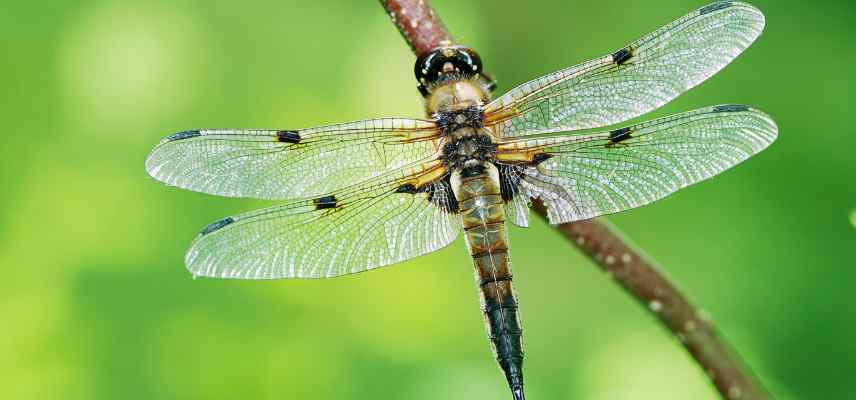
Dragonflies are generally sturdier and have elongated bodies with very large eyes and often contiguous, which give them almost panoramic vision. Their wings are held flat and outstretched when at rest. Generally vibrant in colour, dragonflies use their colour palette to attract during breeding periods or to intimidate in territorial interactions.
Damselflies, although similar, are more delicate and graceful with slender, elongated bodies. Their eyes are clearly separated and smaller. Unlike dragonflies, damselflies fold their wings along the body when at rest (with the exception of a few nimble ones). The colours of damselflies can be just as striking, but they tend to have subtler patterns on their wings and bodies.
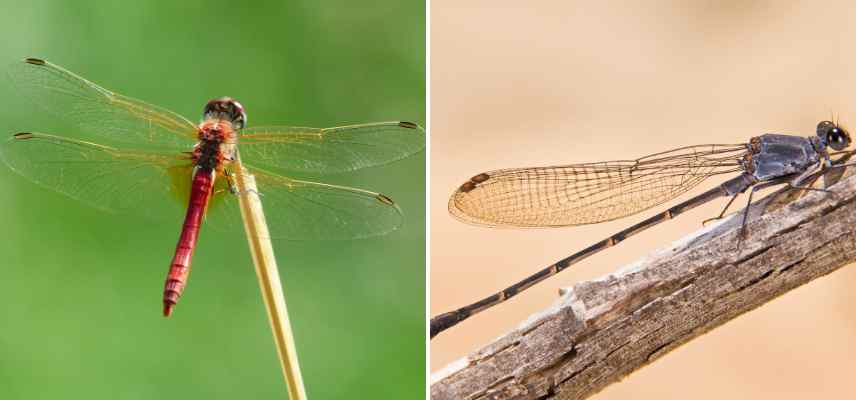
Dragonfly on the left, damselfly on the right.
Preferred habitats and typical behaviour
Dragonflies and damselflies favour habitats that include bodies of water, as their larvae, called naiads, develop in water. Dragonflies are often found near lakes, ponds, rivers and wetlands where the water is calm or slow-moving. They actively hunt a wide range of prey, including mosquitoes, flies, and sometimes even butterflies.
Damselflies, for their part, choose similar environments, but may be more frequently found around streams and rivers where the current is faster. They are also excellent predators and play a key role in maintaining populations of aquatic and terrestrial insects.
These insects display a unique hunting behaviour: they are capable of flying backwards, hovering, and performing aerial acrobatics to catch their prey. Their presence in a garden clearly indicates a healthy and well-balanced ecosystem.
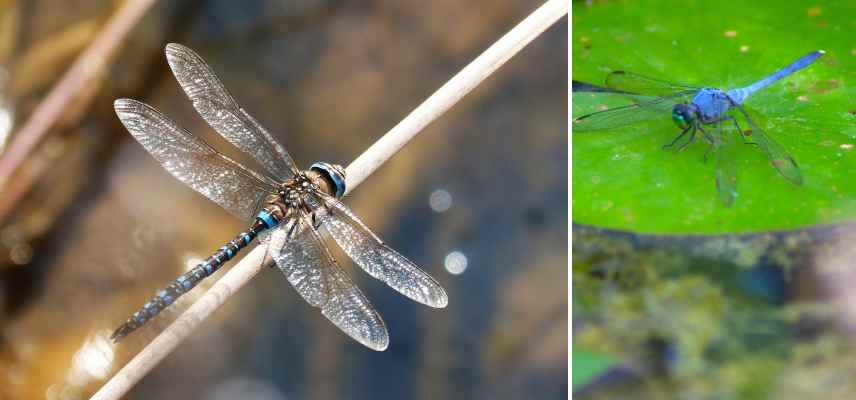
Dragonflies cluster around water sources
Read also
Auxiliary insect in the garden: AphidiusAn ecological role that should not be underestimated.
Excellent predators
From the larval stage, they feed on a wide variety of small aquatic organisms, including larvae of other insects, thereby contributing to their regulation. This larval phase can last up to several years, during which they themselves serve as important prey for various fish and amphibians.
Once emerged as adults (imago), they continue to play a predator role, but this time in the air. They actively consume a significant number of flying insects, such as mosquitoes, flies and other small insects. This predation is essential for regulating the populations of these insects, often regarded as pests for humans and crops.
By feeding on insects that can sometimes be pests for plants if present in large numbers, dragonflies and damselflies contribute directly to garden health and agricultural areas. Concrete example: mosquitoes, in addition to being disease vectors, can significantly affect the quality of life in outdoor spaces. Dragonflies, by hunting and feeding on these insects, help effectively limit their proliferation. Another example: aphids, known for transmitting diseases to plants and for sucking their sap, are a common prey for damselflies that help regulate their populations.
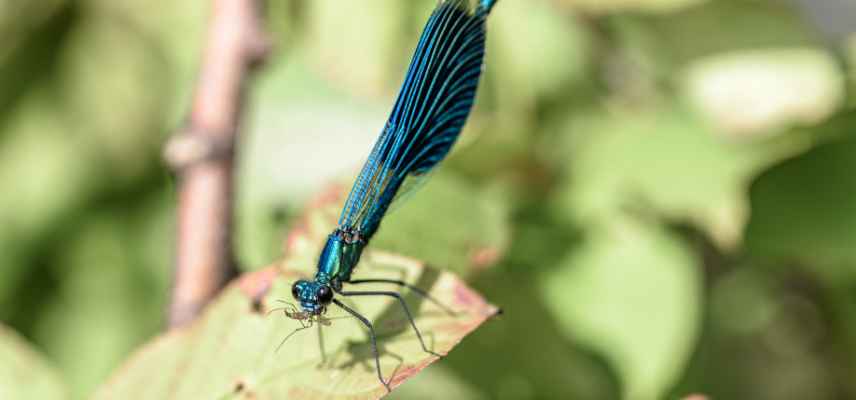
A valuable role in regulating mosquito populations
But they themselves are prey
Dragonflies and damselflies, while effective predators in their ecosystems, are also prey for various animals. Here are some of their most common predators:
- Birds: Birds are the main predators of dragonflies and damselflies. Species such as swallows, the Common Swift, the Blackbird and European bee-eaters are particularly skilled at catching them in mid-air.
- Fish: In their larval stage, dragonflies and damselflies live in water, making them vulnerable to fish that feed on small aquatic invertebrates. Pike, perch and other freshwater fish can consume a large number of these larvae.
- Frogs and other amphibians: Tadpoles and small frogs eat the young dragonfly and damselfly larvae. Adult frogs can also catch the adults near the water surface.
- Spiders: Some large spiders can capture dragonflies and damselflies in their webs or seize them directly with their legs when they perch on plants.
- Other insects: Larvae of certain insect species, such as larger dragonfly larvae or lacewings (Chrysopa), can feed on the smaller dragonfly and damselfly larvae. In addition, wasps and praying mantises are able to capture and consume the adults.
- Bats: In some ecosystems, bats are nocturnal predators of dragonflies, catching the adults in flight at night.
How to attract and protect dragonflies in your garden?
Creation of wetland areas
Creating small wetlands such as a garden pond or a pond can provide the perfect site for dragonflies to breed and, to a lesser extent, damselflies (which prefer a bit of current). These water features should be shallow and well exposed to sunlight, with shaded areas nearby. Avoid equipping them with powerful pumps or fountains that would disturb the water, as these insects prefer calm waters for laying their eggs. Sometimes, a simple basin of aquatic plants and a few tens of litres is enough for dragonflies to lay eggs.
Choosing attractive plants
Dragonflies and damselflies are attracted to gardens that offer plenty of places to rest and to hunt. Planting native plants that attract a wide variety of insects is an excellent way to attract them. Plants such as Marsh iris, cattails, and reeds are particularly attractive, as they provide sturdy stems on which dragonflies can perch to monitor their territory or hunt. Flowering plants that attract other insects also serve as a food source for damselflies.
Moreover, keeping parts of the garden a little wilder can help provide refugia for the larval stages of dragonflies, which spend most of their time in water but need dense vegetation to protect themselves from predators. Leaving tall grasses and shrubs around ponds or wetlands provides vital hiding places for young insects.
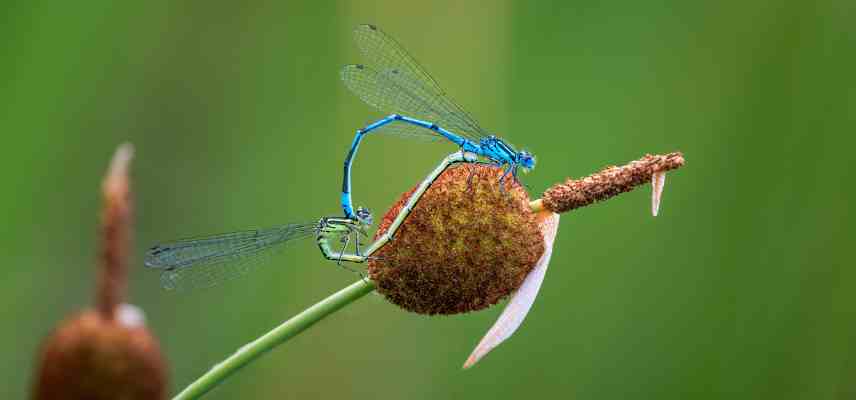
Two dragonflies pair on a reed stem
Read also
Auxiliary insects: hoverfliesAre dragonflies endangered?
Dragonflies and damselflies, despite their crucial ecological role, face a range of threats that could jeopardise their populations. Here are the main factors threatening odonate populations:
- Habitat loss : Destruction of habitats is the primary threat to dragonflies and damselflies. The conversion of land for agriculture, urbanisation and deforestation reduces wetlands, marshes, ponds, streams and lakes, essential for reproduction and larval development of these insects.
- Water pollution : Pesticides, herbicides and chemical fertilisers can poison waterways and affect water quality where dragonflies and damselflies develop. Pollutants affect not only the health of the larvae, but also the availability of their aquatic prey.
- Climate change : Changes in precipitation patterns, temperatures and extreme weather events influence aquatic habitats. Drought periods can dry small bodies of water needed by the larvae, while floods can destroy established spawning sites.
- Invasive species : The introduction of invasive species can also disrupt local ecosystems. For example, some non-native fish may be more aggressive in preying on dragonfly and damselfly larvae than native species.
→ Oliver’s little note: What can we do to protect dragonflies and damselflies? Preserve, protect and restore natural wetlands, create small ones in our own gardens, such as a small pond, favour organic gardening and farming methods, and inform those around us about the importance of wetlands and the conservation of the fauna and flora that rely on them.
To learn more...
→ To consult: the National Action Plan for Dragonflies website.
→ Some dragonfly species are endangered. Here is the IUCN Red List for Metropolitan France.
Finally, for odonate enthusiasts, I can’t recommend the classic enough: Guide to dragonflies of France and Europe, by B. Dijkstra, published by Delachaux et Niestlé. As well as the Identification notebook of dragonflies of France, Belgium, Luxembourg and Switzerland, by Grand D. et al., published by Biotopes. More poetically, My Life as a Dragonfly, by Alain Cugno and Daniel Magnin at La Salamandre tells the life of dragonflies through stunning photography.
Oli’s note: many nature-conservation associations organise annual events, surveys, action days, workshops or training relating to odonates. Do not hesitate to get in touch with one of them near you.
- Subscribe!
- Contents
Comments