





























Drought-resistant plants to grow in pots
Our selection for balcony, terrace, or small garden
Contents
With heatwaves and periods of drought that we are increasingly experiencing, water restrictions are multiplying. However, this does not mean we have to give up growing plants!
Container gardening generally requires more watering than growing in the ground: water evaporates easily, so the substrate dries out more quickly. But some plants that tolerate dry conditions can easily survive a lack of water and can go without watering for several days or even weeks. Here is our selection of drought-tolerant perennial plants or drought-resistant bushes to grow in pots!

Succulent plants or cacti
If these plants are champions of drought and heat resistance, it’s because they have the ability to store reserves of water and juice in their fleshy aerial parts and roots. They can thus naturally survive periods of water scarcity.
Container cultivation always requires more care than growing in open ground, as the substrate is more limited. Occasionally, consider adding specific fertilisers for succulents or cacti in spring. During the height of summer, in case of prolonged drought and heat, remember to water your cacti or succulents when the soil is dry. For the rest of the year, these plants typically rely on natural rainwater.
Provide them with a perfectly drained substrate (that does not retain water), even if it is poor, sandy, or stony. Place these plants outdoors in full sun: they will add structure, graphic appeal, and sometimes a touch of exoticism.
Houseleeks or Sempervivum
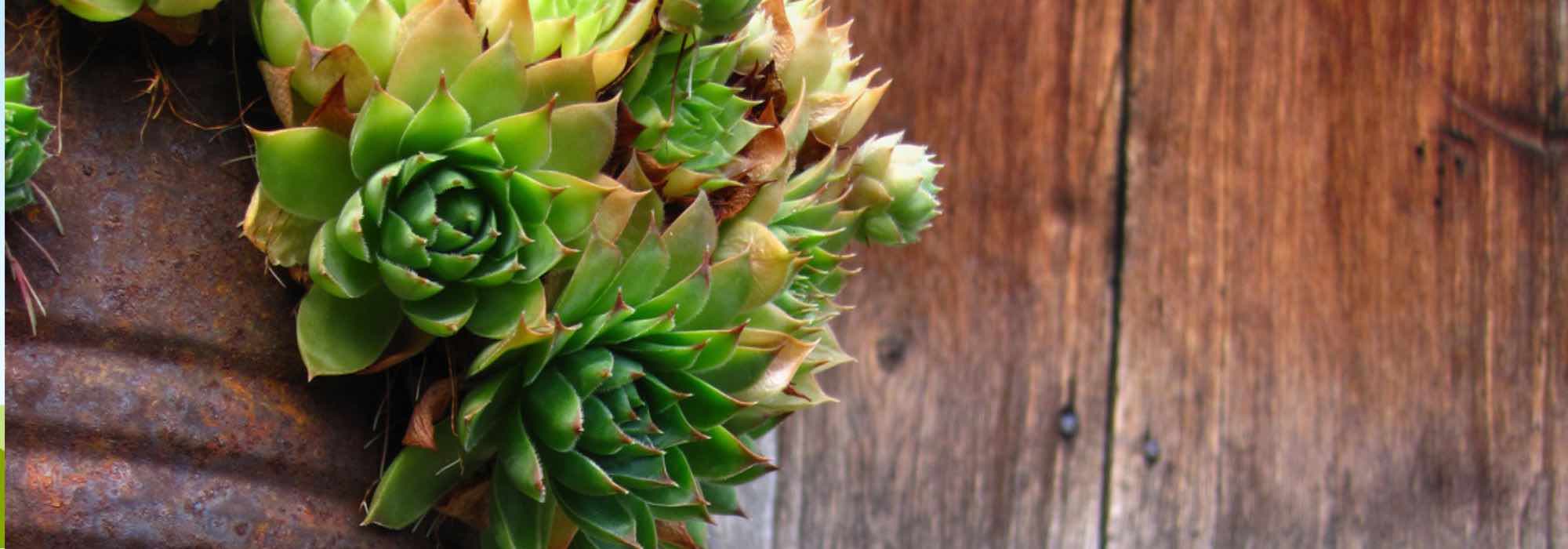
Houseleeks are those charming little rosette plants that fit in anywhere. They are very resistant to drought and water scarcity. Moreover, they have the advantage of being hardy, generally surviving temperatures below -20°C, allowing them to be left outdoors all year round in almost all our regions.
Easy-going and low-maintenance, these undemanding plants can be grown even by beginner gardeners. Not exceeding twenty centimetres in height, they are perfect for cultivation in all types of containers, including the shallowest.
These perennials come in various flower and foliage colours, as well as textures: green (roof houseleek, calcareous houseleek), golden (‘Gold Nugget’), blue (‘Berry Blues’), purple (Sempervivum ‘Silberkarneol’, ‘Dark Beauty’), multicoloured (’Commander Hay’, ‘Purple Beauty’), and fuzzy (‘Cotton Candy’, Sempervivum arachnoideum</a), etc.
To learn more, discover our complete sheet: “Sempervivum, houseleek: how to plant, grow, and care for”, as well as our advice sheet: “How to choose a Houseleek?”
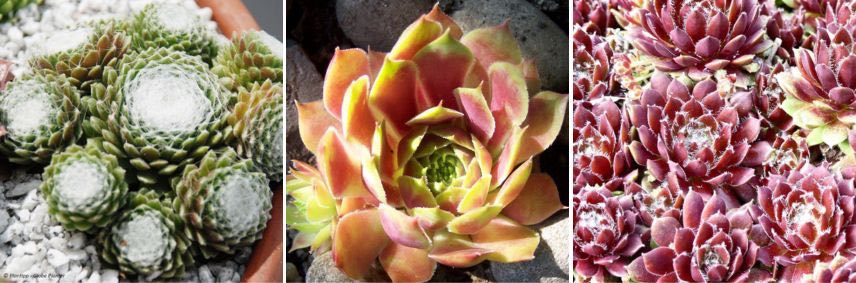
Sempervivum ‘Cotton Candy’, ‘Commander Hay’, ‘Silberkarneol’
Sedums
Sedums are also among those undemanding plants capable of enduring water scarcity. Hardy and easy to grow, they join the club of ideal dry garden plants for greening sunny areas.
Their late flowering has the advantage of enlivening gardens, terraces, or balconies in autumn, when flowers become scarcer. Pink, red, yellow, or white: their flowers come in various colours. The foliage is equally diverse, with shades of green, blue, silver, burgundy, or even bi-coloured.
In terms of shape, depending on the size of your container, choose upright varieties (Sedum telephium ‘Dark Magic’, Sedum spectabile ‘Meteor’) or ground-covering varieties (Sedum acre ‘Yellow Queen’, Sedum spathulifolium ‘Purpureum’, Sedum spurium ‘Fuldaglut’).
They are generally quite hardy, tolerating temperatures between -15 and -20 °C, although some varieties are a bit more sensitive to cold.
To learn more: Sedum or orpin: how to plant, cultivate, and propagate them
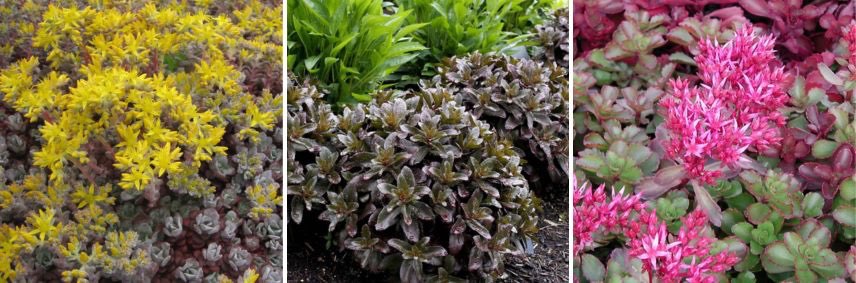
Sedum spathulifolium ‘Purprureum’, Sedum ‘Dark Magic’, Sedum spurium ‘Fuldagut’
Agaves
These succulents are prized for their rosette foliage with serrated edges, giving them an exotic appearance. From their Mexican origins, like cacti, they have developed a resistance to arid conditions and can easily withstand drought.
In pots, grow the smaller varieties, such as Agave stricta ‘Nana’, the Agave victoriae-reginae or ‘Kikijokan’. In a larger container, adopt the Agave attenuata, the Agave filifera or even the Agave parryi ‘Neomexicana’.
Depending on the species, they are moderately hardy and will generally need to be sheltered from frost in winter.
To learn more: Agave: how to plant, grow, and maintain and Growing an agave in a pot.
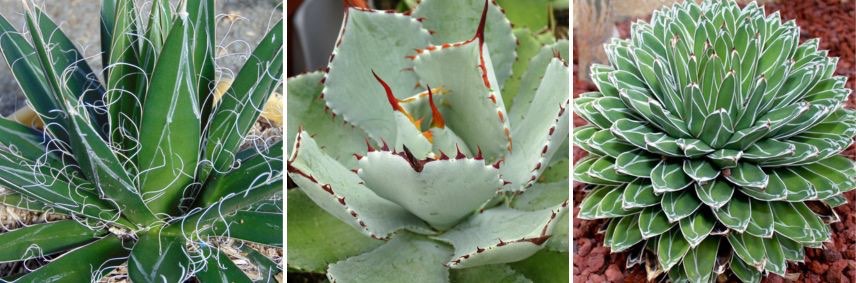
Agave filifera, Agave ‘Kikijokan’, Agave victoriae reginae
Other succulents or cacti for pots that tolerate water scarcity
Also consider Mangaves, these cousins of agaves, Crassulas, Echeverias, Aeonium or even some Aloes. These plants are not very hardy and should be protected from frost and moisture in winter.
Also try some cacti like Opuntia (Opuntia rufida, O. microdasys, O. cacanapa), the flowering groundcovers that are the Delospermas (hardy ice plants) or even the adorable Aptenia cordifolia.
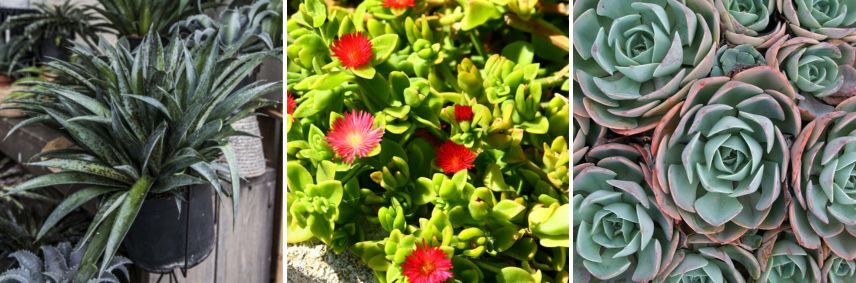
Mangave ‘Pineapple Express’, Aptenia cordifolia, Echeveria elegans ‘Rose’
Mediterranean plants
Plants native to the Mediterranean basin are naturally accustomed to warm, dry conditions. They have learned to tolerate a lack of water and to endure even the scorching rays of the sun. These perennials typically have tough, fine, or downy foliage, which naturally limits water evaporation. Their root system also allows them to draw water from deep within the soil, which is why it is essential to choose a suitably sized container to ensure their development (at least 50 to 60 cm deep).
These plants will easily bring a touch of scrubland and, at times, powerful aromatic scents to the garden, terrace, or balcony.
Plant them in a very light substrate that prevents water from stagnating to avoid risking root rot. Provide them with a well-sunny exposure. Optionally, apply fertiliser for Mediterranean plants in spring. Water only in cases of prolonged drought and do not allow water to stagnate in saucers.
Cistus
Cistus are among those plants capable of easily enduring extreme drought conditions, thriving naturally in scrub and garrigue. These Mediterranean bushes are valued for their aromatic evergreen foliage and the charm of their crumpled flowers. The lifespan of the flowers is short, but they succeed each other over several weeks.
Most varieties can be grown in pots. Choose them based on flower colour: white (Cistus ‘Alan Fradd’), pink (C. creticus), purple (C. purpureus)…
For more information: Cistus: planting, pruning, maintenance and Planting a cistus in a pot.
Helichrysum italicum
TheItalian Everlasting gets its nickname “curry plant” from the aromatic scent of its beautiful silver evergreen foliage. This bushy Mediterranean perennial is adorned in summer with delightful little golden-yellow pompom flowers, which will brighten up gardens, terraces, or balconies.
It is not afraid of drought or sea spray, making it an excellent candidate for seaside gardens, but not only. Relatively hardy in dry soil (down to -10 to -15°C), it will thrive in many other regions, in warm and sunny situations.
Its cultivation in pots is easy and requires almost no maintenance.
For more information: Helichrysum, curry plant, everlastings: sowing, planting, caring
Other Mediterranean plants for pots that tolerate drought
Consider helianthemums, these miniature cousins of cistus, as well as brooms, these bushes capable of withstanding drought and are very hardy.
Let’s not forget lavender, or even Nepeta, more suited to regions north of the Loire. Also mention the aromatic plants, as beautiful as they are useful in the kitchen: thyme, rosemary, common sage, savoury, etc.
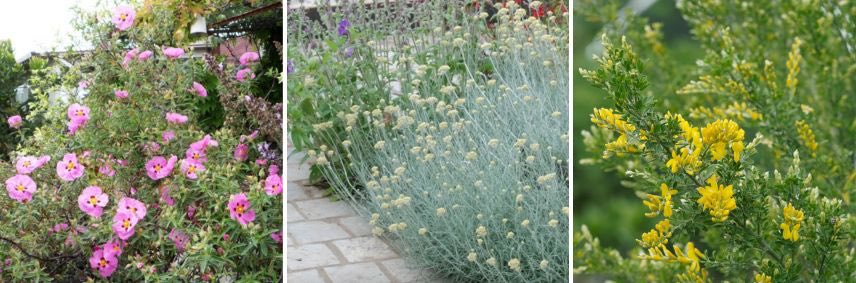
Cistus purpureus, Helichrysum italicum, Cytisus scoparius
Rock plants
These all-terrain plants require almost no maintenance and can thrive in poor, draining, or even inhospitable soils. They also tolerate extreme conditions of drought, and even frost for alpine species.
Often offering a modest, stocky, or creeping silhouette, they will adapt well to pot cultivation, provided they are given a well-draining substrate.
Depending on the species, they can thrive in both full sun and more shaded situations.
Creeping Campanulas
Rock garden campanulas are undemanding: they appreciate well-draining, even dry, and very shallow soils. These small perennials will shine in small pots or troughs, brightening up terraces, balconies, or sunny window sills.
Consider, for example, the wall campanula or Campanula poscharskyana. Their starry, colourful flowering may pause during prolonged heat and drought, but will resume in autumn.
Easy to grow and hardy, they will thrive with almost no watering and are perfect outdoor plants for most regions.
To learn more: Campanulas: planting, cultivation, and maintenance
Saxifrages
Their Latin name leaves little suspense regarding their preferred growing area: Saxifraga indeed means “stone breaker”. While these perennials are perfect for dressing a rock garden, they are also ideal in pots. They will form lovely stocky cushions, often made up of evergreen rosettes. Their flowering also adds a lovely splash of colour in yellow, pink, red, or white.
Alpine species cope well with summer drought. Undemanding, they require little to thrive. In pots or troughs, consider Saxifraga cotyledon ‘Southside Seedling’, which produces small bicoloured star-shaped flowers.
Note, however, that despite its good hardiness, it will prefer to be sheltered during wet winters.
To learn more: Saxifrages: planting, cultivation, and maintenance
Other drought-resistant rock garden plants for pot cultivation
Consider Phormium, with their lovely banded foliage, to add height and structure.
Also try hardy geraniums, floriferous yarrow, creeping fleabane species, or even the lesser periwinkle (Vinca minor), which will thrive in pots in shaded situations.
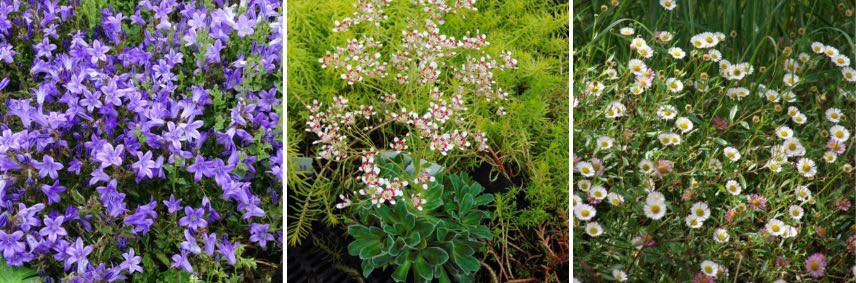
Wall campanula, Saxifraga cotyledon ‘Southside Seedling’, Erigeron karvinskianus
- Subscribe!
- Contents
Comments