
Campanula poscharskyana

Campanula poscharskyana

Campanula poscharskyana

Campanula poscharskyana

Campanula poscharskyana

Campanula poscharskyana

Campanula poscharskyana
View more pictures
Hide images

Thierry P.
Campanula poscharskyana
Thierry P. • 84 FR

Thierry P.
Campanula poscharskyana
Thierry P. • 84 FR

Thierry P.
Campanula poscharskyana
Thierry P. • 84 FR

Thierry P.
Campanula poscharskyana
Thierry P. • 84 FR

Thierry P.
Campanula poscharskyana
Thierry P. • 84 FR

Thierry P.
Campanula poscharskyana
Thierry P. • 84 FR
Campanula poscharskyana
Campanula poscharskyana
Trailing Bellflower, Serbian Bellflower
All the plants have taken well. I've already planted this plant, which is quite invasive, and that's what I'm looking for to hide something.
Jackie, 29/03/2025
Back-to-school special offer!
Get €10 off for every €50 you spend! And get up to €40 off on a single order.
How does it work?
1. Shop your favourites
Add your favourite plants to your basket. For every €50 you spend (excluding delivery charges, store credit and the plastic-free option), you’ll receive a €10 voucher.
€50 spent = €10 voucher
€100 spent = €20 voucher
€150 spent = €30 voucher
€200 spent = €40 voucher
2. Place your order
Once your basket reaches one of the spending thresholds, place your order. You can even choose your delivery date!
3. Receive your voucher
As soon as your order has been shipped, you’ll receive an email containing your personal voucher code and its value.
4. Use it on your next order
Your voucher is valid for 90 days from the date you receive it. It can be used once only, on a new order worth at least the value of the voucher, excluding delivery charges.
Please note: Vouchers can be combined with other offers, but cannot be split or refunded.
Home or relay delivery (depending on size and destination)
Important: You may be charged customs duties by your country’s customs authorities upon delivery.
Schedule delivery date,
and select date in basket
This plant carries a 12 months recovery warranty
More information
We guarantee the quality of our plants for a full growing cycle, and will replace at our expense any plant that fails to recover under normal climatic and planting conditions.
Would this plant suit my garden?
Set up your Plantfit profile →
Description
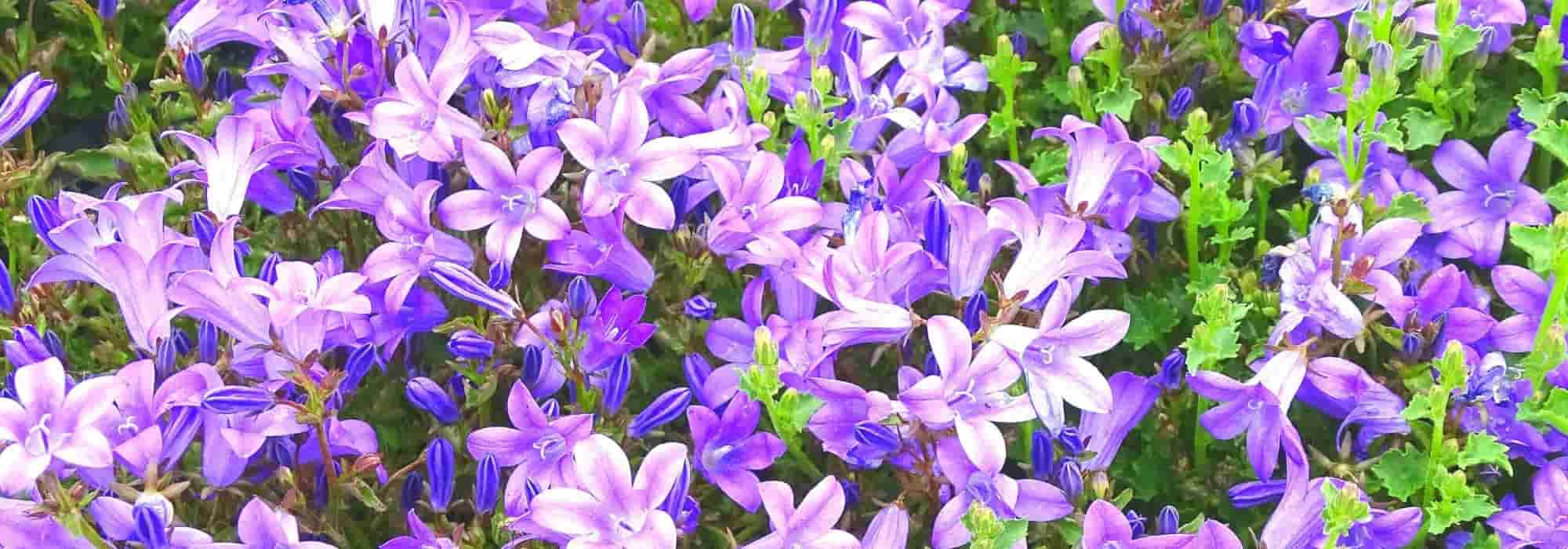
Campanula poscharskyana, appelée campanule des murets ou campanule de Poscharsky, est une vivace tapissante dont les longues tiges se couvrent de fleurs étoilées bleu lavande. Elle habille rapidement les rocailles, les joints de dallage et le sommet des murs d'où elle retombe en cascades souples. Sa floraison se poursuit durant plusieurs mois si elle ne manque pas d’eau en été. Très rustique, accommodante, peu exigeante en entretien, c'est un grand classique des jardins.
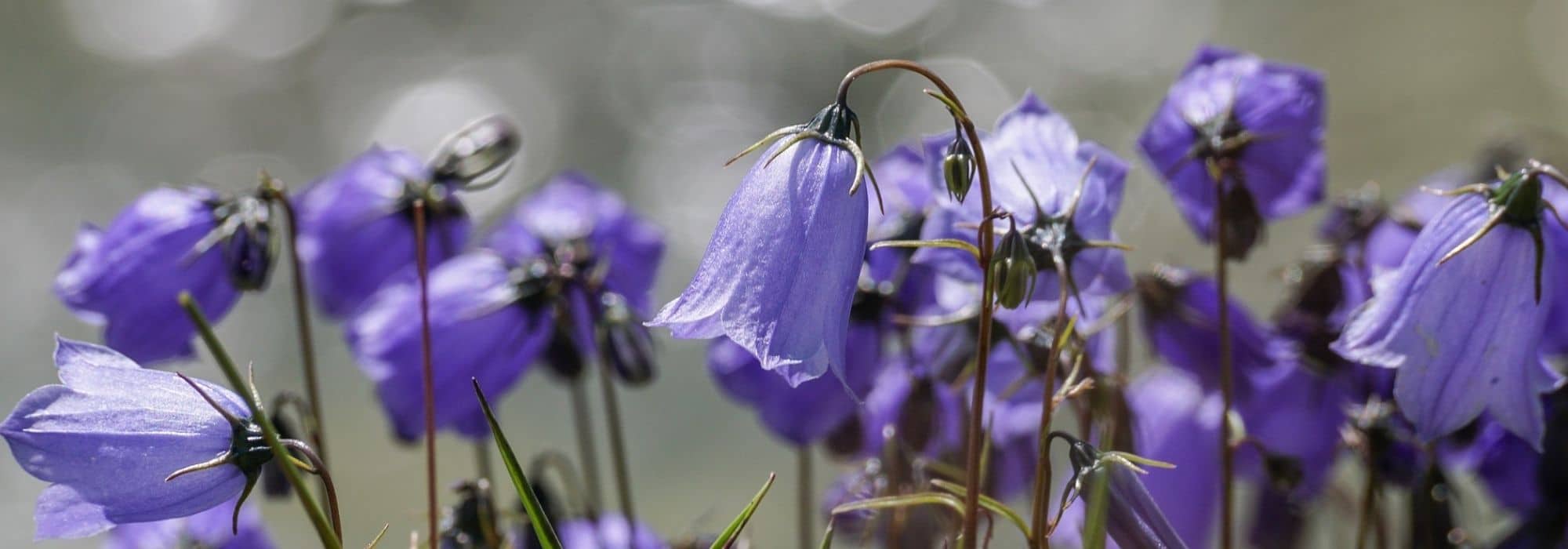
Cette espèce appartient à la famille des Campanulacées. C’est une vivace herbacée : ses tiges repartent depuis sa souche au printemps. Le feuillage persiste en hiver sous climat doux, mais il disparaît en partie ou totalement dans les régions froides. La plante est originaire des reliefs calcaires qui s’étendent de la Croatie au Monténégro, où elle pousse dans les fissures rocheuses et sur les pentes pierreuses. Décrite par le botaniste Árpád von Degen en 1908, elle est cultivée ici sous sa forme botanique, telle qu'on la trouve dans la nature. Sa souche émet de nombreuses tiges couchées ou retombantes qui s’enracinent au contact du sol. Elles forment un tapis de 10 à 15 cm de haut pour 40 à 60 cm de large ; sur un mur ou dans une vasque, elles peuvent retomber sur 30 à 50 cm. Cette croissance rapide demande une surveillance auprès des petites plantes alpines : les tiges gagnent les interstices et des semis spontanés peuvent apparaître plus loin. Les feuilles basales, arrondies à cordiformes et grossièrement dentées, mesurent 2 à 4 cm ; celles des tiges sont plus petites et plus étroites. La floraison peut se renouveler de mai-juin à septembre si l'été n'est pas trop sec : les rameaux portent une multitude de fleurs bleu violacé, larges de 2 à 3 cm. Chaque fleur est profondément découpée en cinq lobes pointus, ce qui lui donne une forme d’étoile bien ouverte. Après la floraison, de petites capsules libèrent des graines fines capables de germer dans les joints de pierre ou de dallage. Ce caractère permet de la distinguer de Campanula portenschlagiana, plus compacte et munie de fleurs davantage campanulées. La campanule de Poscharsky résiste au moins jusqu’à -20 °C dans un sol drainé.
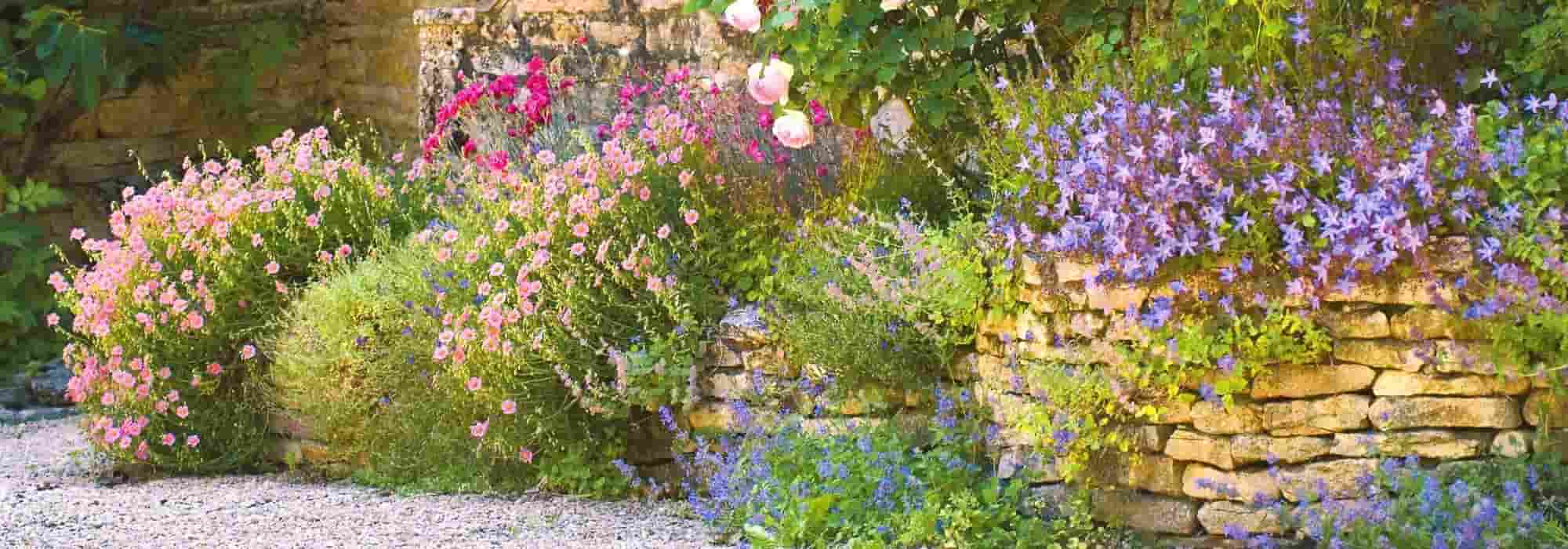
Cette campanule convient aux rocailles, murets en pierre sèche, talus et bordures dallées, dans un jardin alpin, naturel ou de curé. Elle accompagne des vivaces basses telles que le Geranium dalmaticum, le Gypsophila repens ‘Rosa Schönheit’, le Thymus praecox ‘Albiflorus’ et l'Helianthemum ‘The Bride’. Ces plantes acceptent les mêmes sols pierreux et elles ne l'étoufferont pas. Le bleu lavande de la campanule s’accorde avec le rose tendre du géranium et de la gypsophile ainsi qu’avec le blanc du thym et de l'hélianthème. Laissez à chaque plante suffisamment d’espace pour que les tiges de la campanule ne les recouvrent pas.
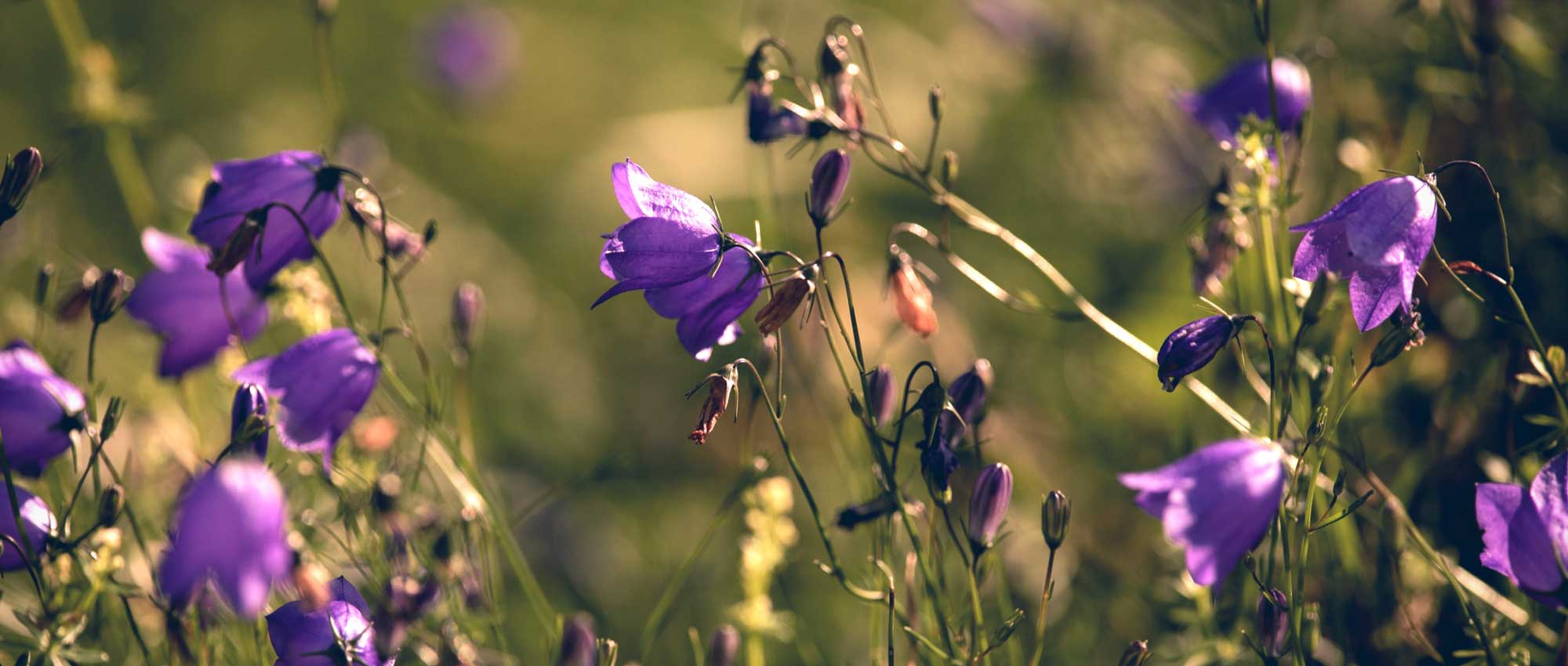
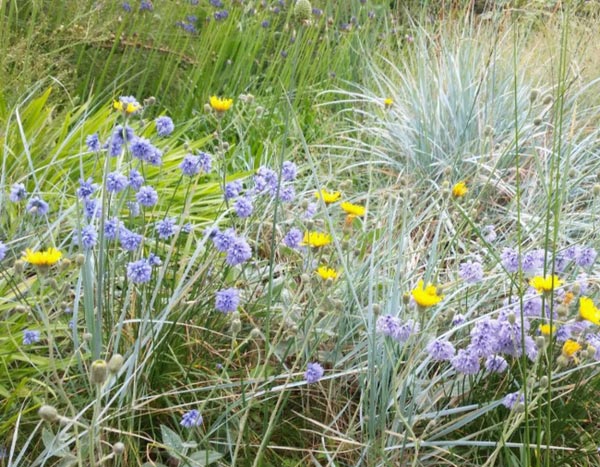
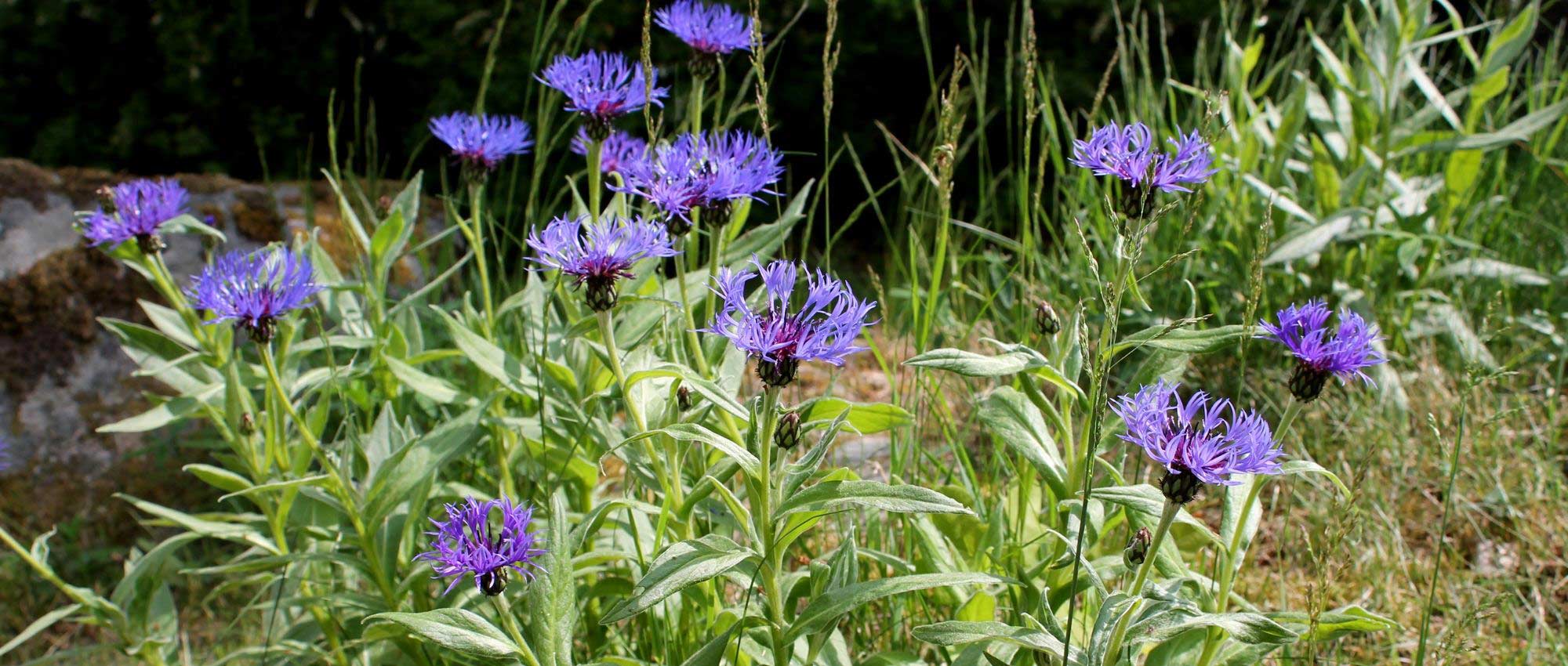
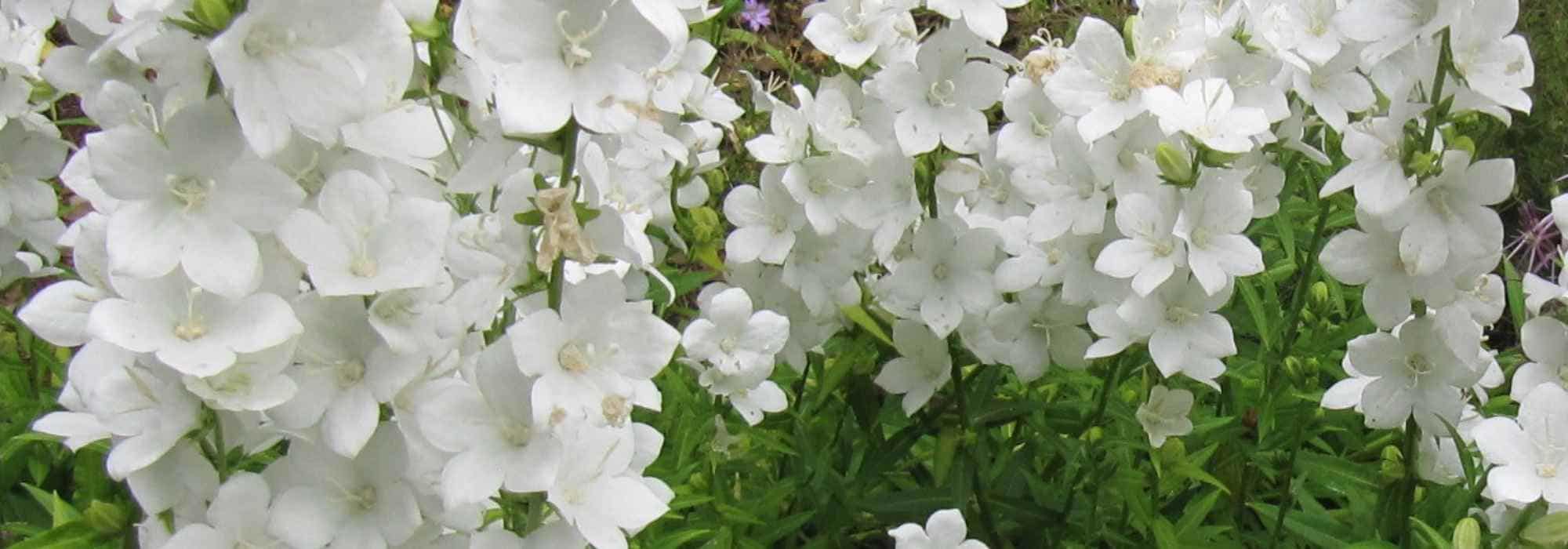
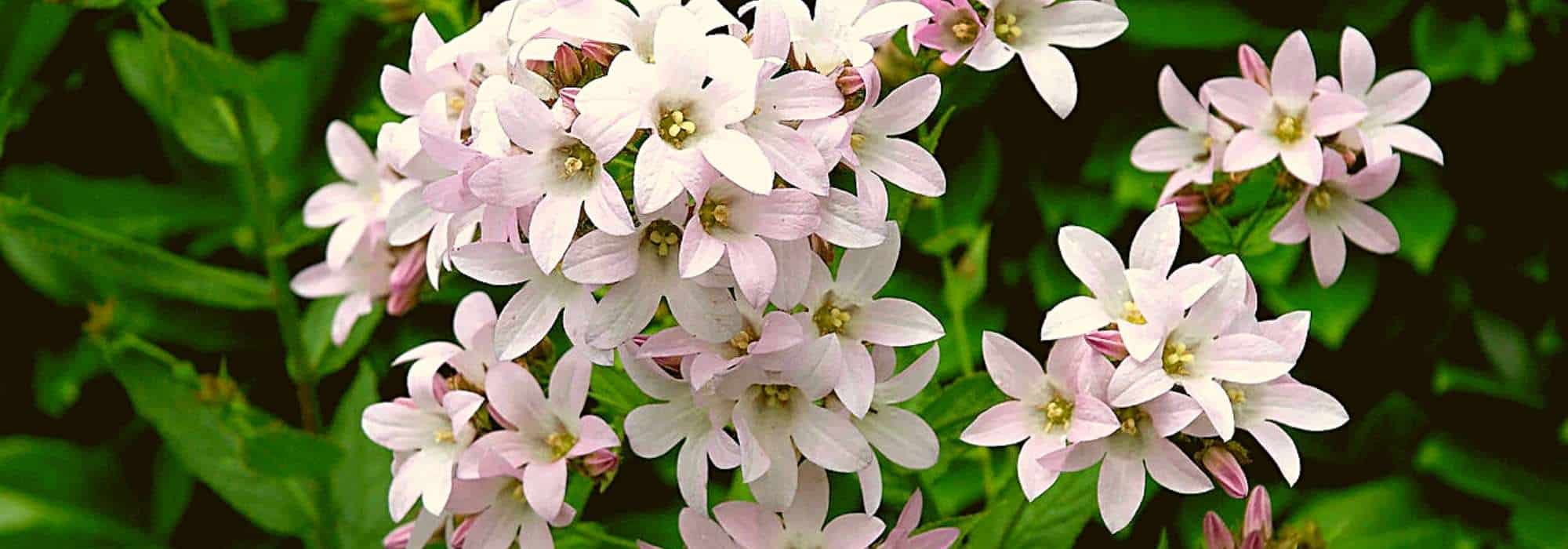
Campanula poscharskyana in pictures


Flowering
Foliage
Plant habit
Botanical data
Campanula
poscharskyana
Campanulaceae
Trailing Bellflower, Serbian Bellflower
Balkans
Planting and care
Campanula poscharskyana is planted from February to April or from September to November, in full sun in areas with cool summers and in partial shade where heat quickly dries out the soil. It prefers a light or stony soil, neutral to alkaline, remaining slightly moist but perfectly drained in winter. In heavy soil, incorporate gravel and plant on a slight mound; in a gap in a low wall, mix garden soil and compost without blocking water drainage. Water during the first summer as soon as the soil dries out deep down. A well-rooted plant tolerates short dry spells, but flowers for less time if they persist. Prune spent flower stems after the main flowering to thicken the carpet and limit self-sowing. Pull up rooted stems that grow beyond the intended area. Division is carried out in spring or September.
In a pot, choose a wide container with drainage holes and allow the surface of the compost to dry out before watering again.
Planting period
Intended location
Care
Planting & care advice
-
, onOrder confirmed
Reply from on Promesse de fleurs
Recently viewed products
Haven't found what you were looking for?
Hardiness is the lowest winter temperature a plant can endure without suffering serious damage or even dying. However, hardiness is affected by location (a sheltered area, such as a patio), protection (winter cover) and soil type (hardiness is improved by well-drained soil).

The flowering period indicated on our website applies to countries and regions located in USDA zone 8 (France, the United Kingdom, Ireland, the Netherlands, etc.)
It will vary according to where you live:- In zones 9 to 10 (Italy, Spain, Greece, etc.), flowering will occur about 2 to 4 weeks earlier.
- In zones 6 to 7 (Germany, Poland, Slovenia, and lower mountainous regions), flowering will be delayed by 2 to 3 weeks.
- In zone 5 (Central Europe, Scandinavia), blooming will be delayed by 3 to 5 weeks.
In temperate climates, pruning of spring-flowering shrubs (forsythia, spireas, etc.) should be done just after flowering.
Pruning of summer-flowering shrubs (Indian Lilac, Perovskia, etc.) can be done in winter or spring.
In cold regions as well as with frost-sensitive plants, avoid pruning too early when severe frosts may still occur.
The planting period indicated on our website applies to countries and regions located in USDA zone 8 (France, United Kingdom, Ireland, Netherlands).
It will vary according to where you live:
- In Mediterranean zones (Marseille, Madrid, Milan, etc.), autumn and winter are the best planting periods.
- In continental zones (Strasbourg, Munich, Vienna, etc.), delay planting by 2 to 3 weeks in spring and bring it forward by 2 to 4 weeks in autumn.
- In mountainous regions (the Alps, Pyrenees, Carpathians, etc.), it is best to plant in late spring (May-June) or late summer (August-September).
The harvesting period indicated on our website applies to countries and regions in USDA zone 8 (France, England, Ireland, the Netherlands).
In colder areas (Scandinavia, Poland, Austria...) fruit and vegetable harvests are likely to be delayed by 3-4 weeks.
In warmer areas (Italy, Spain, Greece, etc.), harvesting will probably take place earlier, depending on weather conditions.
The sowing periods indicated on our website apply to countries and regions within USDA Zone 8 (France, UK, Ireland, Netherlands).
In colder areas (Scandinavia, Poland, Austria...), delay any outdoor sowing by 3-4 weeks, or sow under glass.
In warmer climes (Italy, Spain, Greece, etc.), bring outdoor sowing forward by a few weeks.
Shipping country and language
Your country of residence may be:
Your country of residence is:
For a better user experience on our website, you can select:
Your shipping country:
-
 Austria
-
 Belgium
-
 Bosnia & Herzegovina
-
 Bulgaria
-
 Croatia
-
 Cyprus
-
 Czechia
-
 Denmark
-
 Estonia
-
 Finland
-
 France
-
 Germany
-
 Greece
-
 Hungary
-
 Iceland
-
 Ireland
-
 Italy
-
 Latvia
-
 Liechtenstein
-
 Lithuania
-
 Luxembourg
-
 Malta
-
 Netherlands
-
 Poland
-
 Portugal
-
 Romania
-
 Serbia
-
 Slovakia
-
 Slovenia
-
 Spain
-
 Sweden
-
 Switzerland
Language:
-
French
-
 English
-
Spanish
-
Italian
-
German
-
Portuguese
-
Dutch
-
Finnish
My Account
Hello
My wish lists
My cart
Log in / Register
Existing customer?
This form is protected by reCAPTCHA - the Google Privacy Policy and Terms of Service apply.
New customer?
Create an account to track your orders, access our customer service and, if you wish, make the most of our upcoming offers.