





























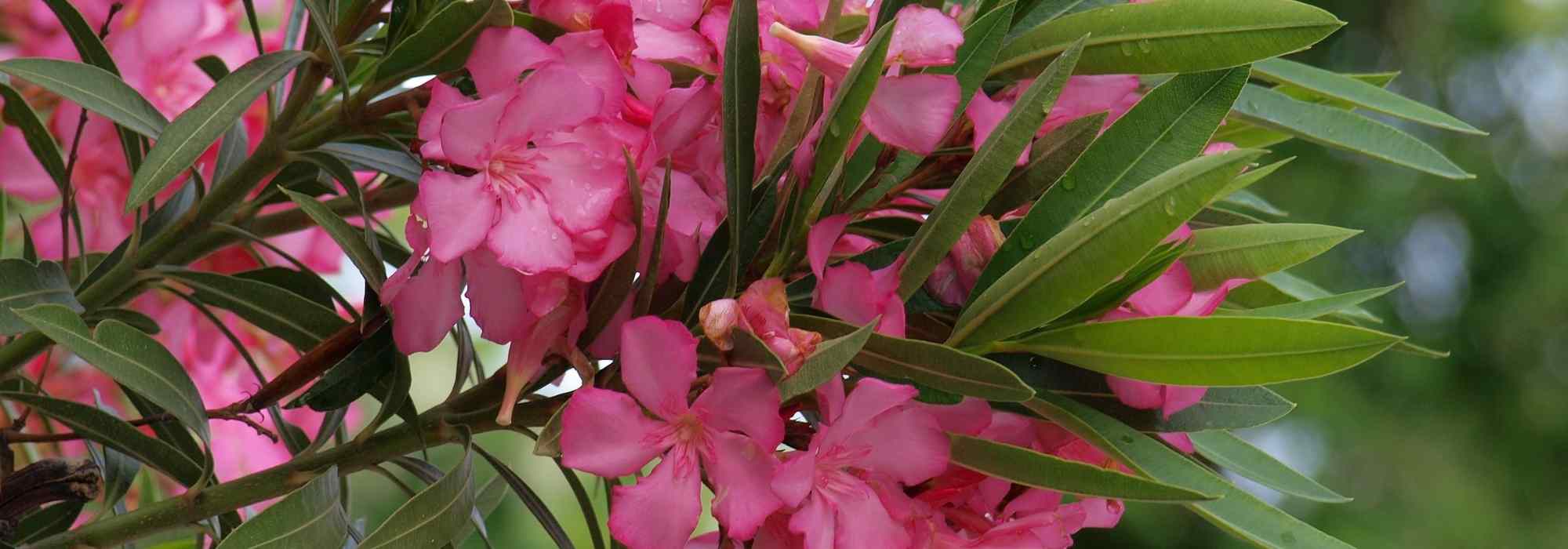
Flowering of the oleander
10 mistakes to avoid for a flowering bush
Contents
The Oleander (Nerium oleander) is a beautiful evergreen bush emblematic of the Mediterranean, valued for its spectacular and prolonged flowering throughout the summer. The flowers of the oleander come in shades of pink, white, yellow, or red. Hardy in mild regions, this evergreen bush with a bushy habit can reach up to 4 metres in height depending on the variety.
It remains easy to grow as long as a few essential rules are followed. Indeed, certain cultivation mistakes can compromise the flowering of the oleander, or even its health.
Why isn’t my oleander flowering? This question often arises among gardeners. To answer it, let’s discover together the 10 mistakes to avoid encouraging abundant flowering, whether the oleander is planted in the ground or grown in a pot.

Planting it in the shade: a mistake that jeopardises the flowering of the oleander
If your oleander is not flowering and its foliage appears dull or wilted, it is likely lacking light! Native to the Mediterranean basin, oleander needs warmth and sunlight to flower generously, especially in temperate climates or in regions located north of the Loire. It will tolerate partial shade in warm climates, but it will be much less floriferous. In the absence of direct sunlight, the flowering of the oleander will be significantly reduced, and the bush will take on a less compact, more stretched silhouette, sometimes even becoming sparse.
Our advice: Whether planted in the ground or in a pot, always choose a south-facing location that is bright and well-sheltered from cold winds to encourage flower production.

The flowering of oleander requires plenty of sunlight
Planting it in autumn: a risk for the flowering of oleander in cold climate
The planting period influences directly the successful establishment and the future flowering of the oleander.
In Mediterranean regions, where autumn remains mild and dry after a hot summer, it is possible to plant oleander as early as September.
On the other hand, in other regions (cooler or prone to early frosts), planting oleander in autumn weakens its establishment. It is best to wait until spring, once the risk of frost has passed. This precaution ensures vigorous growth and prepares for abundant flowering of oleander from the very first year.
Discover other Nerium - Oleander
View all →
Available in 0 sizes
Available in 3 sizes
Available in 4 sizes
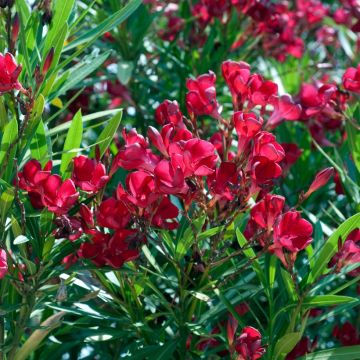
Available in 4 sizes
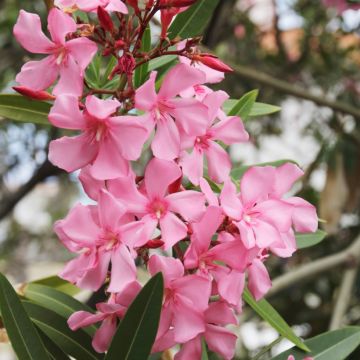
Available in 4 sizes
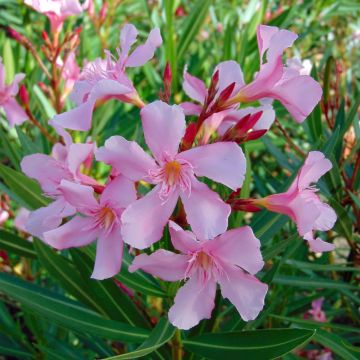
Available in 1 sizes
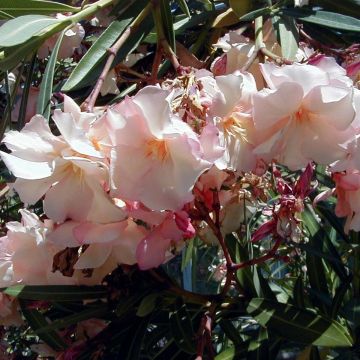
Available in 2 sizes
Available in 2 sizes
Available in 1 sizes
Available in 1 sizes
Not protecting it from the cold compromises its flowering.
Oleander is a tender plant. This tree, typical of the Côte d’Azur, rarely withstands frosts below -8°/-10°C, at best, and only once it is well established. Mature specimens are generally capable of regrowing from the stump after frosts around -12°C. Its Achilles’ heel is therefore its low hardiness, particularly during its early years when it is especially sensitive to cold. Growing it in the ground is best reserved for regions that do not experience harsh winters, where temperatures do not drop below -5°C. Elsewhere, it is better to grow oleander in a pot and store it in a greenhouse, conservatory, or frost-free winter garden (at 5-10°C) from November until May. Watering of oleander should then be significantly reduced, and any fertiliser application stopped.
In the garden, it will appreciate a good mulch of dead leaves (about 30 to 40 cm) or lin pale, especially during the first two winters in regions at the edge of its hardiness. If a cold spell is forecast, I recommend wrapping it in one or two layers of fleece to help it get through the winter.
Without these precautions, the cold can delay or prevent any flowering of oleander, even the following year.
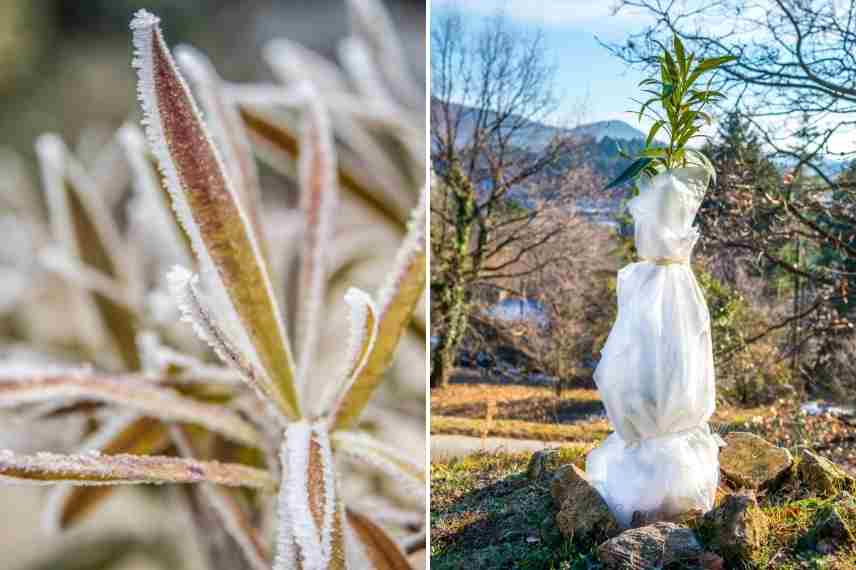
In winter during the first years, don’t forget to protect your oleander
→ to read on the subject: How to overwinter oleander in a pot or in the ground
Read also
How to grow oleander in a pot?Neglecting drainage prevents the flowering of oleander.
For a generous flowering of oleander, the bush must be planted in well-draining soil. Indeed, it fears stagnant moisture that promotes root diseases and hinders the development of flower buds. It appreciates well-drained, deep soils rich in humus. When planting oleander, place a 10 cm drainage layer (gravel, clay balls…) if your soil is clayey and add manure or decomposed compost. If you have chosen to plant oleander in a pot, use a potting mix for indoor plants that drains well. These good cultural conditions will prevent the appearance of fungal diseases.
Not watering it regularly harms the flowering of the oleander.
If it shows good resistance to occasional drought, the Oleander only produces abundant flowering in sufficiently moist soil at depth. It needs the soil to remain relatively cool during its growth and flowering period.
Regular watering of the Oleander, especially in summer, is therefore necessary for the first two years after planting, particularly during hot and dry periods. This allows for good deep rooting and supports flowering. I recommend watering it once or twice a week in spring and summer, allowing the soil to dry out between waterings.
Watering the Oleander in a pot will need to be more frequent, as the substrate dries out more quickly: always let the compost dry on the surface before watering again.
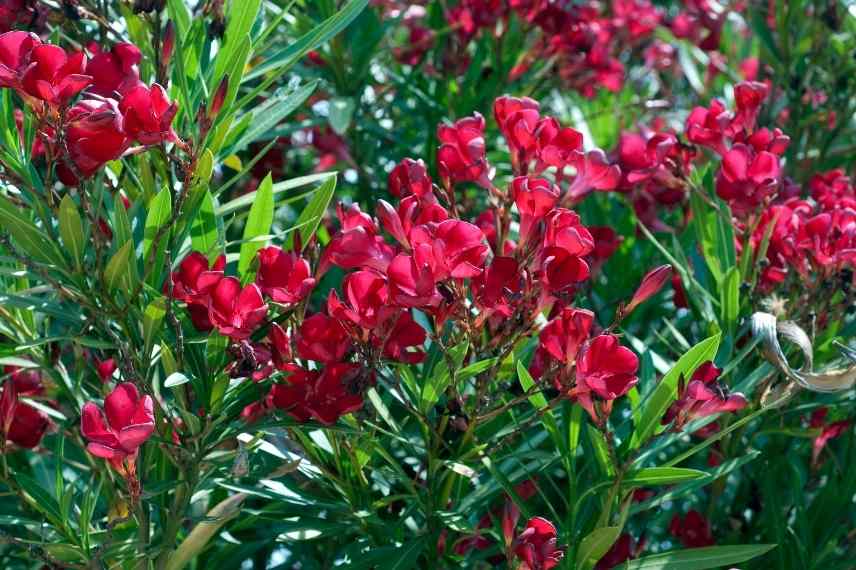
Watering must be well managed, especially for an Oleander planted in a pot
Overwatering the oleander reduces flowering.
Even though oleander requires regular watering in summer to flower abundantly, it is particularly sensitive to excess moisture. Overwatering leads to yellowing of the foliage, often a sign of asphyxiated roots.
This excess water can cause certain diseases, such as botrytis or grey mould, which develop mainly in cases of excessive humidity.
Water oleander moderately, but regularly, without flooding the roots.
In contrast, during winter, space out the waterings. Excess moisture could indeed cause the roots to rot. Similarly, oleander also fears watering by spraying on the foliage, which can lead to certain fungal diseases.
Always ensure to water at the base of the plant, without wetting the foliage, preferably in the morning or late in the day, to maintain a good water balance without harming the flowering of oleander.

The foliage of oleander indicates its water needs. Here is healthy foliage. If it turns yellow, be cautious of overwatering!
Not feeding the oleander limits its flowering.
To achieve a generous flowering of the oleander, ensure it receives the nutrients it needs. In open ground, it will appreciate a supply of compost in spring, which will also help strengthen its defences.
In pots or containers, nutrients are limited, and the plant depletes its substrate more quickly: for beautiful flowering, apply fertiliser for flowering plants approximately every 15 days diluted in the watering water.
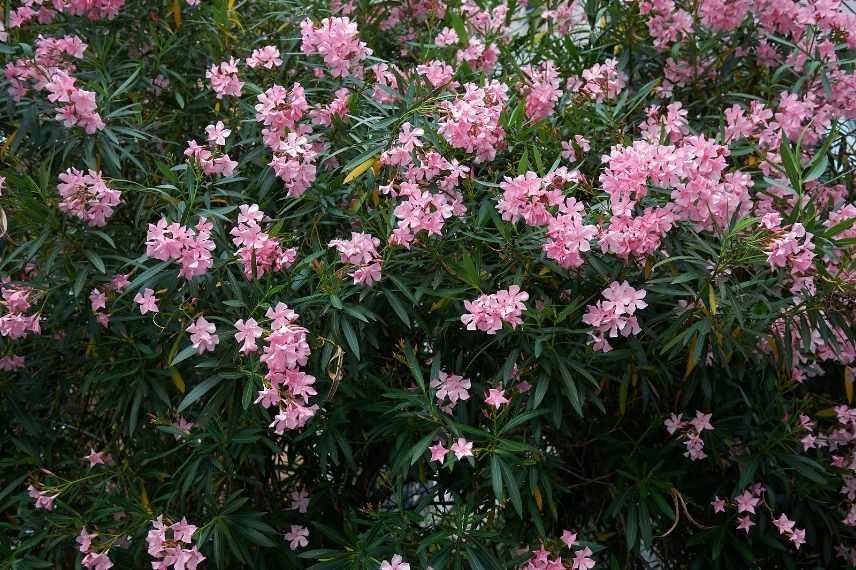
In open ground, enrich your soil with compost
Severe pruning significantly reduces the flowers of the oleander.
If it is possible to severely prune a leggy or frost-damaged Oleander to encourage new growth, outside of these extreme cases, it is better to spare this bush drastic pruning. As Oleander flowers on the wood of the year, you should avoid severe pruning, or you risk being deprived of flowers for the entire season! Your Oleander should be at least 5 years old before you start pruning. Pruning should take place every 4 to 5 years for plants in the ground, every 2 years for those in pots. In early spring, using clean pruning shears, cut back all branches by a third, also removing any dead, damaged, or poorly placed stems. As a precaution, wear gloves while pruning, as Oleander sap is highly toxic, primarily through ingestion. It can also cause chemical burns in case of skin contact.
→ Learn more in our tutorial: How to prune an Oleander?
Do not prune it if it has frozen.
Some branches of your oleander have turned black? Is the foliage looking dull too? Despite your precautions, it’s possible that your oleander has been exposed to a period of frost. This is not necessarily irreversible! However, you must act promptly and remove this dead wood! As soon as spring arrives, around March or April, take your finest pruning shear, well disinfected, and remove all the black parts and the leaves damaged by the frost. Always wait for the vegetation to resume before pruning the frozen parts. If the damage is significant, still in spring, don’t hesitate to cut back the base; its ability to regenerate from the stump is considerable, and you will give your oleander a chance to thrive again.
→ Olivier tells you everything in: My plant has frozen. Why? What to do?
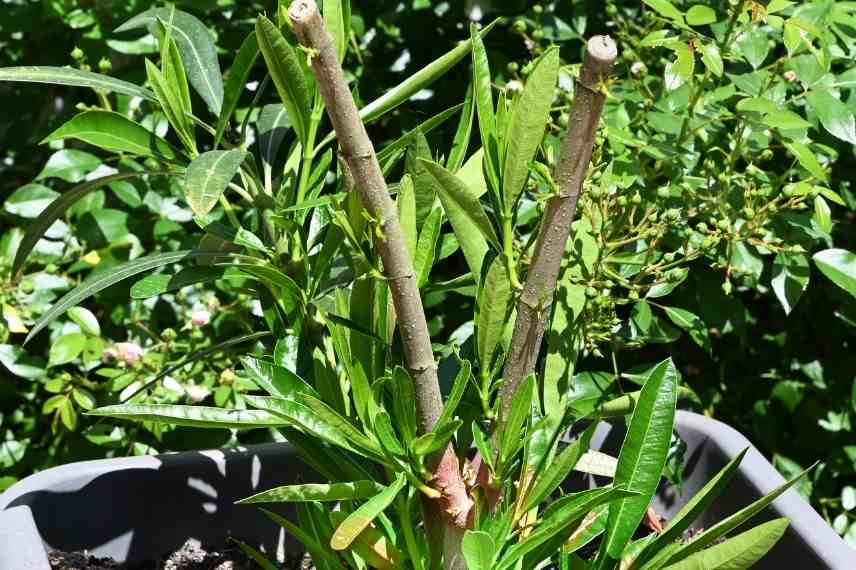
A severe pruning of the frozen branches was carried out in spring on this potted oleander
Ignore the diseases of oleander.
Oleanders are often prey to diseases, pests, and other nuisances. So keep a close eye on the foliage and branches. This will help you prevent the appearance of scale insects, aphid attacks, foliar spots, and the yellow spider (web-spinning mites). You should also be vigilant for bacterial canker, which causes dark, deformed cankers on young stems.
→ Learn more with our advice sheet: Diseases and Pests of Oleander
- Subscribe!
- Contents

Comments