






























Flowers, an essential element of the permaculture vegetable garden
Useful flowers in a permaculture kitchen garden
Contents
A permaculture garden is a garden designed and managed according to the principles of permaculture. Built around a balanced association between vegetables, herbs and flowers, this harmonious system benefits from botanical interactions. Flowers, often overlooked, prove to be valuable allies in this type of garden. Annuals or Perennials, they are both agents in pollination and guardians against pests. Some are useful for protecting tomatoes and other vegetables. As a bonus, they help make the kitchen garden a flowering corner as pleasing to behold as it is to feast the eyes. Unpacking the floral world of a permaculture garden, where every petal has its part to play!

What is a permaculture kitchen garden?
A permaculture garden is a garden that integrates the principles of agroecology and biodiversity, mimicking natural systems. This is not simply a gardening choice: it’s a philosophy aimed at creating a self-sustaining and sustainable ecosystem. Unlike conventional agriculture, permaculture does not use chemicals and relies on the interdependence between the different components of the garden. It rests on a balanced association and interaction between vegetables, aromatics and flowers. These, often overlooked, nevertheless play an essential role in this natural balance. All elements contribute to a delicate balance, minimising waste and maximising production. Creating a permaculture garden requires planning and a deep understanding of the garden’s ecosystem, but it is not necessarily difficult to establish. The aim is to build a system in which every plant, every animal and every microorganism has its place and its role, including the flowers.
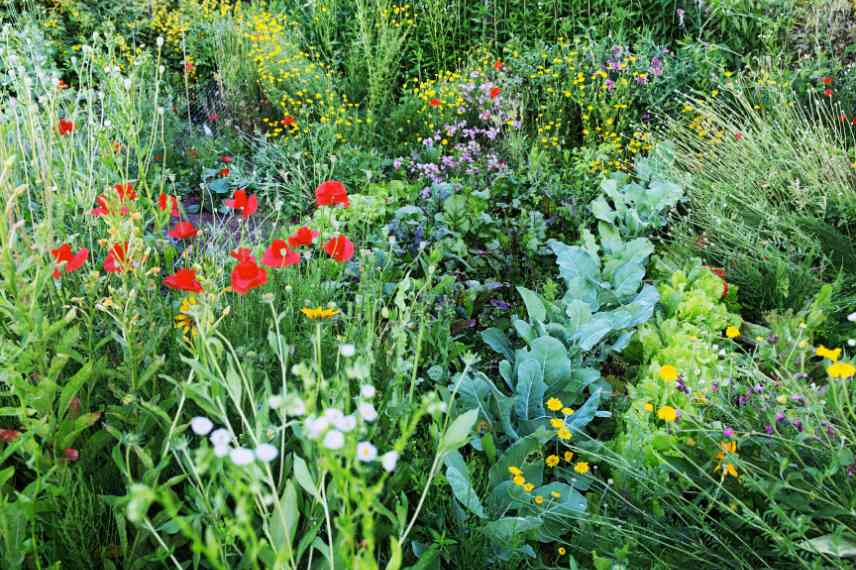
The importance of the interaction between vegetables and flowers in the vegetable garden
Why planting flowers in a permaculture vegetable garden?
The flowers in a permaculture vegetable garden are not merely there to brighten the space around the vegetables; they play essential functional roles. They form a mutually beneficial partnership in the garden. Their deliberate inclusion blends utility with pleasure. The flowers enable:
- Soil erosion control: Some deep-rooted flowers, such as borage, help prevent soil erosion, retaining the moisture and nutrients needed for plant health.
- Enhancement of biodiversity: Flowers attract a wide variety of fauna, from soil microfauna to birds and butterflies, providing them with shelter and food. This biodiversity enhances the resilience and balance of the ecosystem.
- Pollination: Flowers attract the ceaseless ballet of pollinating insects such as bees, bumblebees and butterflies, thereby aiding the reproduction of vegetables and fruits.
- Pest suppression: Some flowers naturally emit repellent substances against harmful insects, thus protecting crops without the use of chemical pesticides.
- Nutrient balancing: Flowers can help restore nutrient balance in the soil. For example, phacelia, widely used as green manure in the kitchen garden, is known to improve soil structure and increase nitrogen levels.
- Embellishment: Flowers bring colour and cheer, making the garden a pleasant flowering corner. They add an aesthetic and emotional dimension to the garden. Their beauty and fragrance can have a positive impact on the mood and well-being of the gardener.
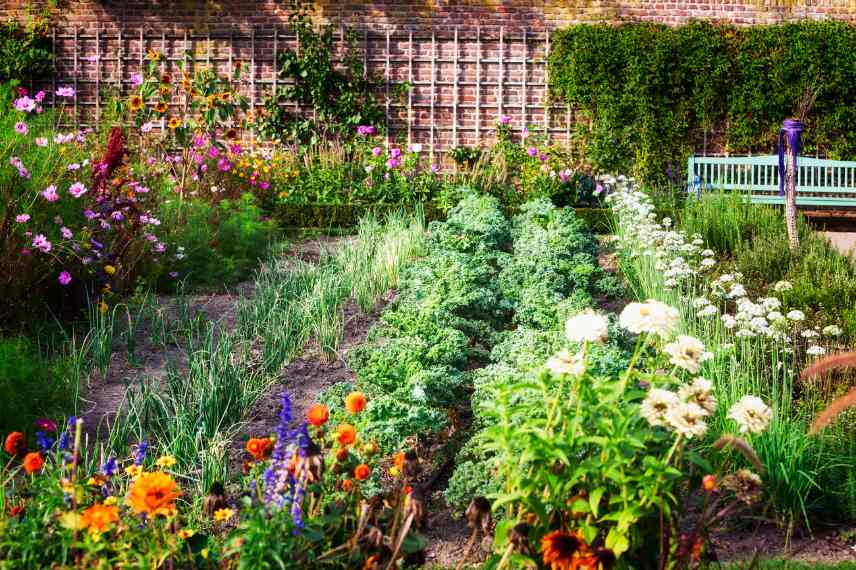 Flowers are as aesthetically pleasing as they are functional
Which flowers should you include in a permaculture kitchen garden?
Sowing or planting flowers in a kitchen garden offers only benefits. Some flowers are useful for their repellent properties; others can be harvested and cooked, while some simply exist to be beautiful! To combine taste, fragrance and visual appeal, prioritise melliferous plants, aromatic and medicinal plants and edible flowers. Among the flowers useful to sow or plant in a permaculture kitchen garden:
- The nasturtium : an annual melliferous plant whose colourful flowers attract pollinators all summer and whose leaves act as an aphid trap! Attracted, the aphids will turn away from your vegetables. Very easy to grow in full sun and in well‑drained soil. It is useful around strawberries, radishes, broccoli, courgettes, potatoes, cucumbers, pumpkins, tomatoes, peppers, aubergines and cabbages, from which it also deters the whiteflies. Leaves, floral buds and flowers are edible and can brighten summer salads!
- The common lavender or true lavender: this beautiful melliferous perennial attracts bees and other bumblebees with its fragrant spikes of purple flowers. But, to be sure, its scent repels ants, flies and carrot- and cabbage-dwelling aphids. Plant it along the edge of the vegetable garden in light, well‑drained soil and a sunny position. It is also appreciated in cooking where dried lavender flowers perfume sugar or summer fruit tarts, and make delicious teas with soothing properties. For more details, read our article on How to make lavender tea?
- Lemon balm (Melissa officinalis) or lemon-scented balm : very melliferous, at once aromatic, culinary and medicinal; its leaves will bring a lemon note to your recipes and infusions. Its flowers are highly visited by nectar-foraging insects, which gave the plant its name (“melissa” in ancient Greek meaning “bee leaf”).
- The cosmos : an annual plant so easy to grow! Its light, abundant flowering is particularly melliferous, attracting many insects and butterflies all summer. After summer, its seeds are highly appreciated by birds. Cosmos seeds self-seed readily from year to year. The tallest varieties can reach almost 1.8 m tall, making them suitable for creating a small hedge at the edge of the potager, which is very useful for providing a light shade to your vegetable crops. Its deep roots help loosen the soil, which is beneficial for aerating soils that are too compact. An extra benefit: cosmos repels the cabbage white butterfly. Another attraction: cosmos flowers are edible and have a delicate floral flavour that enhances salads, and also sorbets and ice creams in summer!
- The African marigold or Tagetes : indefatigable, its melliferous and slightly scented flowers attract bees, butterflies and other pollinators from summer to autumn, but that’s not all of its virtues! Its flowers are edible and will perfume summer salads. Its foliage acts as a true natural repellent against certain garden pests such as aphids. A decoction of leaves can be used to combat aphids and caterpillars. It traditionally keeps company with tomatoes (count two Tagetes for six tomato plants) and with cabbages, because its roots release a substance (thiophene) that repels nematodes as well as whiteflies (aleurodes) which attack the roots of some vegetables. After flowering, bury them in the soil as green manure to enrich it.
- The marigold (Calendula officinalis): which, besides being a pretty flowering annual, is an edible flower valued in herbal medicine and can be grown in the veg garden and used in cooking in salads, teas or infusions. Its melliferous flowering attracts pollinators until autumn, notably hoverflies that love aphids, an essential asset in a permaculture kitchen garden where it repels pests. The scent of its roots also repels whiteflies (aleurodes), nematodes, cabbage beetles, brassica pests and asparagus beetles. This is why it is valuable to plant it between vegetables and strawberries.
- Borage : is a vegetable, ornamental and condiment plant. It also has value in permaculture as a green manure when it finishes its life cycle. Moreover, its rough-textured leaves are reputed to hinder the progress of slugs. It will be useful among salads, strawberries and other plants that slugs and snails love, but also planted not far from potatoes, as it repels the potato beetle. Edible, its leaves have a cucumber-y tang and can be eaten cooked like spinach or raw in salads. As for its star-shaped blue‑tinged or white flowers, in addition to attracting all pollinating insects, they impart a slight iodised flavour that will embellish salads or be used to make infusions and tisanes.
- The tansy : is a precious ally of the permaculture kitchen garden. It is the quintessential repellent plant. The bright sun-yellow flowering of this perennial attracts pollinators all summer, especially bees, while repelling many insects thanks to its odour‑based repellent properties. Its light silhouette will bring a rustic touch, while its powerful scent repels pests. It is very useful in the garden for its natural repellent action to deter cabbage moth, potato beetles, aphids, ants, whiteflies, and also diseases such as powdery mildew and rust thanks to its antifungal properties. To protect your vegetable plants, tansy manure is very effective.
- The sunflower (Helianthus annuus) : this annual with large yellow flowers is very visited by pollinating insects, drawn by the nectar they contain, but birds also love its seeds.
- The aromatic and culinary herbs : they perfume the garden as much as dishes in cooking and in teas. Generally they offer attractive melliferous and nectariferous flowering, such as rosemary officinalis which is clothed in many small blue-lavender flowers, attracting bees in particular and yielding a very fragrant honey and some butterflies. The indispensable thyme attracts during its flowering a myriad of pollinating insects and will easily slip among the garden’s inhabitants, as its potent scent deters aphids and other pests such as ants and molluscs. Mints are also reputed to attract beneficial insects and repel undesirable garden visitors, such as aphids, ants, brassica pests and radish pests, as well as some rodents.
- Un mélange de fleurs à semer pour attirer les pollinisateurs : perfect if you want to create a small meadow within your own vegetable garden. These seed mixes have as their main advantage looking after pollinators in full bloom.
But also, The common sage whose strong scent repels ants, the artemisia whose camphor-like scent deters aphids and caterpillars, the hollyhocks (Alcea rosea) so floriferous and melliferous whose petals and flower buds can be eaten raw in salads or cooked into jams, but also in tea, using dried petals and the young leaves raw or cooked.
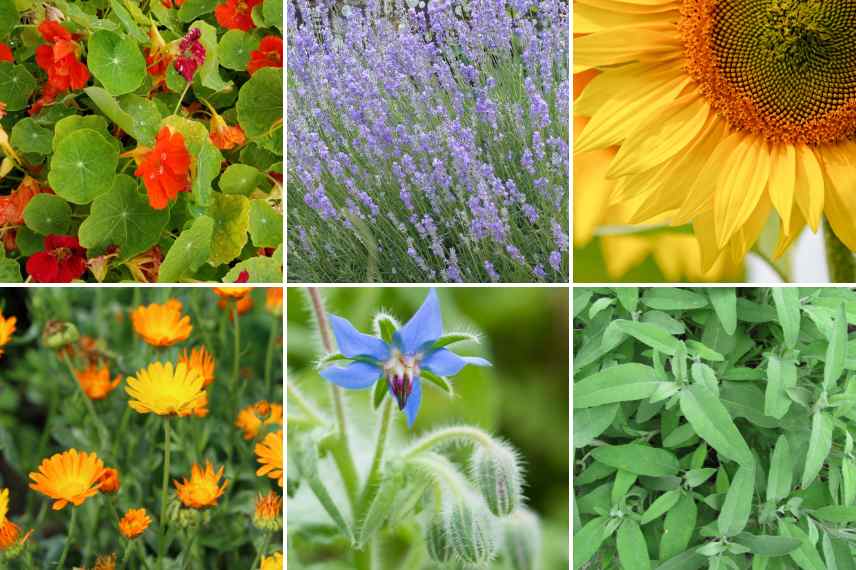
Among the essential flowers: nasturtium, lavender, sunflower, calendula, borage and common sage
Flowers, yes, but in what quantity?
A good balance requires that at least a third of your vegetable garden be dedicated to flowers and aromatic plants. This proportion helps ensure effective pollination, pest control and a pleasing appearance, while maintaining the harmony and functionality of the ecosystem of your permaculture garden. Flowers are an essential element that supports and strengthens the entire garden ecosystem.
- Subscribe!
- Contents
Comments