


Fruit-bearing pomegranate: the best varieties
Selection of high-yielding pomegranate varieties
Contents
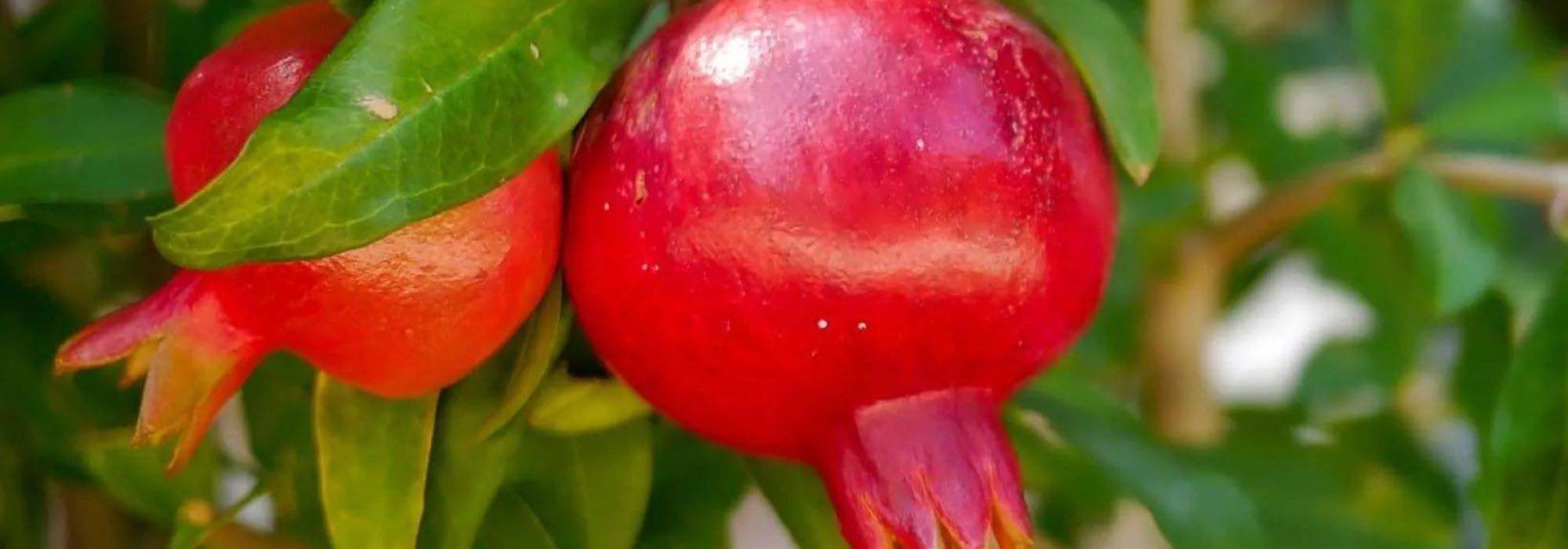
The pomegranate tree, or Punica granatum is a tree or a shrub that, in addition to offering very decorative red-orange flowers, can bear large, juicy and tasty fruit in regions with hot climates. They can be enjoyed from late summer to autumn, between September and November.
To help you choose, you should distinguish between fruiting pomegranate trees that are self-fertile thanks to their male and female flowers that fertilise each other, and the pomegranate trees whose flowers are sterile and do not produce fruit. Fruit-bearing pomegranate trees require a long, hot summer to bear ripe fruit.
Discover our selection of the best fruiting pomegranate varieties which are among the most productive and which yield fruits with delicious flavours.

Fruit-bearing pomegranate - Punica granatum 'Wonderful'
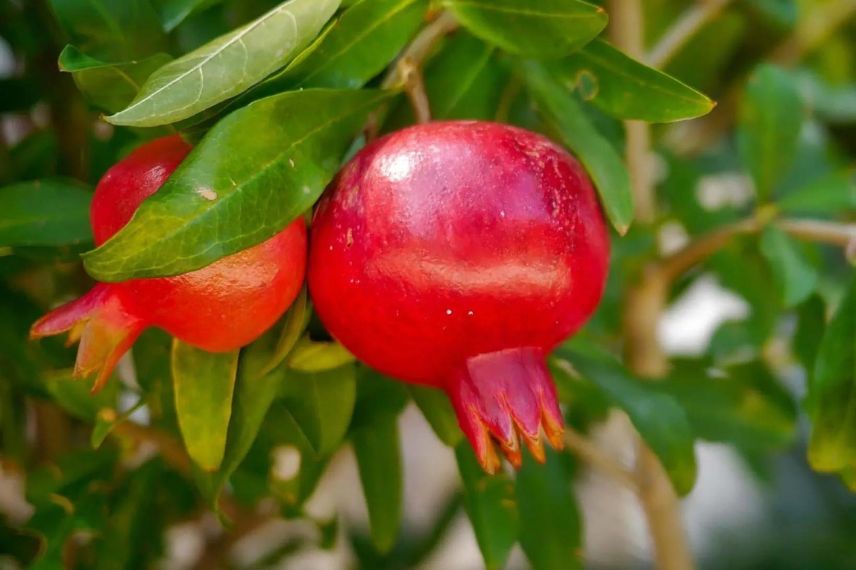
The pomegranate – Punica granatum ‘Wonderful’ is a vigorous variety grown in California for making pomegranate juice. From May to July, it offers bright orange-red flowers, then in September to October, it bears seedless fruits about 12 cm in diameter, prized for their sweet and tangy flavour. They can weigh up to 700 g each. This tree reaches 4 metres in height with a 3-metre spread when mature. It has a spreading, rounded habit and bears spiny shoots and small oval, thick, bright green leaves, which are deciduous. To produce fruit at maturity, it requires warmth and sun and will be productive only in southern regions of France. It is hardy to -8 to -10 °C and the first harvests occur from the 4th or 5th year of cultivation.
Read also
When and how to prune pomegranate?Fruit-bearing pomegranate - Punica granatum 'Provence'
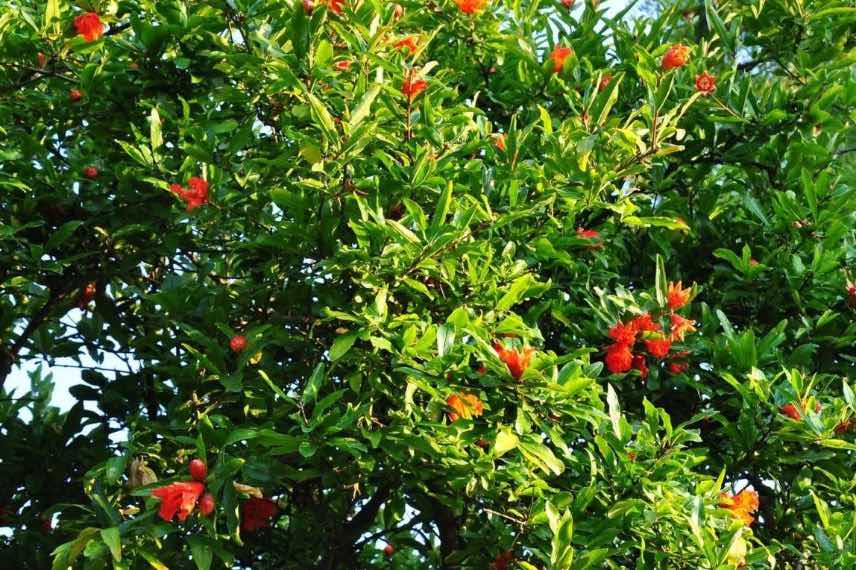
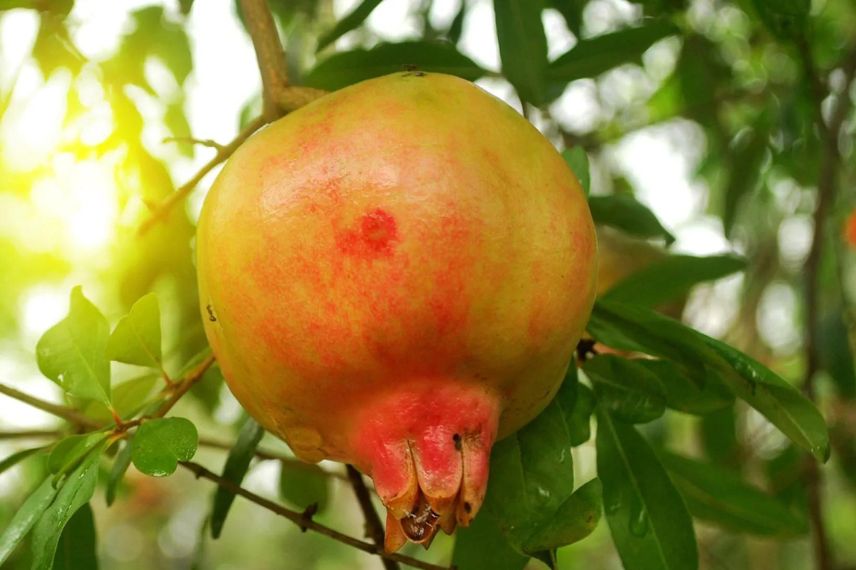
The Punica granatum ‘Provence’ is an ancient, vigorous and hardy pomegranate, which offers a prolonged harvest from late September to November depending on the climate. It yields large, round fruits 8 to 12 cm in diameter, weighing up to 600 g. They are very juicy and sweet. Their thick, glossy skin becomes red, with yellow and brown hues at ripeness. Inside, the red and juicy flesh, slightly tart, contains numerous seeds imparting the characteristic bitterness of the pomegranate. The fruits, edible as soon as picked, store for several weeks, even several months when kept cool. In juice, they are refreshing and rich in vitamins and antioxidants. From June to August, the flowering is particularly decorative thanks to its orange and crumpled flowers. It attracts pollinators. This small tree has a graceful habit of 4 metres high by 3 metres wide. This cultivar, hardy to -15°C, requires a long and hot summer for good ripening. Plant it preferably in spring in deep, well-drained soil.
Fruiting pomegranate - Punica granatum 'Fina Tendral'
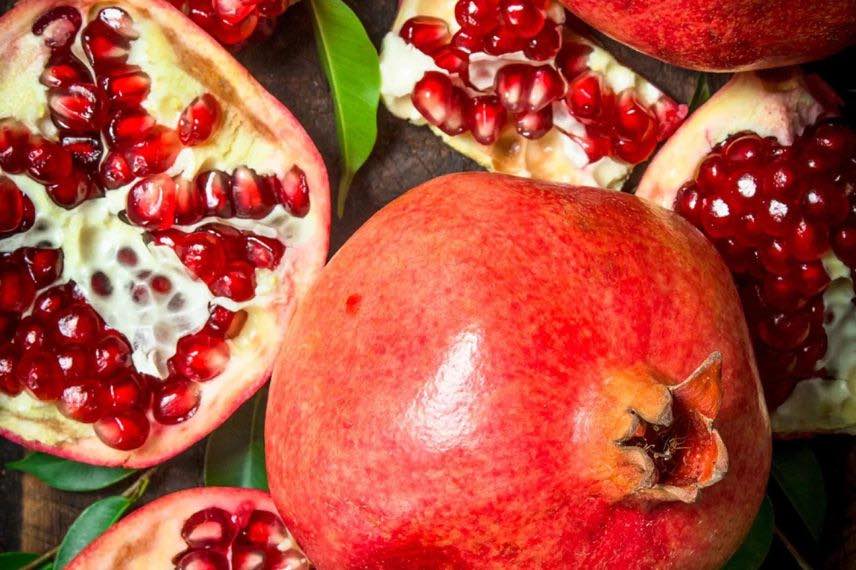
Originating from Spain, the pomegranate – pomegranate – Punica granatum ‘Fina Tendral’ is renowned for its large fruits, which can reach up to 14 cm in diameter, of very good flavour and seedless. The skin of the fruits is thin and yellow-pink. Inside are red, small, pliant arils that are easy to swallow. The tree reaches 4 metres tall by 3 metres wide. It bears flowers ranging from orange to bright red between June and August. The foliage, a vivid green turning to gold, is deciduous. To bear fruit, this pomegranate requires a long, hot summer. Harvest takes place between October and November. It tolerates frost down to -15°C. Planting is preferably carried out in autumn, in deep, well-drained soil.
Read also
How to propagate pomegranate?Fruit-bearing pomegranate - Punica granatum 'Mollar de Elche'
Also native to Spain, the pomegranate – Punica granatum ‘Mollar de Elche’ is a very old variety, known for its fruits of excellent flavour, with a sweet and sugary flavour and seedless. The fruits are of medium size, about 10 cm in diameter, and are round in shape. They can weigh up to 450 g. They are harvested from October to November. They are yellow, red-tinged, with a thick skin, and contain pink pulp with a small amount of soft pips. This tree, which reaches 4 metres in height and 3 metres in width at maturity, bears orange and crumpled flowers from June to August. Hardy to -10°C, it should be planted in full sun and in spring in deep, well-drained soil.
Fruit-bearing pomegranate - Punica granatum 'Black Fruit'
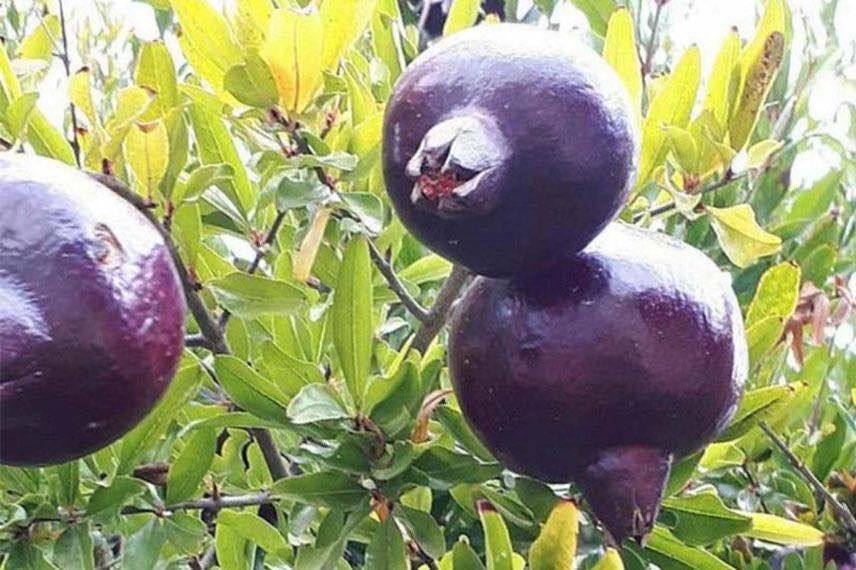
Fruit-bearing pomegranate – Punica granatum ‘Black Fruit’ is a variety to discover. It bears fruits with purplish-red, even black skins, a colour that is rather uncommon. They contain red, juicy seeds with a tart-sweet flavour. From June to August, this pomegranate displays an attractive, very bright orange flowering. Its deciduous, bright green foliage turns yellow in autumn. This bush native to the Mediterranean basin grows to a height of 3.5 metres at maturity with a 2.5-metre spread. Hardy to -13 to -15 °C, it only bears ripe fruit in the southern regions of our country.
Further reading
To learn more about growing pomegranates, see our article dedicated to planting and care of the pomegranate tree planting and care of the pomegranate tree.
- Subscribe!
- Contents

Comments