


Gardening made easy: try these summer bulbs for beginners!
Floriferous bulbs, easy to grow and low-maintenance, for the garden, terrace or balcony
Contents
Summer-flowering bulbs are second to none for brightening our gardens, terraces or balconies! Vibrant colours, ornamental foliage or fragrant flowering are all advantages these bulbs can offer. Another advantage: some are very easy to grow, even if you think you have no green fingers.
Here is our selection of different genera of bulbs known for being easy to grow and which subsequently come in numerous varieties to suit all tastes.

Crocosmias
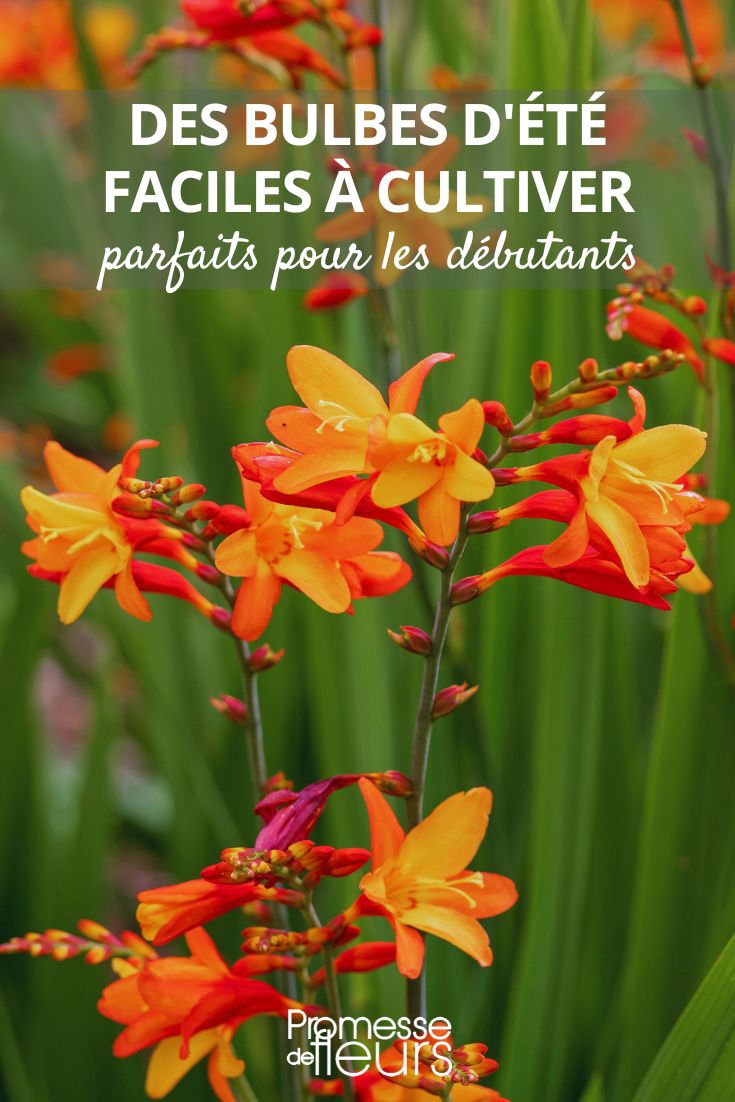
Crocosmias or Montbretias are bulbous plants with vivid colours, which inevitably add a touch of exotica to the garden, on the terrace or balcony. They enliven the whole summer with their small funnel-shaped flowers in orange, yellow or red hues, always flamboyant. For example, ‘Lucifer’, a variety that reaches about 1 metre in height and rewards us with scarlet-red flowers, or ‘Fire King’ with its bicolour flowers.
Their slender foliage also adds structure and volume.
They are ideal for borders, but also for flowering pots and colourful bouquets.
Easy to grow, they require a sunny exposure in light soil (which prevents water from stagnating) and to stay moist, i.e., never completely dry out. Apply organic fertiliser at planting time. During the summer, you will simply need to water in the absence of rainfall. Mulching helps to space out the watering. Crocosmias have the advantage of being relatively resistant to pests. Their roots will sink deeper into the soil over time, making them hardier with each passing year.
Originating from South Africa, this bulbous plant has retained a degree of hardiness. The frost-sensitive species do not tolerate temperatures below -7°C, but others can withstand down to -15°C. They can, however, be grown in pots in regions with harsh winters.
To learn more about their cultivation, see our dossier: Crocosmia, Montbretia: planting, cultivation and maintenance
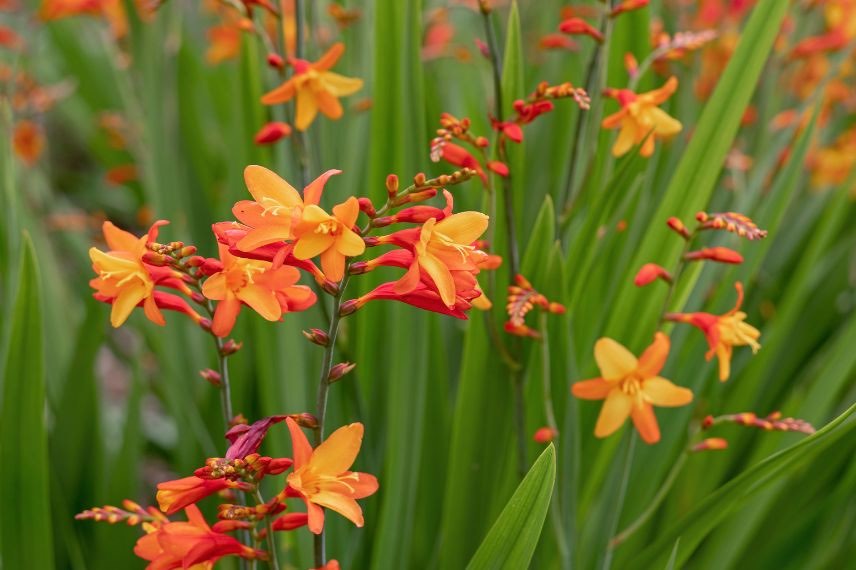
Crocosmias, small single bulbs in shades from yellow to red
Read also
6 summer bulbs with fragrant flowersLilies
Lilies are renowned for their large, beautiful flowers with a particularly refined look. They are trumpet-shaped, bell-shaped or star-shaped, always bearing broad petals and prominent stamens. They are also recognisable by mottled or spotted markings borne by most of them. In terms of colour, the palette is wide: from white to red, via orange, yellow or pink. There are also darker colours, purple or even almost black among the striking Lilium ‘Netty’s pride’. We should also mention other varieties with multiple nuances in contrast, such as Lilium nepalense or the hybrid lily ‘Robert Swanson’.
Flowerings take place in summer, from June to September. Some are also quite fragrant.
Lilies are, of course, excellent cut flowers, which will instantly add a touch of elegance.
For their cultivation, provide a substrate rich in organic matter and light. You can certainly grow them in pots if you choose compact varieties, though watering will need to be more regular. Provide them with a sunny or lightly shaded exposure, sheltered from the wind. In summer, maintenance is limited to watering to keep the soil moist. To encourage flowering, you can simply cut faded flowers.
Lilies have the major advantage of being hardy summer bulbs, able to withstand frosts of -15 to -20°C. Therefore, there is no need to shelter them or lift bulbs in autumn.
To learn more about their culture, discover our dossier: The Lily: planting, cultivation and maintenance.
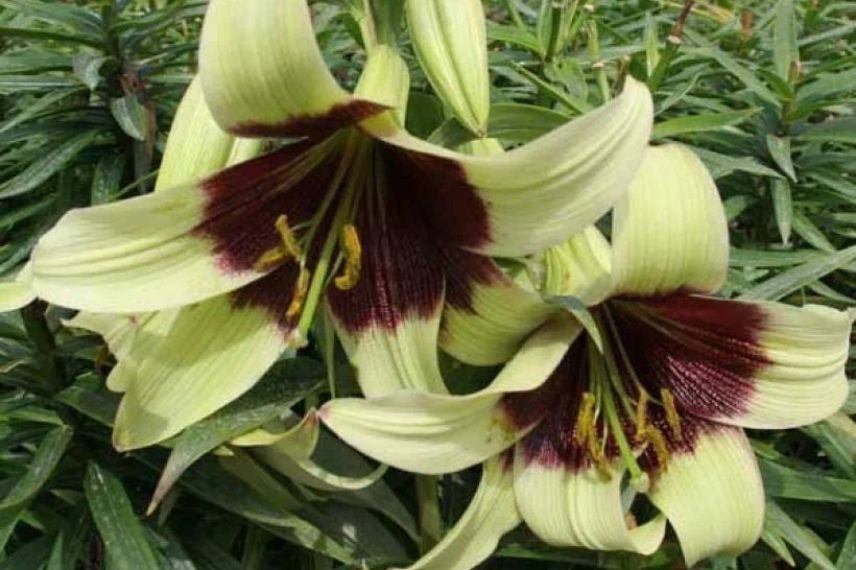
The Lillium nepalense with contrasting bi-coloured flowers
Eucomis
This is a summer bulb with an astonishing appearance, still little known despite its ease of cultivation. If Eucomis is also known by the name “pineapple flower,” it is because of its exotically showy flowering that indeed recalls the famous fruit. This bulbous plant forms a rosette of glossy, luxuriant leaves, sometimes tinged purple or burgundy. The small star-shaped flowers appear in summer. They are gathered in clusters, enhanced by a small tuft of foliaceous bracts that gives them this exotic look. Their colours can be white, red, pink or green.
These bulbous plants will fit easily into borders, and of course also on patios or balconies.
Eucomis is an easy plant to grow, but also to propagate. It prefers a sunny or lightly shaded position, in light soil, in which water can drain away easily. They are hungry bulbs and should be planted in fertile soil, in which you have previously incorporated compost or a slow-release fertiliser. They can also be grown in pots, which makes it easy to bring them indoors in regions with very cold winters. Moderately hardy, they tolerate frosts down to around -6 to -9°C on average.
During summer, plan for watering during dry spells and periods without rainfall. There is no need to prune faded flowers, as they give way to decorative seed capsules. Finally, this is a plant relatively resistant to diseases or pests.
To learn more about their cultivation, discover our dossier: Eucomis or Pineapple Flower: planting, growing and maintaining
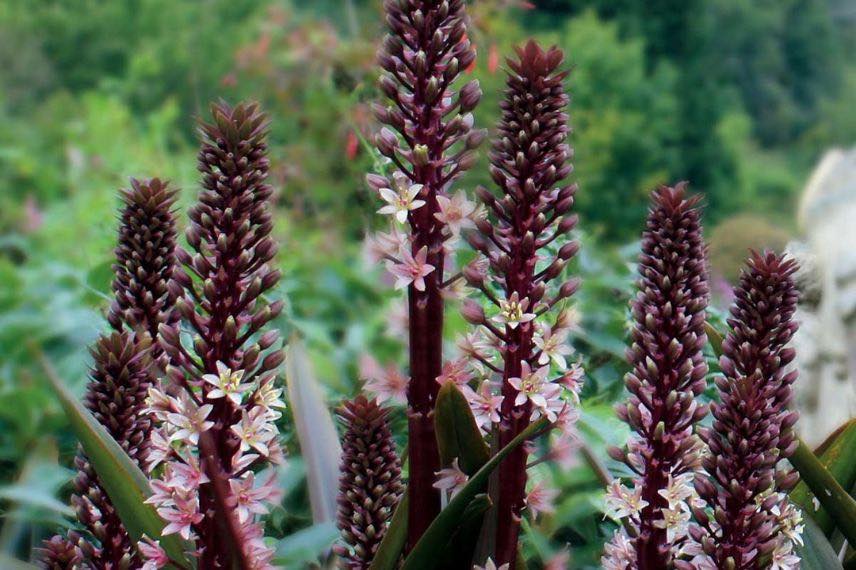
The dark colours of Eucomis’ spectacular flowers
Read also
Growing summer bulbs in potsDahlias
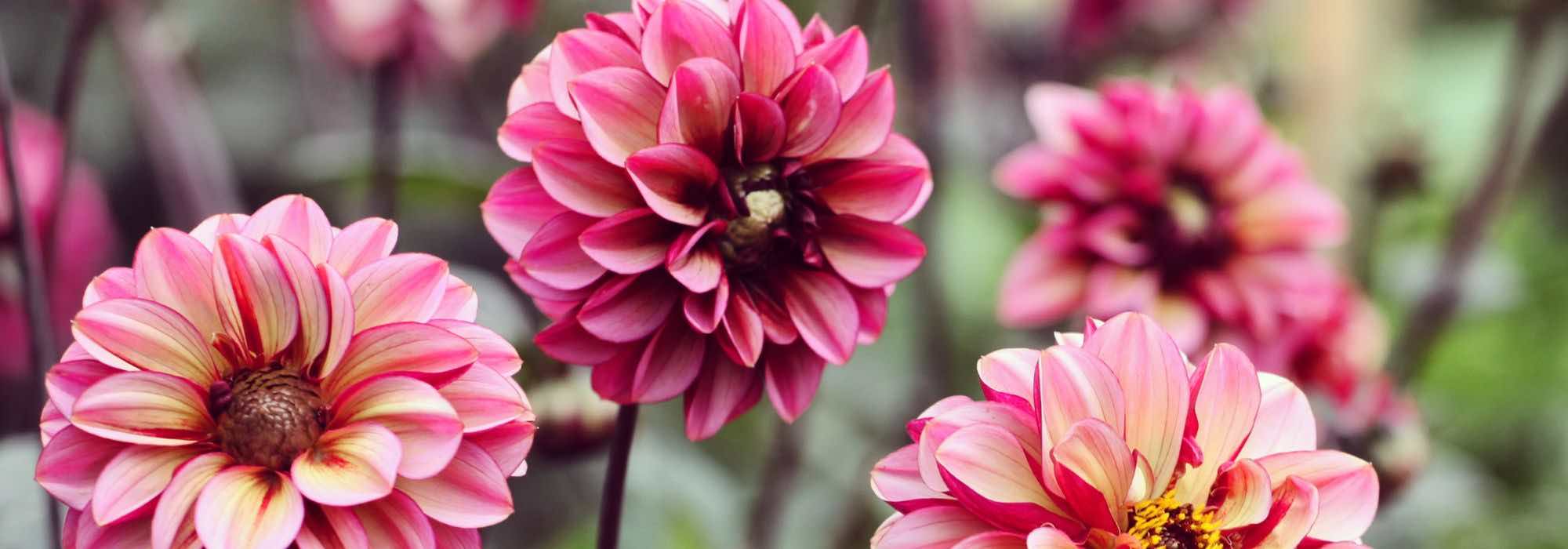
The dahlias are among those plants whose flowering seems almost endless! Generous and productive for many months, they brighten the garden throughout the summer, from June/July to September/October, or even longer as long as it doesn’t frost.
But they are also tuberous with a wide palette of varieties, which are distinguished by their flower shapes, colours and sizes (from 15 cm to 2 metres in height). We thus find fairly classic flowering forms (single flowers, anemone-flowered…), but other exuberant ones clearly do not go unnoticed due to their graphic form (orchid-flowered, ball dahlias, cactus dahlias…)
The dwarf varieties make for example a wonderful addition in borders, or in pots on the terrace and balcony. But dahlias are also perfect candidates for the cottage gardens, exotic borders, vegetable plots and the mixed borders. We advise choosing varieties that are not too tall, so you won’t need to stake them. All are ideal for cutting to create beautiful summer cut flower arrangements.
Culturally, Dahlias are somewhat more demanding than other summer tuberous plants. But they are worth devoting a little time to, and they do not present particular cultivation difficulties.
They thrive in full sun, in soil rich in organic matter. Simply add a base fertiliser at planting (horn meal or well-rotted household compost, for example) and work the soil so that it is not too heavy or compact. If needed, add drainage elements (sand, gravel, clay pellets…). Then, Dahlias require almost no maintenance: a mulch placed at their base will help retain moisture longer and space out the watering. If you want to encourage flowering, remove spent flowers as they appear (though this is not obligatory).
To overwinter them from year to year, they do, however, require a small action by the gardener if winter drops below -5°C: the tuberous roots must be dug up, then stored dry in a dark, well-ventilated place during the cold season.
To learn more about their culture, read our dossier: Dahlia: planting, maintenance and growing tips and our tutorial How to winter summer bulbs?
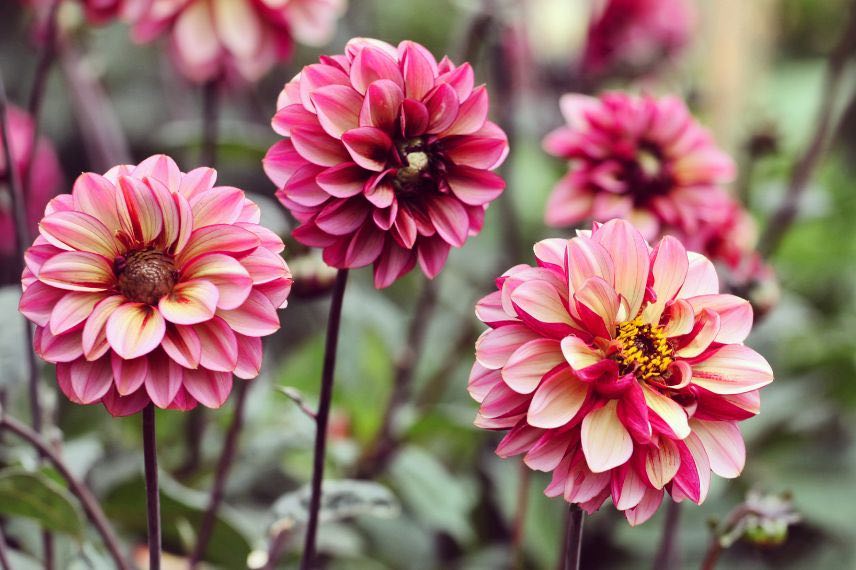
The dwarf dahlia ‘Senior’s Hope’
Gladioli
Gladioli are ideal candidates for creating cut flower arrangements, thanks to their tall flower spikes. They offer us a wide diversity of colours, from the softest to the most vibrant. They range from the purest white, as seen in ‘White Prosperity’, to the most extravagant multicoloured tones, such as Gladiolus Far West or ‘Circus Club’. Also note gladioli with red, pink, mauve, salmon, or even lime-green colours (‘Green Star’). You will surely find a colour that makes you swoon!
Their flowering generally lasts all summer, from June to October.
They are bulbous plants that sit very well at the back of a border. They like sun and warmth, but can be grown in partial shade in the gardens of southern France. Provide them with a position sheltered from prevailing winds, which could damage the flower stems.
As with most bulbs, gladioli require well-drained soil so that moisture does not stagnate and risk rotting them. If your soil is heavy and compact, simply add sand or gravel at planting time. To meet their needs, also apply organic fertiliser. During flowering, water them regularly. Be careful not to water the foliage to limit the risk of developing cryptogamic (fungal) diseases.
Gladioli are frost-tender plants (hardiness varying from about -5°C to -12°C depending on the varieties). Just as with dahlias, their corms (storage organs resembling bulbs) should be dug up and kept dry in regions with harsh winters.
To learn more about their culture, discover our guide: Gladioli – planting, growing and maintaining.
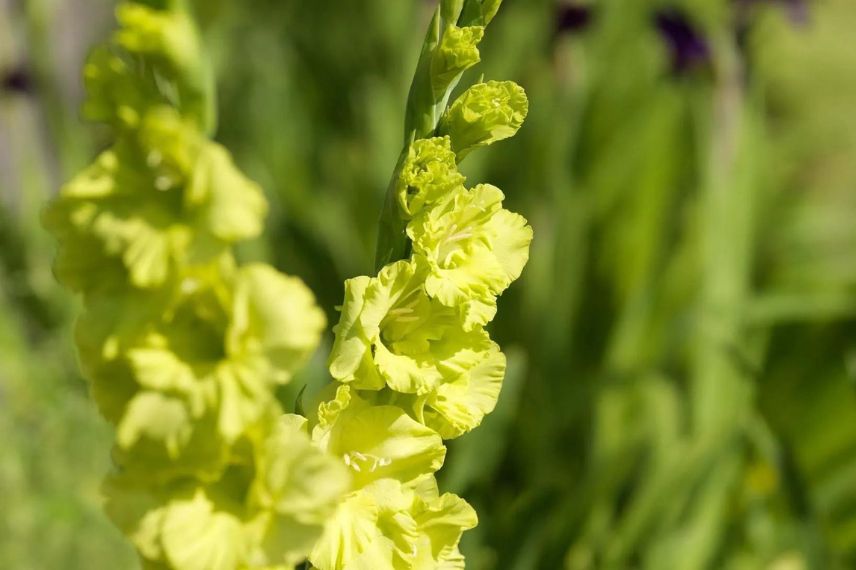
Gladiolus ‘Green Star’
- Subscribe!
- Contents
Comments