


Giant pumpkins: the art of growing to extraordinary sizes
Everything you need to know about these pumpkins that break all records
Contents
In the small, tranquil world of the vegetable garden, some vegetable plant species and varieties defy belief to become real fairground spectacles! Even entries in international competitions. They are the giant squashes that, every year, attract media attention. It must be recognised that these cucurbits reach truly exceptional dimensions, sometimes not far off the size of a small car. But behind these garden behemoths lie enthusiasts who push genetics and gardening to the extreme. Cultivation of these giant squashes requires total commitment and absolute precision, from seed selection to millimetre-perfect transport for the weigh-ins at autumn exhibitions.
Enter the fascinating world of giant squashes to understand everything about these exceptional cucurbits.

Giant pumpkins, the stars of gigantism
More than mere vegetables, giant pumpkins are genuine phenomena that defy gravity and reason. Beyond their genetics, they are the product of intensive cultivation pushed to its limits. These garden behemoths embody excess in their own right and certainly pique the curiosity of gardeners, or the public flocking to competitions around the world.
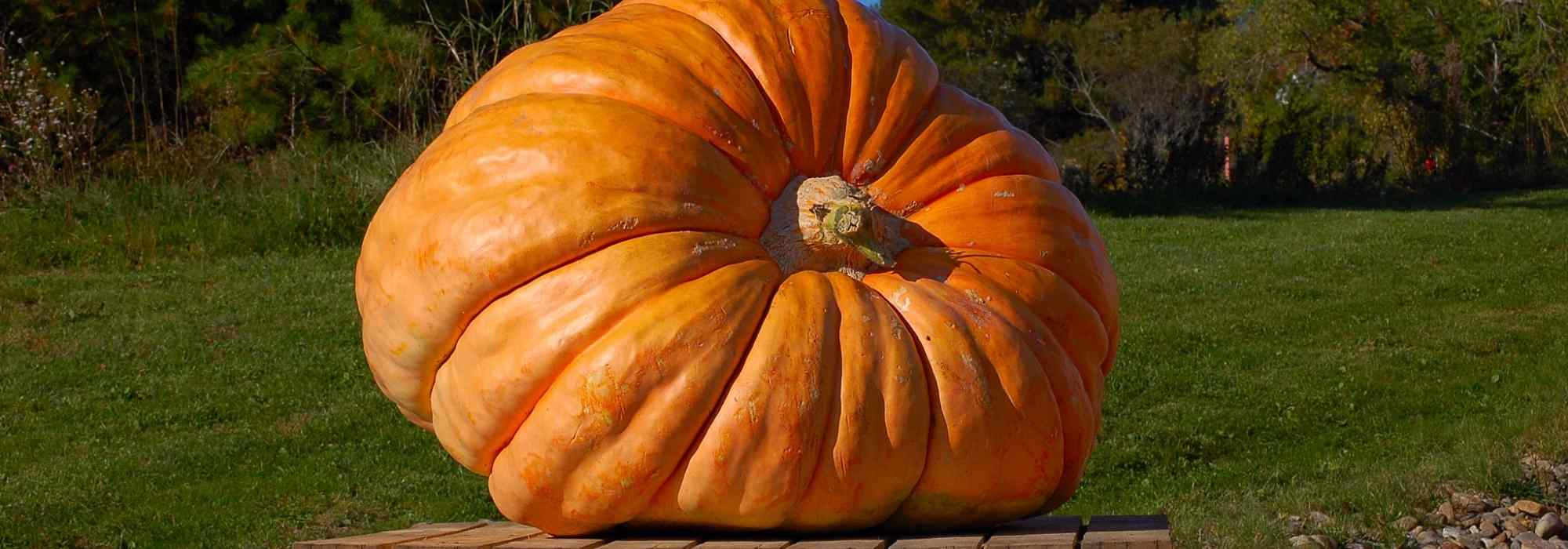
Some species and varieties of pumpkins naturally reach extraordinary dimensions. They carry gigantism in their genes. Science and the gardener’s passion do the rest… That said, the world of giant pumpkins is dominated by a single species and its cultivars, namely the aptly named Cucurbita maxima:
– ‘Atlantic Giant’ : this is the best-known variety and the most used for giant pumpkin competitions. This variety can reach 1000 kg under optimal growing conditions. Its flesh is very thick, usually pale orange in colour
– ‘Big Max’ : a very popular variety whose fruit can reach 30 to 50 kg
– ‘Goliath’ : a pumpkin of the ‘Atlantic Giant’ type that averages 20 to 30 kg, but can climb to 70 kg
– ‘Jaune Gros de Paris‘ : a traditional pumpkin that can produce fruits around 20 to 50 kg, with thick flesh, ideal for soups
– ‘Rouge Vif d’Étampes‘ : a relatively well-known pumpkin variety, offering fruits that are flattened in shape with red-orange skin. Weighs up to 10 to 30 kg
– ‘Bleu de Hongrie‘ : a pumpkin variety with bluish-grey skin, reputed for its tasty flesh. Fruits can reach 10 to 30 kg
– ‘Pink Jumbo Banana‘ : a banana-shaped pumpkin variety that can reach 30 kg
– ‘Blue Hubbard‘ : a pumpkin variety with blue skin, very thick and hard to peel, reaching 5 to 10 kg.
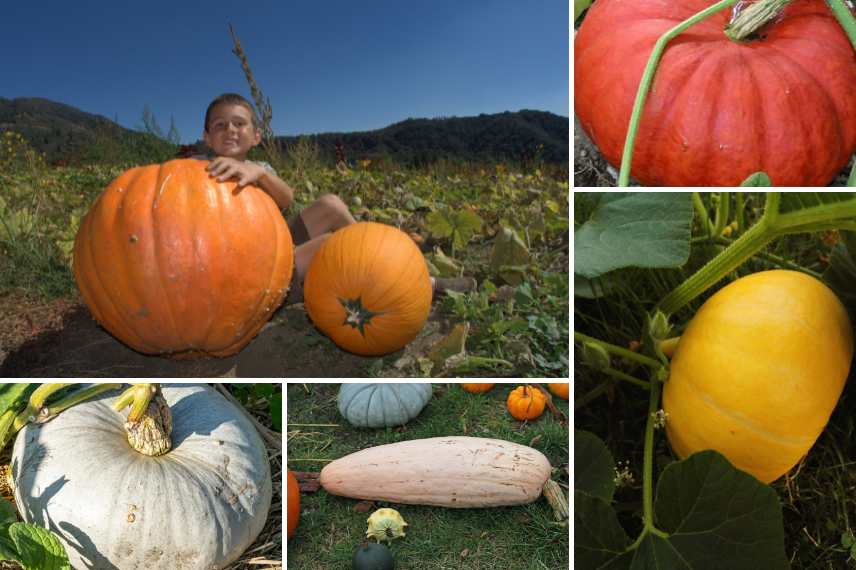 In clockwise order, the pumpkins ‘Atlantic Giant’, ‘Rouge Vif d’Étampes’, ‘Jaune Gros de Paris’, ‘Pink Jumbo Banana’ and ‘Blue Hubbard'</caption]
Less prone to producing weight records, some varieties of Cucurbita moschata also yield handsome fruits. As with the ‘Musquée de Provence’ which offers large ribbed fruits, brown-ochre at maturity, and can still weigh up to 20 kg.
Giant pumpkin growing: a science of excess?
The undisputed queen of giant pumpkins is the variety ‘Atlantic Giant’, which has spawned almost all world records. But cultivating such a variety, capable of breaking every record, is no simple undertaking. It’s a genuine discipline, almost a vocation, that demands constant attention and a substantial investment of time and resources. And this spans several months, from seed selection to harvest.
Seed selection and sowing
The journey begins with seed selection. If the ordinary gardener purchases a seed from commercial seed stock, the competitive grower seeks THE seed. They source seeds from pumpkins that have themselves set records, thereby guaranteeing maximum genetic potential. A single seed from a 1000 kg pumpkin can fetch a king’s ransom.
The sowing takes place very early, usually in a greenhouse or under heated shelter, from the end of March or early April, well before the last frosts. The seeds are planted on edge to prevent rotting, and the young plant is pampered to ensure a rapid start, requiring a stable germination temperature of around 20 to 22 °C. A specialist seed compost, kept consistently moist but not waterlogged, is ideal.
A perfectly prepared soil
The giant pumpkin is an extremely hungry plant. The soil intended to accommodate it must be prepared meticulously. It is enriched with organic matter (compost, well-rotted manure) and amended to guarantee perfect drainage. A giant pumpkin bed is often a raised, enriched growing bed, designed to maintain high nutrient levels throughout the season.
Transplanting into open ground takes place once all risk of frost is past, usually mid-May. The plant is installed in an enormous space: a record giant pumpkin can cover an area of 50 to 100 m²!
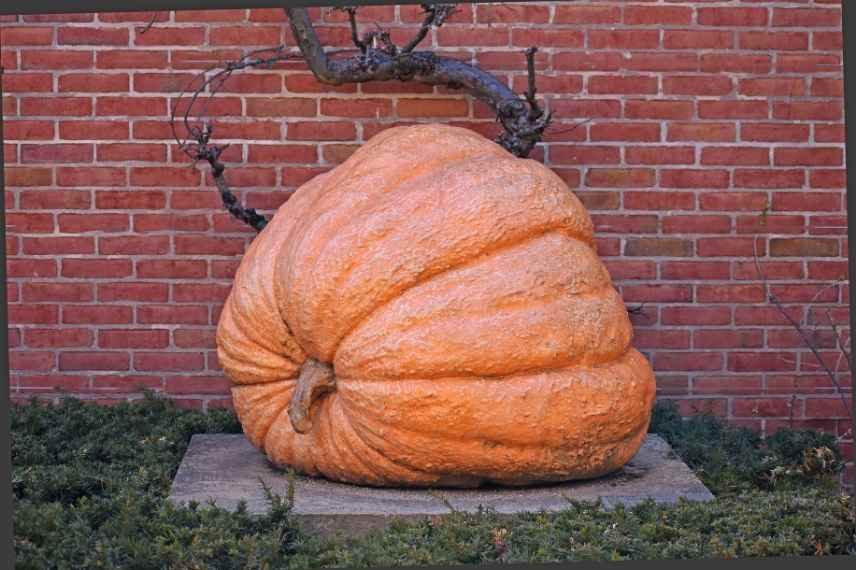
Giant pumpkins require exceptional growing conditions
The fruit selected by size
This is the crucial step, but also the most critical. To have a single fruit reach phenomenal weight, all of the plant’s energy must be directed towards it.
- To obtain a record fruit, the gardener performs manual pollination to ensure the fruit’s line and its earliest start in the season
- As soon as the fruits are formed, only one is kept per plant, ideally the first or second female fruit, positioned on the main stem at an optimal distance of 3 m to guarantee maximum sap flow
- All other flowers and fruits are removed ruthlessly. Secondary shoots are cut after a few metres. It is possible to bury them to form new rooting points.
Watering and fertilisation
Quite logically, giant pumpkins have astronomical needs for water and nutrients. Reflecting their size.
- In summer, watering must be regular and abundant, at around 100 litres of water per week. Any water stress can halt growth
- The record-seeking gardeners create real fertilisation programmes, adjusted daily according to the fruit’s growth. In any case, at the very start, the giant pumpkin requires a nitrogen-rich fertiliser for vegetative growth, then a phosphorus- and potassium-rich fertiliser for the development of the fruit.
Spectacular growth of giant gourds
During the peak phase, often between 40 and 80 days after pollination, growth is so rapid that it is visible to the naked eye. A competition pumpkin can reach up to 15 to 25 kg per day! This is when show growers measure the fruit daily, typically measuring its circumference along a horizontal axis and a vertical axis, to calculate its estimated weight. It is said that you may sometimes hear the pumpkin crack or creak as a result of its rapid growth.
The competition, the culmination
The pinnacle of the year for those who grow pumpkins for their gigantism is the weigh-off season. Gardeners gather to showcase the fruit of their labour and compete for the title of the heaviest pumpkin. But before the competition, the transport of the phenomenon must be arranged!
Moving a pumpkin weighing several hundred kilograms is a logistical challenge. Special straps, winches, customised trailers and forklifts are required. The pumpkin must be handled with extreme care, as a crack can disqualify it. Once on the official scales, the emotion is palpable, and the result is certified by international bodies such as the Great Pumpkin Commonwealth (GPC).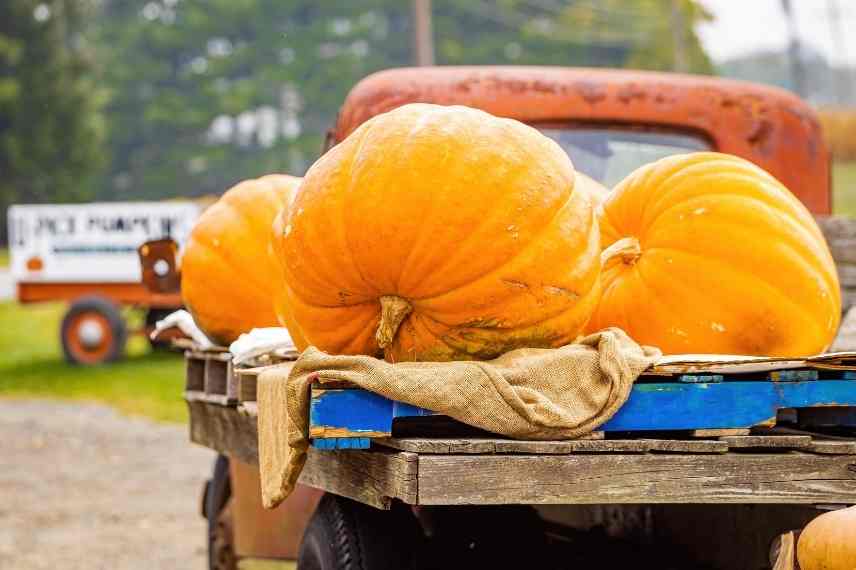
The world record for the largest pumpkin is continually being broken. From 2023, it was held by Travis Gienger in Minnesota with an Atlantic Giant weighing 1,246.9 kg. But this record fell on 4–5 October 2025. The twin brothers Stuart and Ian Paton, from Lymington in New Hampshire, United States, have been recognised as the world’s largest pumpkin with their 1,278 kg and a circumference of 6.4 m. A milestone for these two brothers who have been growing pumpkins for over 50 years. And the growth figures are just as impressive: 500 litres of water per day, a 131-day development period, and a growth of 32 kg per day during the first two weeks…
And after the contest, what do we do with the giant pumpkins?
What happens to giant pumpkins after the competition? Are giant pumpkins edible? These are often the questions asked by spectators at fairs and festivals where these giant pumpkins are displayed.
These exceptional pumpkins are edible, but their culinary quality is often disappointing compared with smaller varieties that are higher in sugar. Thus, the ‘Atlantic Giant’ features a very thick flesh, often stringy and watery. It is typically used for soups and purées. Varieties such as the ‘Jaune Gros de Paris’ or the ‘Rouge vif d’Étampes’, although less massive than the Atlantic Giant, are highly valued by chefs for their abundant flesh and their relatively mild flavour, perfect for soups and stuffings. The ‘Musquée de Provence’ is, for its part, prized for its thick, firm flesh and its sweet and musky, highly fragrant flavour.
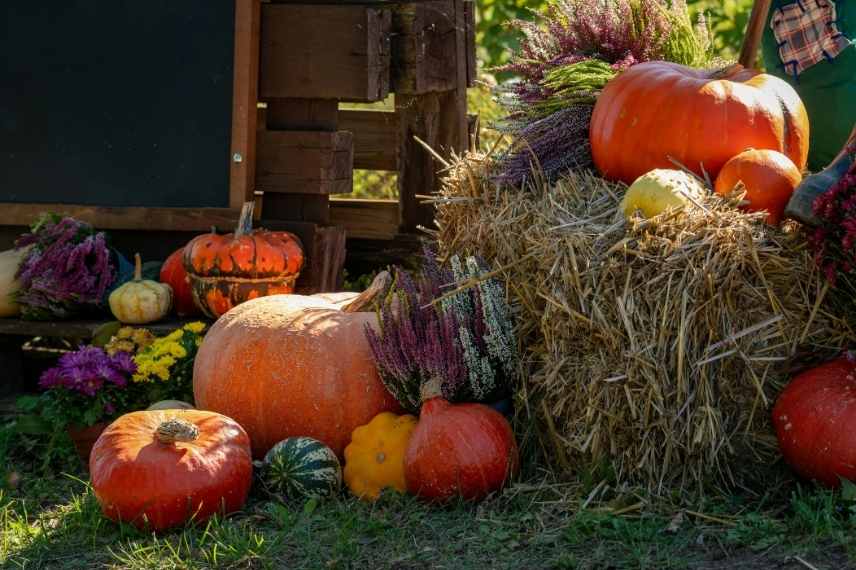
In competitions, the fate of pumpkins can vary: some are displayed for decorative or educational purposes, others are turned into giant soups for charity events, and some are donated for animal feed.
- Subscribe!
- Contents
Comments