





























Growing gooseberry: when, where and how?
Everything you need to know about planting and caring for this small fruiting bush.
Contents
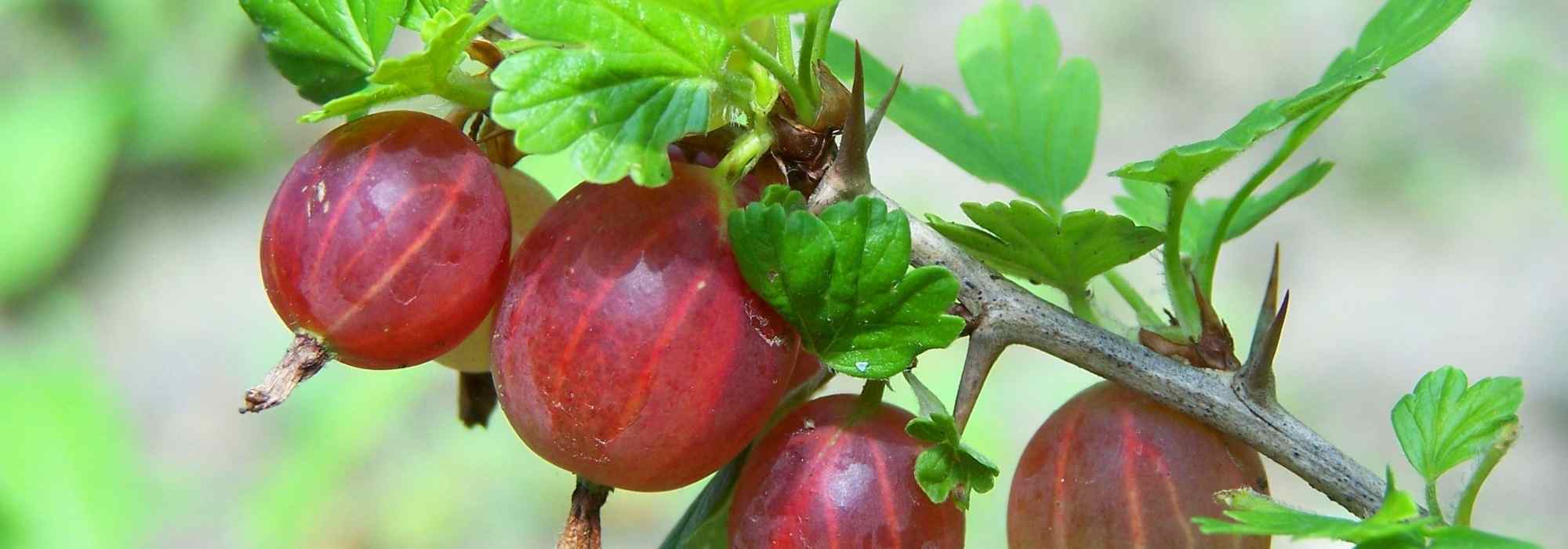
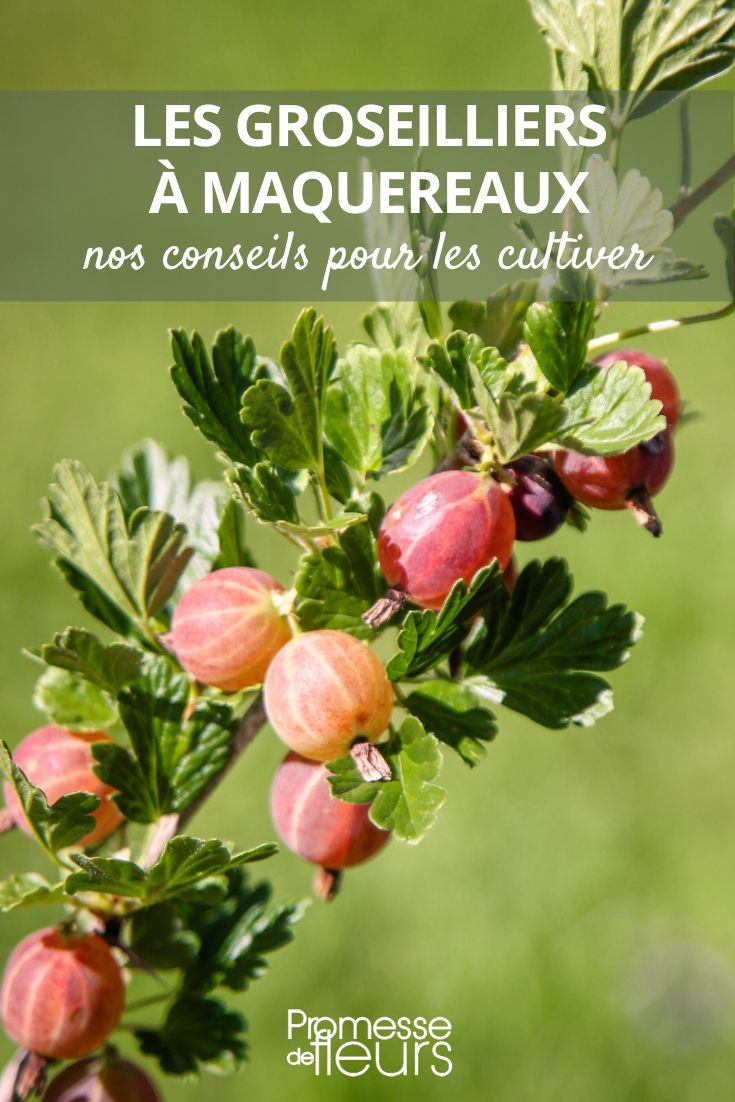
A milder flavour, between tart and sweet, with fruits larger than plain gooseberries… Certainly, gooseberries (Ribes uva-crispa) deserve a place on our dessert plates. Even though the British, as well as the French, from the 17th century used these small, perfectly round berries, with marbled and downy skins, pink, red or pale greenish-white, to make a sweet-and-sour sauce that accompanies mackerel. Nevertheless, gooseberries are also delicious in sweet preparations, jellies and jams, or even incorporated into desserts.
As for the shrub, it is very easy to plant and to maintain, in the kitchen garden, or in an ornamental garden, as a fruit hedge or even as a defensive hedge. For the gooseberry bush, often called the thorny gooseberry, the plant has the characteristic of bearing spines at the base of the petioles of the deciduous, trilobed and dentate leaves.
Discover all the secrets of planting and caring for the gooseberry bush to achieve fine harvests.

What exactly is a gooseberry bush?
The gooseberry bush (Ribes uva-crispa) is a species of fruiting shrub closely related to the gooseberry and currant. Not particularly ornamental, this bush displays a whitish-green flowering that is very discreet, from March to April. It is, however, a fruiting shrub in the Grossulariaceae family of great value, as it produces berries that are round and translucent, very rich in vitamins, with a flavour much milder than currants. Lightly sweet, these solitary berries conceal a very mild acidity, rather pleasant on the palate.
There are numerous varieties that, at first glance, differ mainly by the colour of the fruits, ranging from yellow-green to pink and red. Note that the gooseberry bush is self-fertile and can bear fruit as a solitary plant. Nevertheless, planting other plants nearby always promotes fruiting. 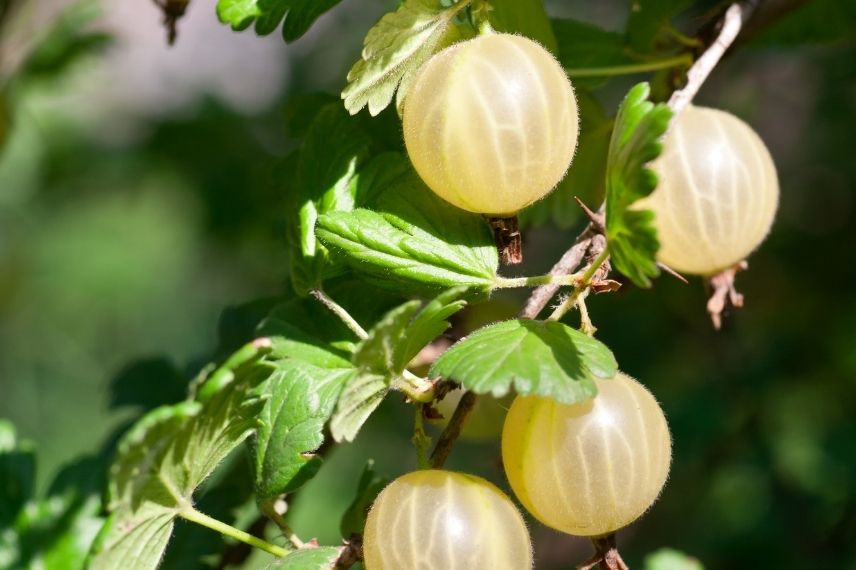
The only drawback of this gooseberry bush lies in its thorny habit. A characteristic that makes harvesting the fruit more difficult, but is easily forgivable given the deliciousness of these very fruits. The deciduous foliage shows a green colour that ranges from light to dark. Covered with a fine down, these leaves are dentate and trilobed, and notably bear a thorn at the base of the petiole. This shrub with a slightly flattened habit tends to grow horizontally and rarely reaches 1 m in height. Its branches often spread under the weight of the fruit, which forms on both the current-year wood and older shoots.
Hardy to temperatures well below -20°C, this gooseberry bush thrives particularly in northern and eastern regions or in gardens set in mountainous zones. In contrast, southern heat does not always suit it. Gooseberry bushes need winter chill to fruit well. And if summers are somewhat humid, that’s even better!
Read also
Choosing the right gooseberry bushWhere and when to plant this fruit-bearing bush?
The gooseberry bush is a fairly hardy fruiting shrub, easy to grow and with excellent hardiness. It can find a place around a vegetable plot or an orchard, or in a border or hedge.
When to plant?
Generally, the planting of the gooseberry bush takes place from October to March, of course during frost-free periods. It is also best not to plant in waterlogged soil. In autumn, planting should therefore be between October and November, especially if your shrub is sold as bare roots. This planting period allows the shrub to establish itself well over winter, and, as spring returns, it will take off again. In spring, planting can be done between February and March.
Where to plant it?
The gooseberry bush prefers ordinary soils and deep clay soils. It will tolerate sandy soil provided it is well-watered. However, heavy, waterlogged soils, or calcareous soils, are not suitable at all. Finally, the soil should be firm but crumbly, perfectly drained, and especially cool, particularly in summer.
In terms of exposure, the gooseberry bush prefers sun in regions with temperate summers. However, in regions where the sun is scorching in summer, it is better planted in partial shade. Indeed, the gooseberry bush really fears drought due to its shallow root system.
The gooseberry bush can easily find a place in any corner of the vegetable plot or border, thanks to its modest size. It will also thrive in an edible hedge, spaced 80 cm to 1 m apart, alongside gooseberries, jostaberries or blackcurrants. It can also be integrated into a defensive hedge.
The gooseberry bush can be grown as espalier or as a spindle.
How to plant a gooseberry bush?
In the ground, gooseberry bushes sold in containers or as bare roots can be planted easily. The latter option proves more economical, especially if you want to establish a long fruit-bearing hedge.
Planting in the ground
- Dig a hole twice as wide as the root ball, having first prepared the soil well and removed all weeds
- If your bush is in a container, place the root ball in a bucket of water to moisten it and ease removal. If your bush is bare-root, lightly trim the ends of the roots by about one centimetre and coat them in a mixture of one-third garden soil, one-third manure and one-third rainwater
- Mix the soil excavated from the hole with compost and a handful of crushed horn, an organic, nitrogen-rich, slow-release fertiliser
- Plant the gooseberry bush in the hole ensuring the collar sits slightly below soil level. Plants should not sit too high on the surface, to ensure good rooting and better renewal of the shoots
- Fill the hole with the soil mix
- Firm the soil to remove air pockets
- Water generously.
Espalier planting
Some gooseberry varieties adapt very well to trellising. It is enough to plant stakes 1.5 m tall between the gooseberry bushes, then run wires at heights of 0.5 m, 0.9 m, 1.3 m and 1.7 m. Then simply fix 4–5 branches to the wires so they are supported, without binding too tightly.
Pot planting
Growing a gooseberry bush in a pot is possible on a balcony or terrace. But growth and fruiting will not be optimal. You will need to plant your bush in a substrate made from garden soil, potting compost and a little sand, in a pot whose bottom is lined with clay balls.
Read also
How to propagate gooseberry bushes?How to care for beautiful gooseberries?
Gooseberry bushes are relatively easy to care for. They require a few simple steps to yield a plentiful harvest:
- Water regularly to keep the soil moist. Watering should be increased in summer, during heatwaves or periods of drought. Be sure to water at the base without wetting the foliage.
- Install a good mulch to keep the root zone cool. Mulching can be done with dead leaves, with RCW or with pine bark.
- If you do not mulch, you must keep the soil clean to prevent the spread of fungal diseases.
- An special soft fruit fertiliser is recommended in spring when growth resumes. You can also add a little compost or well-rotted manure at the base of the shrub.
- The first year, in February, prune back by half the 4 to 6 shoots starting from the base to thicken them. Then, each year, at the same time, shape the shrub to balance it by pruning the shoots so that they are of equal length. Also remove excess growth and air the centre of the clump. Similarly, pinching the tips of the shoots helps to thicken the shrub and ramify the ends. Every five years, rejuvenate the main branches by cutting them back to the base or just above a bud pointing outward.
- Install a bird protection net before the fruit ripens
- Monitor carefully for any risk of disease such as downy mildew or powdery mildew. As a preventive, you can spray a horsetail decoction. Likewise, the gooseberry bush can be attacked by sawflies. You can read my article to learn how to combat them: Sawflies: all you need to know about these false caterpillars.
Harvest: when and how?
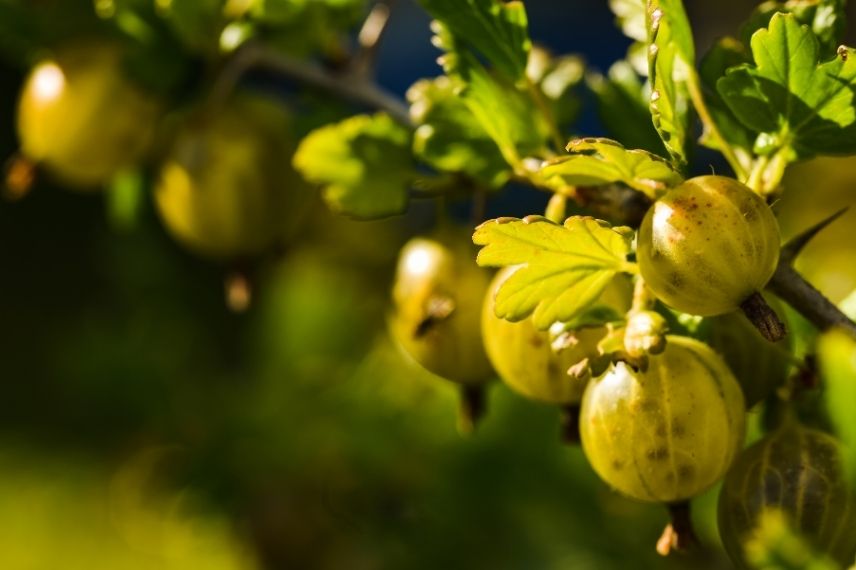
Fruits destined for cooking are usually picked while still green from mid-May. They are said to be picked at veraison. They contain little acidity at that stage and do not need to be as sweet as when picked at full ripeness. These fruits are cooked into compote, jelly or jam.
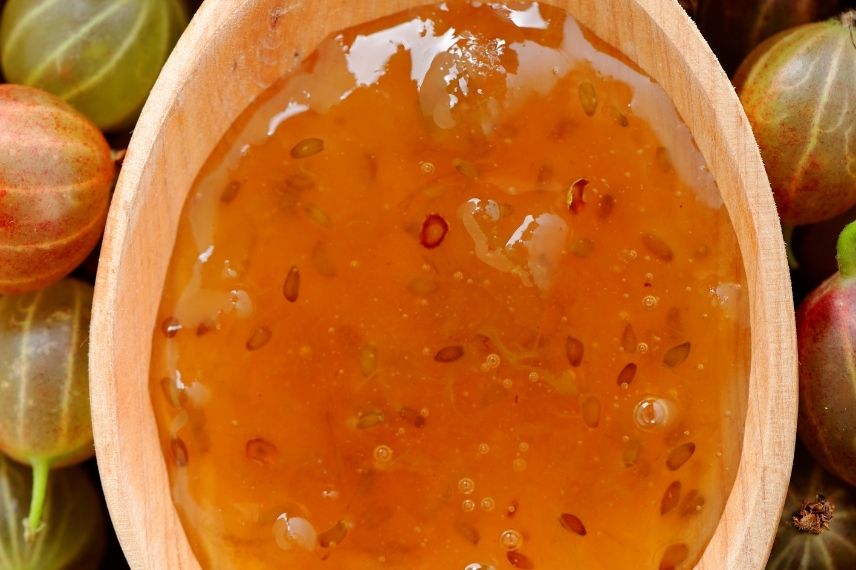
Gooseberry jam
Fully ripe fruits are harvested between July and August, once they are well coloured and slightly soft. They are picked one by one, by hand, with gloves, as the thorns can be dangerous. They break down immediately when cooked and their aroma is very fragrant. These gooseberries can be eaten fresh or as an accompaniment to fish or meat.
If you want to make harvest easier, choose to plant spineless varieties such as ‘Captivator’ with large red fruits or less thorny ones such as ‘Freedonia’.
- Subscribe!
- Contents
Comments