


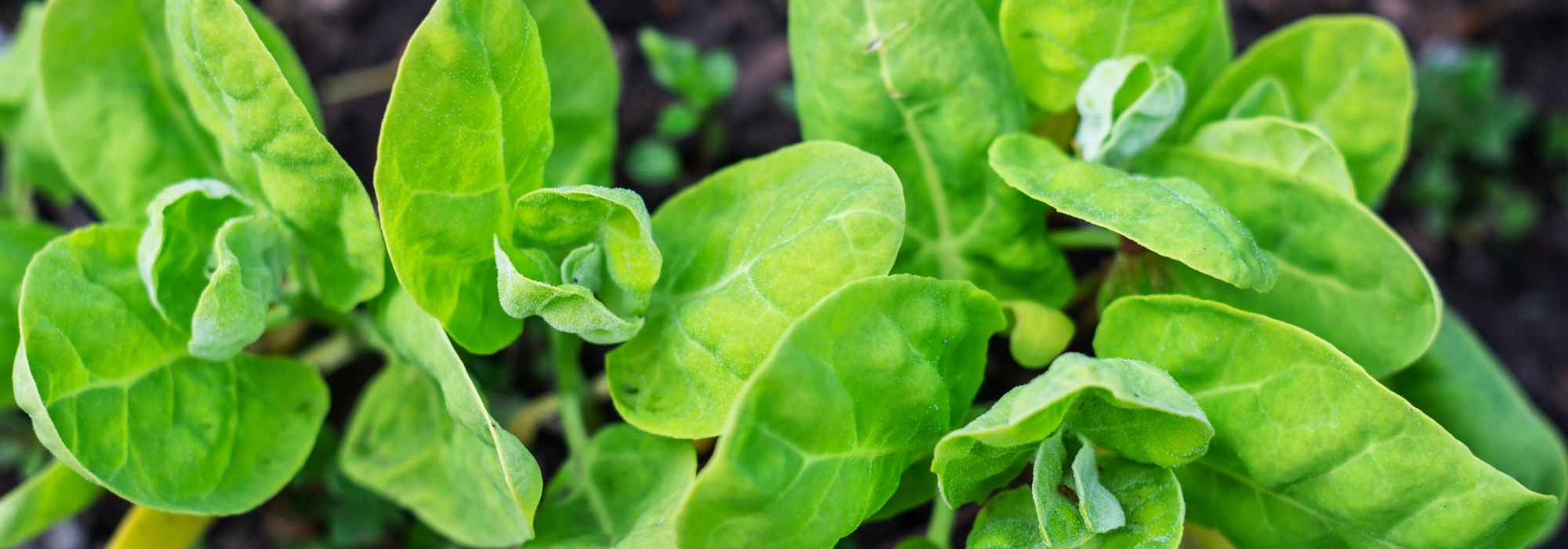
Growing orache, an ancient vegetable with a spinach flavour
Our tips on orache, also known as false spinach: sowing, care and harvest
Contents
If you like spinach, you’ll love orache (Atriplex hortensis), commonly known as the false spinach. It is, moreover, a very interesting summer alternative when heat causes spinach to bolt. Indeed, orache grows as quickly as spinach, but the leaves of the main stem and the secondary stems stay tender and edible. However, like spinach, orache contains oxalic acid, problematic for people prone to kidney stones, but in smaller amounts. That is why gardeners should not miss out on this edible garden plant, widely eaten in the Middle Ages and later fallen into obscurity, supplanted by spinach. For it has quite a few advantages: very easy to grow, orache is also very decorative with its red, golden or green leaves. As for its tall stature (nearly 2 m), it provides shade for other vegetable plants that dislike hot weather.
Convinced by the virtues of orache? Then discover everything you need to know about sowing, care, harvest and the consumption of its succulent leaves, with a flavour slightly milder than that of spinach.
For more information: Orache: sowing, growing, harvest

What exactly is orache, that edible garden plant?
To introduce garden orache (Atriplex hortensis), let’s begin by addressing its French nicknames: “belle-dame”, “bonne-dame”, “chou d’amour”, “épinard géant” or “faux-épinard”. In other words, these vernacular names reflect the virtues of this vegetable plant from the Chenopodiaceae family, now included among the Amaranthaceae. Orache is thus a close cousin of other vegetable plants such as beetroot (Beta vulgaris), the goosefoot (Chenopodium album), spinach (Spinacia oleracea) or quinoa (Chenopodium quinoa). It is therefore an herbaceous annual plant with an erect habit that can reach 1.80–2 m in height. Orache has upright, angular and branched stems.
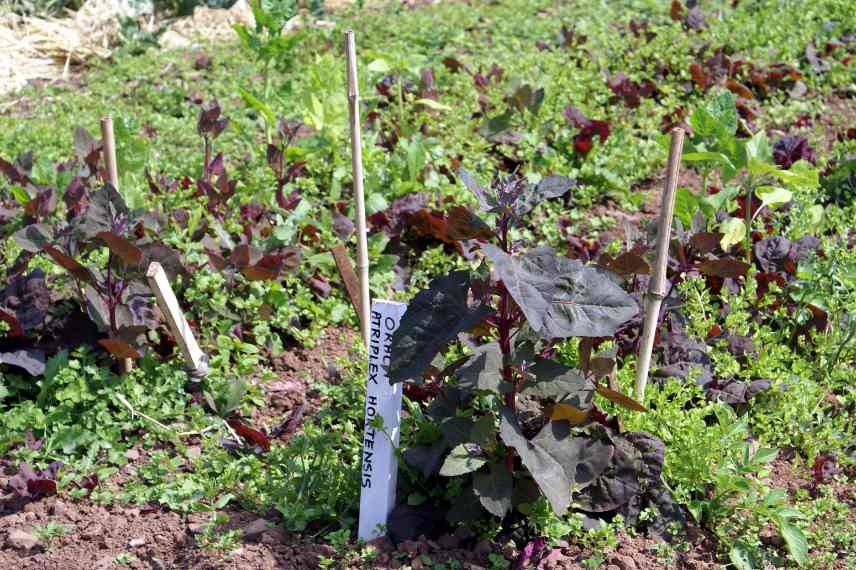
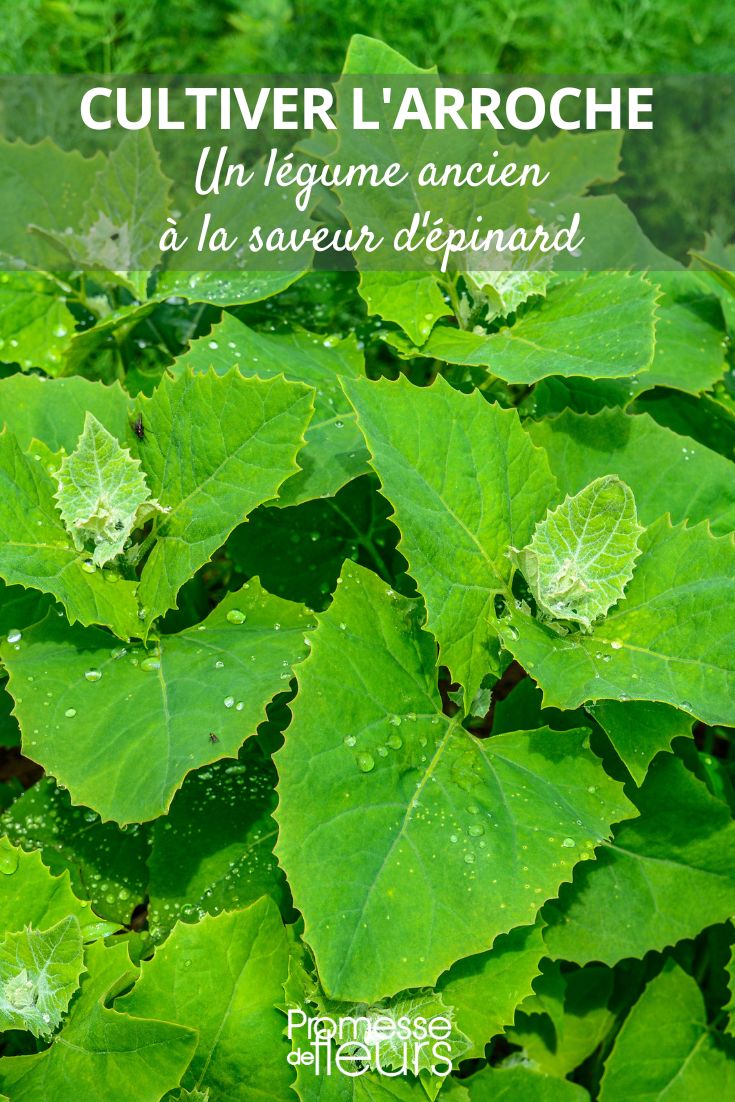
Orache (Atriplex hortensis) benefits from rapid growth
Originating from Central Asia, orache was very popular and widely consumed in medieval Europe. It is mentioned in the Capitulary of Villis. But in the seventeenth century, spinach relegated it to second place due to its stronger flavour. However, gardeners continued to cultivate it until the nineteenth century, when it disappeared from vegetable gardens. Considered an ancient and forgotten vegetable, orache is now back in the limelight. It must be said that it can win over children who do not always enjoy spinach.
From a botanical point of view, garden orache has alternate leaves, ranging from oblong-oval to triangular-oval. The greenish flowers, grouped into terminal and axillary panicles, form a large panicle. They appear from July to September–October. They give rise to reddish seeds. Note that orache readily self-seeds too. It is also very easy to harvest its own seeds by cutting the stems at maturity and drying them in a sheltered place.
There are three varieties of orache:
- blonde orach, which offers leaves from yellow to pale green
- green orach
- ‘red orach, magnificent and decorative with its purplish to dark red leaves
How to sow orache?
Orache can thrive in poor soil, but its growth will be much better in fresh soil rich in humus, not calcareous. Soil enriched with a well-decomposed organic manure or with compost in autumn will be the panacea for this vegetable. It also loves soils that are well-worked and loosened, free of weeds and stones. Regarding exposure, it will be rather semi-shaded. Orache is fairly sensitive to heat and drought, which causes it to bolt. Nevertheless, it remains widely edible. This is also why it is grown more than spinach in southern regions.
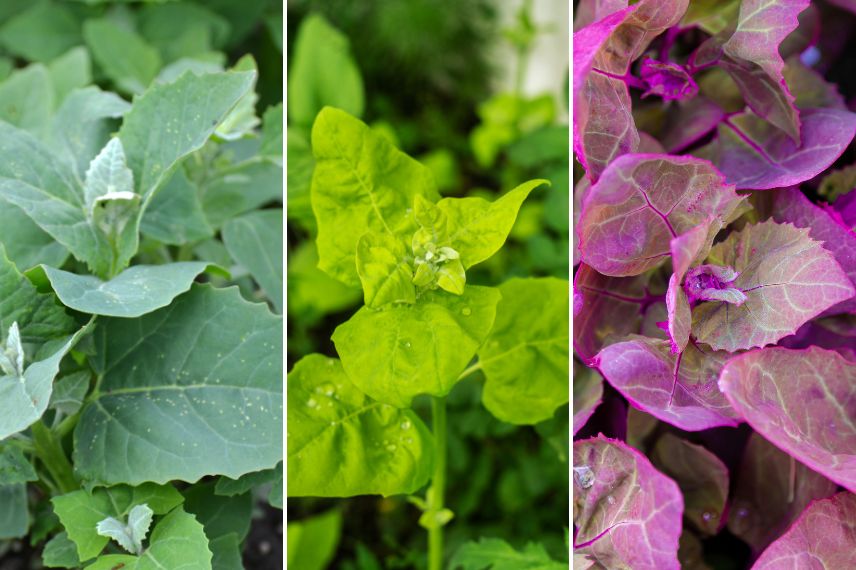
Orache exists in three varieties: green orache, blonde orache and red orache
Sowing is carried out in open ground from April to August, or as early as March in regions with a mild spring. It is also prudent to stagger sowings over this five-month period to ensure a continuous supply of leaves. Orache germinates at between 15 and 20 °C and benefits from very rapid growth. Sowing is done under a waning moon.
How to sow?
- Make furrows 40 to 50 cm apart and 1 to 2 cm deep
- Sow in rows and cover with a thin layer of soil
- Firm the soil with the back of the rake
- Water with a light spray.
Germination occurs after about ten days. When the plants have 4 to 5 leaves, it is essential to thin them out every 30 cm to keep only the strongest seedlings.
Orache is a good companion in the vegetable garden, as it provides shade for heat-sensitive vegetables such as salad leaves, the salads, the radishes, the turnips or beetroot.
Caring for orache
Orache is easy to grow. That is why it requires very little maintenance. But a few steps are needed to obtain a good harvest:
- Orache prefers moist soil, regular watering is essential. Especially as a lack of water will cause it to go to seed even more quickly.
- Hoeing and weeding should be just as regular.
- A mulch made from lawn clippings and dead leaves helps retain soil moisture and reduces the need for hoeing.
- To prevent going to seed and encourage branching of several stems, pinch out the tips of the stems as soon as the first flowers appear.
Harvest of dock leaves
Harvest begins in the second month after sowing, from May–June to October. The most tender leaves are picked as they grow, as needed. Older leaves are, however, still perfectly edible. By contrast, the leaves wilt very quickly and do not keep well for long. That is why they are consumed immediately after harvest. Leaves can, however, be frozen.
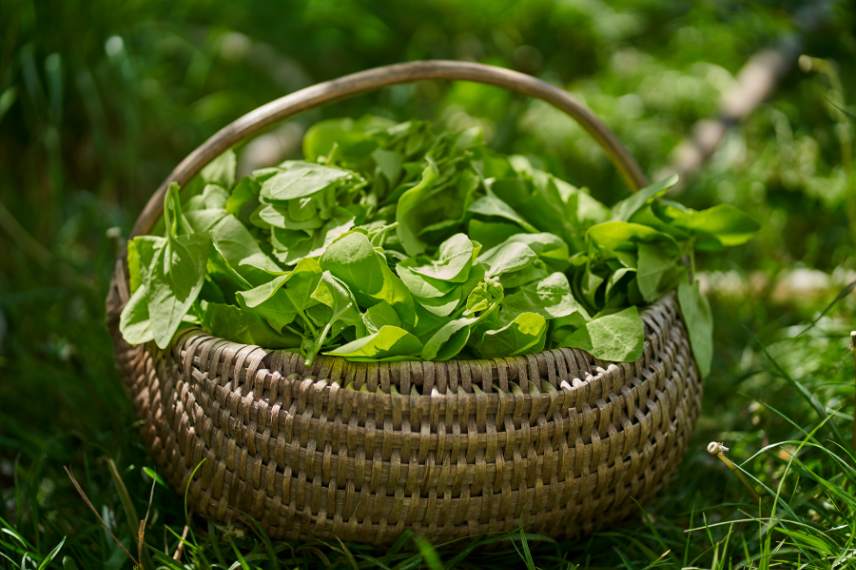
Orache leaves are harvested young for their tenderness
The advantage of orache is that it can be eaten throughout the summer. Spinach, by contrast, takes a break during the summer.
To harvest seeds, keep a few healthy plants from which you will not harvest the leaves after the flowers appear.
How do you prepare this ancient vegetable that tastes of spinach?
Orache is cooked like spinach. Leaves can already be eaten raw in a salad or a mesclun, with some rocket, spinach shoots, some purslane or orache to balance its acidity. Cooked, the leaves are prepared like spinach, simply sautéed in a pan or incorporated into a curry, a quiche, or served with a pasta dish.
Orache is a very interesting vegetable to enjoy for its fibre content, vitamin C and minerals, but also for its antioxidants (especially in the red variety). However, it also contains oxalic acid. This is why consumption should be moderate for people sensitive to kidney stones made of calcium oxalate. Orache is also known for its laxative and refreshing properties. In the past, its leaves were used in poultices for their emollient virtues. They also have a soothing action on insect stings.
- Subscribe!
- Contents
Comments