





























Growing nasturtiums in pots
Our tips
Contents
Planting nasturtium in pots is a great way to add a splash of colour and a touch of nature to your outdoor space, whether in the garden or on a small balcony. Easy to grow and low-maintenance, nasturtium is most often an annual plant, whose showy flowers attract pollinators. Its rounded leaves and flowers in a range of shades cascade prettily from hanging baskets. The flowers and leaves of nasturtium are edible and can be easily harvested from plants near the house or kitchen. In this article, we guide you through the essential steps to successfully grow nasturtium in pots, from choosing the container to the care required for abundant flowering.

Why grow nasturtiums in pots? Which species or varieties should you choose?
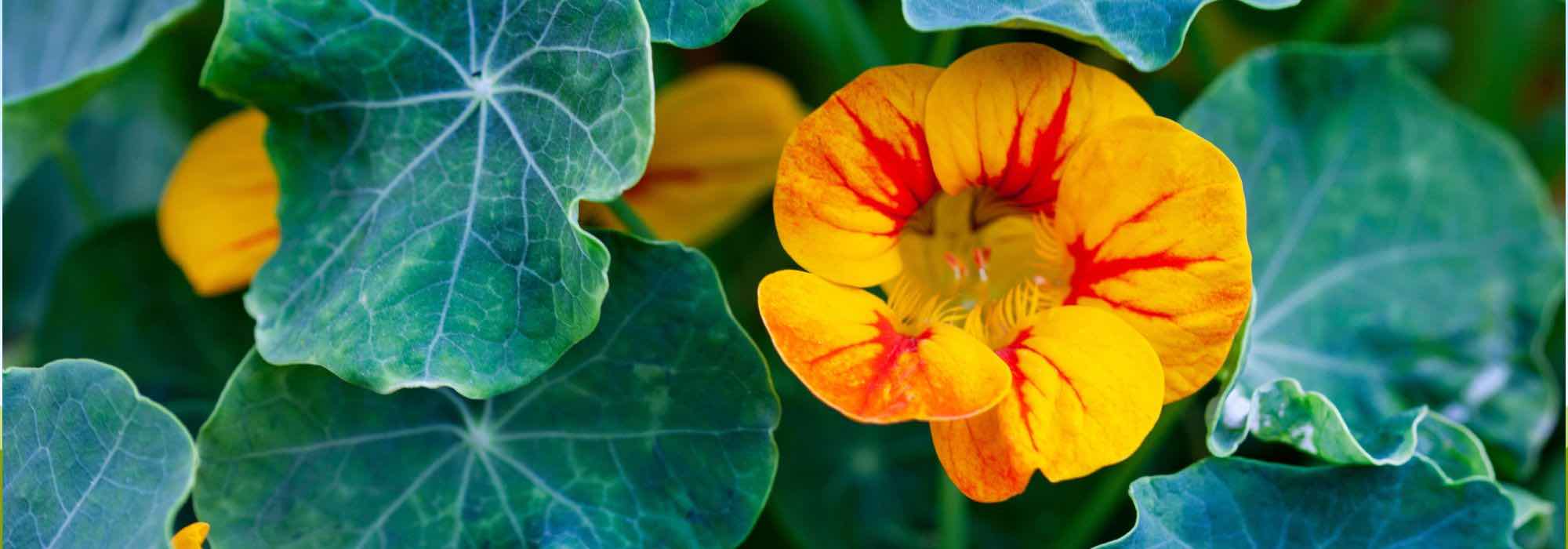
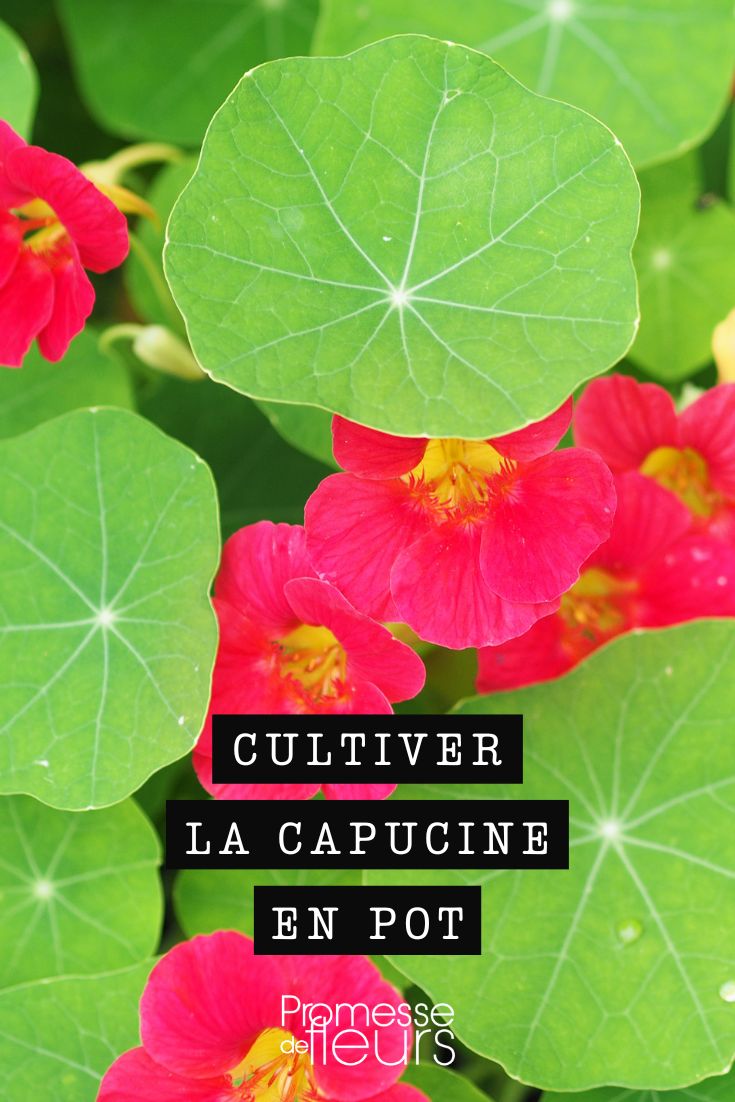
Nasturtiums are easy to grow and require little care. They adapt perfectly to small spaces, which makes them an ideal choice for balconies, terraces or small gardens. Nasturtiums attract pollinators such as bees and butterflies. Their ornamental value is undeniable, with flowers in bright and varied colours on handsome round foliage. In addition, the flower buds, the flowers and the leaves of nasturtiums are edible, offering a pleasant peppery note to salads. The flower buds are pickled like capers in vinegar.
Nasturtiums are most often frost-tender species, therefore grown as annuals, but there are also perennial species, notably the tuberous nasturtium or Tropaelum tuberosum, not very hardy, and the Tropaeolum ciliatum.
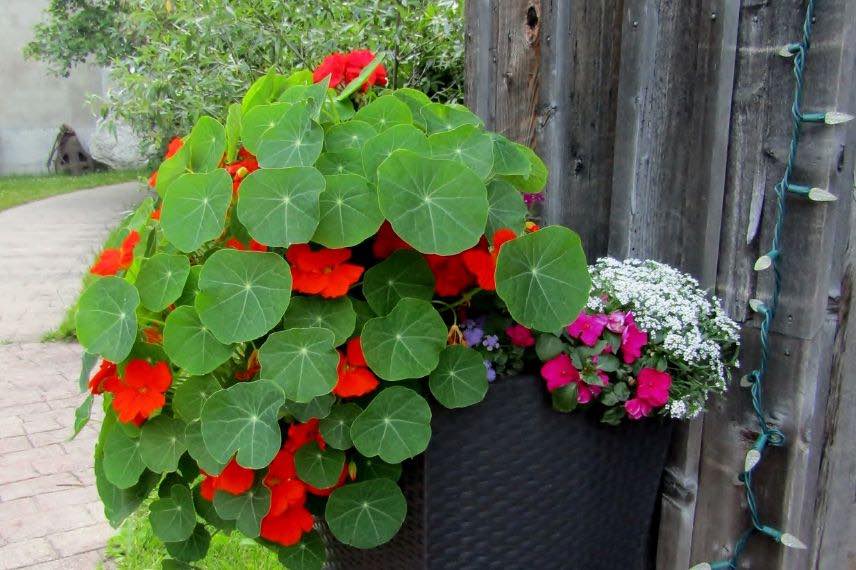
The last two are climbing species like the annuals derived from Tropaelum majus. They can be grown in pots, with a climbing support or installed in hanging baskets, so they can cascade from a good height.
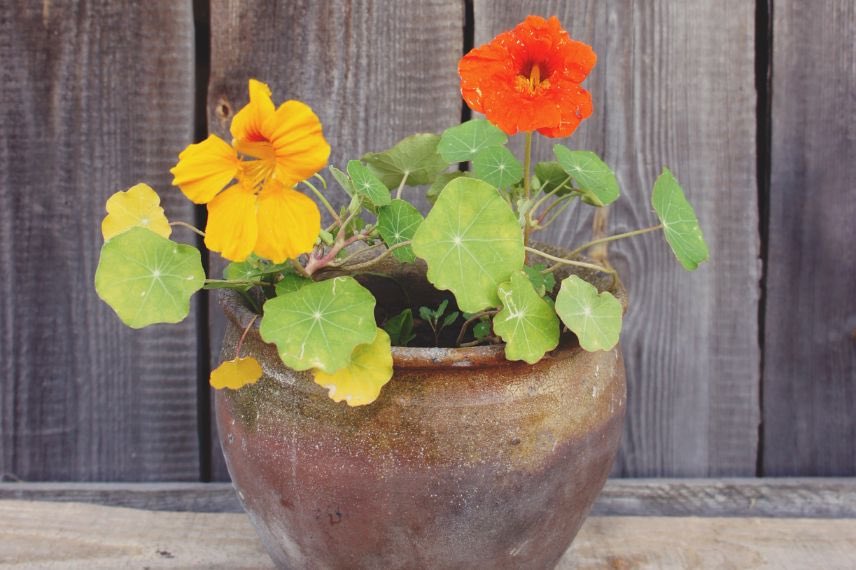
There are also dwarf varieties that maintain a compact size of about 30 cm tall by 30 cm wide and are grown in a standard pot, forming a rounded clump.
Finally, you can choose to buy them as plug plants or in pots, as bulbs for perennials, but you can also sow annual nasturtiums very easily.
Read also
Nasturtium: planting, sowing, caring forWhat type of pot? What size?
The ideal pot for nasturtiums should provide enough space to allow healthy root development. Choose a container at least 20–30 cm deep and wide. Dwarf nasturtiums can cope with smaller pots, while climbing varieties require more space to flourish.
You can also opt for a hanging basket or a planter. If necessary, provide a trellis to allow the plant to climb.
The pot material is also something to consider. Terracotta pots are valued for their ability to regulate moisture naturally, but they are heavier. Plastic or resin containers are lightweight and durable, but may retain more moisture. Whichever material you choose, ensure the pot has adequate drainage holes to prevent waterlogging, detrimental to the health of nasturtiums.
Which substrate?
A quality potting mix is essential for the growth of nasturtiums. Opt for a light, well-draining potting mix, slightly enriched with organic matter. Nasturtiums prefer a soil that is slightly poor, as an excess of nutrients, notably nitrogen, can promote leaf growth at the expense of flowering. You can opt for a universal potting mix to which you can add a little sand to improve drainage, or choose a mix specially designed for container plants. You can also mix it with garden soil.
Ensure drainage at the bottom of the pot by adding clay balls, of pouzzolane or gravel to the bottom few centimetres.
Provide an organic mulch to retain moisture between waterings.
Read also
Pairing ideas with nasturtiumsWhen and how to plant?
Nasturtiums are sensitive to cold and should only be planted outdoors after the last frost. Generally, planting can take place from mid-May in most temperate regions. If you want earlier flowering, you can start sowing indoors about 4–6 weeks before the expected last frost, then transplant the young plants into pots outdoors once the frost risk has passed.
Tender perennials should be moved indoors at the first frosts or kept in a warm conservatory all year round.
How to plant :
- Place a drainage layer a few centimetres deep at the bottom of the pot, using clay balls, gravel or expanded clay pellets (LECA).
- In a separate container, mix the different components of the substrate if needed.
- Fill the pot with substrate.
- Place the plants.
- Top up with substrate, lightly and evenly pressing it down.
- Fill to within a few centimetres of the rim and press down again.
- Water generously.
- When the water has been absorbed, add a little more substrate if necessary to fill any gaps.
- After a few minutes, water again.
- Mulch to a depth of 3 cm.
Sowing or planting:
- For sowing: Sow the seeds to about 1.5 cm deep, 10–15 cm apart. Lightly cover with seed compost and water with a fine spray to avoid dislodging the seeds.
- For plants: Dig a hole in the substrate large enough to take the root ball of the young plant. Gently remove the plant from its original container, place it in the hole and adjust the depth so that the base of the plant sits level with the soil. Fill the hole with substrate, lightly firm and water generously to hydrate the roots and promote anchorage in its new medium.
Where should nasturtiums be planted?
Nasturtiums love sun and need at least 5 to 6 hours of direct light per day to bloom abundantly. However, in very hot regions, some protection from the afternoon sun can help prevent leaf wilting and extend the life of the flowers. If you notice that your nasturtiums are not flowering enough, consider moving them to a sunnier spot.
Watering and fertilisers
Watering
Nasturtiums prefer soil that is slightly moist, but do not tolerate excess water. It is therefore important to water moderately, allowing the soil to dry slightly between waterings. During periods of hot weather, more frequent watering may be necessary, especially for pots exposed to full sun. However, take care not to allow water to stagnate in the pot’s saucer, as this could lead to root rot.
Water when the top few centimetres of the soil are dry.
Fertilisation
Although nasturtiums are not particularly demanding when it comes to fertilisation, a moderate supply of nutrients can promote more abundant flowering. Use a liquid fertiliser low in nitrogen and rich in phosphorus and potassium, diluted to half the recommended strength, once a month. Avoid over-fertilising, as this could encourage leaf growth at the expense of the flowers.
Care, harvest and tips for prolonged flowering.
Pinching and Pruning
To encourage a bushier plant and denser flowering, you can pinch the tips of the stems when plants are young. This technique stimulates branching and thus the production of more flowers. If some stems become too long or unruly, feel free to prune them to maintain a harmonious shape.
Regular pruning of nasturtiums is an effective method to stimulate the production of new flowers. By removing spent flowers, you prevent the plant from dedicating its energy to seed production, thereby encouraging it to produce more flowers. This technique, known as deadheading, can simply be carried out by pinching off the spent flowers with your fingers.
In addition, pinching the tips of the stems can promote bushier growth and denser flowering. This operation stimulates lateral branching, providing more surface for flower development.
Harvest of edible flowers and leaves
To harvest without harming the plant, proceed gently, selecting the most vigorous flowers and leaves. Be sure to leave enough foliage for the plant to continue photosynthesising and growing.
Regular harvesting of the flowers and young leaves can also encourage the plant to produce new shoots, thereby contributing to ongoing flowering. However, ensure you do not take more than a third of the plant at a time, to allow it to regenerate effectively.
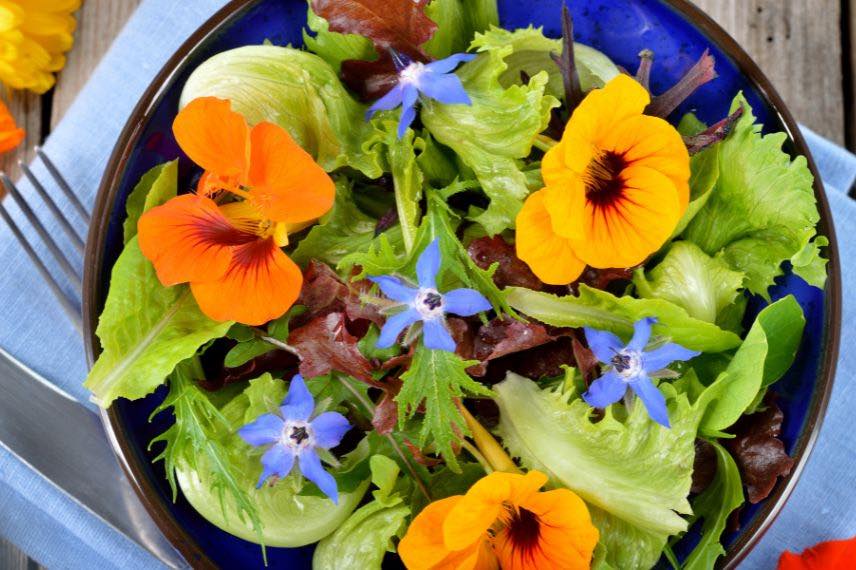
Don’t forget to harvest the flowers to brighten up your salads!
Diseases and parasites
Nasturtiums can be susceptible to several pests and diseases, including:
- Aphids: These tiny green, yellow or black insects often cluster under the leaves and on the stems, sucking sap from the plants and weakening their vigour.
- Whiteflies (aleurodes): These small white insects are found on the undersides of the leaves and can cause damage similar to aphids.
- Rust: This fungal disease appears as orange or yellow pustules under the leaves, causing deformation and premature leaf drop.
- Powdery mildew: This fungus is characterised by a white powdery coating that forms on the leaves, stems and sometimes flowers, reducing photosynthesis and weakening the plant.
Preventive measures
Prevention is the best strategy to protect your nasturtiums from diseases and pests. Here are a few measures to adopt:
- Choose well-ventilated locations: Ensure your potted nasturtiums have good air circulation to reduce humidity and limit the risk of fungal diseases.
- Adequate watering: Avoid overwatering and standing water, which promote disease development. Water at the soil level to keep the foliage dry.
- Regular inspection: Regularly check your plants to detect early signs of pests or diseases, enabling rapid intervention before the problem worsens.
Natural treatments
If despite preventive measures, your nasturtiums are attacked by pests or diseases, here are some natural treatments:
- For aphids and whiteflies: A spray of water may be enough to dislodge these pests. Otherwise, use an organic insecticidal soap or a soapy water solution (one tablespoon of mild liquid soap per litre of water) to treat them.
- For rust and powdery mildew: Remove the affected parts and apply an appropriate organic fungicide. Ensure good air circulation around the plants to prevent recurrence of these diseases.
- Subscribe!
- Contents
Comments