





























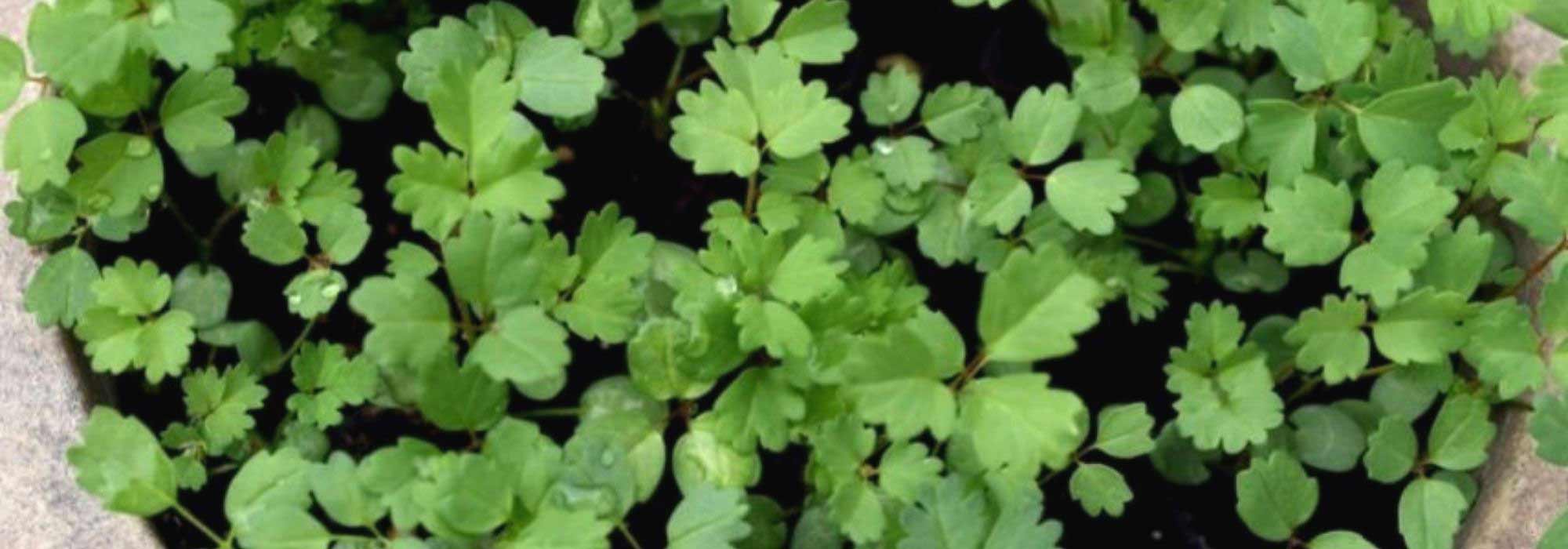
Growing a Sanguisorba in a pot
Our tips for enjoying a profusion of colourful spikes on your terrace or balcony
Contents
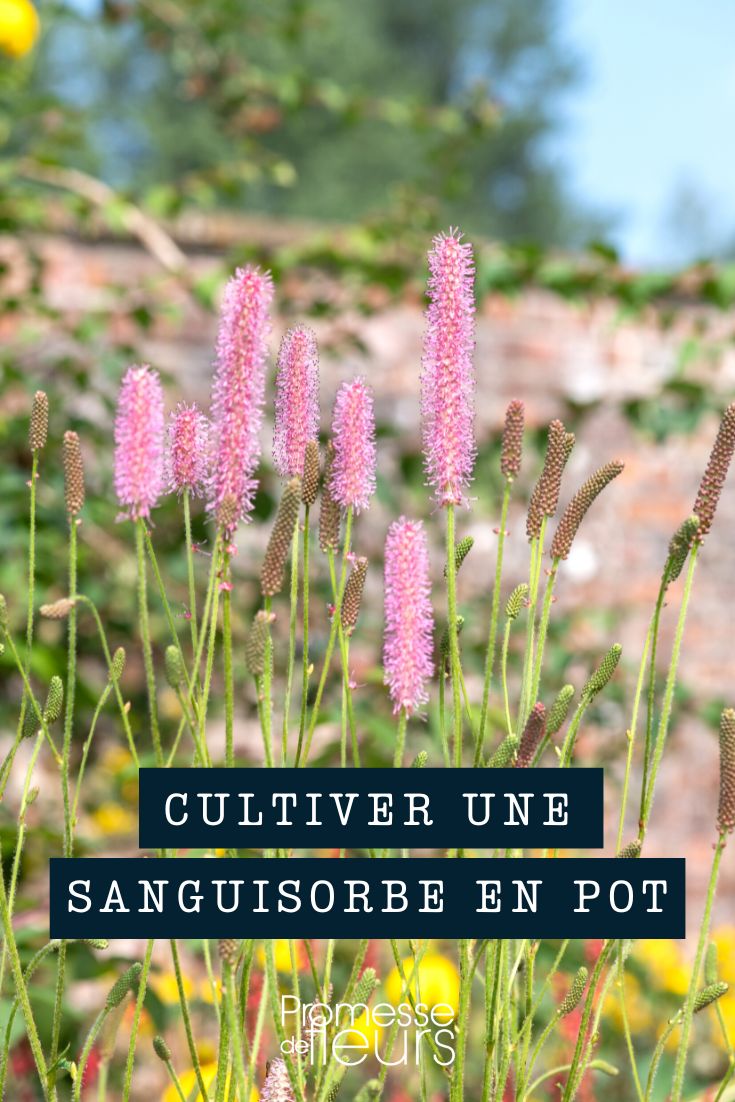
The Sanguisorba are lovely perennials that are easy to care for. Also known as Pimprenelles, their simple, rustic appearance, adorned with small spikes of colourful flowers that are either soft or rigid depending on the species and cultivars, along with their ease of cultivation and disease resistance, make them allies for gardeners, both experts and amateurs. In pots, containers, or window boxes, Sanguisorbas can lightly adorn the surroundings of the home and living spaces such as terraces, courtyards, or balconies… If you’re tempted to grow these beautiful plants, discover everything you need to know to successfully cultivate Sanguisorba in pots.

When to plant Sanguisorba in a pot?
You can plant Sanguisorba purchased in pots or containers almost all year round. Preferably, plant them in spring when frosts are no longer a concern, or in autumn, from September to November. Avoid periods of frost and the height of summer, as your young plants may suffer.
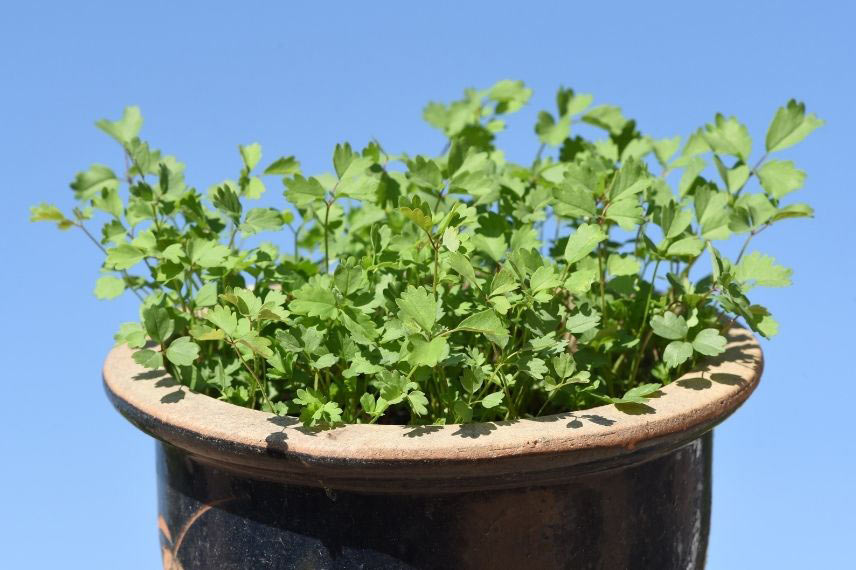
Plant your Pimprenelles in pots preferably in spring
What type of pot to choose?
When choosing a pot, rely on your aesthetic preferences and the style of the location where you wish to install them. Sanguisorba are rhizomatous perennial plants (the rhizomes are underground stems growing horizontally), so they do not require very deep rooting to thrive and are easy to grow. Whether the pot is round, square, or rectangular will also depend on your tastes!
Size the pot according to the size of the chosen Pimprenelle: for example, the Sanguisorba officinalis ‘Morning Select’ will quickly form a clump of about 80 cm in height and 60 cm in width. Choose a pot with a minimum diameter of 50 cm to allow it to develop properly. The Sanguisorba officinalis ‘Tanna’ or the Small Pimprenelle Sanguisorba minor will have a more compact habit of 40 to 50 cm in all directions. You can plant them in a slightly smaller pot or a lovely window box, accompanied by other perennials or bulbs.
Keep in mind that wooden and terracotta planters and troughs are more environmentally friendly than resin or plastic pots.
Discover other Sanguisorba
View all →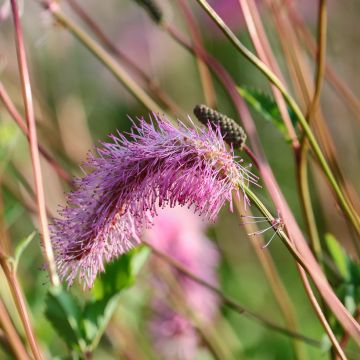
Available in 1 sizes
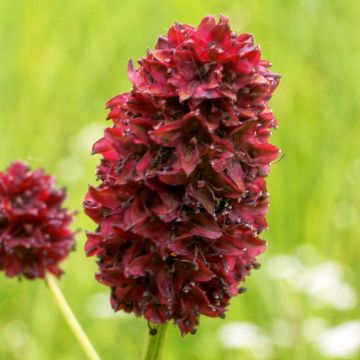
Available in 1 sizes

Available in 0 sizes

Available in 1 sizes
Available in 1 sizes
Available in 2 sizes
Available in 1 sizes
Available in 1 sizes
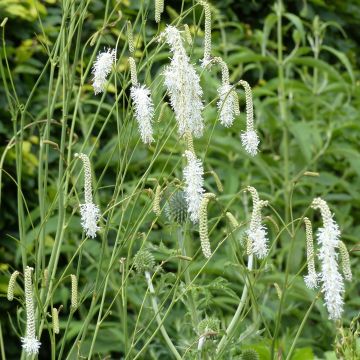
Available in 2 sizes
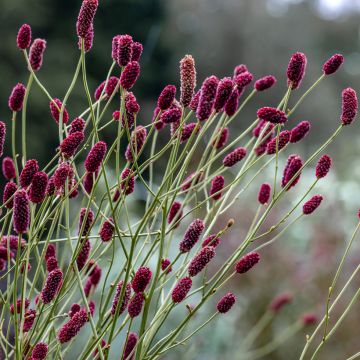
Available in 1 sizes
What type of substrate to choose?
Originating from temperate regions of the Northern Hemisphere, most Sanguisorba will thrive in rich, cool, and well-draining substrates to delight you with their colourful spikes, except for Sanguisorba minor, which can tolerate poor and fairly dry soils.
- Therefore, it is essential to provide them with the necessary nutrients for their growth and flowering in a substrate such as potting compost for containers.
- If you have good, rich, non-clay garden soil, you can also use it to repot your Burnet, possibly adding 1/3 homemade compost or a natural fertiliser.
- When planting, remember to drain the bottom of the pot by spreading a layer of gravel or clay balls.
→ Browse our advice sheets on composts and fertilisers to guide your choice:
Read also
How to choose good compost?Which Sanguisorba to choose?
To make your choice, discover our varieties of Sanguisorba. Orient yourself based on size, flowering period, whether you prefer early or later flowering, and desired colour, so that your young plant harmonises as well as possible with the plants that will accompany it:
Purple Sanguisorba:
Among the young plants with red-purple to chocolate flower spikes, you will find, for example:
- the Sanguisorba tenuifolia ‘Cangshan Cranberry’
- the Sanguisorba officinalis ‘Chocolate Tip’, ‘Arnhem’, ‘Morning Select’ and ‘Tanna’
- the Sanguisorba ‘Little Angel’
- or the Sanguisorba menziesii
Pink Sanguisorba:
This colour, which ranges from soft pink to more vibrant raspberry, will allow you to enliven your terrace with:
- the Sanguisorba tenuifolia var. ‘Purpurea’ and ‘Pink Elephant’
- the Sanguisorba hakusanensis
- the Sanguisorba hybrid ‘Pink Brushes’
- or the Sanguisorba obtusa
White Sanguisorba:
Rarer, the white young plants include Sanguisorba tenuifolia ‘Alba’ and Sanguisorba canadensis.
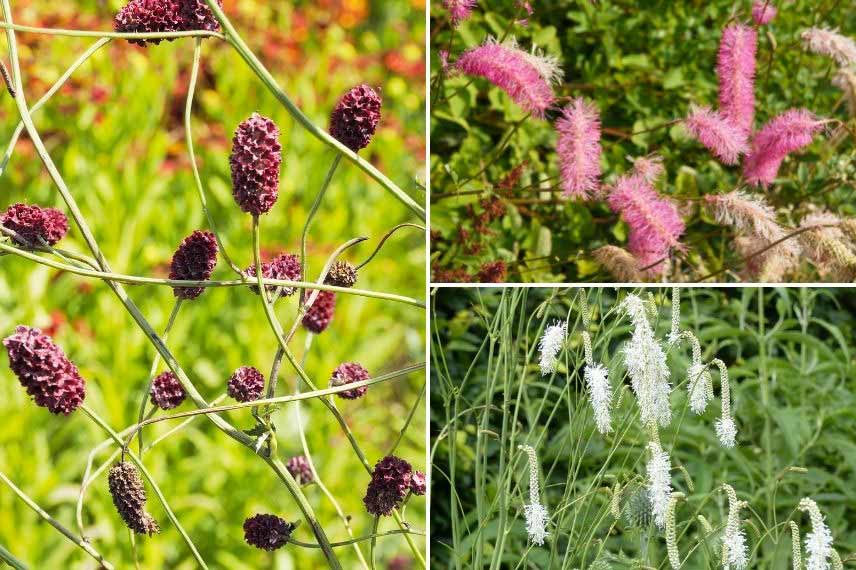
Sanguisorba officinalis, Sanguisorba obtusa and Sanguisorba tenuifolia ‘Alba’
Which exposure to choose?
In northern France, prefer sunny exposures, so that your Pimprenelles can benefit from maximum light. In the south, a partially shaded position will be more favourable for them. An exception to this rule is Sanguisorba minor. Plant it in well-drained soil in full sun.
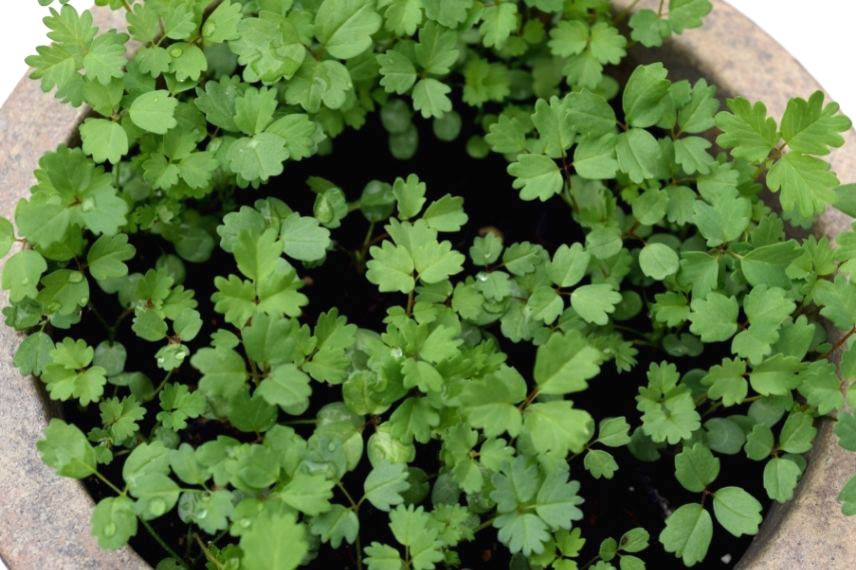
Most Pimprenelles will prefer partial shade, especially south of the Loire
How to care for your Sanguisorba in a pot?
- Sanguisorba prefers rather cool soil, water it regularly while allowing the substrate to dry out slightly between waterings. The coolness at the base can be effectively maintained with a mulch.
- Removing faded flowers as they appear will encourage abundant and prolonged flowering.
- Pinching back the long flower stems will help maintain a dense and ramified habit in your Sanguisorbas, ensuring they are floriferous.
- A regular supply of fertiliser or organic matter (compost) will help compensate for nutrient loss in the substrate. The frequency of applications will depend on the chosen fertiliser, so be sure to follow the recommended doses on the packaging.
- Cutting back to the base of the clumps each spring will allow the plant to grow vigorously from the base each year.
- If a severe cold snap of -15 °C is forecast, plan to protect your potted Sanguisorbas with a thick mulch, while avoiding stagnant moisture in the pot; your Pimprenelles will withstand harsh winters well if water does not stagnate around their root system.

- Subscribe!
- Contents
Comments