





























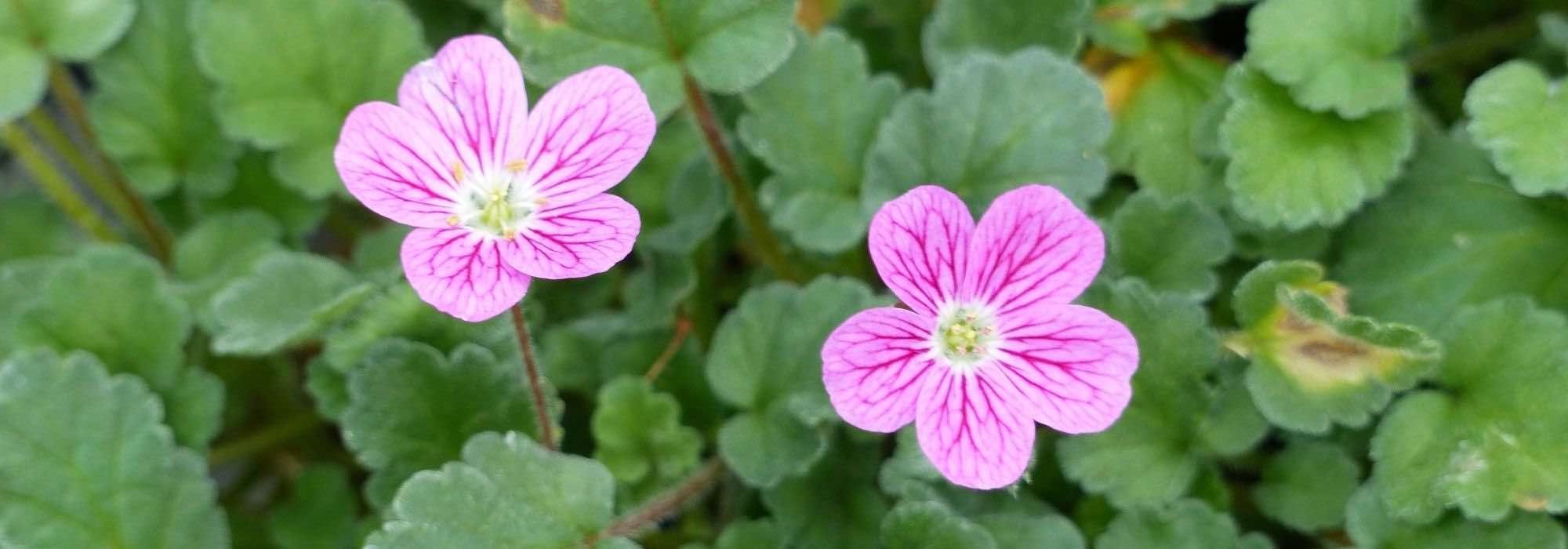
Growing an Erodium in a pot
A lovely curiosity to observe up close
Contents
The Erodium, a close relative of geraniums and pelargoniums, is a little-known perennial for dry soil. As a groundcover, it showcases attractive, finely cut foliage, sometimes evergreen and aromatic. From spring to autumn, it produces graceful flowers that shine in the sun, in shades of pink, white, or yellow. It is a sun-loving plant that thrives in well-drained soil. Thus, it grows well in pots, provided you ensure good drainage and position it in full sun or possibly partial shade. You will be surprised to observe its remarkable fruiting in autumn up close. The seeds, shaped like long upright beaks, give it the vernacular name ‘crane’s beak’ or ‘heron’s beak’.
Plant this original perennial in a pot, either alone or accompanied, to enjoy its lovely features.

How to grow an Erodium in a pot?
You can grow an Erodium in a pot if you can provide the following conditions: a sunny balcony, terrace, or garden, with a slight corner of shade if necessary to protect it from intense heat. You will have the opportunity to water it regularly, as even though it is a plant native to the Mediterranean, it needs a bit of water regularly when grown in a pot.
You can certainly pair it with other perennials in well-drained soil in a lovely container, taking care to avoid mixing it with perennials that have very vigorous growth, as it is sensitive to root competition.
This way, you will enjoy its long and delicate flowering from April to October, along with its fine aromatic foliage that is beautifully cut.
All species and varieties of Erodium are suitable for pot cultivation.
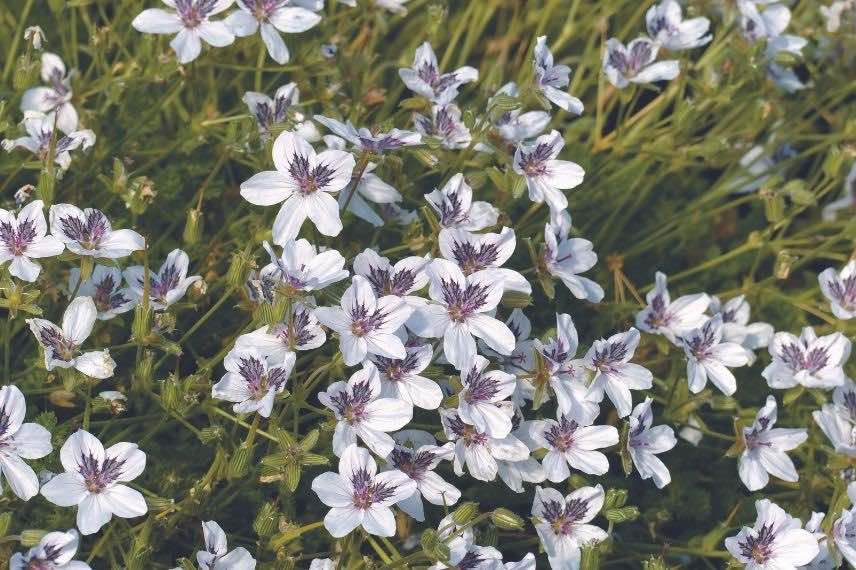
Erodium ‘Stéphanie’, a lovely refined flower
What type and size of pot for my Erodium?
Plan for a pot 20 to 30 cm deep and 20 to 30 cm wide for a single plant. You can pair Erodium with other plants of similar conditions; in that case, adjust the pot size accordingly.
Choose the material of your preference, just keep in mind that terracotta, being porate, is well-suited for plants in dry soil, as water is quickly absorbed and does not stagnate, but it requires more frequent watering.
If you live in a very rainy region in winter, favour terracotta to prevent water from saturating the substrate for too long during the bad season.
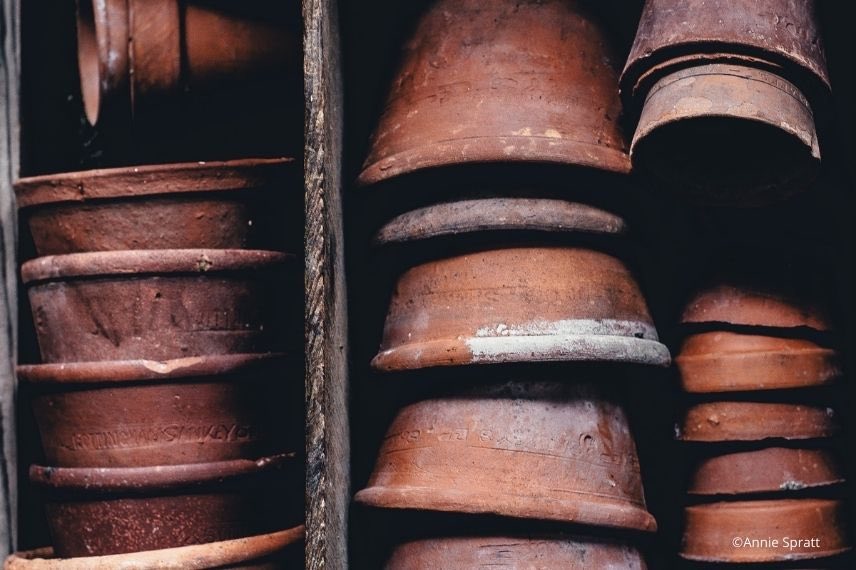
The lovely terracotta
Discover other Erodium - Stork's-Bills
View all →
Available in 0 sizes
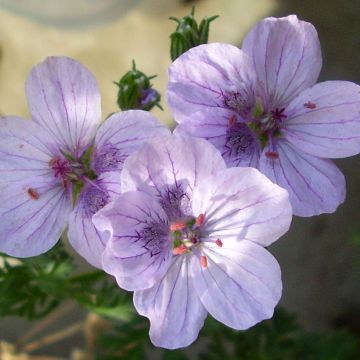
Available in 2 sizes
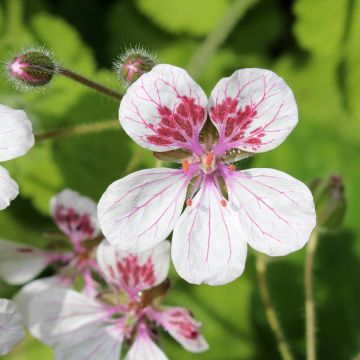
Available in 1 sizes
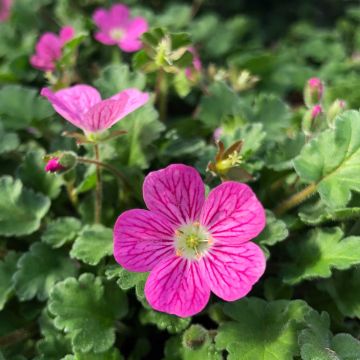
Available in 2 sizes
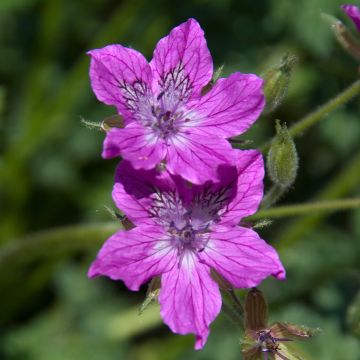
Available in 1 sizes
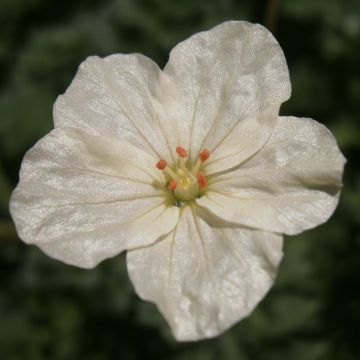
Available in 2 sizes
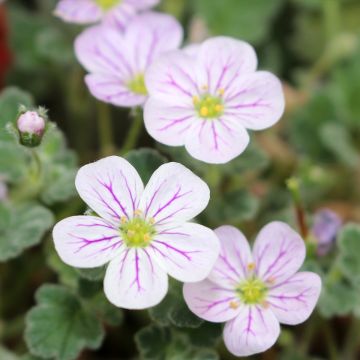
Available in 1 sizes
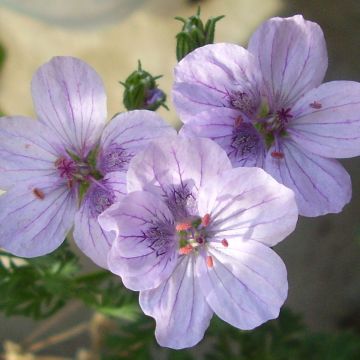
Available in 1 sizes
What substrate?
Choose or compose a substrate characteristic of dry soil plants, although slightly less draining to adapt it for pot planting where the substrate dries much faster than in open ground.
You can create a mix consisting of 1/3 of quality potting soil with good water retention or compost, 1/3 of river sand, and 1/3 of garden soil. If you do not have access to all these elements, you can also mix 40% river sand with 60% quality potting soil.
Ensure drainage at the bottom of the pot using clay balls, pouzzolane, or gravel. Also, plan for a mineral mulch for the top of the pot.
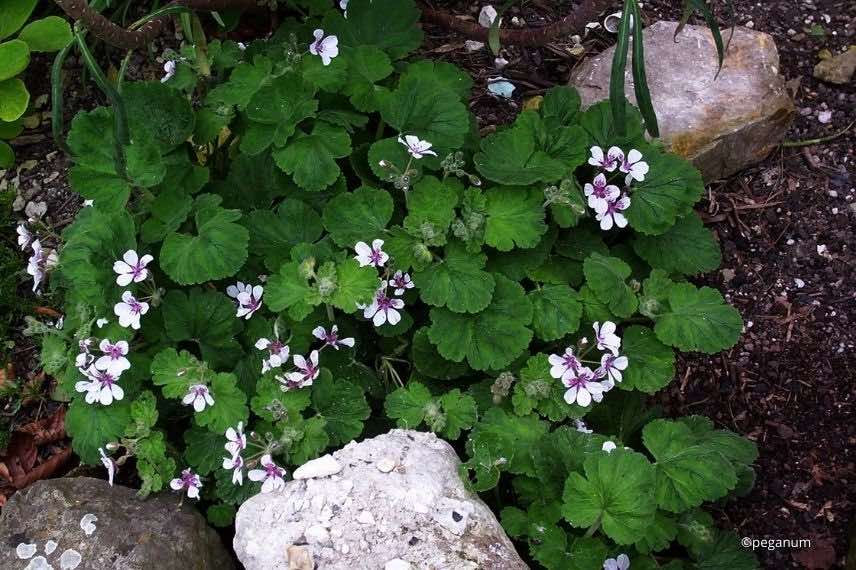
Erodium trifolium in drained soil
Read also
Pairing ideas with ErodiumsWhen and how to plant Erodium?
Plant your Erodium in autumn or spring. In the northern regions of the Loire, prefer spring to avoid winter rains during its establishment. Similarly, avoid planting in autumn if you live in a USDA climate zone from 1 to 5 (in zones 6a to 8a, with frost from -23 °C to -9.4 °C).
Plant your Erodium as follows:
- Soak the nursery pot in a basin of water while preparing your pot.
- Add a drainage layer of a few centimetres at the bottom of the pot using clay balls, gravel, or pumice.
- Separately, mix the various components of the substrate.
- Pour your substrate to about half the height of the pot.
- Remove the pot and place the Erodium.
- Fill in with substrate, pressing down lightly and evenly.
- Fill to a few centimetres below the rim of the pot and press down once more.
- Water generously.
- Once the water has been absorbed, add a bit more substrate if necessary, if any gaps have appeared.
- Mulch with your mineral mulch to about 2 centimetres.
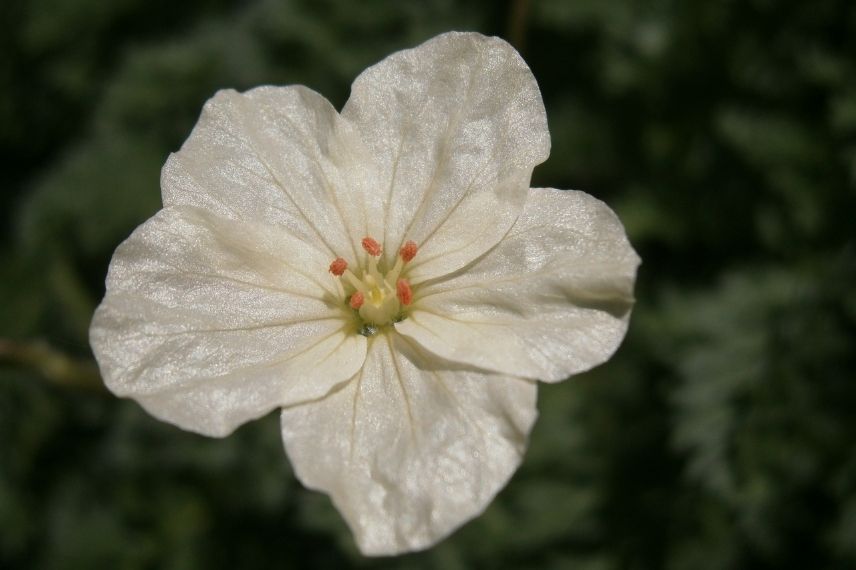
The sparkling flower of Erodium chrysanthum
Where to place your Erodium?
Mediterranean perennial for dry soil, Erodium enjoys being exposed to sunlight and tolerates a bit of shade in pots. During hot weather, feel free to move the pot to a shaded area to prevent the plant from suffering. In the southernmost regions, you can grow it in partial shade, but ensure that it is not too dense; keep in mind to provide it with an open and bright situation.
Watering and fertilising
Here again, we temper these preferred conditions for open ground by adapting them to the pot situation: it needs a bit of water from time to time to thrive in its restricted medium. This means that you always allow the substrate to dry out between waterings, to about half of the pot. Be careful that the substrate does not dry out and pull away from the edges, as it is difficult to rehydrate afterwards.
Erodium does not require fertiliser; see the next chapter for a small addition of compost in spring.
Entretien
Erodium is a self-sufficient perennial. In a pot, this observation is somewhat nuanced, given the limited amount of substrate around the plant.
At the end of winter, clean the damaged parts in the pot.
If necessary, before flowering in spring, pinch the new stems to encourage the plant to ramify. Remove the mineral mulch, add a bit of well-decomposed compost to the surface of the pot, and replace the mulch.
In summer, cut back the faded stems to their base to prolong flowering.
After 3 to 4 years, replace the substrate of your plant.
- Subscribe!
- Contents
![[erodium pot="container" bac="planter"]](https://en.promessedefleurs.eu/blogwp/wp-content/uploads/2022/04/Cultiver-un-Erodium-en-pot.jpg "[plant id=\"1234\" care=\"container\"]")
Comments