




























Growing peppers and chillies in pots
Cultivation tips and tricks
Contents
Chillies and peppers belong to the same family. The term pepper actually refers to a subset of Capsicum annuum, but without any heat. Both require very similar growing conditions and can be grown in pots. Thus, even if you are not fortunate enough to have a house with a garden, it is possible to grow these vegetables in pots that you can place on a warm, sunny terrace or balcony.
Not sure how to grow peppers or chillies in pots? From choosing the variety to selecting the pot, as well as the ideal substrate and basic care… Here are all our tips to ensure your success.

Which varieties of peppers and chillies to grow in pots?
Chillies and peppers generally reach a maximum height of 1 m at ripeness. Therefore, many varieties can be grown in pots. However, note that some varieties have a more compact habit and a lower height, making them naturally suited for this type of cultivation.
For peppers, consider:
- the dwarf pepper ‘Redskin’, a variety with red, medium-long fruits that reaches between 35 and 40 cm in height;
- the ‘Balconi’ pepper (mini) which measures 40 cm in height and produces tiny, sweet, red horn-shaped fruits;
- the ‘Sweetmie Red’ pepper with its 60 cm height and small, horn-shaped red fruits;
- the ‘Mini Chocolate Bell’ pepper, a variety that reaches 60 cm in height with numerous miniature brown fruits;
- or even the ‘Terrazzi’ pepper which reaches a maximum height of 70 cm and produces small yellow to orange fruits.
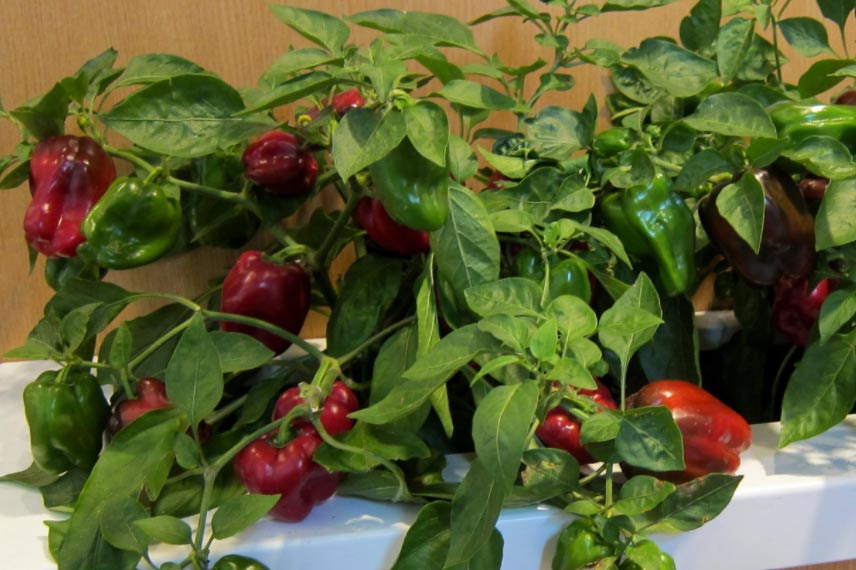
Dwarf pepper ‘Redskin’ ©cultivar413 (Flickr)
For chillies, consider:
- the ‘Demon Red’ chilli, a dwarf variety that does not exceed 35 cm in height, with very spicy red fruits;
- the ‘Purple’ chilli, which does not exceed 40 cm in height and produces fleshy, dark purple fruits;
- the ‘Basque Gorria’ chilli which reaches a height of 60 cm and produces the famous Espelette chillies;
- or even the ‘Cayenne’ chilli with a maximum height of 80 cm that offers some of the hottest fruits in the world.
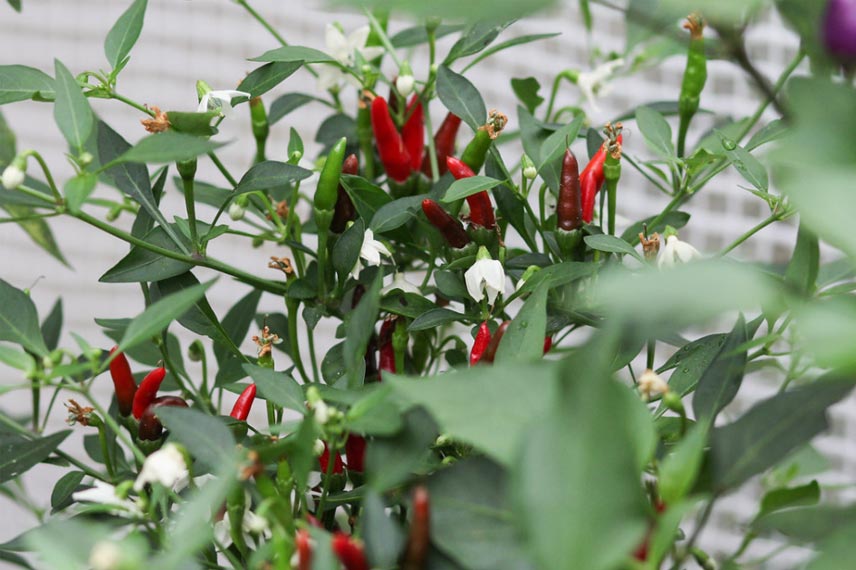
‘Demon Red’ chilli ©Maja Dumat (Flickr)
Peppers and chillies in pots: what type of pot to use?
When intended for container cultivation, peppers and chillies are sown in pots before being transplanted into larger containers.
Therefore, proceed with the sowing at the end of winter, specifically at the end of February, at a temperature between 20 and 25 °C.
Transplant the young plants into their growing pot when they reach 15 cm in height and have 4 to 5 true leaves (approximately 60 to 90 days after sowing). Choose a large pot that is 60 cm deep. If that is not possible, the container should have a minimum depth of 30 cm. Ensure that the container used has drainage holes in the bottom to ensure proper drainage of the growing medium.
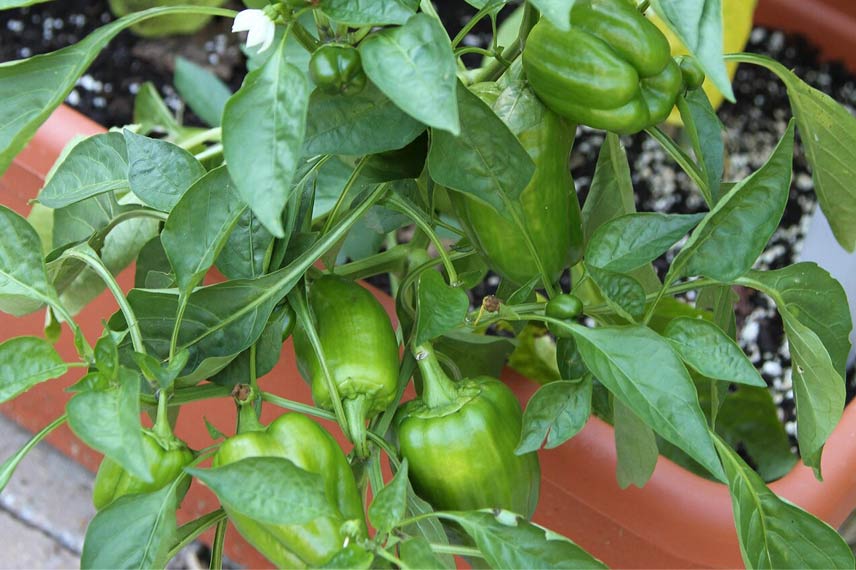
Pepper in a planter ©Jim, the Photographer (Flickr)
Prefer a terracotta pot as it provides better aeration for the soil than plastic, which tends to overheat in the sun. However, be careful that your balcony can support the weight of the pot and the growing medium.
Discover other Pepper seeds
View all →
Available in 1 sizes
Available in 1 sizes
Available in 1 sizes
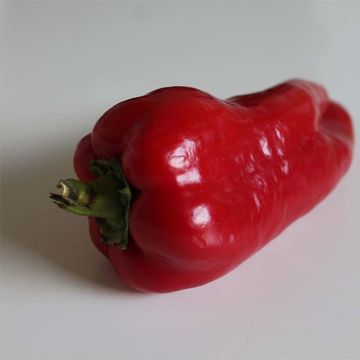
Available in 1 sizes
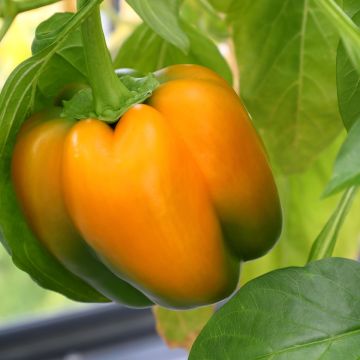
Available in 1 sizes
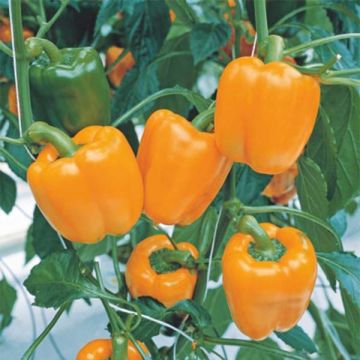
Available in 1 sizes
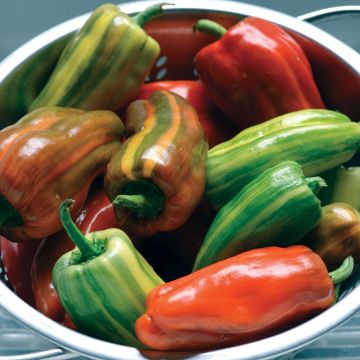
Available in 1 sizes
Available in 1 sizes
Available in 1 sizes
Available in 1 sizes
What substrate for peppers and chillies in pots?
Gourmet plants, peppers and chillies prefer rich substrates. Use preferably a potting compost for vegetable plants of very good quality.
Moreover, chillies and peppers have a preference for soils that are continuously moist, but especially not waterlogged. So, start by placing a thick layer of clay balls at the bottom of the pot before adding the rest of the substrate along with your Capsicum young plants.
Read also
Strength of chilliesWhere to place chilli and pepper pots?
Young plants of peppers and chillies in pots need warmth and sunlight to thrive. They can therefore be placed outdoors from May, in a warm and sunny spot, protected from strong and cold winds. A balcony, terrace, or patio are perfect for this.
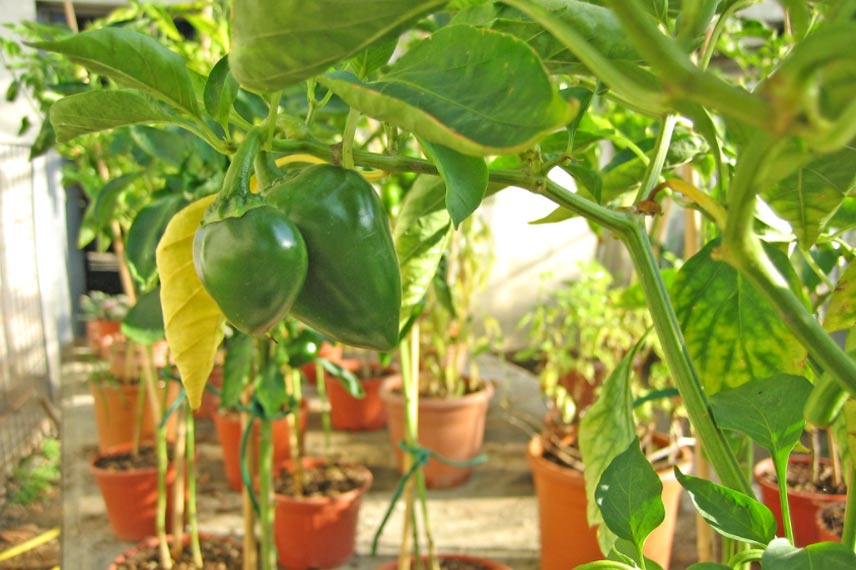
Late chilli in pot ©fugzu (Flickr)
To minimise the risk of thermal shock, take the precaution of gradually acclimatising your young plants in pots to their new environment. Otherwise, the development of the young plants may be affected by the sudden change in exposure, and their foliage may even dry out. To avoid this type of setback, place your peppers and chillies outdoors for just a few hours each day. After a few days, set them outside for the entire growing season.
What care do peppers and chillies in pots need?
Watering
Potted chillies and peppers require frequent but moderate watering to keep their substrate consistently moist. The frequency of watering is especially important during periods of intense heat, where daily watering is even necessary.
Tip: install a good layer of organic mulch on the surface of the pot to help retain soil moisture for longer.
Be careful, excess moisture must absolutely be avoided, as it can lead to your plants being affected by blight or powdery mildew. The saucer under the pot should be emptied systematically after each watering.
Fertilisation
Early in the season, apply to your potted plants an organic fertiliser (chemical-free) rich in potash and phosphorus. During active vegetative growth, fertiliser should be applied every two weeks.
Staking
The tallest chilli and pepper plants (about 1 m) can be staked to keep the branches upright and prevent them from bending under the weight of the fruit.
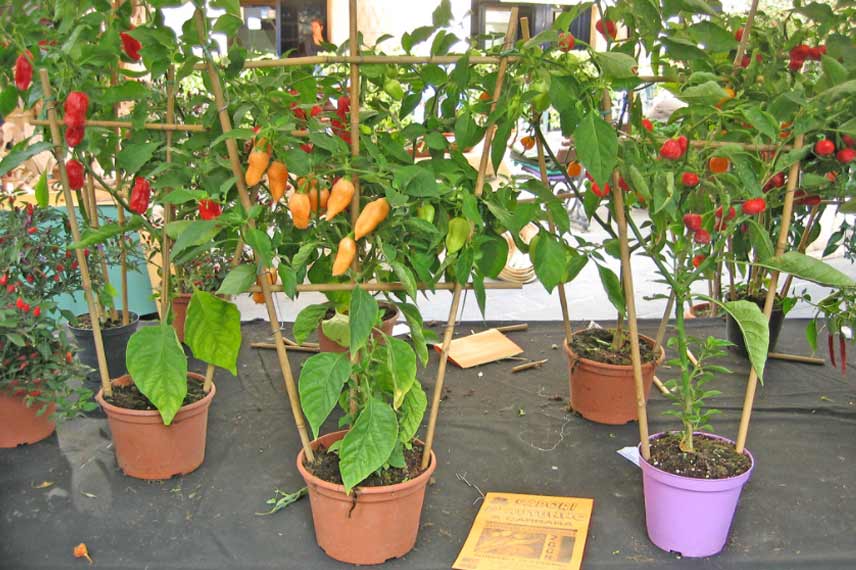
Potted chillies staked ©fugzu (Flickr)
Wintering
Thanks to pot cultivation, you can keep your Capsicum plants for several years, as long as you take care to store them in a warm, light place during winter.
- Subscribe!
- Contents
Comments