





























Growing Philodendrons indoors
All our maintenance tips
Contents
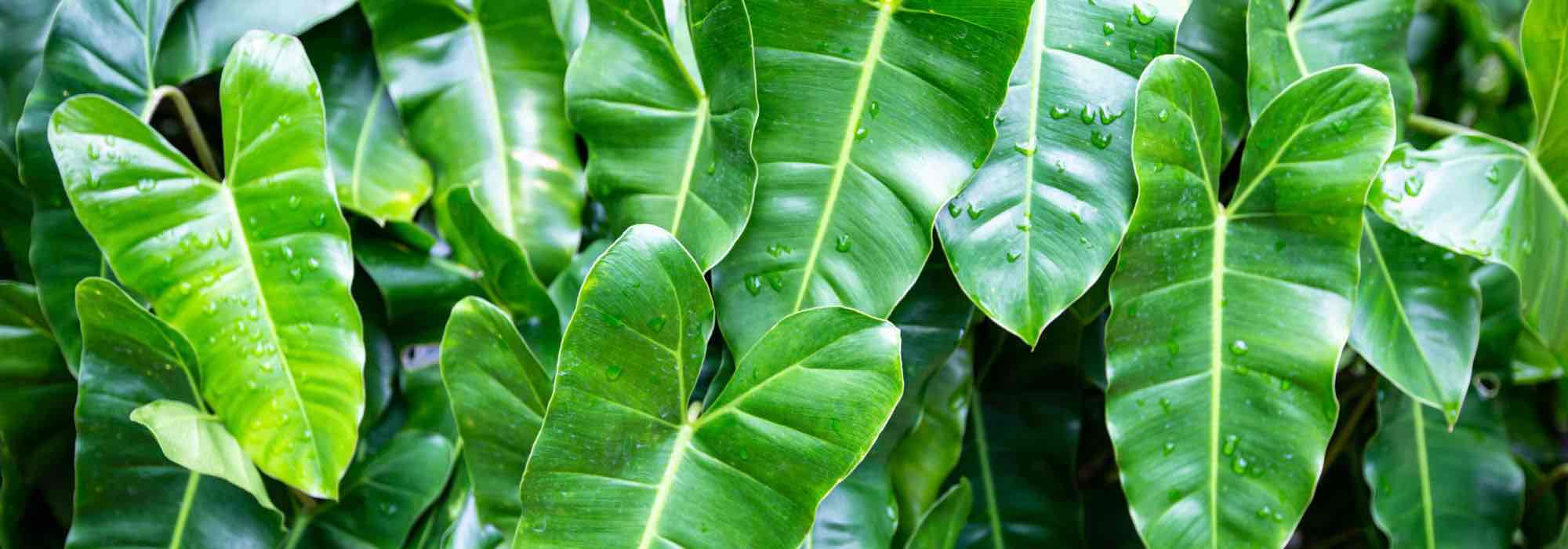
Philodendrons have established themselves as staples in the world of indoor plants. Originating from tropical regions, these plants with lush foliage bring a touch of exoticism to our interiors.
The popularity of Philodendrons also rests on their great diversity. There are many varieties, each with unique characteristics in terms of leaf shape, size and colour.
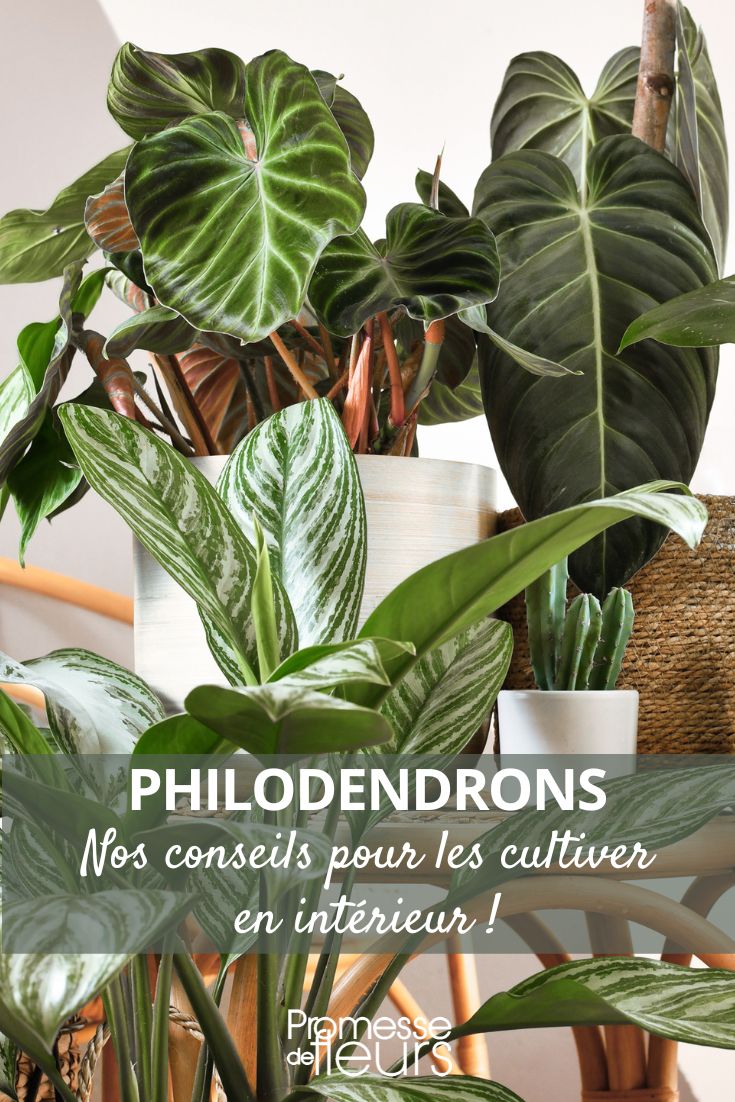
Heart-shaped or very elongated leaves, velvety or coloured, variegated, lobed, climbing plant or shrubby: each variety has its own personality, offering a wide range of choices for plant enthusiasts.
To get the best out of these plants and ensure their optimal growth, it is essential to understand their specific needs in terms of pot, substrate, light, and pest management.
Discover in this article all our care tips for this very interesting group, belonging to the large Araceae family.

Do all philodendrons require the same growing conditions?
Almost there! Aside from the pot size, which obviously varies with the size of the plant, there are varieties of all sizes!
Substrate, light, watering and ambient humidity requirements are similar across all philodendrons.
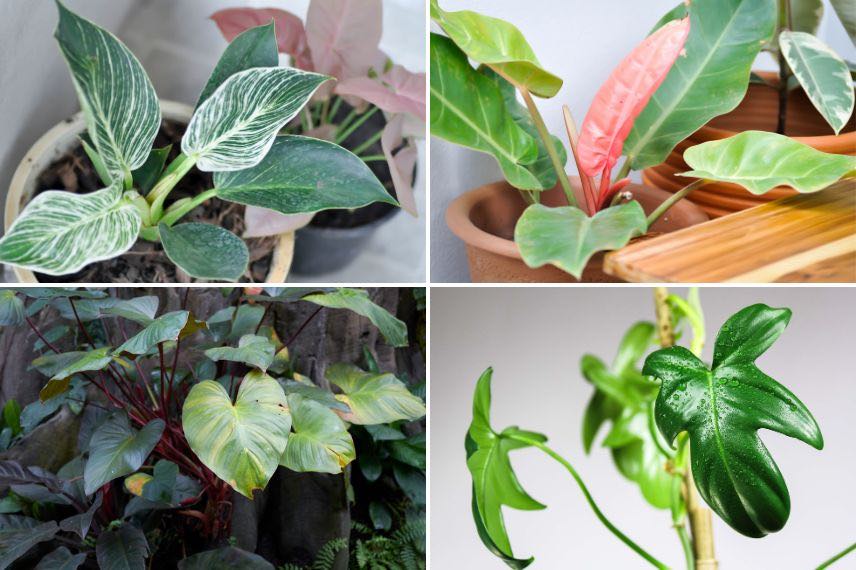
Some philodendron varieties with varied foliage
Read also
7 trailing indoor plantsChoosing a pot
Choosing the pot is a crucial step in growing philodendrons indoors. An appropriate pot not only complements the plant’s aesthetics but also plays a vital role in its health and development.
Ideal pot size
Pot size should be proportional to the size of the plant. For a young philodendron, a pot with a diameter of 15 to 20 centimetres is usually sufficient. As the plant grows, it may be necessary to repot it into a slightly larger pot. A good indicator for repotting is when the roots begin to emerge from the drainage holes. It is important not to choose a pot that is disproportionate to the plant’s size, as a pot that is too large can retain excess water and cause root rot.
Recommended materials
Terracotta pots are often recommended for philodendrons due to their porosity, which allows better root aeration and prevents moisture buildup. However, plastic pots are also a viable option, especially if they are equipped with adequate drainage holes. The choice between terracotta and plastic may depend on your watering frequency. You will water a plant more frequently in a terracotta pot, but if you notice that your potting mix takes a long time to dry, and the atmosphere is a bit humid in winter, that is the option to favour.
Importance of drainage
Drainage is a crucial aspect. A pot with adequate drainage holes is essential to prevent waterlogging. If water stagnates at the bottom of the pot, this can lead to root rot, a common and often fatal problem for philodendrons. To improve drainage, it is also advised to place a layer of gravel or clay balls at the bottom of the pot before adding the substrate.
Which substrate?
Everything hinges on the substrate for philodendrons; it must be just right. It should provide a perfect balance between water retention, drainage and root aeration, while supplying the nutrients the plant needs.
For philodendrons, a very light and well-draining substrate is essential. Several mixes are possible. A mix of potting compost, perlite at 25% of the total, and coconut fibre is possible. Perlite improves drainage and coconut fibre helps retain moisture while keeping the substrate light. You can also replace the potting compost with coconut husk or pine bark, and add activated charcoal to improve aeration. This substrate mimics the philodendrons’ natural environment, which often grow on other plants or trees in their natural habitat. For dry environments, don’t hesitate to add sphagnum moss to improve water retention. Add vermicompost for fertilisation at 10 to 15% of the substrate.
A quality substrate allows the roots to develop freely and to absorb water and nutrients efficiently. It also helps prevent diseases, notably root rot, by ensuring good drainage. A well-chosen substrate promotes healthy and vigorous growth, which is reflected in the beauty and vitality of the foliage.
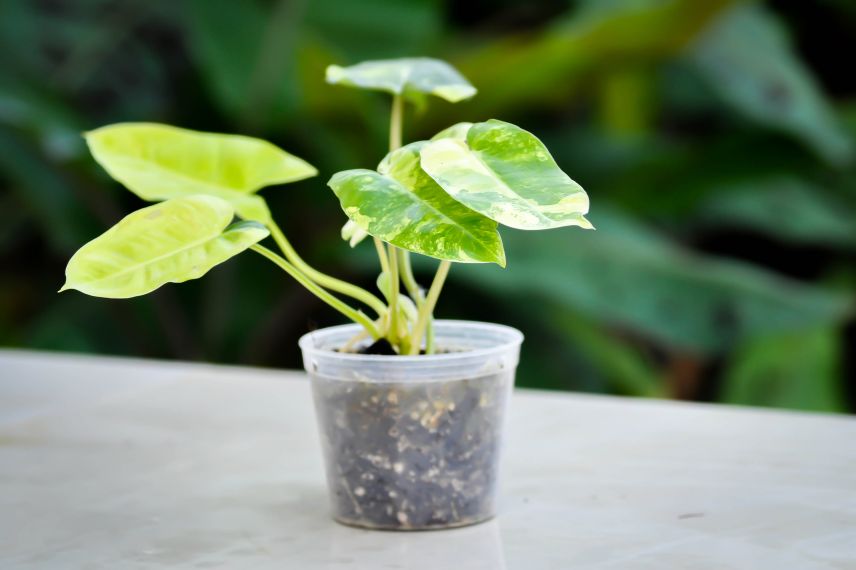
Create a very well-draining and airy substrate for philodendrons, with plenty of perlite in particular
Read also
Philodendron: cultivation, care and tipsHow to plant or repot?
1- To plant a philodendron, start by filling the bottom of the pot with a layer of gravel or clay pellets, then add the prepared potting mix.
2- Place the plant in the centre of the pot and fill the spaces around the roots with the potting mix, taking care not to bury the stem too deeply.
3- Gently firm the potting mix around the plant to eliminate air pockets, and water generously to establish good contact between the roots and the mix.
Philodendrons require repotting every two to three years, or when you notice signs such as slowed growth, roots protruding from the drainage holes, or substrate that breaks down or becomes compacted. Repotting not only provides fresh substrate for the plant, but also gives it more space for root growth.
To repot a philodendron, carefully remove the plant from its current pot and gently shake off excess substrate from the roots. Inspect the roots and remove any that are damaged or rotten. Choose a new pot slightly larger than the old one and follow the same steps as for the initial planting.
Position
Philodendrons thrive in indirect light that is moderate to bright, with a preference for bright light. The ideal location is near a large window facing north, southeast, or southwest. If light comes from the south, filter or diffuse it to prevent direct sun exposure, especially during the hottest hours.
The amount and quality of light directly influence the growth and appearance of philodendrons. insufficient light can cause leaves to pale and stems to become leggy. It’s important to observe your plant and adjust its position according to its response to the available light.
In addition to light, consider other factors such as temperature and air currents. Philodendrons prefer a temperate and stable environment, free from cold or hot drafts. Avoid placing the plant near direct heat sources such as radiators or air conditioning units. If necessary, rotate the plant regularly to ensure even growth of all parts.
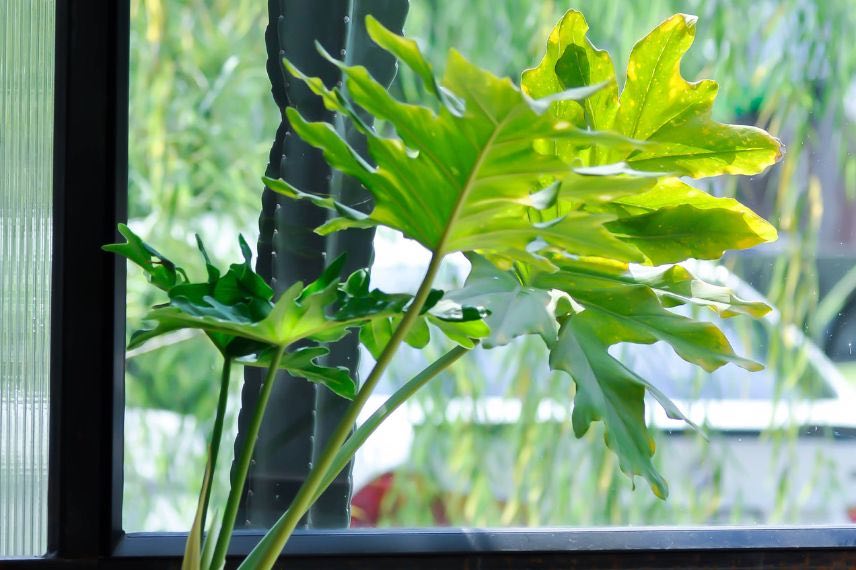
Position philodendrons in a well-lit setting, avoiding direct sunlight
Care
Frequency and method of watering
It is important not to overwater Philodendrons. These plants prefer soil that is slightly damp, but do not tolerate standing water.
Frequency of watering depends on several factors, such as light, temperature and substrate type. Generally, water when the top few centimetres of the substrate are dry to the touch. Use water at room temperature and water evenly. If you have used a very well-draining substrate, don’t hesitate to water generously, over a sink for example, provided you do not leave water standing in the saucer or cachepot.
Managing ambient humidity
Philodendrons, native to tropical environments, appreciate high ambient humidity. In dry environments, particularly in winter with heating, it may be necessary to increase humidity around the plant. This can be achieved by placing a humidifier nearby or by regularly misting the plant with water.
Fertilising advice
Fertilising helps provide nutrients needed for growth of Philodendrons. Use a balanced fertiliser, suitable for indoor plants, and apply it according to the manufacturer’s instructions, usually once a month during the growing season. Avoid fertilising in winter. If you have used vermicompost, no need to fertilise further, provided you add it every 3 to 6 months.
Diseases and pests
Identification of common diseases
Philodendrons can be susceptible to a range of diseases, notably root rot, often caused by overwatering. Symptoms include yellowing and wilting of leaves. Leaf spots, caused by fungi or bacteria, appear as brown or black spots on leaves. To prevent these diseases, ensure the substrate drains well and avoid excess moisture.
Pest control
Common pests include aphids, scale insects and red spider mites. These pests attack the leaves, causing yellowing, spots or distortion of the foliage. To combat them, keep black soap on hand to dilute at 15 to 30 g per litre of water. Depending on the pests, other ingredients should be added to make an effective treatment.
→ For more information, read our articles: Philodendron diseases and pests, the aphids, the scale insects, the red spider mites.
Prevention and natural solutions
Prevention is the best strategy against diseases and pests. Maintaining good hygiene, ensuring adequate air circulation around the plant, and avoiding leaf damage are effective preventive measures. Inspect your plant regularly for signs of pests and act quickly to prevent their spread. For treatments, favour natural and organic solutions, which are less harmful to the environment and to the plant.
- Subscribe!
- Contents
Comments