





























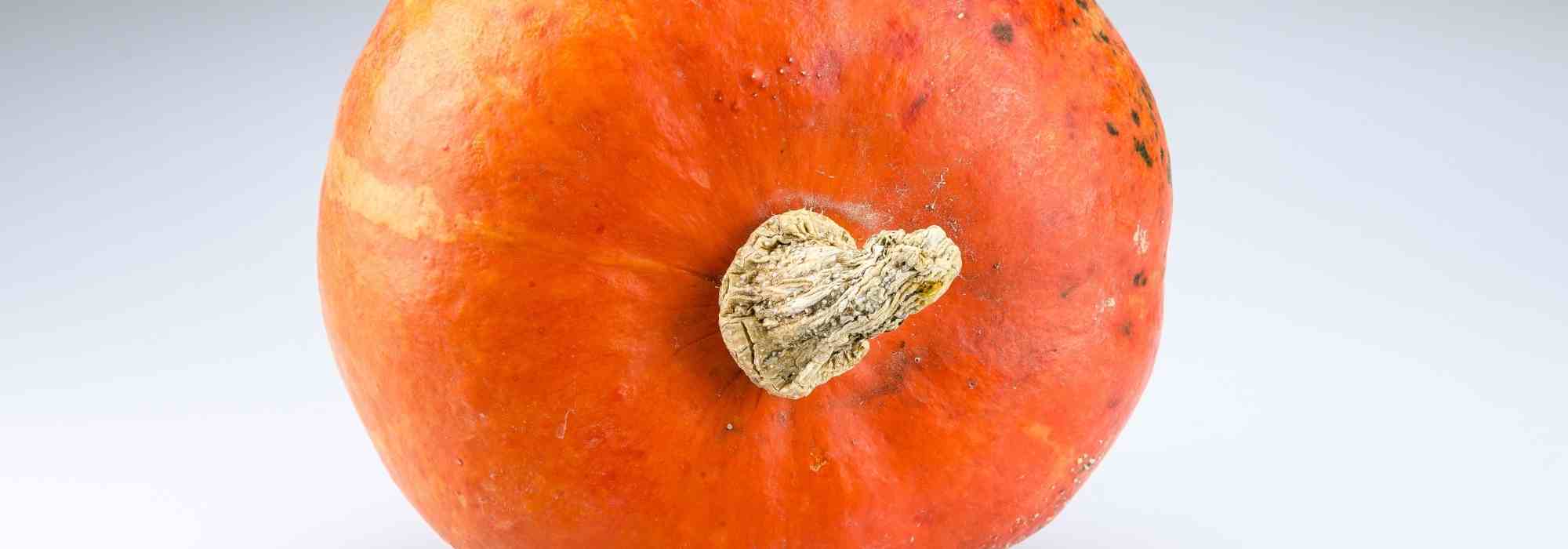
Growing red kury squash: our tips
Our single tips for sowing, planting and harvesting beautiful potimarron pumpkins in the garden
Contents
In the beautiful and extensive Cucurbitaceae family, the red kuri squash stands out, with its flamboyant colour and its inimitable flavour, reminiscent of chestnut. In just a few decades, it has become one of the Cucurbitaceae’s favourite crops for both gardeners and cooks. Originating from Eurasia, though it is a cultivar of the pumpkin (which originates from the Americas), this fruit-vegetable is a staple of autumn and winter harvests. Its ease of cultivation, its robustness to temperature fluctuations (once the frosts have passed), and its exceptional keeping ability make it a top choice for any allotment or vegetable garden.
Discover all our tips and little secrets for growing red kuri squash, from sowing under cover to harvest. Don’t forget our tips for storing it properly.

What exactly is potimarron?
The potimarron is a squash, closely related to pumpkin, in the genus Cucurbita maxima, and a member of the wide family Cucurbitaceae. This is a winter squash that differs from its close relative (the pumpkin!) by its fruits being smaller and less flattened, slightly pear-shaped. A potimarron typically weighs between 2 and 3 kg. The fruits have a thin bark (which can be eaten!) of reddish-orange colour (sometimes blue-grey) and a yellow-orange, starchy flesh, whose flavour recalls that of chestnuts. Hence its name…
The potimarron is delicious in tart, but it can also be eaten in soup, purée, fritter, or fried. It can also be eaten raw, shredded, for example with carrots and beetroot. It is very rich in vitamin C and provitamin A, in trace elements (phosphorus, calcium, magnesium, potassium) and in amino acids. It is more energy-dense than pumpkin.
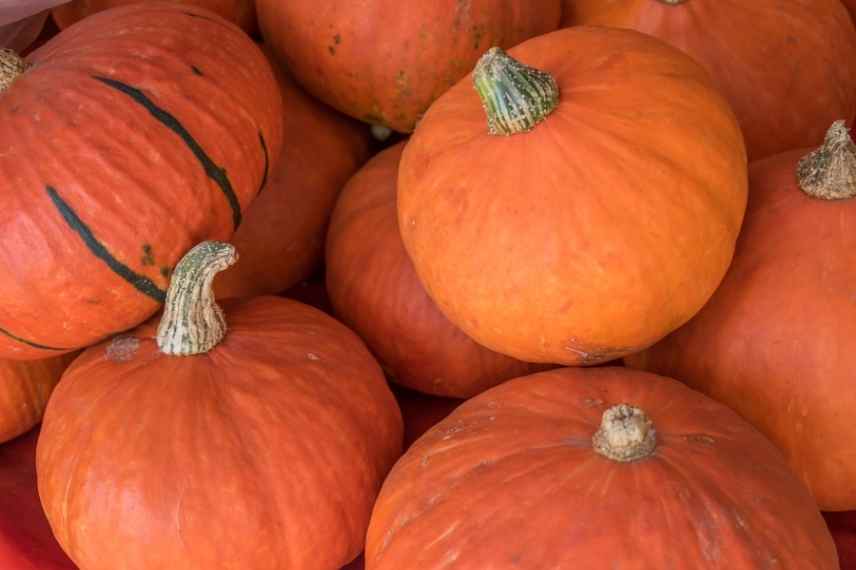
Potimarron is a close relative of pumpkin
In the vegetable garden, it is a spreading plant. Its stems can spread up to 3 m.
There are several common varieties:
- ‘Uchiki Kuri’: a productive and early variety that produces medium-sized fruits
- ‘Red Kuri’: a variety that yields small fruits of excellent flavour
- ‘Blue Kuri’: a variety with striking blue skin that produces medium-sized fruits with very fragrant flesh
- ‘Divine F1’: an F1 hybrid variety, very productive and relatively early.
Read also
Pumpkin: harvest and storageWhen and how to sow the seeds of this squash?
Potimarron, like all cucurbits, is extremely sensitive to cold and cannot tolerate frost. It is therefore essential to sow at the right time to avoid planting seedlings that are too fragile. Seedlings can be sown under cover or directly in the ground.
When to sow ?
- Under cover : the sowing takes place from March to the end of April. This allows plants to be ready to be transplanted about 3–4 weeks later, i.e. after the Ice Saints (around 15 May).
- In the open ground : direct sowing is possible from mid‑May in mild regions, or once the soil has reached a temperature of at least 12°C.
How to sow ?
To increase the germination rate, you can soak the seeds overnight in warm water.
Under cover
- Fill standard pots or biodegradable pots with a mixture of seed compost and well‑decomposed compost
- Push 2–3 seeds per pot, to a depth of about 1 cm
- Water gently with a spray bottle and keep the potting mix moist
- Place the pots in light and warmth.
Dès que les plantules ont développé 2 à 3 vraies feuilles, thin out to keep only the strongest plant. Remove the others at soil level to avoid damaging the roots of the remaining plant.
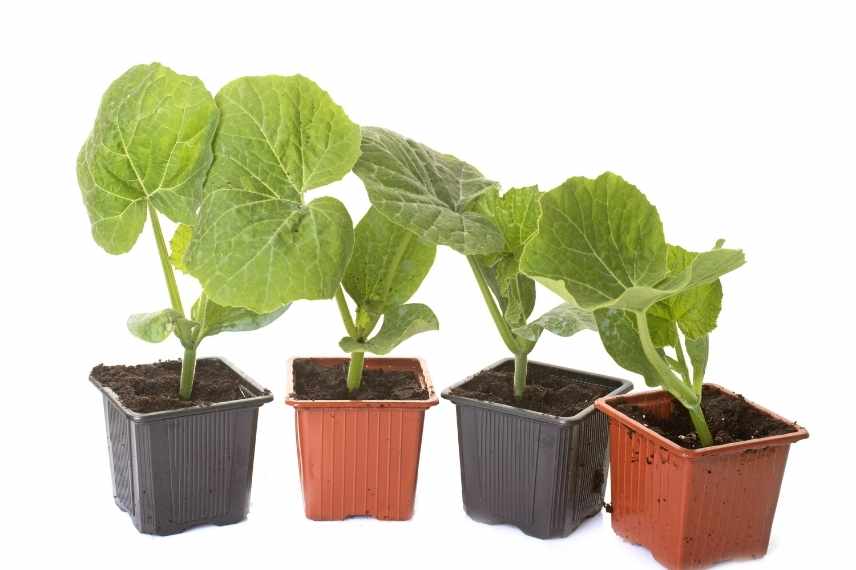
Potimarron is sown in seedling pots under cover, or directly in the ground from mid-May
In the open ground
- Prepare the soil by incorporating a good dose of compost or well‑rotted manure (potimarron, like all squashes, is hungry for nutrients!)
- Plant 3–4 seeds about 1 cm deep
- Once germination has occurred, thin out to keep only the strongest plant
Where, when and how to plant red kuri squash?
The planting of pots purchased from shops or online, or transplanting young plants started indoors, is a crucial step that must be carried out with care to ensure a good establishment.
Where to plant?
The Potimarron is a very hungry plant. It requires soil rich in organic matter, deep and well-drained. Before planting, it is essential to enrich the soil with well-decomposed compost or manure. It needs a sunny, warm location.
The Potimarron is a sprawling plant that takes up a lot of space. You should therefore allow 1 to 1.5 m between each plant, and 1 to 2 m between rows.
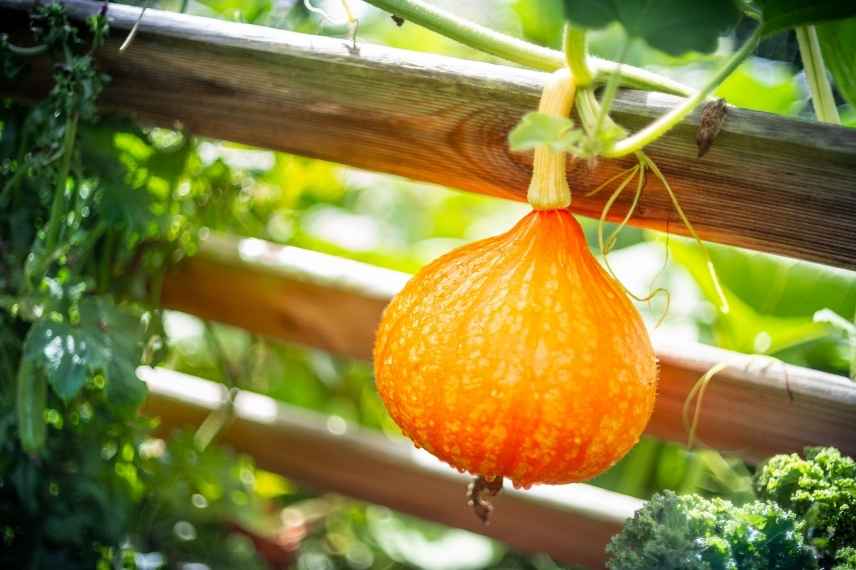
Potimarron thrives in rich soil and full sun
When to plant?
The golden rule is to plant once all risk of frost has definitely passed, generally from mid-May to early June, when the soil has warmed sufficiently and night-time temperatures no longer fall below 10°C.
How to plant?
- Dig a hole wider than the root ball and mix in a little more well-decomposed compost or manure
- Set the root ball in the hole, making sure not to bury the collar
- Firm the soil gently around the plant, water thoroughly, then immediately lay a thick mulch around the plant.
Read also
Pumpkin: planting, sowing, growingWhat care is needed to achieve a beautiful harvest?
Once the plants are established, regular maintenance is the key to good yields. Potimarron is certainly fairly easy to grow, but it requires some care to maximise fruiting and protect it from diseases.
Watering
Potimarron requires a regular and steady watering, especially during periods of high heat and drought, and during fruit growth.
- Keep the soil consistently moist, but never waterlogged. A lack of water would produce small fruits with flesh less sweet
- Always water at the base of the plant, deeply, avoiding wetting the foliage
- Stop watering in late August/early September to promote fruit maturation and concentrate sugars, which will improve flavour and storage.
Fertilising
In addition to the initial input, Potimarron benefits from nutrients during its growth, particularly at flowering and fruiting. Potimarron is very hungry for potassium (K) to form its fruits. A potassium-rich organic fertiliser or a solution of comfrey manure can be applied every two weeks during fruit growth.
Pruning (or pinching)
Pinching is an optional pruning technique, but recommended to limit the plant’s exuberance and concentrate its energy on a manageable number of fruits.
- When the plant has 4 to 5 leaves, cut the main stem above the second leaf. This will force the plant to develop lateral stems
- When the secondary stems bear small fruits, leave 2 or 3 per stem, then pinch the stem two leaves after the last fruit kept. This will stop the stem’s growth and direct energy toward the fruit. In general, aim to keep between 2 and 5 fruits per plant, depending on the vigour of the plant.
Protection against diseases and pests
Potimarron is susceptible to a few enemies namely powdery mildew and downy mildew, grey mould and aphids. It is enough to keep adequate spacing between each plant, water at the base without wetting the foliage and use mulch. To prevent rot, ensure that the fruits do not touch the soil directly by keeping them on the mulch, or by using a tile or a flat brick.
To treat aphids, use diluted black soap in water. Introducing ladybirds is a very effective biological control.
Harvest and storage of potimarrons
Potimarron has the advantage of being a vegetable with good keeping qualities, but its keeping depends entirely on harvesting at the right moment and under the best conditions.
When to harvest?
The moment of the harvest generally takes place from September to October, strictly before first frosts. A fruit that has frozen will not keep. Maturity is reached when:
-
- The peduncle begins to dry out and become corky (yellow, brown, or very hard)
- The skin is hard and smooth. It is difficult to dent with a fingernail
- The fruit gives a dull sound when tapped.
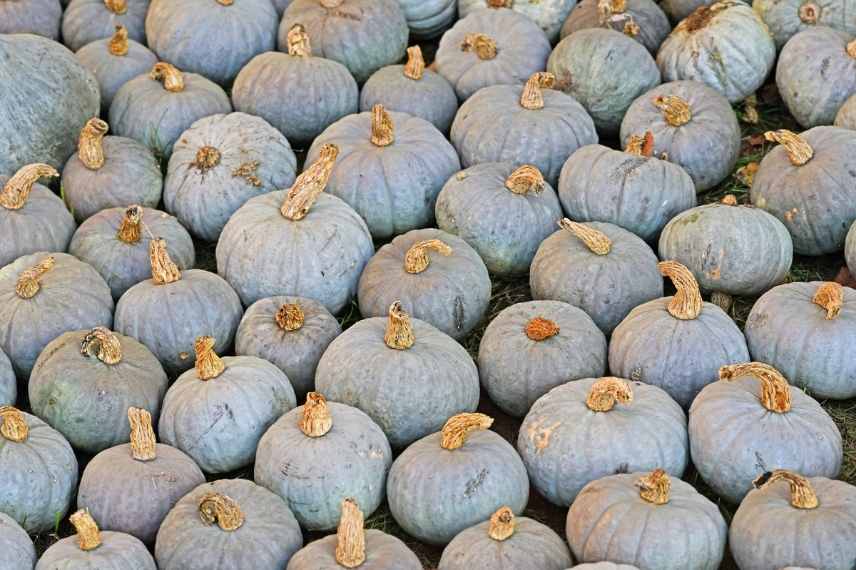
The ‘Blue Kuri’ variety has a bluish skin
How to harvest?
The quality of the harvest determines keeping quality. It is therefore essential to harvest in dry and sunny weather, with a clean and disinfected pruning shear or knife. Cut the stem, leaving a long peduncle (minimum 5 to 10 cm) attached to the fruit.
Storing potimarron
Potimarron stores exceptionally well, keeping for between three months and almost a year for some varieties.
Potimarrons should be stored in a dry, well-ventilated place at a constant temperature between 10°C and 15°C. A non-heated room, a dry garage or an attic will usually do. Avoid cool, damp cellars (below 10°C, they tend to wilt and rot).
Place potimarrons on wooden shelves or pallets, ensuring they do not touch each other, to allow air to circulate around them.
It is essential to check the fruits regularly and remove immediately those showing signs of rot.
- Subscribe!
- Contents
Comments