


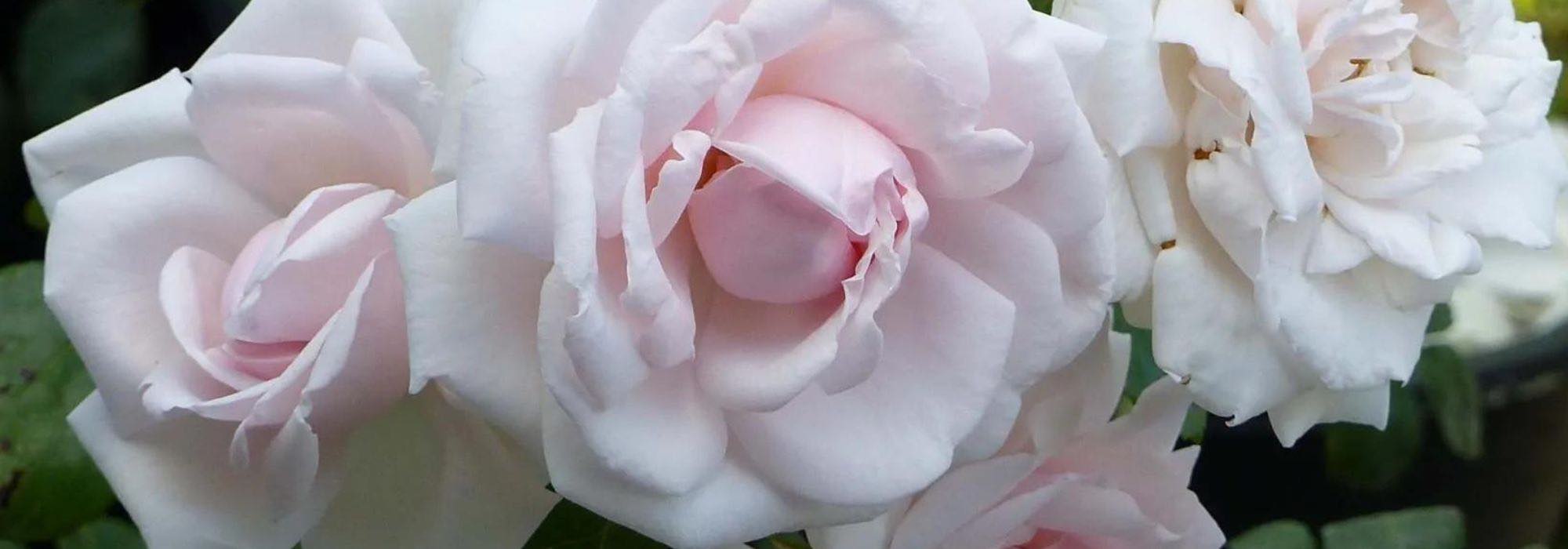
Growing roses in partial shade: it is possible!
Flowers aplenty, even in shaded areas
Contents
Growing roses in partly shaded areas can seem a challenge, but some cultivars thrive surprisingly well with less direct sun.
Whether your garden has partial shade from buildings, tall canopy trees, or if you’re located in a region that isn’t particularly sun-drenched, some roses adapt very well to these conditions.
In this article, let’s explore seven varieties of roses that thrive in partly shaded conditions, offering abundant and long-lasting flowering.
shade-loving roses are chosen for their ability to bring light and colour to the darkest corners of your outdoor space.
From the beauty of the flowers to their intoxicating fragrance, each rose on our list has been selected to enrich your garden without needing the full sun that more traditional varieties require.

Climbing rose 'Gloire de Dijon'
Created around 1850 by the French horticulturist Henri Jacotot, the climbing rose ‘Gloire de Dijon’ is a remarkable hybrid, recognised for its vigorous growth and climbing habit, and can reach over 3 metres in height. Its young reddish shoots develop into matte green foliage by summer, giving a musky aroma when crushed.
Its abundant flowering begins in June and continues to November, with vanilla-yellow flowers evolving towards warmer hues of apricot and salmon pink in autumn. These large double, delicately scented flowers open in open-cupped forms.
This rose, suited to dry soils and semi-shaded exposures, shows good disease resistance, although it is susceptible to downy mildew in humid climates. It is ideal for adding a splash of colour and romance to gardens, in shaded areas, particularly in hot, dry climates.
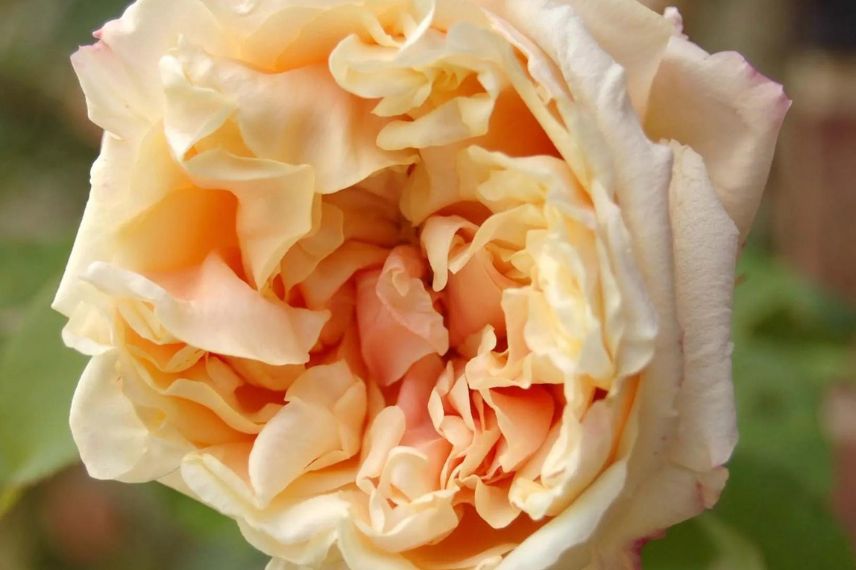
Climbing rose 'Mermaid'
Climbing rose ‘Mermaid’, introduced in 1878 by the English rosarian William Paul, is a variety resulting from the cross-breeding between the Rosa bracteata, an Asian wild rose, and a yellow-flowered tea rose. This vigorous climber is appreciated for its almost continuous flowering from June to the first frosts and its almost evergreen dark, glossy green foliage.
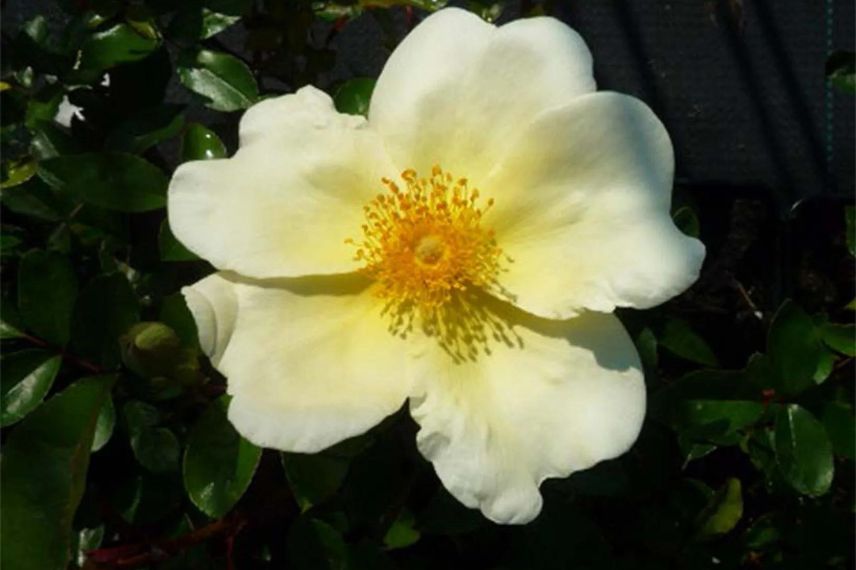
Rosa 'Madame Alfred Carrière'
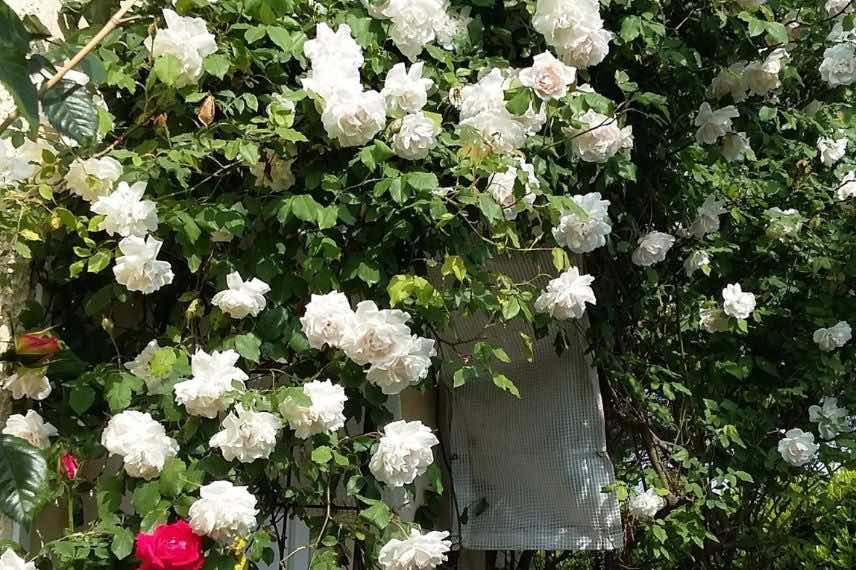
The climbing rose ‘Madame Alfred Carrière’, introduced in 1879, is hailed as one of the finest repeat-flowering climbing roses. Renowned for its vigour and hardiness, this rose offers from May to October an abundance of large double flowers, ivory-white with a pink-centred heart, exuding a captivating fruity fragrance. Capable of thriving even in shaded areas and poorer soils, it can cover an entire wall with its long, lightly thorny canes, bearing luxuriant dark green foliage.
Derived from a cross-breeding between a Noisette rose and Tea roses, ‘Madame Alfred Carrière’ easily reaches a height of over 3.5 metres. Its flowering begins in June, sometimes as early as May in mild climates, and lasts until the first frosts.
This Noisette hybrid rose is remarkably resistant to diseases and tolerates difficult conditions well, although it is susceptible to downy mildew in humid climates.
‘Madame Alfred Carrière’, recognised by the Royal Horticultural Society and included in the “Old Rose Hall of Fame”, is a preferred choice for gardeners seeking to add lushness and colour to their garden, particularly in dry climates.
Read also
10 white-flowered climbing rosesRose 'Jacques Cartier'
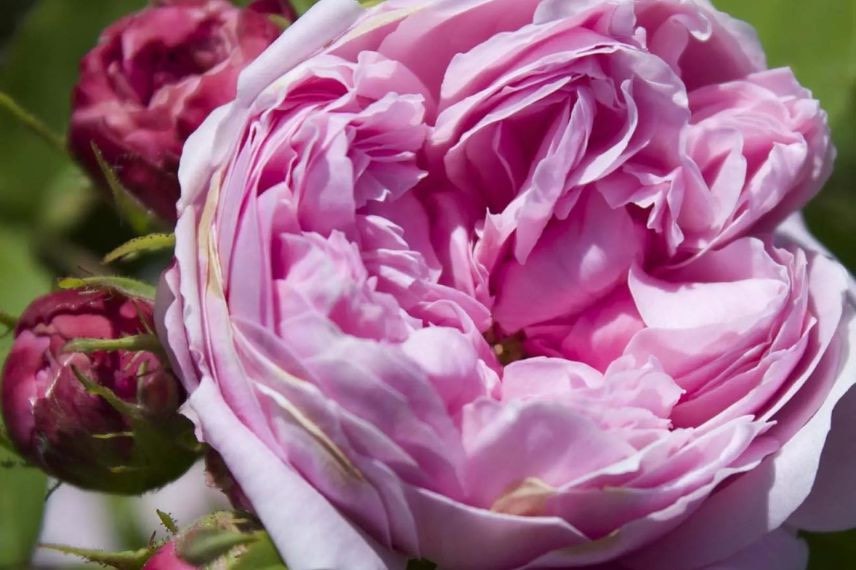
The rose bush ‘Jacques Cartier’, introduced in 1868 by Moreau-Robert, is often the go-to choice for new gardeners due to its ease of cultivation and exceptional qualities. This variety originates from the rose bush ‘Duchesse de Portland’, discovered in 1800 near Naples. It reaches a height of 1.2 metres and a spread of 75 cm, making it ideal for small spaces.
Its deciduous, dark green foliage, borne on sturdy, thorny stems, is remarkably disease-resistant. The flowering starts mid-June, repeats throughout the summer and lasts into autumn, with very double flowers, 8–10 cm in diameter, bearing more than 40 petals arranged in quarters. The bright pink buds open into pale pink flowers, their blossoms edged with white, and emit a powerful, intoxicating fragrance.
Easy to fit into any garden, the Jacques Cartier rose pairs well with various herbaceous perennials and shrubs. In a border, it pairs harmoniously with white foxgloves.
Plant your Jacques Cartier rose in a sunny or partial shade position, which it tolerates well, particularly in hot climates.
Rose 'Felicité et Perpetue'
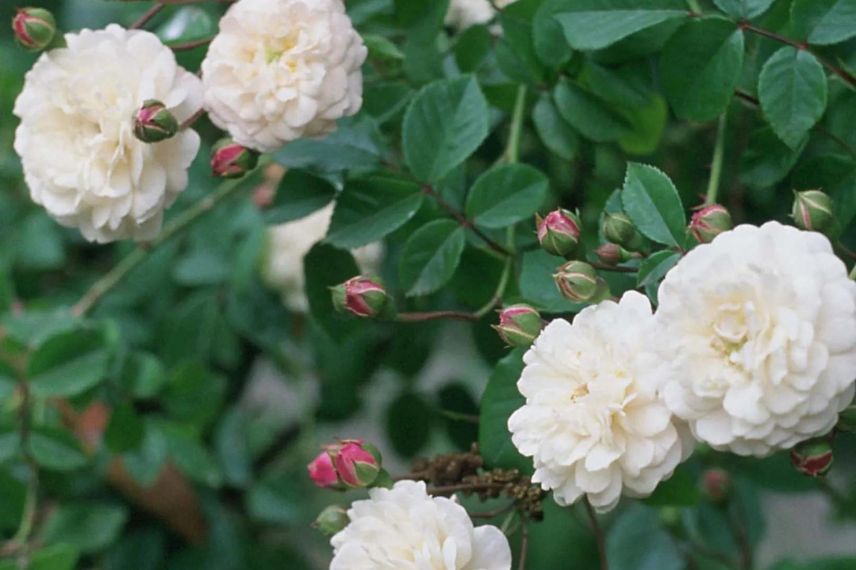
The climbing rose ‘Félicité et Perpétue’, created in 1827 by the Duke of Orléans’s chief gardener, is a direct descendant of the evergreen rose (Rosa sempervirens). It develops large clusters of small cream-white roses, slightly pink-tinged, with a primrose scent, from mid-June to mid-July.
Particularly suited to hot, dry climates, Félicité et Perpétue has glossy, almost evergreen foliage and can reach a height of 4–5 metres with a spread of 2–3 metres. Its stems are flexible and armed with small curved thorns, bearing flowers arranged in long clusters on flexible stems.
This rose is ideal for gardens in southern France, tolerant of partial shade and able to adapt to stony, dry soils. It is perfect for embellishing structures such as fences or sheds, giving them rustic charm. Although it flowers only once per season, its pairing with clematis such as ‘Purpurea Plena Elegans’ and ‘Princess Kate’, which bloom later in the season, ensures lasting beauty. This hardy, low-maintenance rose is an excellent choice for gardeners seeking a combination of easy care and natural aesthetics.
Plant it in well-worked, well-drained ordinary soil, in a sunny position north of the Loire or in partial shade to shade elsewhere.
Old-fashioned rose 'Stanwell Perpetual'
Climbing rose 'New Dawn'
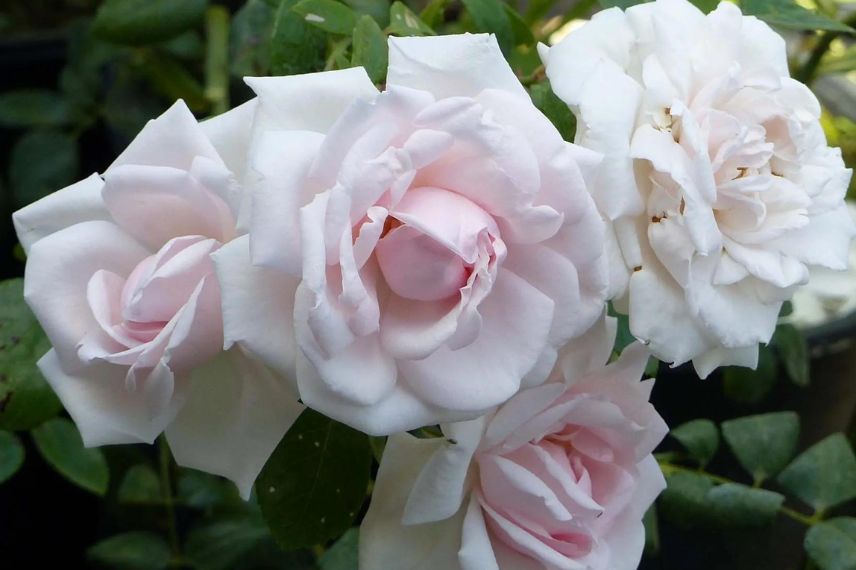
Introduced in 1930 by Somerset Rose in England, the climbing rose ‘New Dawn’ is a mutation of the variety ‘Dr. Van Fleet’. This rose traces its origins to the Wichura rose, robust and vigorous, and shares common characteristics with old-fashioned roses such as ‘Alberic Barbier’ and ‘Albertine’. It is distinguished by its arching canes that can reach over 5 metres, ideal for decorating pergolas and trellises.
‘New Dawn’ offers continuous flowering from early summer to late autumn. Its roses, a very pale silvery pink with a heart slightly deeper, measure about 8 cm in diameter and are grouped in small cut flower arrangements. These double, crumpled flowers already echo the shapes of modern roses and emit a delicate fruity fragrance.
Renowned for its robustness and ease of maintenance, ‘New Dawn’ prospers in a range of conditions, even in shaded areas and on different soil types, provided that the soil is well loosened and well drained. It was awarded an AGM by the Royal Horticultural Society in 1993 and by the World Federation of Rose Societies in 1997, testifying to its exceptional qualities.
Particularly versatile, ‘New Dawn’ is perfect for large spaces needing cover and colour, capable of concealing an unsightly structure or climbing sturdy walls and trees.
- Subscribe!
- Contents

Comments