





























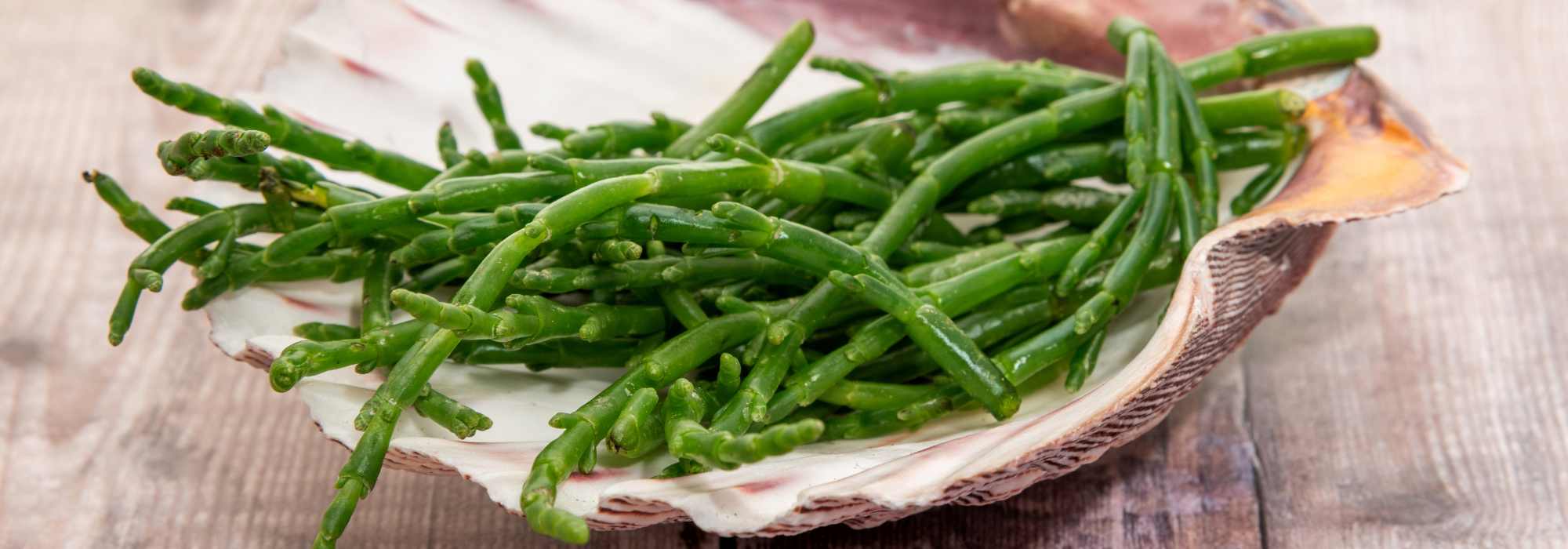
Growing glasswort in a pot: how and why?
the seaside at home
Contents
The common glasswort or sea pickle, a succulent plant of salt marshes, is not only a culinary delight with its unique flavour, but also a very original plant to grow. Learn how to plant it, grow it in a pot, and harvest it to enrich your dishes with a natural saline touch. Our care guide will walk you through it step by step, from choosing the container and substrate to harvesting techniques, to help you make the most of this exceptional plant.
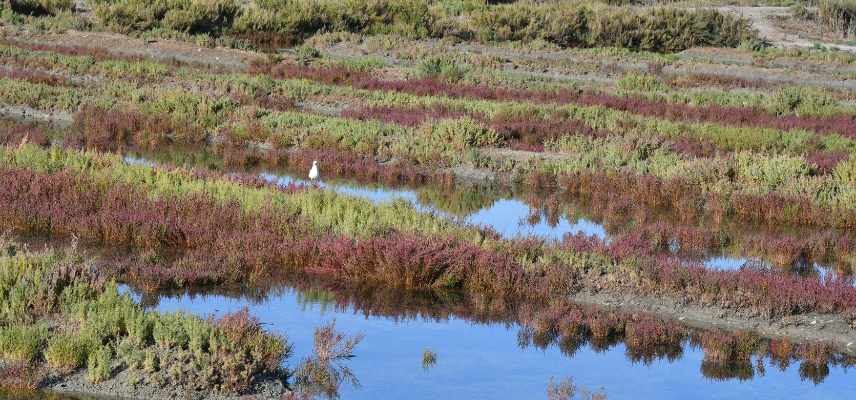
European glasswort thrives in abandoned salt marshes
→ All about Salicornia in our complete guide: Salicornia, sea pickle — planting, growing and harvesting.

A quick note on samphire
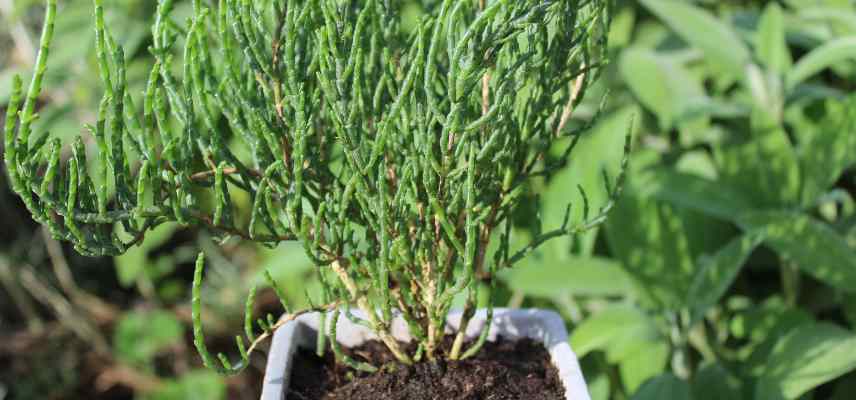
European samphire (Salicornia europaea), also known as sea asparagus or sea pickle or samphire, is a succulent plant that grows in salt marshes and coastal areas. Valued for its distinctive salty flavour, it is used in cooking, notably in salads, fish dishes, and as a condiment. Rich in minerals and vitamins, it makes a nutritious dietary supplement. Its pot cultivation allows gardening enthusiasts to experiment with an unusual plant that adds a seaside touch to their garden.
Why grow it in a pot? Well, growing salicornia in pots provides it with the right substrate (very sandy) which is hard to find in a garden. This way, you can enjoy its undeniable flavour while protecting its natural habitat and the biodiversity of coastal zones.
Please note: there exists a Japanese samphire or Japanese sea bean (Salsola komarovii) that is grown in the vegetable garden as an annual and which requires the same needs as European samphire.
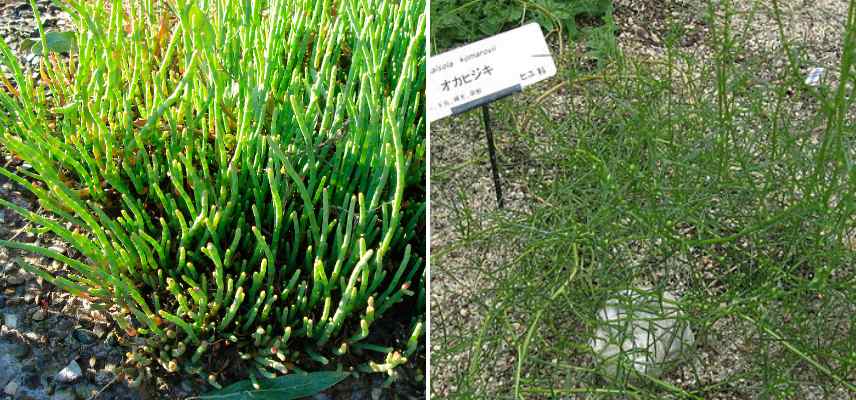
European samphire (on the left) and Japanese samphire (on the right, © Kenpei-Wikimedia Commons)
The harvest of glasswort
Harvesting European samphire from the garden is done with care to preserve the plant and ensure ongoing production. Here is how to proceed:
- Ideal time for harvest : glasswort is generally ready to harvest in late spring or early summer, when the shoots are still tender and green, before they harden and become woody. The exact period may vary depending on your local climate and the time of planting.
- Harvesting technique : use clean scissors or a sharp knife to cut the shoots of samphire. Harvest by cutting the shoots to about one third of their length from the top. This encourages the plant to produce new shoots, thereby prolonging the harvest period.
- Quantity to harvest : take only the quantity of samphire you need. The plant can continue to produce throughout the season if it is not over-harvested. Leaving enough shoots on the plant ensures continuous growth and the health of your samphire.
- After harvesting : once harvested, samphire can be rinsed with fresh water to remove surface salt and any debris. It is best enjoyed fresh, but can also be kept for a few days in the fridge, wrapped in a damp paper towel and placed in a plastic bag.
- Culinary use : samphire has a distinctive salty flavour that pairs well with fish dishes, salads, and can be used as a garnish or vegetable in its own right. It can be eaten raw, blanched or sautéed, depending on your preference.
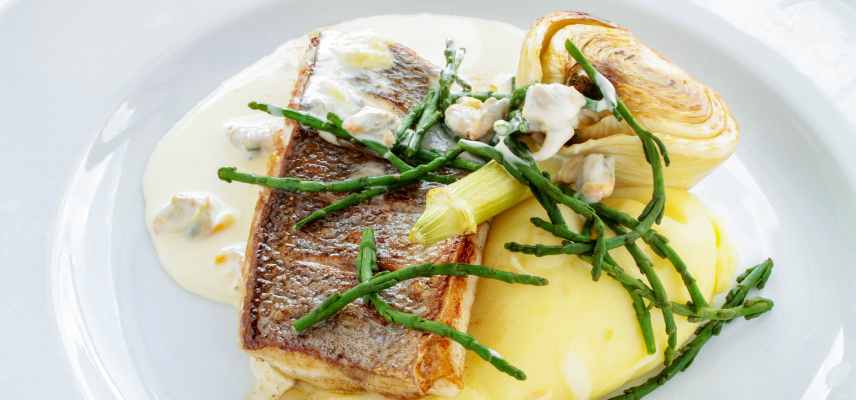
Samphire will accompany all your fish or seafood dishes
Choosing the right container
To grow samphire in a pot, opting for a container at least 30 cm deep is essential, enabling good root development. Materials such as terracotta or recycled plastic are recommended, as they provide good air and water circulation.
A pot with drainage holes is crucial for draining excess water, thereby preventing root rot, a common problem in container gardening.
Which growing medium should I choose?
The ideal substrate for growing samphire in pots mirrors its natural, salty, well-drained conditions. A cactus mix, which provides fast drainage, makes a perfect base, as it prevents excess moisture while providing good root aeration.
To recreate samphire’s preferred saline environment, one can add a moderate amount of sea salt to the soil mix, or use slightly saline water for irrigation. However, it is crucial to dose the salt carefully to avoid harming the plant. The aim is to simulate samphire’s natural environment without compromising its health and development. Typically, for the substrate, adding about 1 teaspoon (5 g) of sea salt per litre of soil can simulate samphire’s preferred saline conditions. For the irrigation water, dissolve 1 teaspoon of sea salt in 1 litre of water; this is a good measure to maintain salinity without overloading the plant.
Potting samphire
Where to place the pot?
Choose a location that benefits from full sun for at least 6–8 hours a day. However, and although samphire likes sun, in regions with a very hot, sunny climate, a little shade during the hottest part of the afternoon can prevent water stress and leaf scorch. A spot offering partial shade or a shade veil during these periods is ideal.
Finally, a well-ventilated spot helps prevent fungal diseases, especially in humid areas. However, avoid sites that are excessively windy as they could dry out the soil quickly or damage the plant.
When and how to plant your samphire?
Early spring, after the last frost and when temperatures start to warm up regularly, is perfect for planting samphire. This gives it the entire growing season to establish itself and thrive, taking advantage of the gradual increase in sunlight and temperatures.
Here are the steps for planting a potted samphire :
- Removing from the pot: dampen the soil in the pot slightly to ease removal of the plant. Gently tap the sides and bottom of the pot to loosen the samphire, being careful not to damage the roots.
- Planting: partially fill the pot with your prepared substrate. Place the samphire in the centre of the pot, ensuring the top of the root ball is level with the pot’s soil. Fill the sides with more substrate, lightly firm to remove air pockets, without over-compacting the soil.
- Initial watering: after planting, water the plant to moisten the substrate. This watering helps establish good contact between the roots and the new substrate. Ensure water drains freely through the drainage holes.
From seed, it’s possible!
- Timing: sow samphire seeds in early spring, after any frost risk, or indoors a few weeks before the end of frosts if you live in a region with a cooler climate.
- Substrate preparation: use a well-draining mix, such as a cactus mix or a home-made blend of potting compost, sand, and perlite. Ensure the pot or seed tray has adequate drainage holes.
- Sowing: scatter the seeds over the surface of the substrate and lightly cover with a thin layer of soil. Samphire seeds are small, so be careful not to bury them too deeply.
- Watering: moisten the substrate with water, taking care to use a spray bottle so you don’t displace the seeds with a jet of water. The substrate should stay moist, but not soggy.
- Growing conditions: place the pot or seed tray in a warm, well-lit spot. Samphire needs plenty of light to germinate and grow well.
- Transplanting: once seedlings have grown a few centimetres and all risk of frost has passed, you can transplant them into individual pots or outdoors if conditions allow. Be sure to acclimate them gradually to outdoor conditions to avoid a temperature shock.
Seasonal care
Spring
- Planting and sowing: it’s the ideal time to plant or sow samphire. Ensure that any risk of frost has passed if you are planting outdoors.
- Watering: start watering regularly to keep the substrate evenly moist, but not saturated. Samphire loves damp environments but does not tolerate waterlogging.
Summer
- Watering: increase the frequency of watering during the summer months, especially if you notice signs of drought in the substrate.
- Harvest: late summer is often the best time to start harvesting samphire, when the stems are tender and juicy.
Autumn
- Reducing watering: as temperatures begin to fall, gradually reduce the watering. Samphire will begin to enter dormancy in preparation for winter.
- Preparation for winter: if you are growing samphire in a pot outdoors in a cold region, consider moving it indoors or to a more protected place to avoid damage from frost.
Winter
- Rest: samphire is generally in dormancy during winter. Minimise watering, keeping the substrate barely moist.
- Protection from the cold: ensure the plant is protected from frost and cold winds, especially if grown outdoors.
- Subscribe!
- Contents
Comments