





























Growing hard shell fruits in the garden
Some of these fruit trees are quite easy to grow
Contents
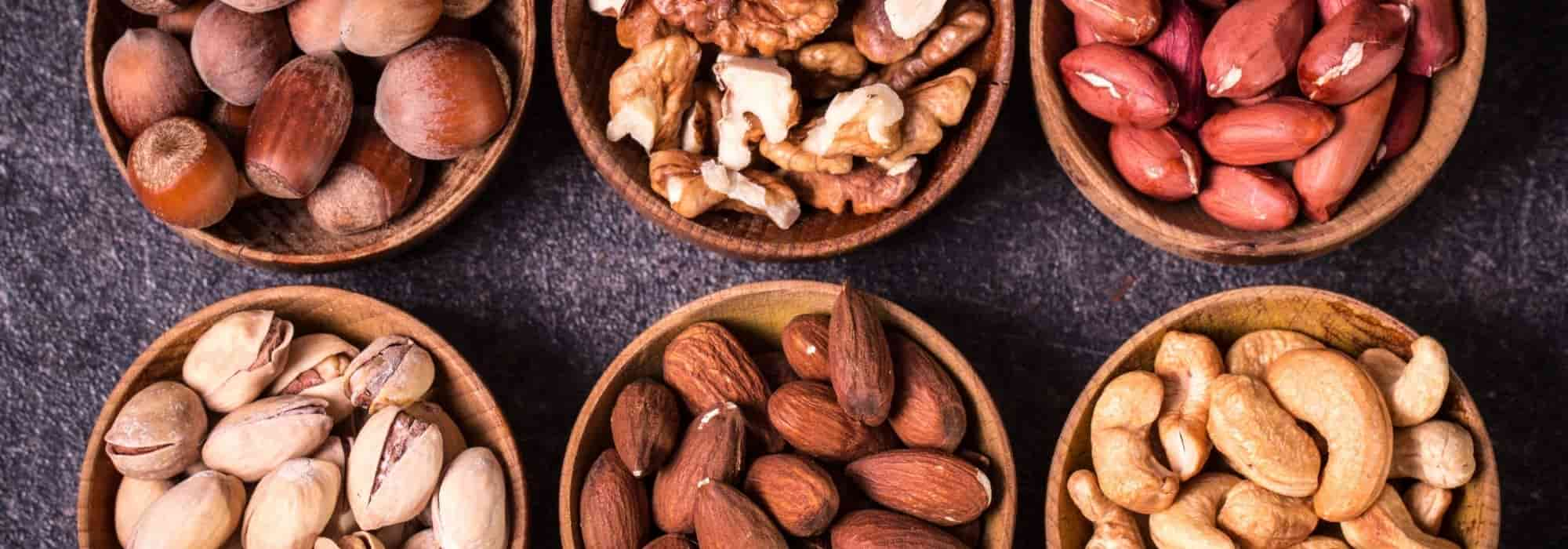
Ah, nuts… We tend to consume them roasted and salted during aperitifs, but it’s really in their natural state that we should be enjoying them. For we can never praise the culinary value, but especially the energy value of nuts enough. The various walnuts, cashew nuts, macadamia nuts, pecans, and Brazil nuts, almonds, pistachios, and hazelnuts are indeed particularly rich in nutrients such as vitamins, minerals, fibres, proteins…, as well as healthy fats. Recommended in certain diets like the Mediterranean, ketogenic, vegetarian, or vegan diets, or for athletes, nuts have a rightful place in a balanced diet. So, why not make a little space for them in the garden as well? Some can be easily grown throughout France, while others prefer regions with a milder climate.

Walnut (Juglans regia), the most versatile
Very hardy (down to -25 °C), walnut (Juglans regia) is a magnificent tree with a stately habit that can grow anywhere in France. However, it does not particularly appreciate the hot climate of southern France or altitudes above 600 metres. Self-fertile (although the slightly staggered male and female flowering encourages planting two different varieties close to each other), the walnut has a relatively long fruiting period, typically between 10 to 20 years. Some newer varieties, however, have a fruiting period of around 5 years. As for its longevity, it easily exceeds 100 years.
Walnut has an exclusive appearance in that its foliage, wide and dense, creates a thick shade. It is difficult to grow other plants nearby, so the walnut is best suited for large gardens.
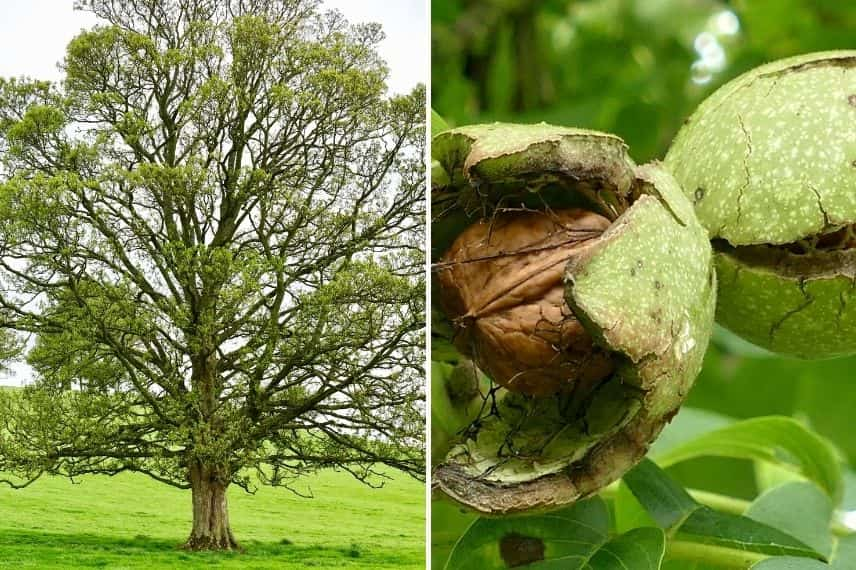
The walnut grows everywhere in France but fears the heat of the south
The young shoots of walnut can be susceptible to spring frosts, which is why in the north of the Loire, it is advisable to choose late varieties such as Franquette, Meylannaise, Parisienne, or Ronde de Montignac. The flowering of the walnut occurs from April to June depending on the varieties and features very decorative male aments and very discreet female flowers. As for the harvest, it takes place in September or October.
It prefers deep, loose soils, and especially well-drained and cool, as the walnut fears both humidity and drought. Regarding its location, it should be sunny and sheltered from cold winds.
Feel free to consult Eva’s article, which will tell you how to plant, prune, and care for walnuts.
Hazel tree (Corylus avellana), a beautiful ornamental tree
Also very hardy like the walnut (down to -30 °C), hazel is, however, sensitive to spring frosts. Nevertheless, it adapts to all climates, including mountainous regions up to 1500 m in altitude.
It is a deciduous bush, equally at home planted in hedges, as a specimen, or in clumps. Wherever it is, it will fully showcase its beauty: its long pendulous aments (male flowers) bloom between January and March, before the practically insignificant female flowers. This characteristic necessitates planting several varieties with overlapping flowering periods to hope for a harvest. Its heart-shaped, dentate foliage, green or purple, is also very decorative.
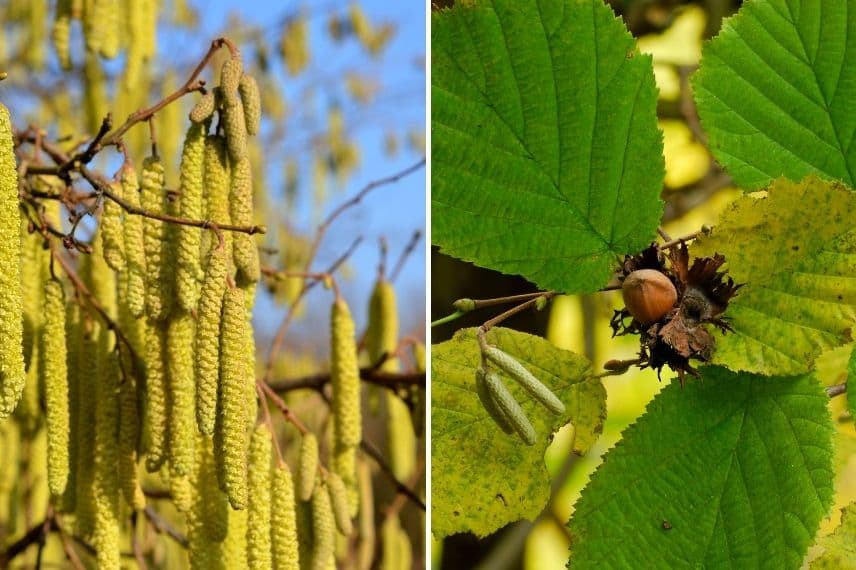
The hazel can be planted in hedges, as a specimen, or in clumps
Fruit production is significantly earlier than that of walnut, typically around 5 to 6 years for most varieties. It can bear fruit until the age of 60 to 80 years. Harvesting occurs in late summer for early varieties like Nottingham Frühe or Merveille de Bollwiller, or in September to October for later varieties like the Giant of Halle.
The hazel can thrive in sunny to partially shaded locations and in all types of soil, although it prefers cool, well-drained earth.
The hazel has a significant enemy, the weevil. This beetle can jeopardise an entire harvest.
To learn everything about the hazel, check out Eva’s cultivation sheet that tells you how to plant, prune, and maintain it.
Discover other Shell fruit
View all →
Available in 0 sizes
Available in 2 sizes
Available in 4 sizes
Available in 1 sizes
Available in 1 sizes
Available in 1 sizes
Available in 1 sizes
Available in 2 sizes
Available in 1 sizes
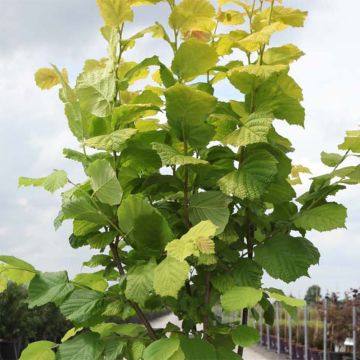
Available in 1 sizes
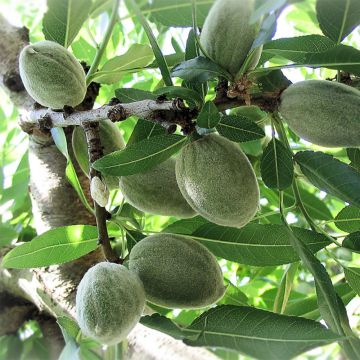
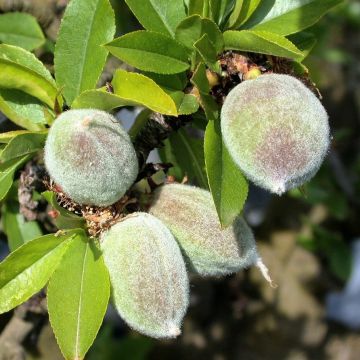
Almond tree (Prunus dulcis syn. amygdalus), found only in the South
We all know the almond tree by the fragrance of its flowering, heralding the arrival of spring. The almond tree indeed blooms from January to March, making it a tree suited to the south of France due to the damage that winter or spring frosts can cause.
This beautiful tree, which can reach heights of 8 to 12 metres, thrives in poor, dry, deep soil and requires little care. Although it is generally self-sterile, there are now self-fertile varieties that can be planted alone, such as All in One or Supernova.
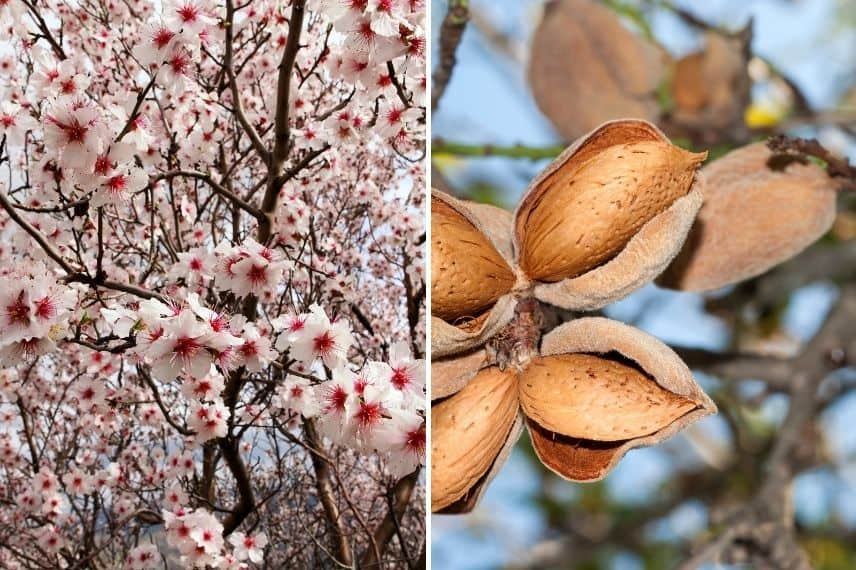
With early flowering, the almond tree thrives in the South
As a prunus, the almond tree can be affected by the same diseases as the apricot tree, but to a lesser extent. However, its main pest remains the Eurytoma, or almond wasp, particularly prevalent in the southeast of France.
To learn more, discover my growing guide on the almond tree.
Pecan tree (Carya illinoinensis) is a must-see
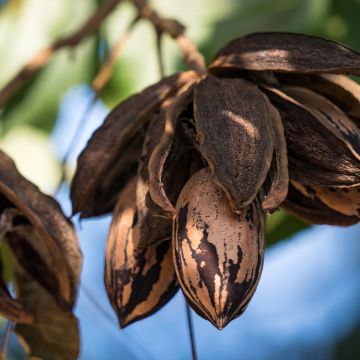
What is the pecan tree? Simply put, it is the large bush that produces pecans, often grown in the United States. This tree is not very frost-sensitive (it can withstand temperatures down to -15 °C) but has significant heat requirements to bear fruit. It therefore prefers the climate of southern France, which offers long, warm summers. However, it can be grown elsewhere for its ornamental appearance.
To achieve good fruiting, it is advisable to grow two trees in proximity. Indeed, pecan trees bear both male and female flowers, but they have staggered maturity. As for fruiting, it begins quickly, after 4 or 5 years of cultivation.
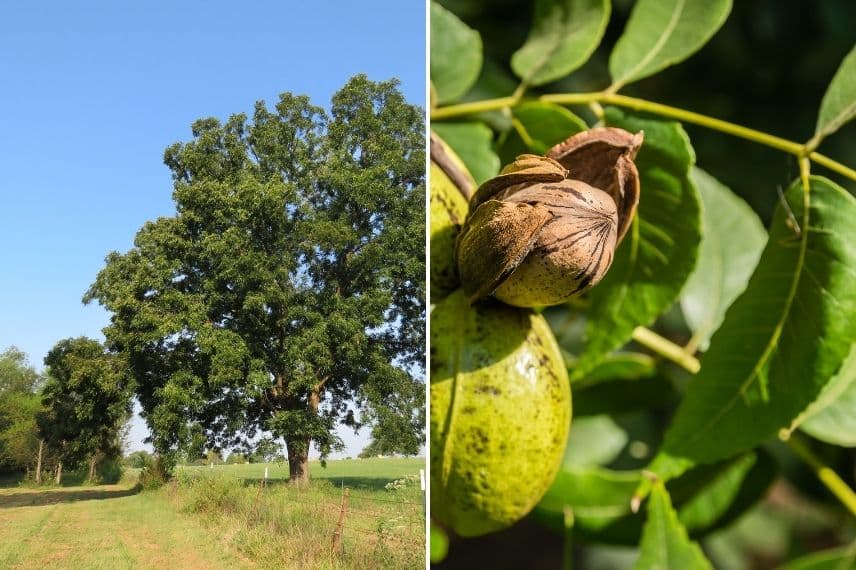
The pecan tree has a dense foliage
Its foliage is dense and takes on lovely yellow hues in autumn. It is a beautiful ornamental tree that does require a bit of space. It can reach 6 metres in spread and 20 to 25 metres in height, even up to 40 metres if it thrives.
Flowering occurs from March to May, with the harvest of pecans in summer and autumn. It needs rich, fresh to moist, well-drained soil and a very sunny exposure.
The pistachio tree (Pistacia vera), best suited for the South of France
As its name suggests, Pistachia vera produces pistachios. Not very cold-resistant, this small fruit tree, which rarely exceeds 10 metres, thrives only in the South of France. Indeed, it requires long periods of warmth.
Its fruiting occurs around 5 to 7 years. It is a dioecious variety that requires the presence of both male and female plants to be pollinated and thus bear fruit. This is a bush that blooms in late spring for a harvest of pistachios in late summer, which must be roasted before consumption.
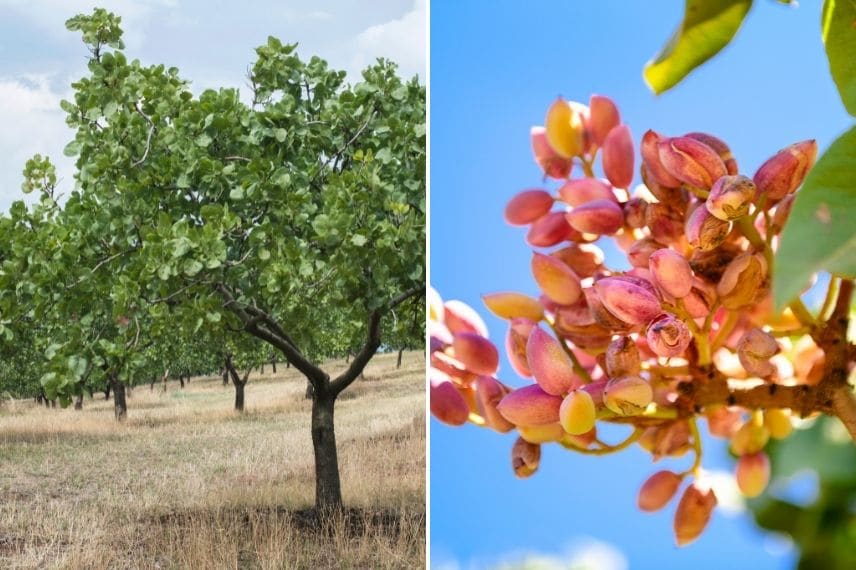
The pistachio tree needs long periods of warmth
The pistachio tree should be planted in full sun, sheltered from winds, in fertile, well-drained soil, preferably sandy and dry. It particularly dislikes heavy, wet soils. It tolerates drought.
The macadamia tree, a tree of Australian origin
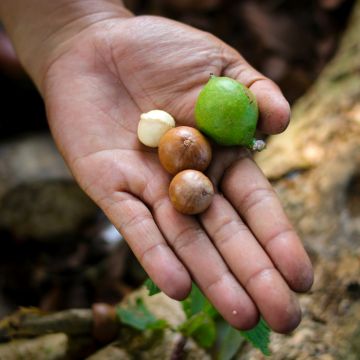
The macadamia tree (Macadamia ternifolia) is an evergreen fruit tree that produces macadamia nuts. Native to Australia and now grown in Brazil and South Africa, the macadamia requires warmth. It can be grown in Mediterranean regions in well-drained, possibly sandy, slightly acidic soil, and especially in full sun and well-sheltered conditions. It can also thrive in a pot on a terrace or balcony. It should be brought indoors in winter, as it is only hardy down to -3 °C.
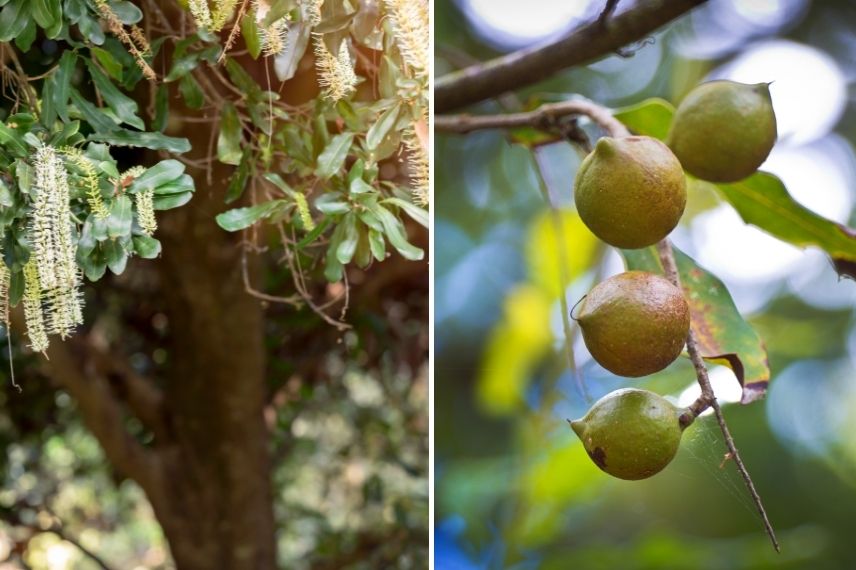
Sensitive to cold, the macadamia tree can be grown in a pot
It begins to bear fruit from its fourth year. It is covered in small white flowers in November and December. By January, the fruits form in clusters. After eight months, the time for harvest arrives when the nuts fall to the ground on their own.
The macadamia is not prone to diseases and requires no special maintenance.
It only reaches 10 metres in height and 5 metres in spread in our climate.
The cashew tree or the bush with cashew nuts
Originating from tropical regions around the globe, the cashew tree (Anacardium occidentale) is doubly interesting. It produces cashew nuts, as well as a fruit, the cashew apple, which is little known due to its fragility.
Reaching heights of 4 to 12 metres, this evergreen tree grows on a twisted trunk. It is adorned with small inflorescences of a yellowish-green colour in early spring, and its fruits ripen in the heart of summer. Fruit production begins as early as 3 years, but the cashew tree truly starts to yield around 7 to 8 years.
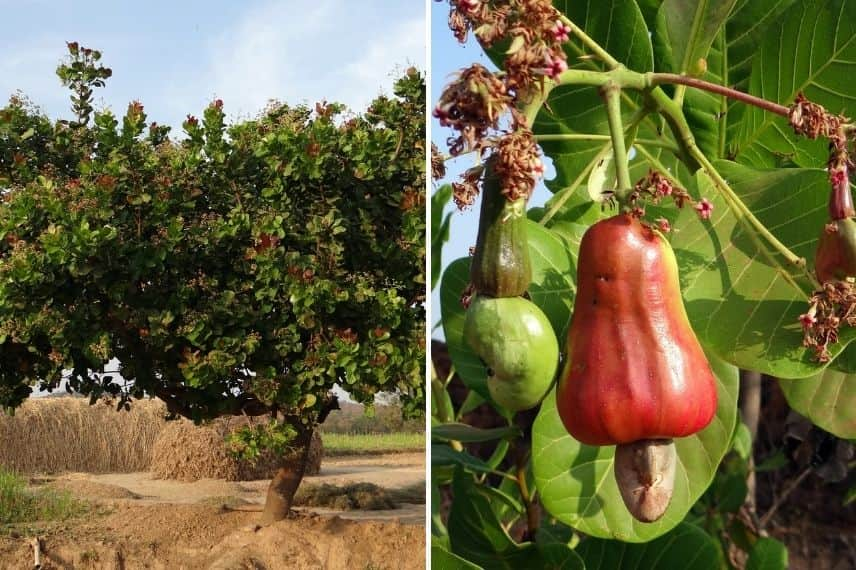
The cashew tree produces cashew nuts and cashew apples
Hardy down to -5 °C, the cashew tree can be planted along coastlines, but away from salt spray. It requires 6 hours of sunlight per day. It needs soft, deep, and rather acidic soil. Dwarf varieties can be grown quite easily in a large pot.
And what about peanuts?
At first glance, it seems logical to include the peanut among nuts. This is a mistake, as the peanut is the fruit of the groundnut, which is classified as a legume, just like peas, lentils, and chickpeas…
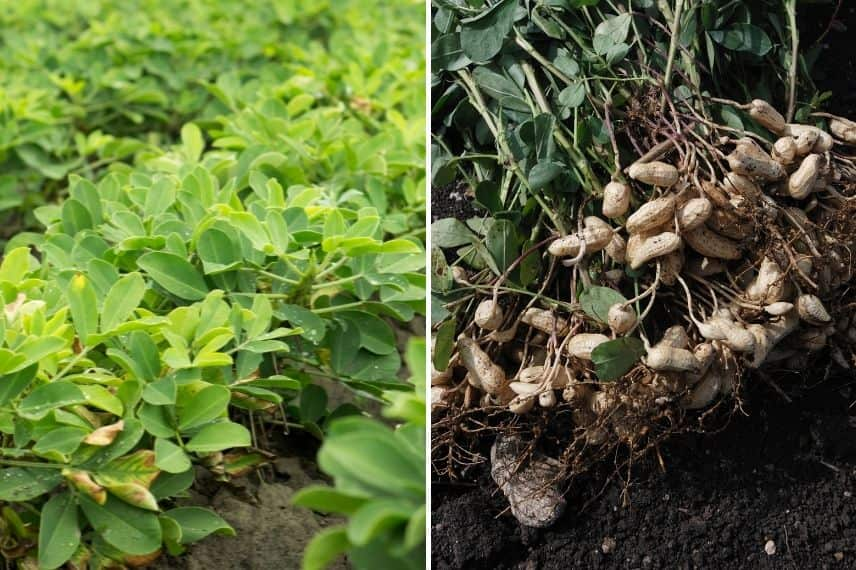
The peanut is not considered a nut
Moreover, nuts grow on trees or large bushes, whereas the groundnut is an herbaceous plant that produces pods. This plant is particularly remarkable in that the pollinated flowers bury themselves in the soil to bear fruit. Peanuts are therefore harvested from underground! Discover more with Pascale’s tips in: How to grow groundnuts to harvest peanuts?
- Subscribe!
- Contents
Comments