


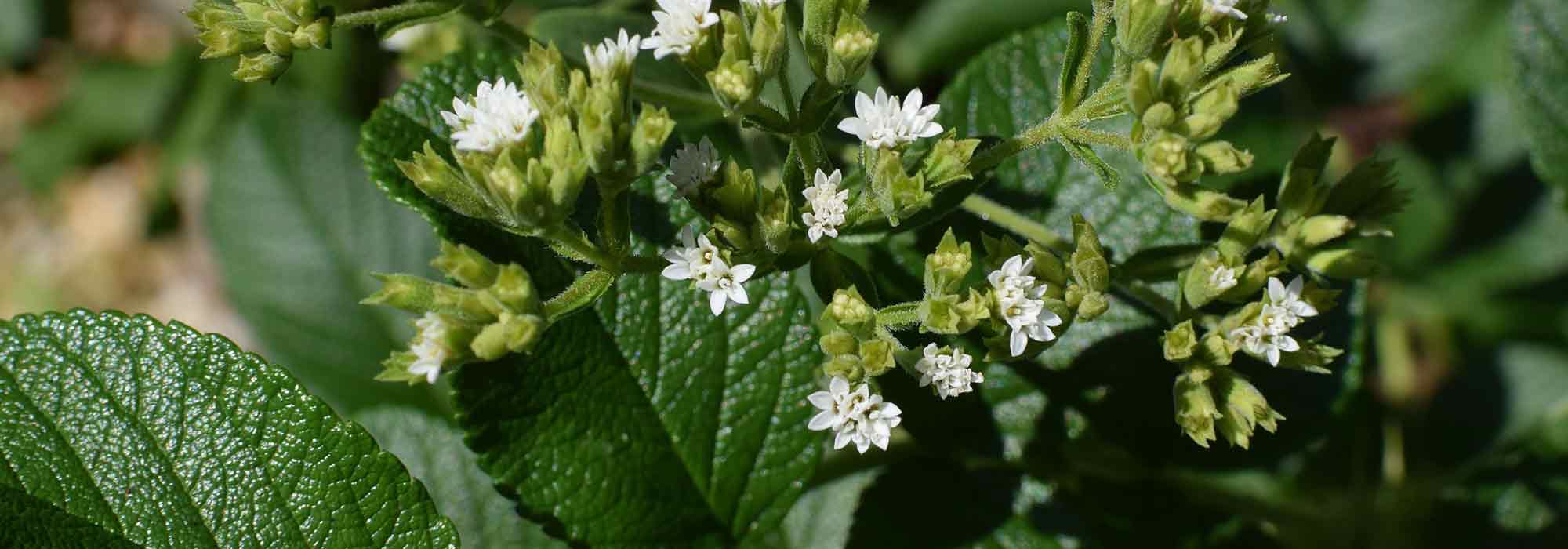
Growing stevia
Growing stevia in pots or in the ground
Contents
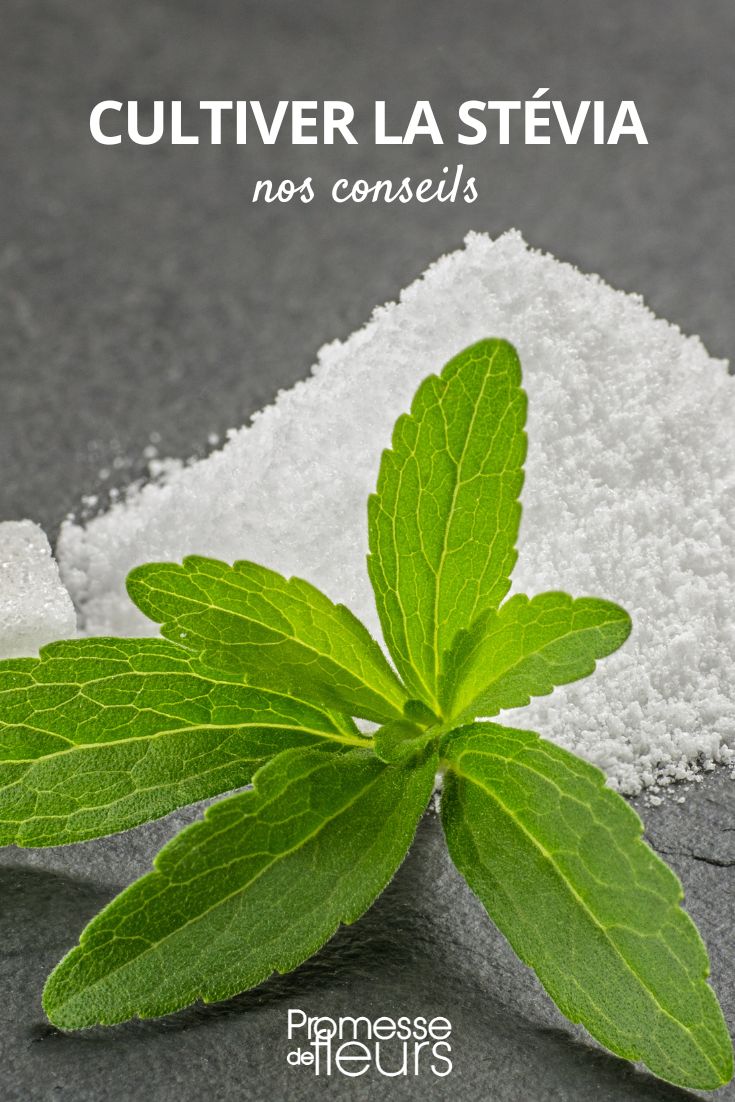
Stevia, known by its Latin name Stevia rebaudiana, is a tropical plant native to South America, highly . This sweetening power is even 100 to 300 times greater than that of sugar, but with no calories.
When its few requirements are met, Stevia rebaudiana is a plant that proves to be fairly easy to grow. In pots or in the ground, discover all our tips for growing stevia.

How to grow stevia?
Originating from South America, stevia is found in its natural state at the edges of forests and clearings, and less frequently in undergrowth. It is therefore a plant that requires light, but cannot tolerate direct summer sunlight.
Weakly hardy, Stevia rebaudiana is only cultivated in open ground in the mildest climates of the hexagon, specifically in oceanic and Mediterranean regions.
In the garden or in pots, on the balcony or terrace, feel free to pair it with aromatic and culinary plants, such as basil, parsley, sage, verbena, oregano, fennel, dill…
When to plant?
In the previously mentioned mild climate regions, stevia is planted in open ground between April and May, once the risk of frost has passed. In pots, young stevia plants are repotted into their final containers in spring.
Growing stevia in open ground
Substrate
To thrive properly, stevia needs moist but well-drained soil. Stagnant moisture should be avoided, as it can cause the plant to wilt above the collar. However, soil that is too dry can also be fatal. So, be cautious during heatwaves.
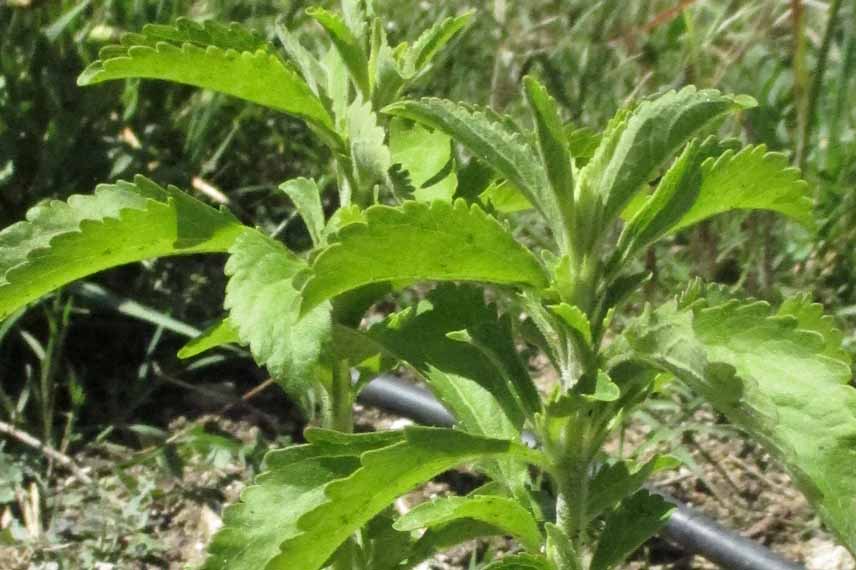
Growing stevia in open ground, ©Huerta Agroecológica Comunitaria “Cantarranas” y – Flickr
Aside from that, Stevia rebaudiana adapts to all soils, even poor ones. However, it prefers rich soil, ideally well-drained loamy soil.
Exposure
Plant stevia in a sheltered spot, in partial shade or in light sun.
Planting
- Space your planting holes 40 cm apart in all directions.
- Amend the bottom with some well-matured compost.
- Place the plant in the centre of the planting hole.
- Cover the root ball with fine soil, but leave the collar exposed.
- Firm down and water.
Growing stevia in pots
Choosing the pot
Preferably choose a pot that is quite wide, with a diameter of 20 to 30 cm.
Substrate
In pots, stevia is grown in a mixture of potting soil and well-matured compost. The substrate should rest on a layer of gravel or clay balls to promote drainage.
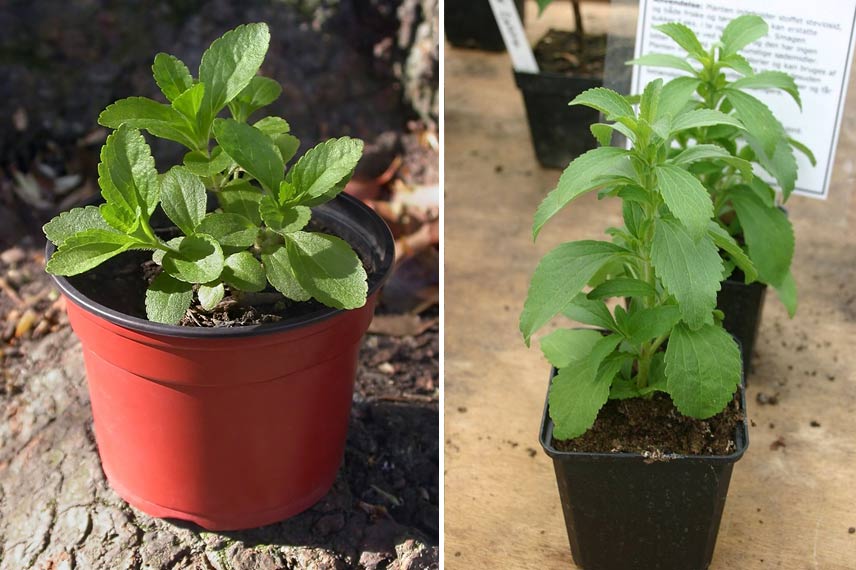 Growing stevia in a pot, ©Gabriela-F. Ruellan and Sten Porse – Flickr
Planting
- Place a thick layer of clay balls at the bottom of the pot.
- Fill the container with your potting soil + compost mixture.
- Place the root ball and cover with substrate leaving the collar exposed.
- Firm down and water.
- Empty the saucer under the pot.
- Position the pot in a bright location, but without direct sunlight.
How to care for stevia?
Fertilisation
As a greedy plant, stevia needs to be regularly fertilised, especially in pots where the substrate depletes more quickly.
A supply of nitrogenous, organic, slow-release fertiliser is particularly recommended two weeks before harvest. Avoid quick-release fertilisers that diminish the sweetening power of stevia leaves.
Organic fertilisers, such as ground horn powder, seaweed extracts, or nettle manure macerated for 12 to 15 days… Can be added to the substrate occasionally.
Watering
As mentioned, Stevia rebaudiana needs a continuously moist substrate. Remember to water regularly, especially in summer and during dry periods. Likewise, a potted stevia will be more sensitive to lack of water, as the substrate dries out faster than in open ground. However, avoid excess moisture by allowing the substrate to dry briefly between waterings, and ensure no water stagnates in the saucer if you are growing stevia in a pot. Stagnant moisture could cause its roots to rot.
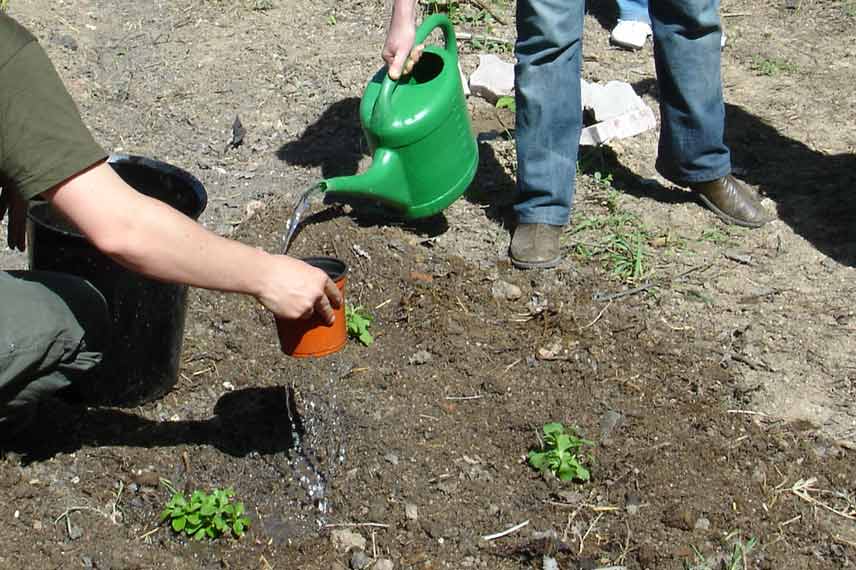
Watering freshly planted stevia, ©Huerta Agroecológica Comunitaria “Cantarranas” y – Flickr
Regular watering of your stevia plants, especially in pots, is therefore essential for their well-being. Whether in open ground or in pots, apply a mulch at the base of your plants, which will help to retain moisture in the substrate for longer, while limiting the growth of weeds.
Wintering
Wintering potted stevia
Feel free to place your potted stevia outside during the entire growing season. However, remember to bring them in to protect them from frost as soon as the forecasted temperatures drop below -5°C.
During winter, stop your fertiliser applications and drastically reduce your watering (the substrate should not, however, dry out completely).
Wintering stevia in open ground
Before the first frosts, mound the bases of your stevia plants. Then apply a thick mulch that will serve to protect the roots from the cold. This is particularly useful, as the root system of stevia is very dense just below the soil surface.
Stop all fertiliser applications and do not water the plant until the end of the winter period.
Pruning
Winter is the best time to prune stevia grown in open ground. Indeed, the plant is in a period of dormancy.
With the cold, leaves and stems completely dry out and need to be pruned. This operation should only be carried out in dry weather. This precaution limits the risk of fungal infections from the wounds.
Cut the stems above the third eye. In the following spring, you will be pleased to see the plant regrow from the base and vegetative buds.
Good to know: during the summer period, also remember to remove flowers as soon as they appear to prevent the plant from weakening and to stimulate leaf production.
Pests of Stevia
When grown outdoors, in the ground or in pots, stevia can be attacked by small rodents (rabbits, voles, field mice, and other mice…) that particularly enjoy the taste of its leaves. You can here prevent these attacks by using elder leaf manure, as it effectively acts as a natural repellent for garden rodents.
Slugs and snails also enjoy nibbling on its leaves, especially the young shoots in spring. To protect your plants, you can use slug deterrents or make a slug trap, for example. Feel free to consult our sheet “Slugs: 7 ways to fight effectively and naturally”.
Stevia grown indoors can, on the other hand, be subject to attacks from mealybugs or whiteflies. These pests are sensitive to cold and humidity and can be kept at bay by regularly misting the leaves of the plant and ensuring proper ventilation.
Read also
Create a spiralled herb garden.How to propagate stevia?
Sowing stevia yields inconsistent results, as the germination rate of the seeds is quite low. Therefore, the best technique for propagating stevia is by cuttings.
- Take a terminal cutting about 10 cm long.
- Remove the leaves at the base, leaving only a few at the top of the cutting.
- Replant the cutting in a pot filled with potting soil.
- Firm the soil around the stem to ensure good contact with the substrate and avoid air pockets.
- Water generously.
- Place the pot in a bright location, out of direct sunlight.
How to harvest and store stevia?
Stevia leaves are harvested as needed. Avoid harvesting too many from a single plant to allow it to continue photosynthesising. It is best to grow several plants so you can easily use them while leaving enough leaves on each. The end of summer is when the plant is richest in glucosides, giving it a better sweetening power. You can use fresh or dried leaves, incorporating them into desserts (yoghurts, fruit salads…), infusions, teas, or coffees, as a substitute for sugar. In addition to their strong sweetening power, they have a slight liquorice aroma. Fresh leaves can be stored for a few days in the refrigerator.
If you wish to preserve them for a longer period, dry them in the shade, in a dry and airy place, then grind them into powder and store them in an airtight jar.
- Subscribe!
- Contents
Comments