





























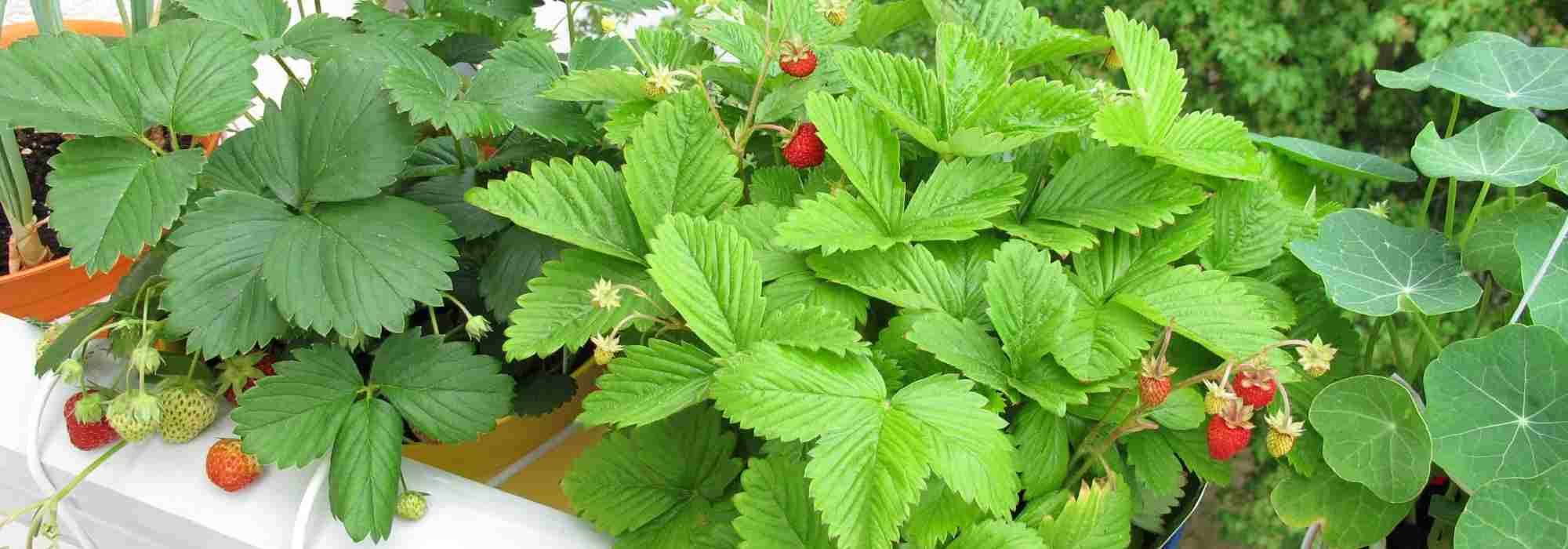
Growing strawberries on the balcony
For harvests even without a garden!
Contents
Not everyone is lucky enough to have a garden! Fortunately, it is possible to grow strawberry plants and enjoy abundant, delicious harvests on a balcony! Strawberries are among the easy-to-grow red berries that can thrive even in a small space. Strawberry plants adapt perfectly to pot cultivation, window boxes, or hanging baskets, adding charm to your pocket garden. They are so rewarding that it would be a shame to miss out on the sweet, fragrant, and juicy flavour of strawberries!
Here are my secrets for generous strawberry plants and beautiful harvests on your balcony!

Which varieties of strawberries to plant on a balcony?
Before planting your strawberry plants in your mini-orchard, take the time to choose your varieties carefully. In theory, any strawberry plant is suitable for pots or containers on a balcony, but it’s best to avoid varieties that would quickly outgrow their containers. I recommend prioritising repeat flowering and productive varieties. To stagger your harvests, feel free to mix different strawberry varieties.
Repeat flowering or non-repeat flowering?
There are 3 types of strawberry varieties:
- woodland strawberries or four-season strawberries, such as Reine des Vallées and Fragaria vesca ‘Pink Marathon’, producing small fruits from April to October
- repeat flowering strawberries, producing large fruits from May-June to October but in smaller quantities, often marking a resting period in July-August, such as Mara des Bois, Reine des Vallées, and Mariguette.
- non-repeat flowering strawberries, such as the very tasty and early Gariguettes and Ciflorettes, which yield large fruits abundantly around June, sometimes as early as May.
Among other interesting varieties to grow in pots, you can also find:
- The Temptation strawberry, a woodland strawberry variety that produces long climbing or creeping stems that look wonderful in hanging baskets and containers to brighten up balconies.
- The F1 Toscana Deep Rose trailing strawberry, a highly productive hybrid variety with a trailing habit particularly suitable for pot or hanging cultivation. It offers beautiful pink flowers!
- The Mount Everest climbing strawberry, a repeat flowering variety ideal for small spaces. It can be trained on a support (trellis, tipi…) to climb up to 1.20 m high or placed in a hanging basket to cascade down.
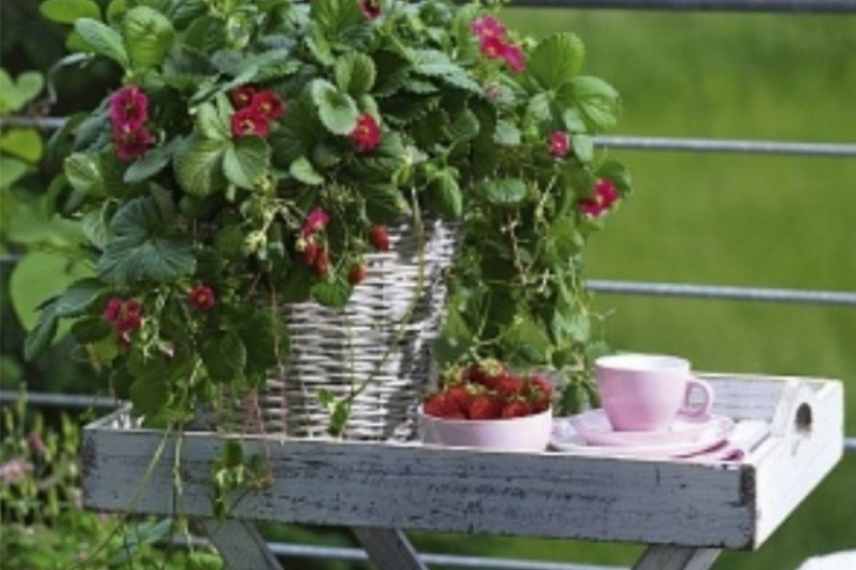
‘Toscana Deep Rose’ Strawberry
Read also
Strawberries: planting, growing and careWhich container to choose?
With strawberries, anything goes or almost! No matter the pot as long as you have the desire! The only limits are the available space and your imagination. You can have fun varying the containers and plant your strawberries in a window box, in a pot, elevated in a raised bed, in a wall-mounted plant bag, in geotextile bags, in a strawberry fountain, in a strawberry tower made of terracotta pots, or in stackable window boxes to plant without clutter, like in a repurposed pallet, if you enjoy recycling.
Make sure the size of the container is suitable for the development of the strawberry plant: a depth of 20-30 cm will be sufficient. Also, ensure that the container is well-drained, so that watering or rainwater can properly escape: poor aeration of the pots would lead to the rotting of the plants.
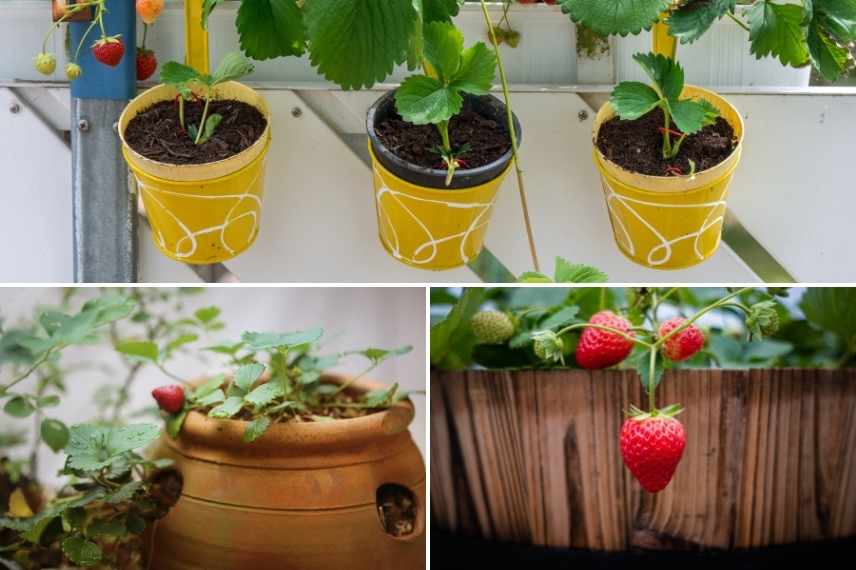
Small pot, strawberry tower, window box… strawberries will be quite happy with any of these on a balcony
Discover other Strawberry plants
View all →
Available in 2 sizes

Available in 3 sizes

Available in 3 sizes
Available in 0 sizes

Available in 2 sizes
Available in 1 sizes
Available in 3 sizes
Available in 3 sizes

Available in 2 sizes

Available in 3 sizes
What compost to use for planting strawberries?
Fill the container with a mixture of potting soil, sand, garden soil, and well-decomposed compost as strawberries thrive in substrates rich in organic matter. You can also opt for a potting soil that is both rich, airy, and retains water well.
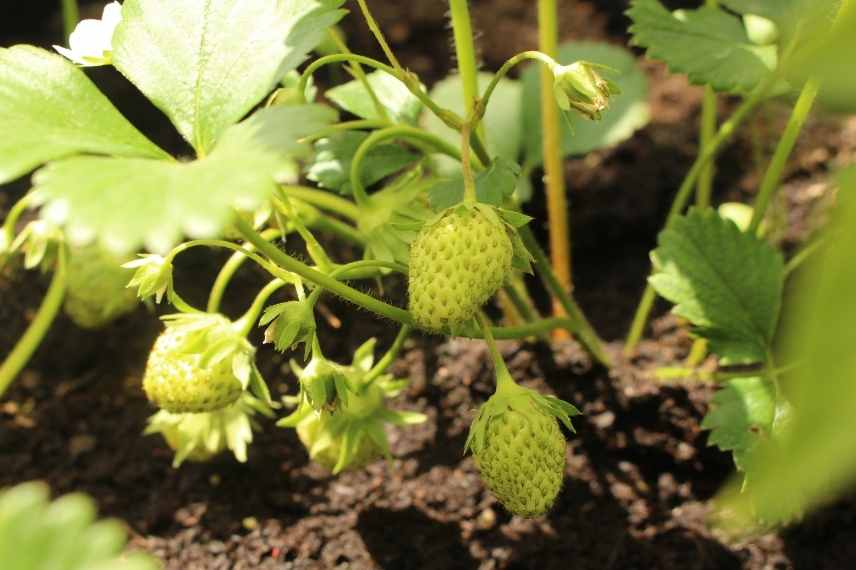
Care for your delicious strawberry plants with good potting soil
Read also
How to make dried strawberries?The right exposure
- Place your pots in a sunny spot for varieties with large fruits
- In partial shade for wild strawberries that fear overly hot exposures
When to plant strawberries on a balcony?
The ideal time to plant large-fruited strawberries, whether repeat flowering or not, is preferably in late summer and autumn for a harvest from May/June to October. For everbearing strawberries, favour planting in spring.
→ to read more on the subject: “Strawberries, 3 reasons to plant them in autumn”
How to plant strawberries?
The substrate must be well-draining, with no standing water at the roots. As the holes alone will not suffice, install a nice layer of drainage materials at the bottom of the container. Space the plants 30-35 cm apart in all directions for good fruiting.
- Soak the root balls for a few minutes in a basin of water
- Place a layer of gravel or clay balls at the bottom of the pot to facilitate drainage
- Fill the pot with the substrate
- Position the plant and cover with soil (the collar should be level with the soil)
- Firm down well
- Water generously and regularly until established
→ Also discover this sheet: « Planting bare root strawberries »
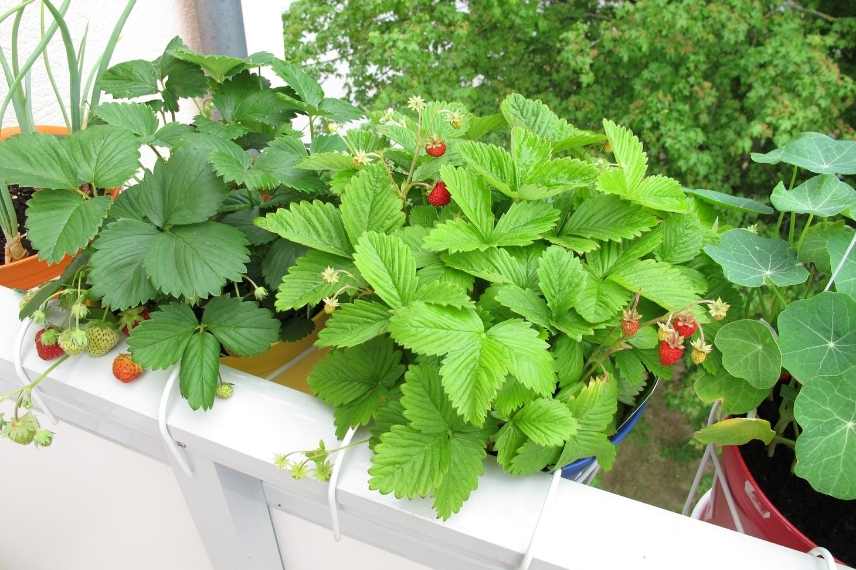
When to harvest strawberries?
Strawberries are harvested as they reach ripeness, approximately every 2 to 3 days, ideally in the morning. Pick them with their pedunculate by pinching the stem 1 to 2 cm above it.
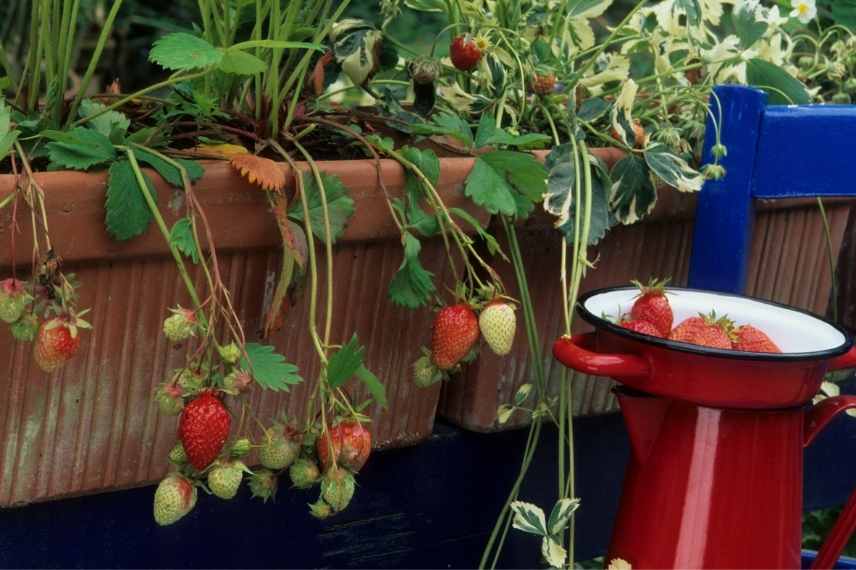
Pick the fully red fruits
Caring for your strawberries on the balcony
Renew your strawberry plants every 3 to 4 years as they will have given their best!
Watering
Potted strawberries require frequent watering, especially in summer when the substrate dries out quickly. Ensure regular watering during flowering and fruiting, particularly in hot weather. However, be careful not to over-saturate the root balls. In winter, reduce watering and place your pots out of the rain.
Mulch with organic mulch around the plants in summer to keep the roots cool. This will also prevent your fruits from coming into direct contact with the soil, protecting them from substrate moisture.
Pruning
In autumn, remove dry, spotted, and yellowing leaves. Your strawberry plants will thrive again in spring! Regularly remove the runners that tend to exhaust the plants.
Fertilisation
In pots, the substrate depletes quickly. Add compost to the surface in spring, lightly scratching the soil. During the season, before transplanting young plants or after the first harvest, you can also fertilise with a fertiliser for strawberries to ensure good growth and generous fruiting.
Protecting Your Strawberries
As soon as the first strawberry flowers appear, to ensure abundant harvests and protect them from spring frosts, install a fleece if the nights are cool.
Strawberry plants are mainly threatened by fungal diseases caused by excess moisture. Botrytis is a grey mould that can affect strawberries, especially if the plants are too crowded. The strawberry downy mildew and anthracnose also occur in cases of insufficient air circulation, highlighting the importance of spacing the plants adequately.
Install a bird protection net before the fruits turn red.
Slugs and snails can feast on young plants. Discover our natural solutions to keep them away.
→ For more information, visit our pages: How to Grow Strawberries and Diseases and Pests of Strawberry Plants
For further reading
- Our range of strawberry plants: many varieties to harvest in spring and throughout summer
- Strawberries in the vegetable garden: stop the raiding!
- Choosing strawberry plants
- Subscribe!
- Contents
![[strawberry_culture pot="container"]](https://en.promessedefleurs.eu/blogwp/wp-content/uploads/2022/06/Cultiver-des-fraises-sur-le-balcon.jpg "Growing strawberries on the balcony")
Comments